Aesop in Orange
AESOP; Augustin LEGRAND, illustrator.
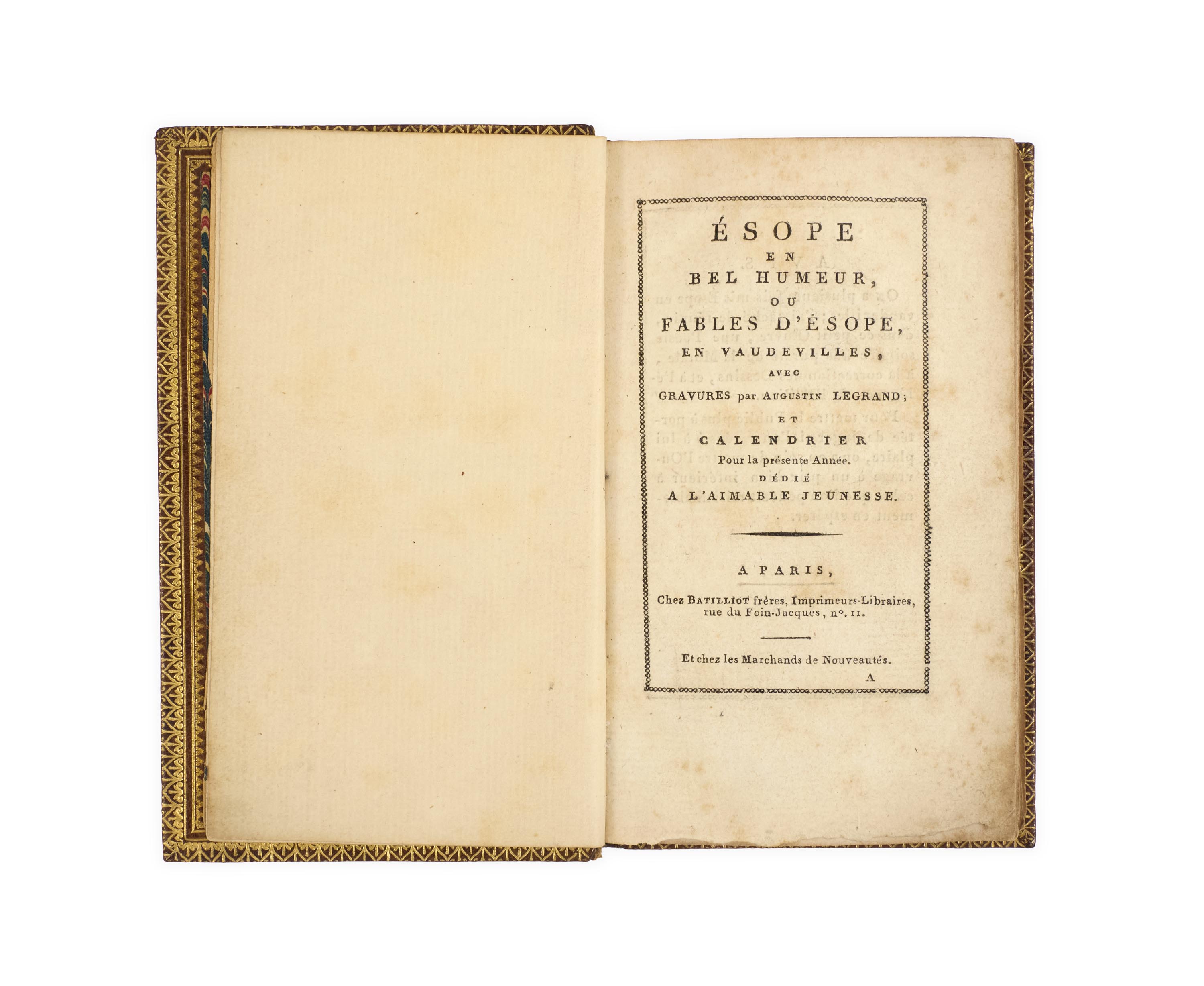
Ésope en bel humeur, ou fables d’Ésope, en vaudeville, avec gravures … et calendrier pour la présente année. Dédié à l’aimable jeunesse. Paris, Batilliot frères, [c. 1795–1800].
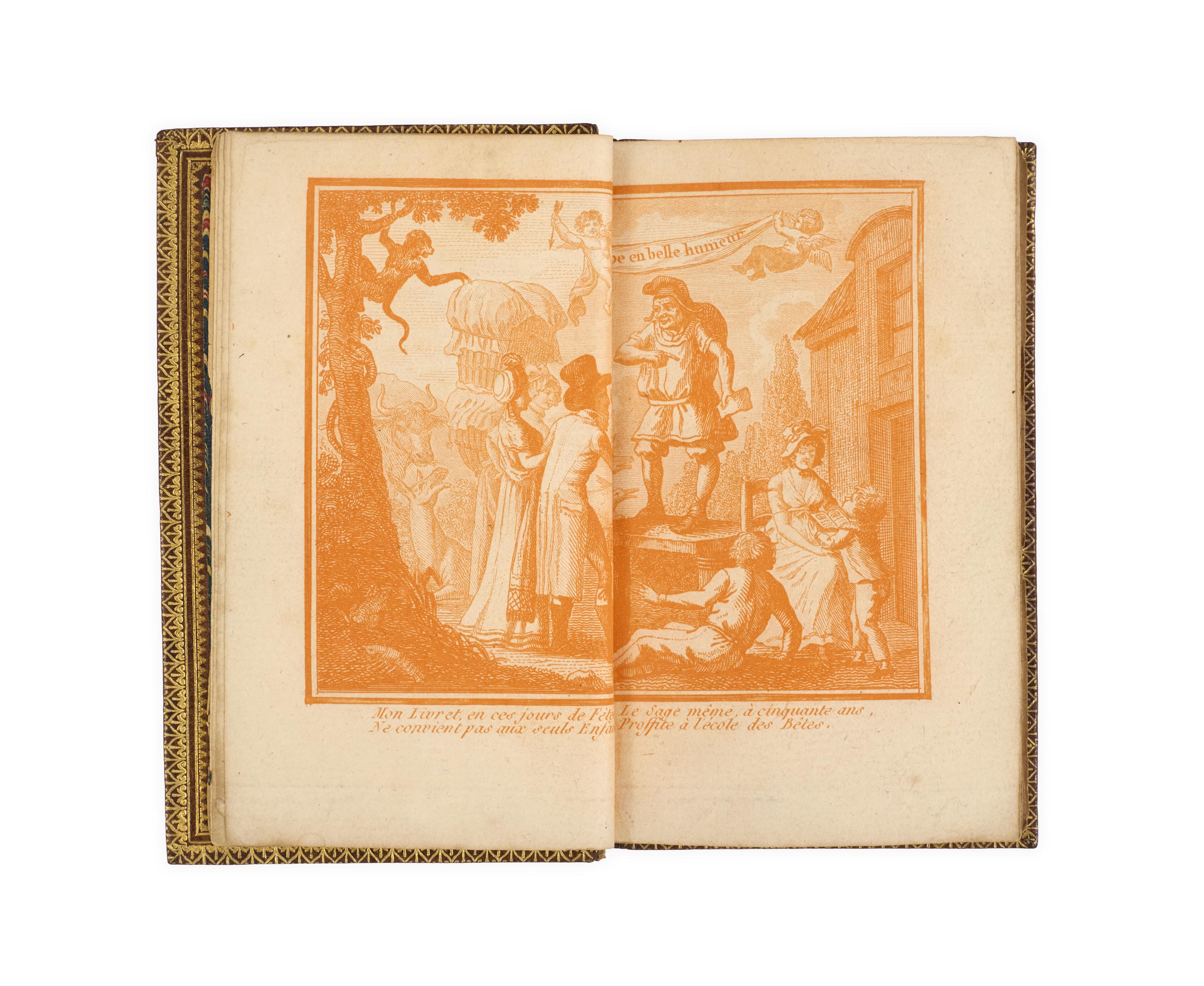
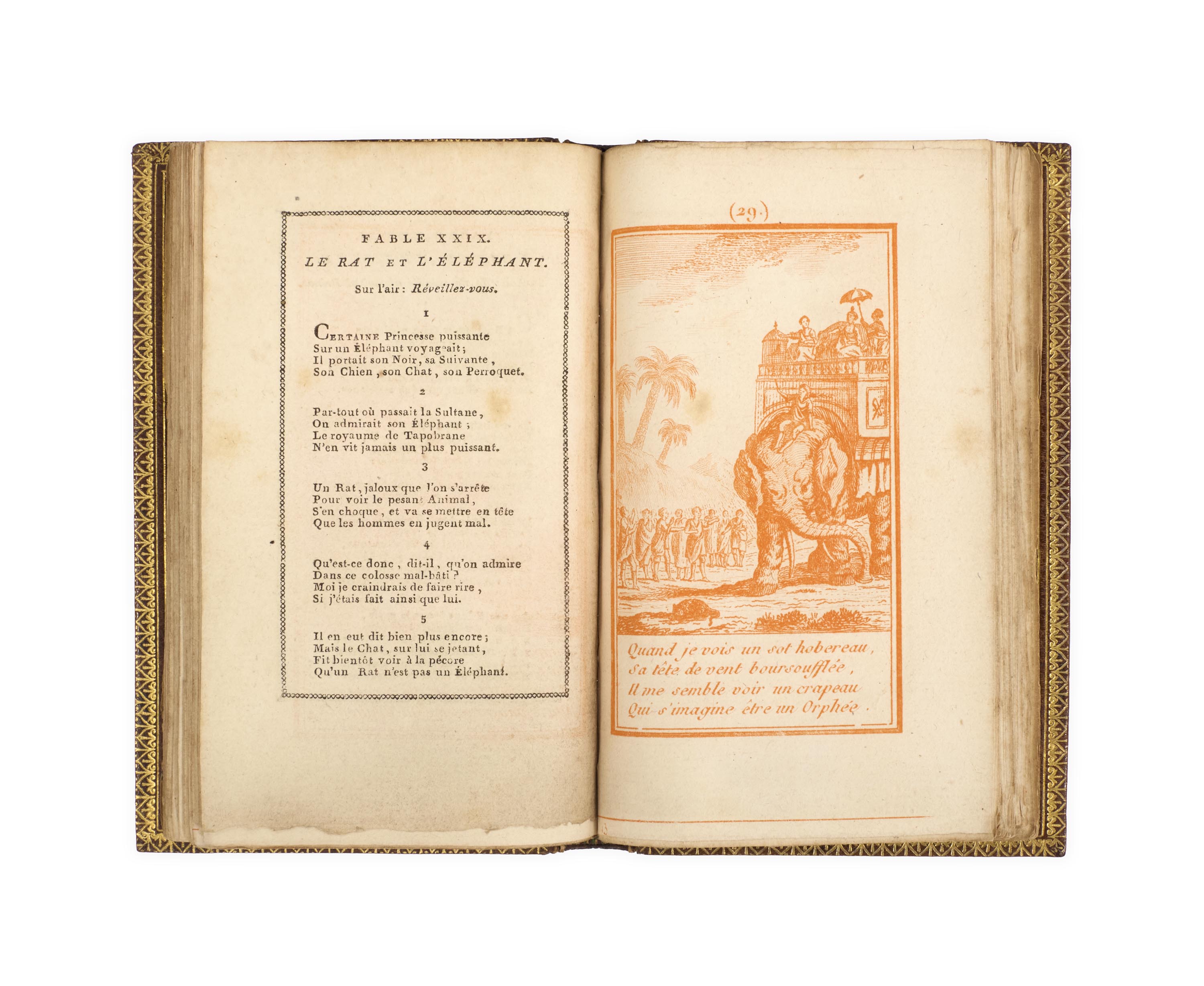
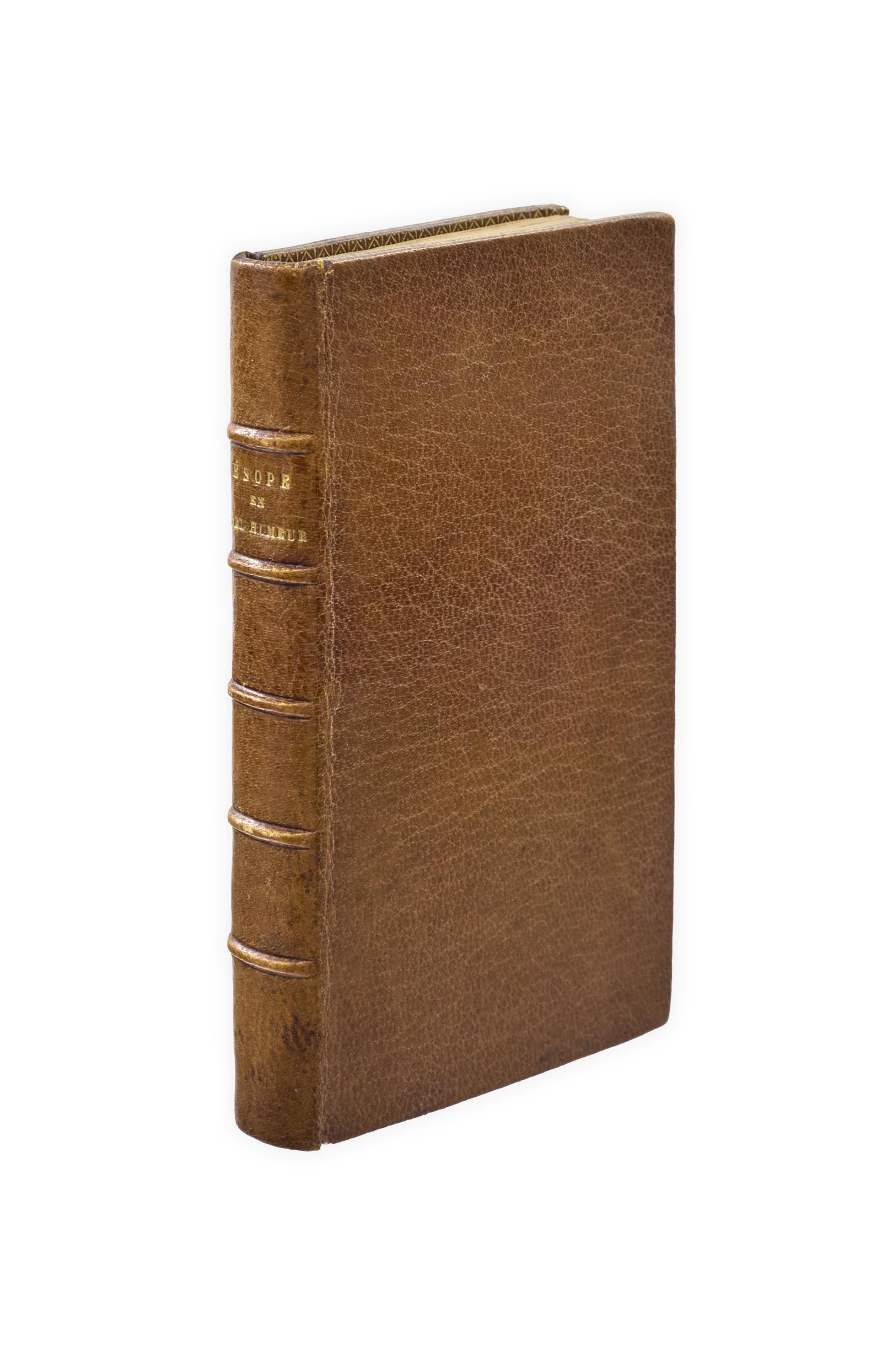
16mo, pp. [63], [1, blank], with 32 leaves of double-sided engravings printed in orange (the first two engraved leaves containing a half-title, a double-page engraving of Aesop the hunchback, and an allegorical plate; the fable illustrations numbered 1–60); bound without the calendar; a few very slight spots to first leaves, but an excellent copy; bound in crushed tan morocco, spine lettered directly in gilt, gilt dentelles, top-edge gilt, others uncut, coloured ribbon place-marker.
Added to your basket:
Ésope en bel humeur, ou fables d’Ésope, en vaudeville, avec gravures … et calendrier pour la présente année. Dédié à l’aimable jeunesse.
A French verse Aesop to be sung to popular tunes, with fine plates by Legrand printed in bright orange.
The Batilliot brothers issued several versions of these fables for children set to the tune of popular songs. The first fable in the book is not, in fact, one of Aesop’s, but is an allegory entitled ‘La Fontaine et La Marre’, a pun on La Fontaine and his fables, which were also set to ‘vaudevilles’ around the same time. The caption to each engraving contains La Fontaine’s rhyming moral for each tale. The text is attributed to Pierre Blanchard (1772–1856).
Copies are also recorded with the plates printed in black, and sometimes bound with a calendar for the year 1801 (with the imprint Brussels, B. Le Francq) or with a final leaf of advertisements, not here present.
OCLC finds only two copies in the US (LoC, BPL) and two in the UK (Bodleian, Trinity Cambridge).