Aesop the Moralist
AESOP; Jean-Baptiste Morvan de BELLEGARDE, translator.
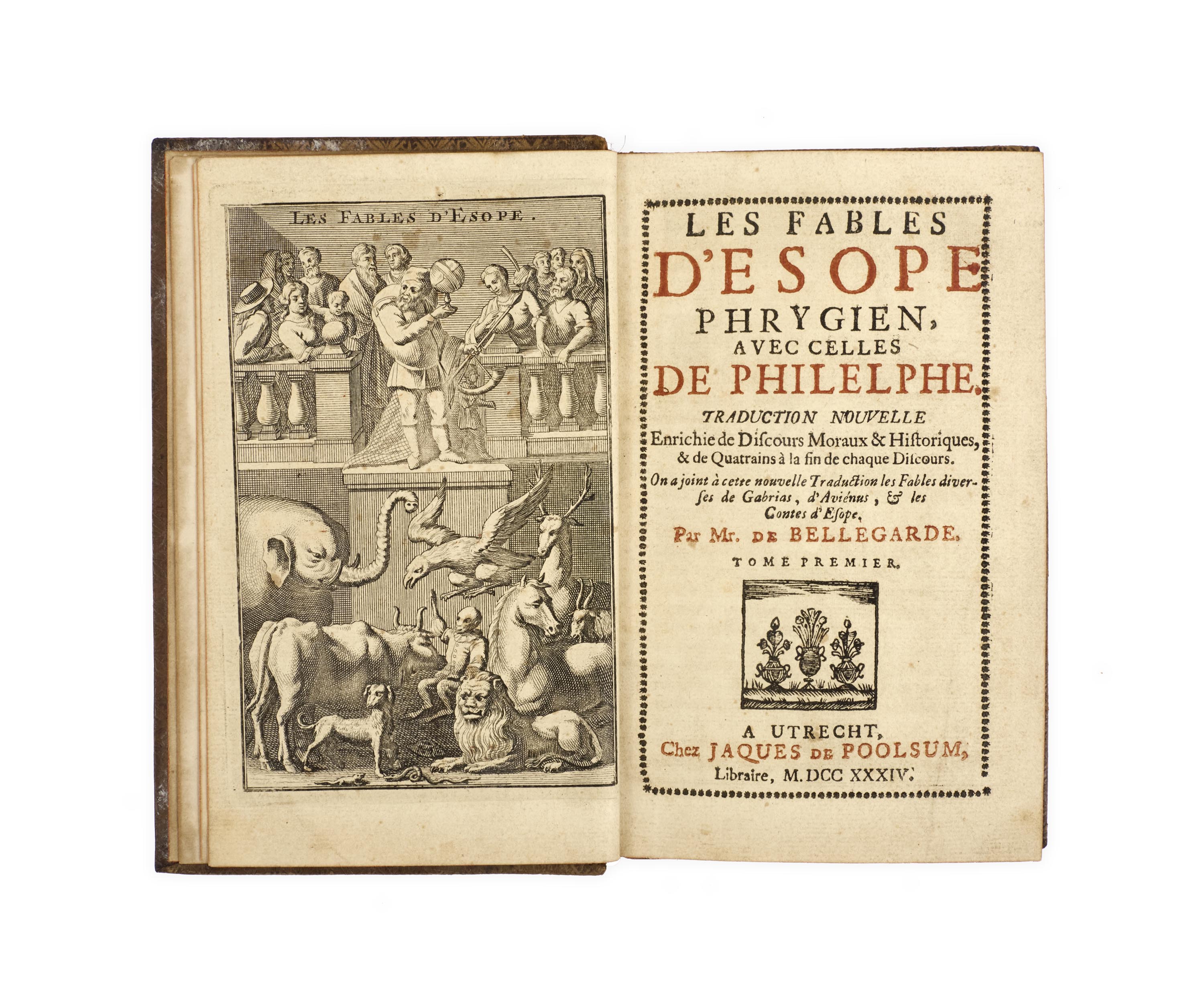
Les fables d’Esope phrygien, avec celles de Philelphe. Traduction nouvelle, enrichie de discours moraux & historiques, & de quatrains à la fin de chaque discours. On a joint à cette nouvelle traduction les fables diverses de Gabrias, d’Aviénus, & les Contes d’Esope, par Mr de Bellegarde. Utrecht, Jacob van Poolsum, 1734.
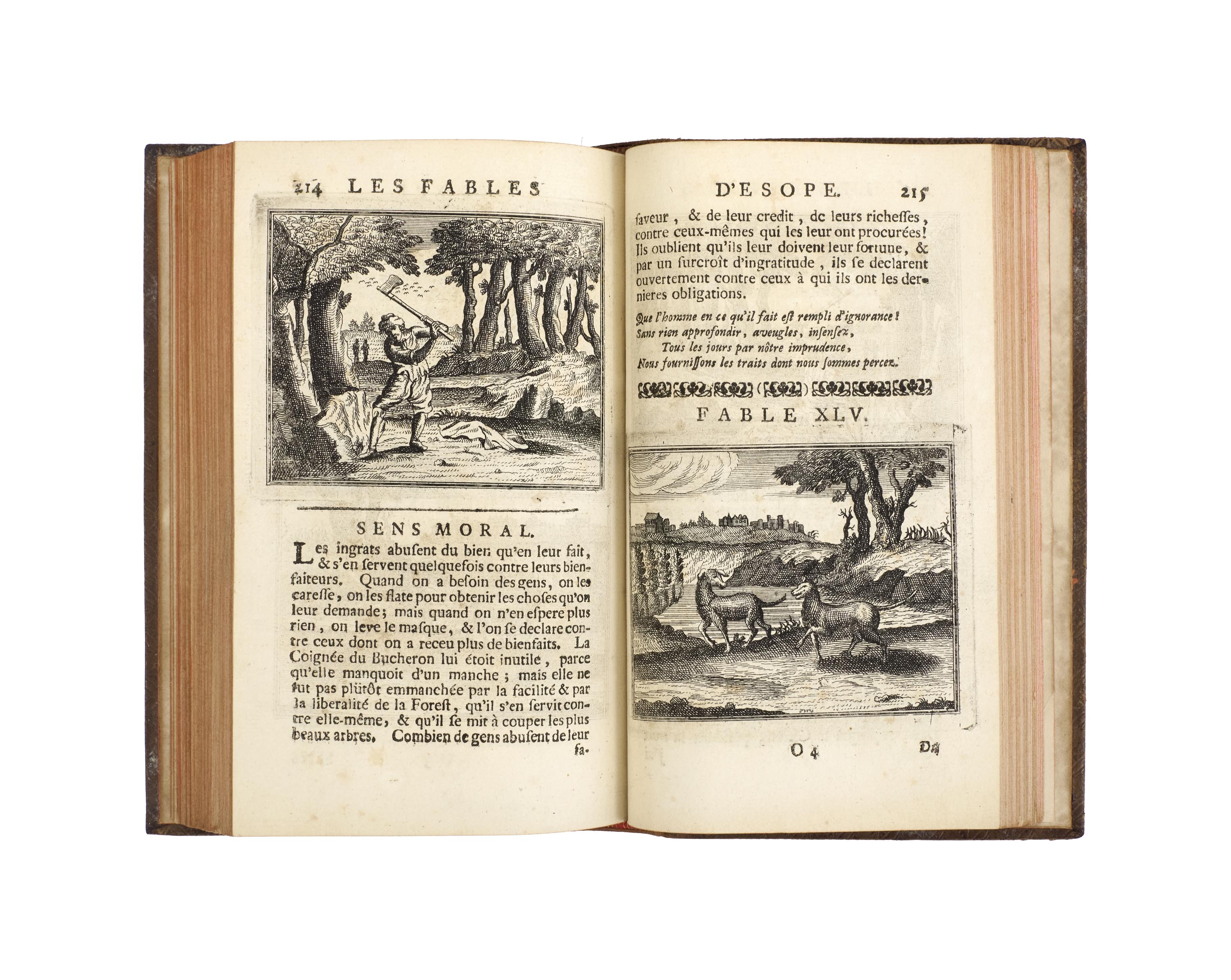
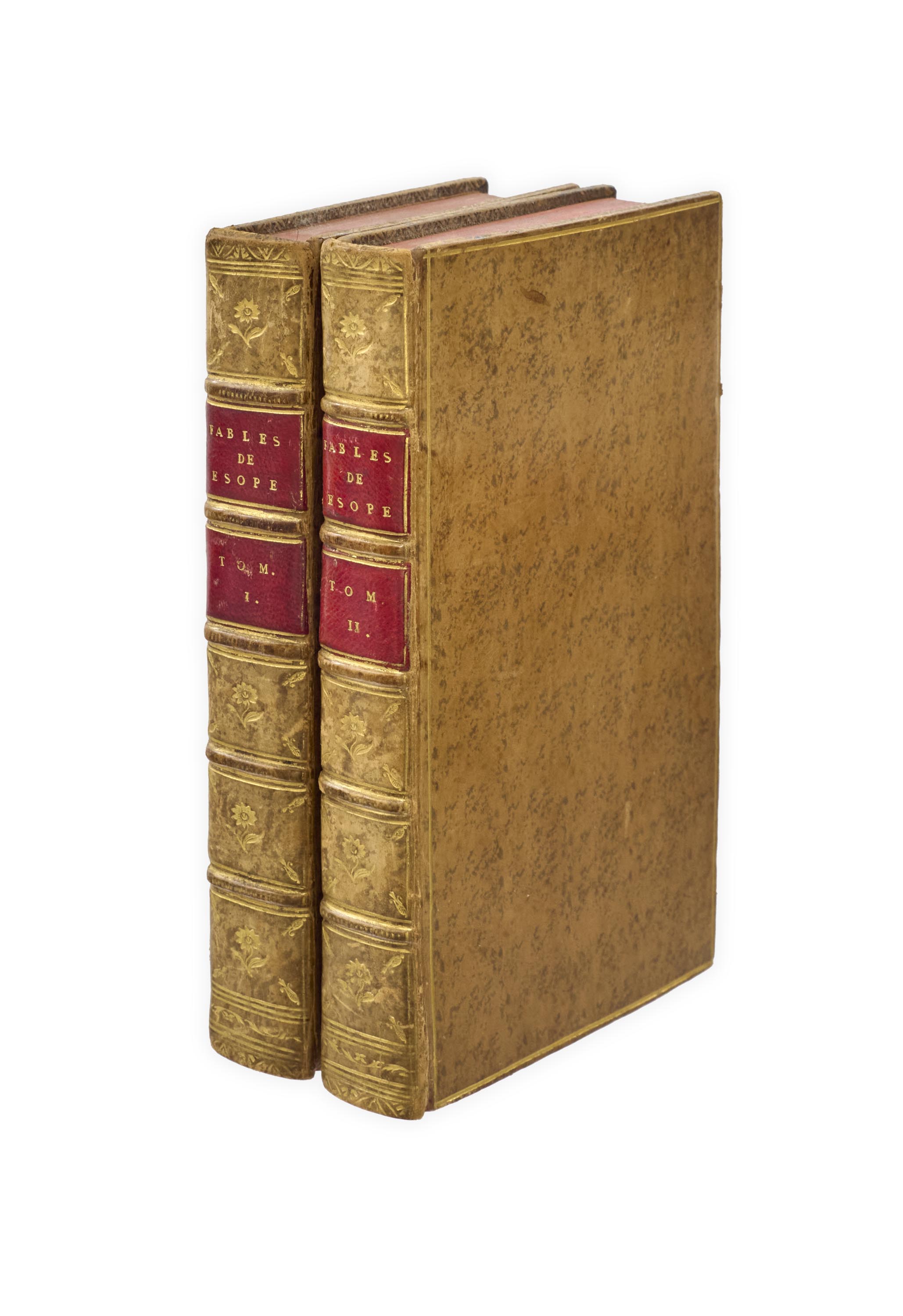
Two vols, 8vo, pp. I: [x], 297, [7], II: [ii], 287, [4], [3, blank], with copper-engraved frontispiece to each volume; titles printed in red and black within typographic borders with woodcut ornaments, numerous copper-engraved illustrations, woodcut and typographic ornaments; a very good set, bound in early nineteenth-century mottled calf, spines gilt in compartments with gilt red morocco lettering-pieces, edges stained red; early nineteenth-century bookplates of the Grosvenor family and pencil note ‘F.D.C. 1’ to front pastedowns, armorial bookplates of Merthyr Guest to rear pastedowns.
Added to your basket:
Les fables d’Esope phrygien, avec celles de Philelphe. Traduction nouvelle, enrichie de discours moraux & historiques, & de quatrains à la fin de chaque discours. On a joint à cette nouvelle traduction les fables diverses de Gabrias, d’Aviénus, & les Contes d’Esope, par Mr de Bellegarde.
Aesop’s Fables in the translation read by French schoolchildren for two centuries, with fine copper-engraved illustrations, a neatly bound set with English aristocratic provenance.
This is a reprint of the translation by the French cleric Jean-Baptiste Morvan de Bellegarde (1648–1734), which provides a moral interpretation and a quatrain for each tale. Bellegarde translated into French both religious and secular works from Greek and Latin, including Ovid and Epictetus, as well as writing conduct books. His translation of Aesop and other fables first appeared in Amsterdam in 1708 and was regularly reprinted into the twentieth century.
Provenance:
Thomas Merthyr Guest (1838–1904), the son of a Welsh industrialist, built Inwood House in Somerset. He married the writer Lady Theodora Grosvenor (1840–1924), daughter of Richard Grosvenor, second Marquess of Westminster, and Lady Elizabeth Mary Levenson-Gower.
STCN 33121198X; Landwehr, Emblem and fable books of the Low Countries F063.