Against Spanish Rule in Chile
BOWLES, William Lisle.
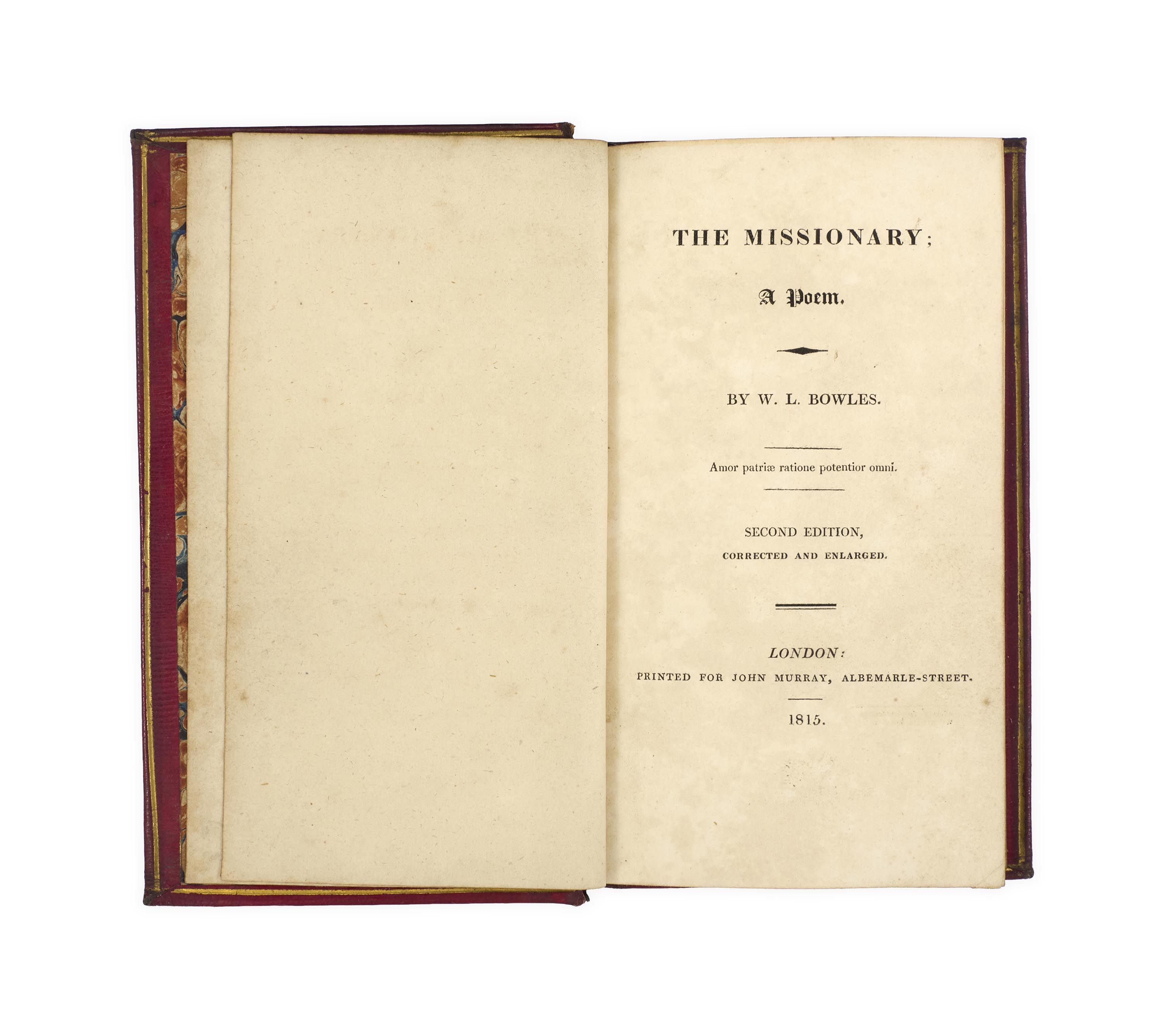
The Missionary: a Poem … Second Edition, corrected and enlarged. London, [T. Davison for] John Murray, 1815.
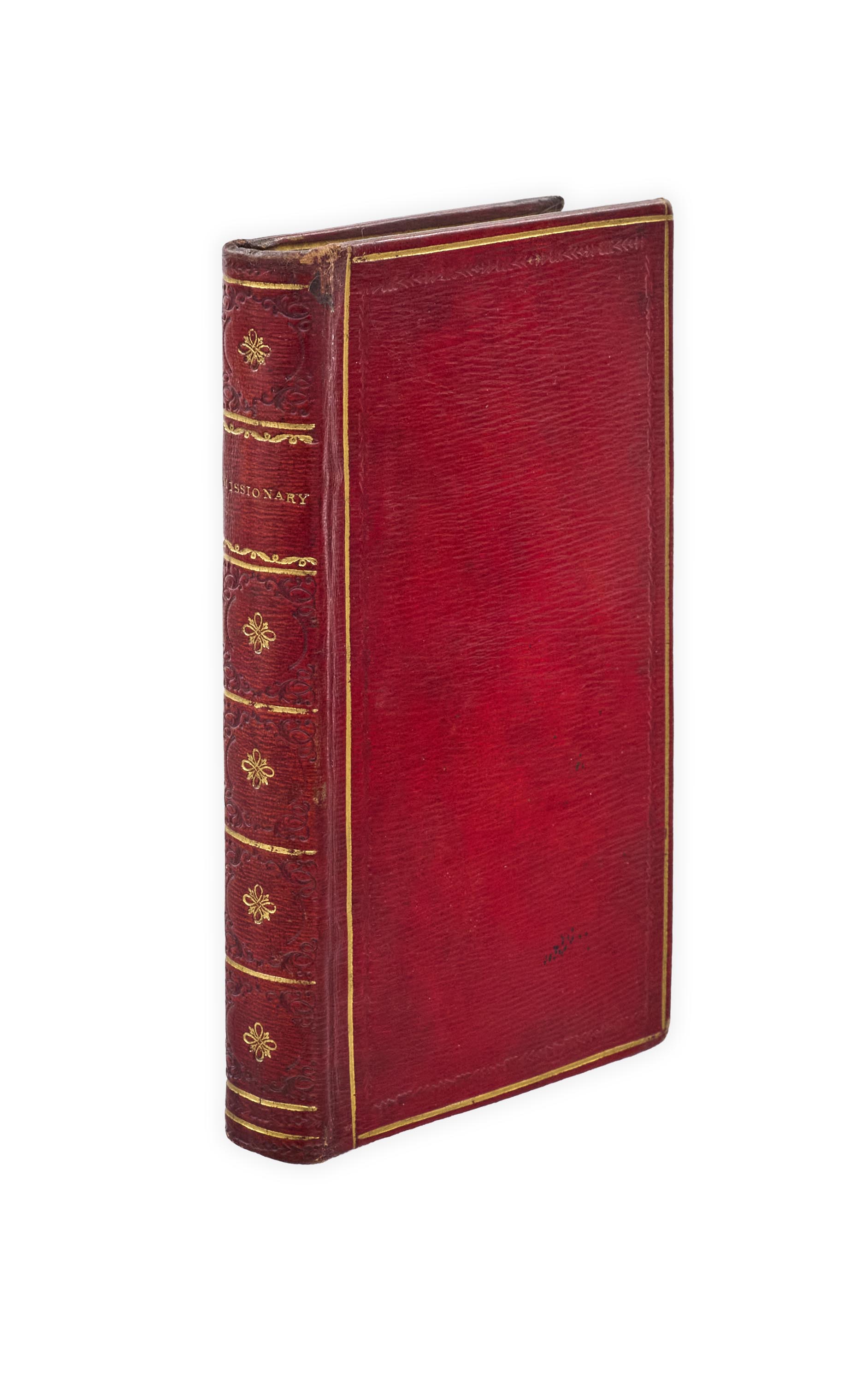
8vo, pp. viii, 199, [1]; occasional very light foxing, but withal a very good copy; handsomely bound in contemporary red straight-grained morocco, borders filleted in gilt and roll-tooled in blind, spine tooled in compartments in gilt and in blind and lettered directly in gilt, edges gilt, marbled endpapers; minimally rubbed; modern private collector’s bookplate to front pastedown.
Second, enlarged edition (first 1813), a handsome copy, of this poetic attack on Spanish rule in Latin America, an important influence on Byron.
William Lisle Bowles (1762–1850), the clergyman and poet whose sonnets had a formative impact on the young Coleridge, wrote the present verse narrative against the backdrop of the burgeoning independence movements in Latin America: ‘His purpose was to praise native, Araucan, resistance to a brutal, enslaving, imperial power at a time when Creole South America was rebelling against colonial rule. The poem narrates colonial relations through a love story, with a kindly missionary father establishing a peaceful community in the Andes in which Spanish and Chilean youth – boy and girl – are united under his paternal blessing. The moral is clear: Christian paternalism will create lasting and peaceful colonies because childlike natives will welcome the authority of more technologically advanced Europeans if treated with compassion’ (Fulford). The poem has been cited as a source for Byron’s The Giaour (1813), another tale of love caught between empires, as well as for the South American references in Don Juan.
See Fulford, ‘Poetry, Peripheries and Empire’ in The Cambridge Companion to British Romantic Poetry (2008).