Hebrew for Dummies
CALASIO, Mario di.
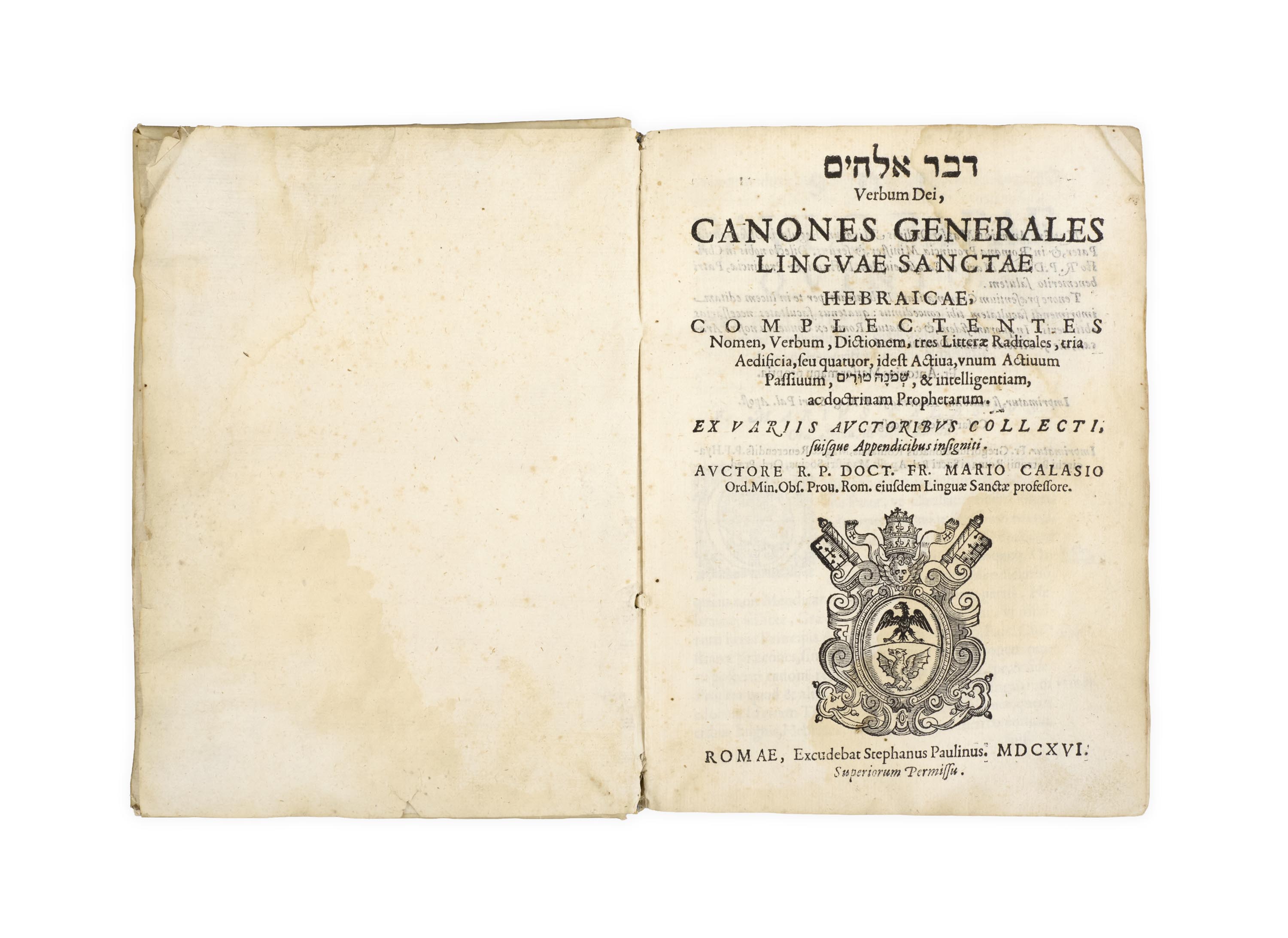
דבר אלהים Verbum Dei, canones generales linguae sanctae hebraicae, complectentes Nomen, Verbum, Dictionem, tres Litterae Radicales, tria Aedificia, seu quatuor, id est Activa, unum Activum Passivum, שְמֹנָה טוּרִים, & intelligentiam, ad doctrinam Prophetarum … Rome, Stefano Paolini, 1616.
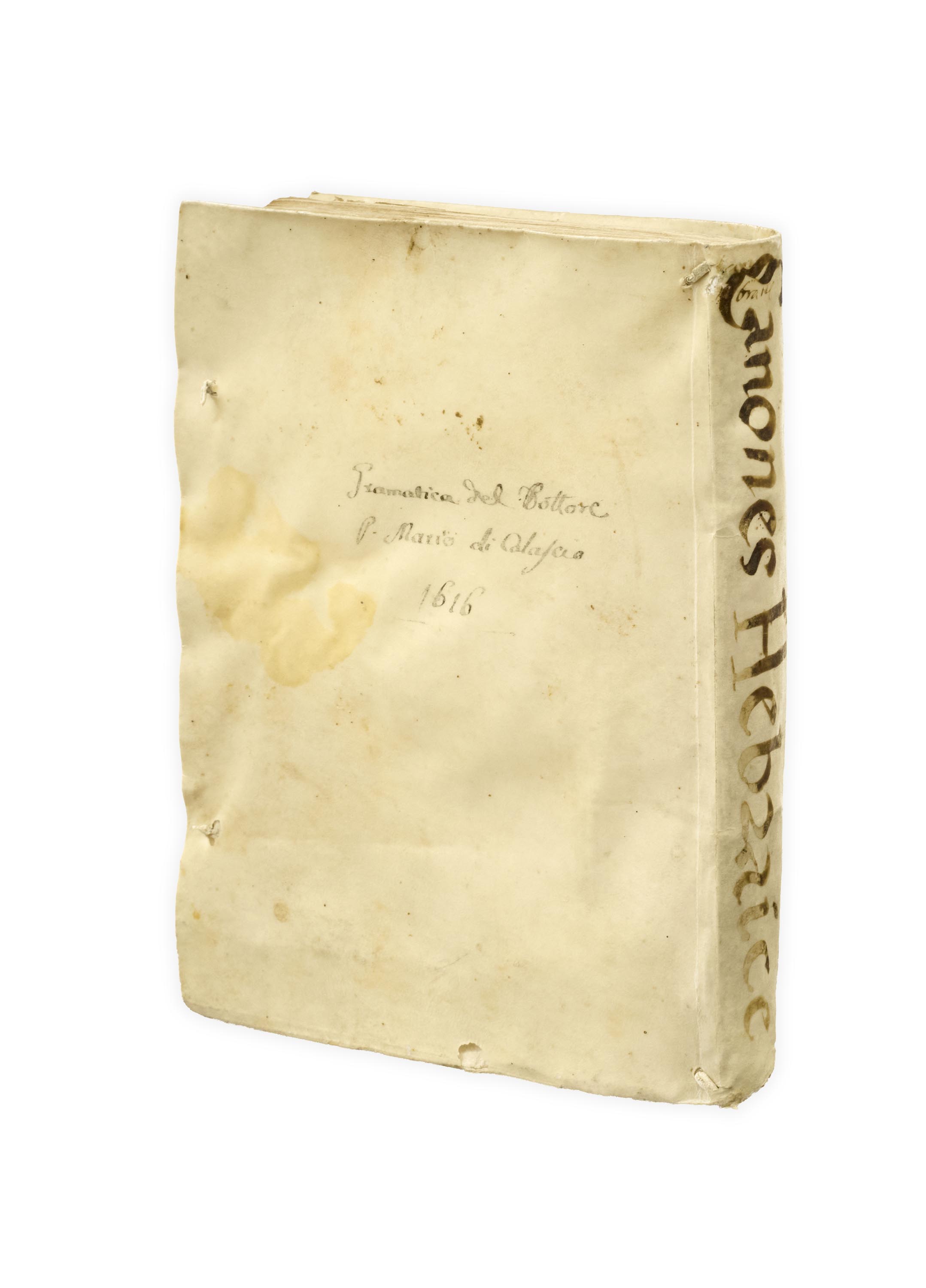
4to, pp. [xvi], 272, [4]; woodcut armorial of Pope Paul V on title-page, woodcut initials; light damp-staining across lower half of volume, occasional light browning, but still a very good copy; bound in later seventeenth-century Spanish vellum over carta rustica, spine with calligraphic lettering, lower cover with nineteenth-century manuscript title, one alum-tawed tie (of four).
Added to your basket:
דבר אלהים Verbum Dei, canones generales linguae sanctae hebraicae, complectentes Nomen, Verbum, Dictionem, tres Litterae Radicales, tria Aedificia, seu quatuor, id est Activa, unum Activum Passivum, שְמֹנָה טוּרִים, & intelligentiam, ad doctrinam Prophetarum …
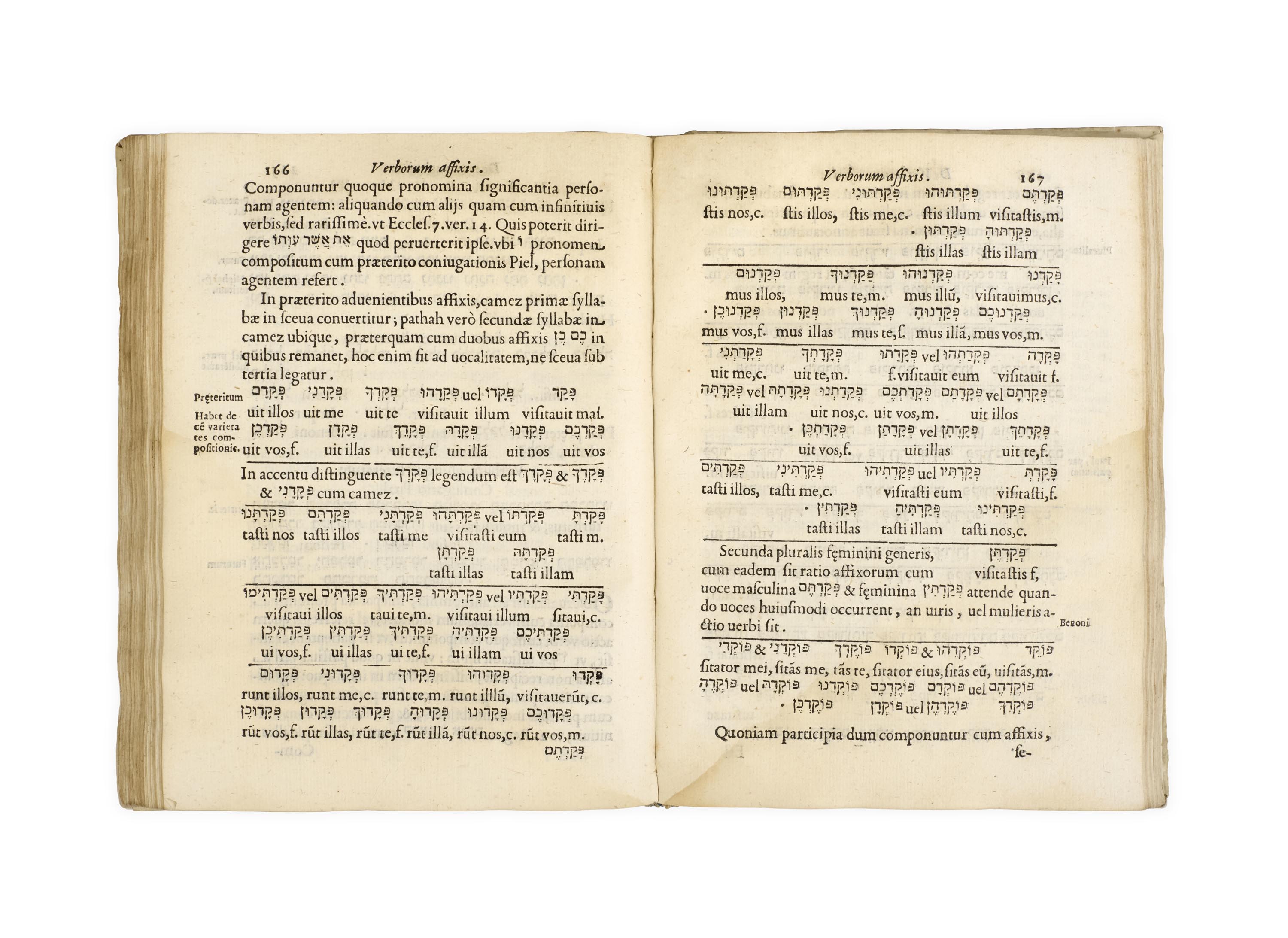
First edition of Calasio’s grammar of biblical and rabbinical Hebrew.
The Franciscan Mario di Calasio (or Calascio, 1550–1620) was confessor to Pope Paul V and appointed as maestro generale della lingua santa, teaching Hebrew in Rome. His Hebrew grammar, aimed at beginners while acknowledging (in the preface to the reader) the difficulties in learning Hebrew, was followed by a Hebrew-Latin dictionary (issued by Paolini in 1617), and his monumental concordance of the Hebrew Bible (1621–1622). A full and detailed description of the contents is provided by Pazzini (pp. 220–226).
The printer, Stefano Paolini (1596–1641), printed numerous works in non-roman typefaces, from Georgian to Syriac. He had previously worked for Giovanni Battista Raimondi at the renowned Tipografia medicea orientale, which had been established in the late sixteenth century at the behest of Cardinal Ferdinando de’ Medici. Paolini learned both the languages and the printing of them from Raimondi, and later acquired some of the types of the Tipografia medicea orientale. The work of his press was soon overtaken by the Congregatio de Propaganda Fide, founded in 1622 for the spreading of Catholic doctrine around the world, which quickly established a polyglot press to support its missionary publication programme.
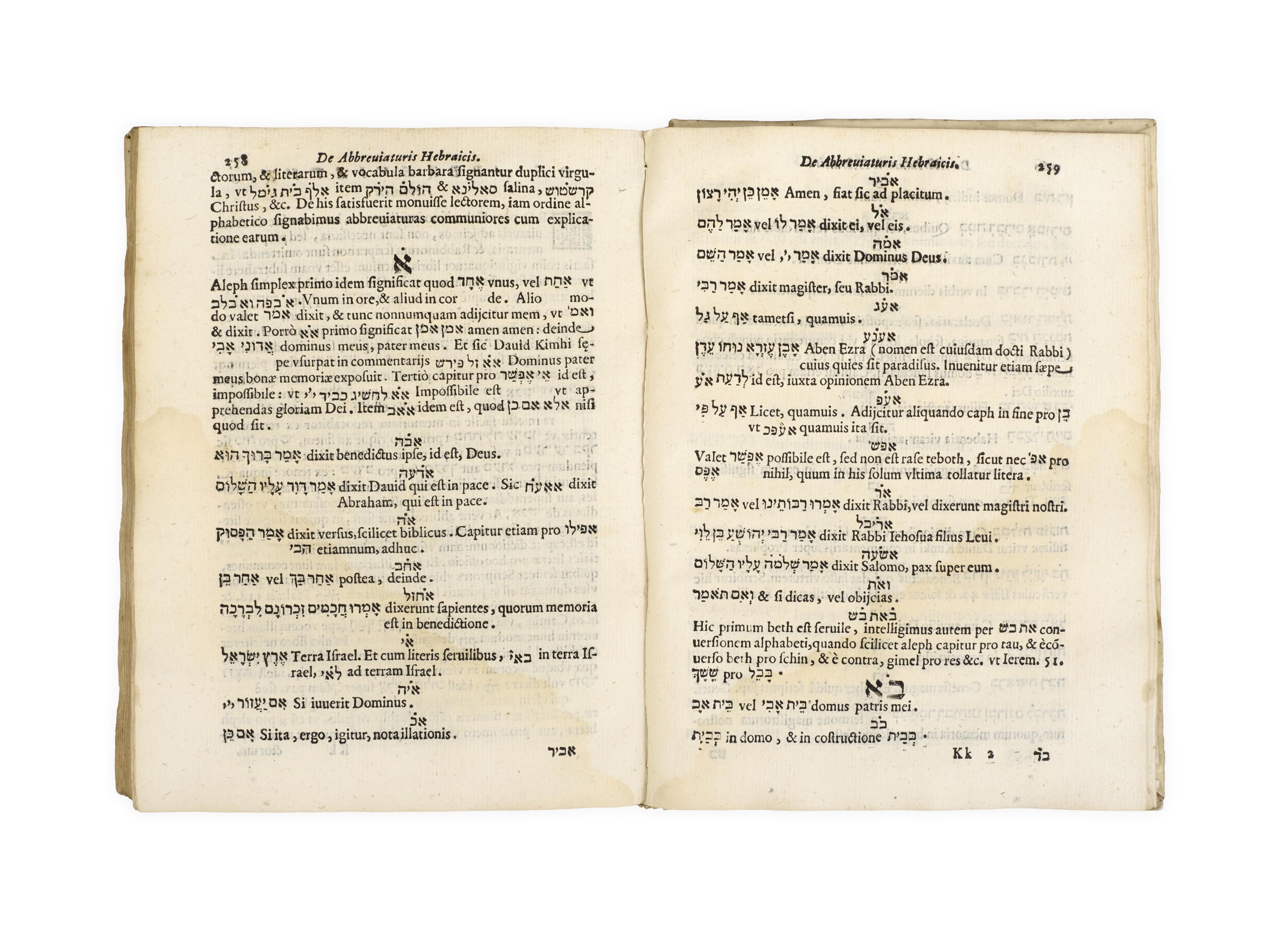
The penultimate two quires contain ‘De abbreviaturis Hebraicis’, not present in all copies, and the final quire contains additions to the text and the errata.
Uncommon: we have traced three copies in the US (Jewish Theological Seminary, Hebrew Union College Ohio, Yale), and four in the UK (Aberdeen, Bodleian, Worcester College Oxford, Cambridge University Library).
USTC 4025809. Pazzini, ‘Padre Mario da Calascio grammatico e lessicografo’, Liber Annuus 55 (2005), pp. 217–238.