Phallic Panegyric
‘CODACCI, Scarpafico’, pseud. [i.e. Gaetano VERACI.]
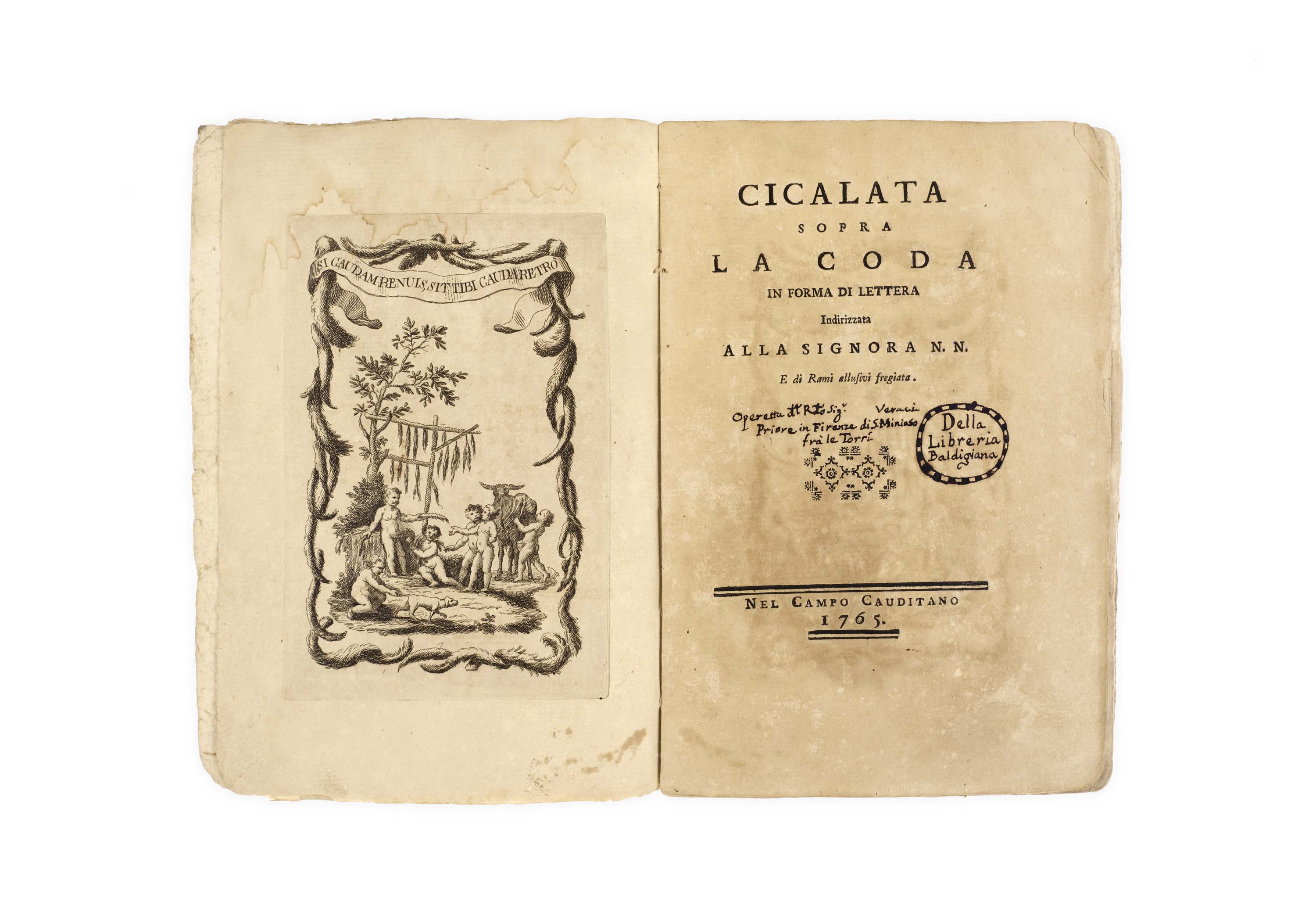
Cicalata sopra la coda in forma di lettera indirizzata alla Signora N.N. e di rami allusivi fregiata. [Florence,] ‘nel Campo Cauditano’, 1765.
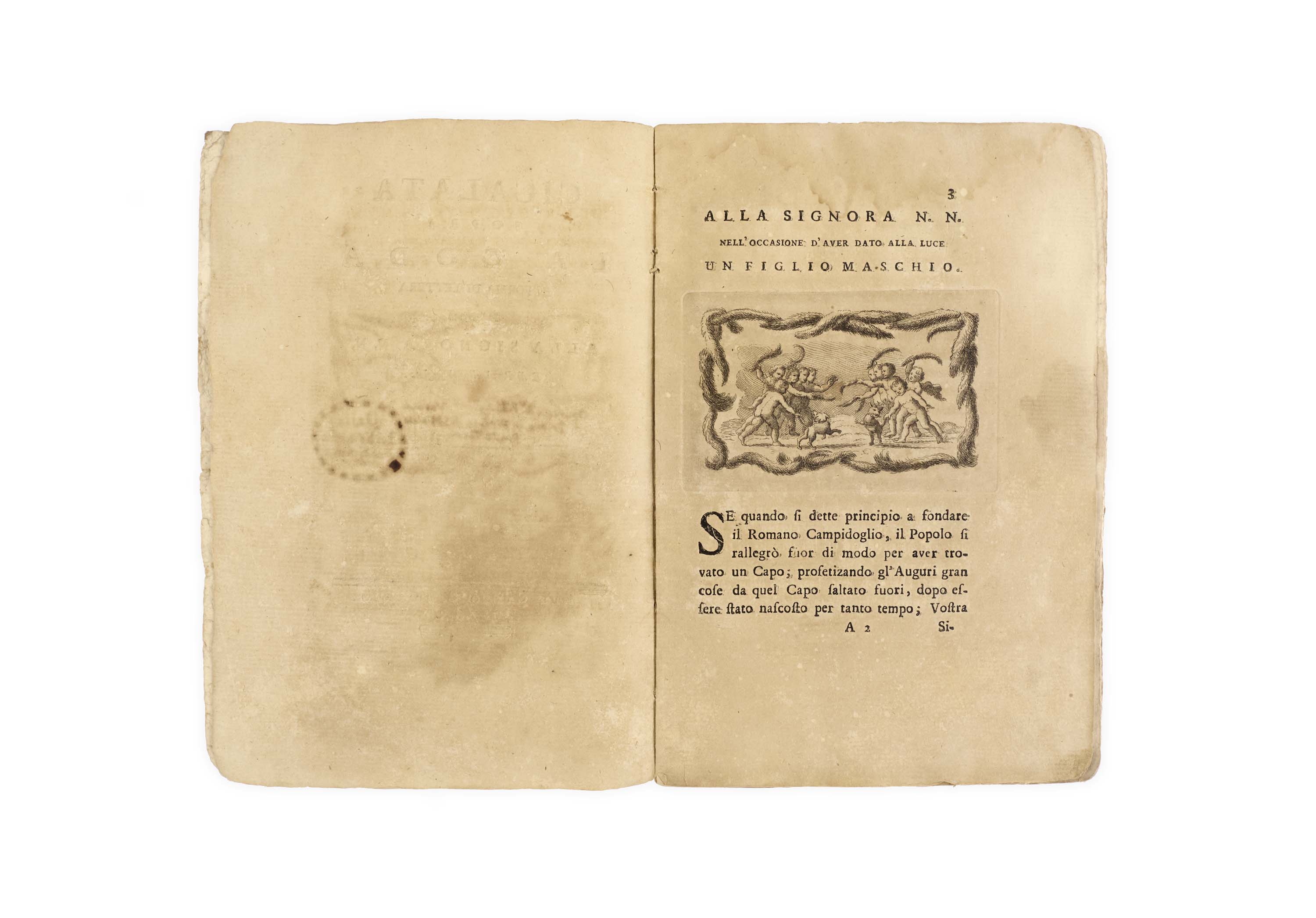
8vo, pp. 49, [1 (blank)]; engraved frontispiece (see below), engraved vignette depicting putti brandishing furry tails to p. 3, engraved vignette of donkeys tied together by their tails to final verso, typographic ornament to title; marginal oilstaining to a few leaves, sporadic browning (heavier to A1–4 and C5–6); bound in contemporary yellow patterned paper wrappers, blue paper label lettered in manuscript to upper cover; spine defective, a few chips to edges; contemporary manuscript authorial attribution to title, inscription ‘della Libreria Baldigiana’ to title within banded manuscript cartouche, early twentieth-century book label of Pietro Gerini to upper cover.
Added to your basket:
Cicalata sopra la coda in forma di lettera indirizzata alla Signora N.N. e di rami allusivi fregiata.
First edition of this highly suggestive, mock-academic ode to the ‘tail’, dedicated to an anonymous lady on the birth of a son.
The engraved frontispiece depicts nude putti pulling the tails of a dog and an ox within a border of furry, intertwined tails, and the vignette at the end shows a group of dangling donkeys with their tails tied together. The pseudonymous author, of the ‘Accademia in Via Porciaia’, expounds upon the relevance of the ‘tail’ from classical literature and mythology (from Martial to Priapus, ‘god of gardens and very partial to the tail’, trans.) to Dante and Boccaccio, the natural world (including wagtails and rattlesnakes) and the kitchen (with much innuendo about sauces and pestles and mortars). Women ‘are born without a tail of any sort … given that they form a single body with a man, it follows that one of them should be without a tail, otherwise they will form an animal with two tails, like those two-tailed lizards which are signs of good fortune’ (trans.). A second, expanded edition was published c. 1770.
Melzi I, p. 205; Parenti, p. 45. Not in Kearney or Pia. OCLC finds two copies in the UK (BL, Taylor Institution) and two in the US (Harvard, UCLA).