College Constitutions
[COLLEGIO GHISLIERI.]
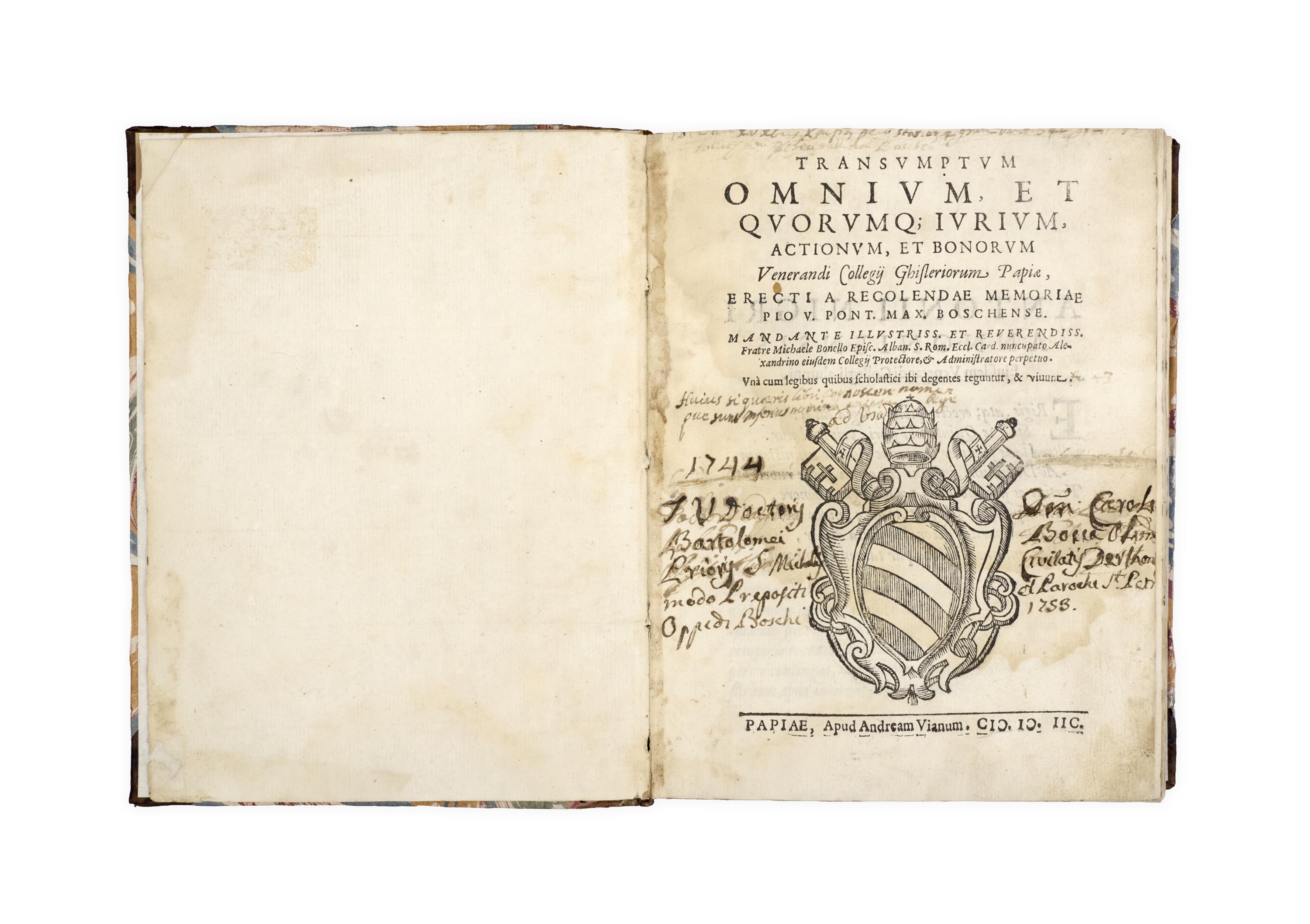
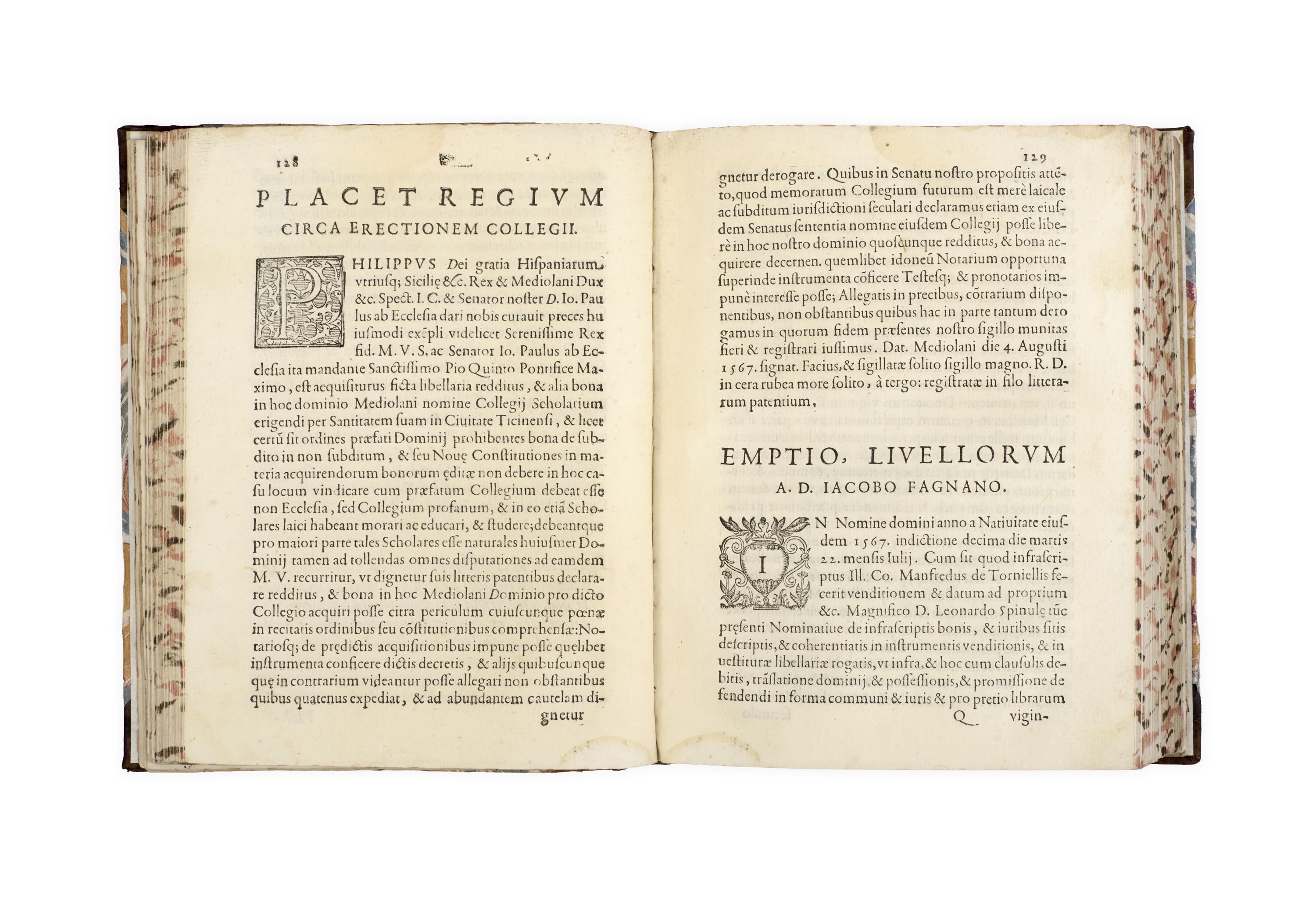
Transumptum omnium, et quorumque iurium, actionum, et bonorum venerandi Collegii Ghisleriorum Papiae, erecti a recolendae memoriae Pio V Pont. Max. Boschense. Mandante illustriss. et reverendiss. Fratre Michaele Bonello Episc. Alban. S. Rom. Eccl. Card. nuncupato Alexandrino ... Una cum legibus quibus scholastici ibi degentes reguntur, & vivunt. Pavia, Andrea Viani, 1598.
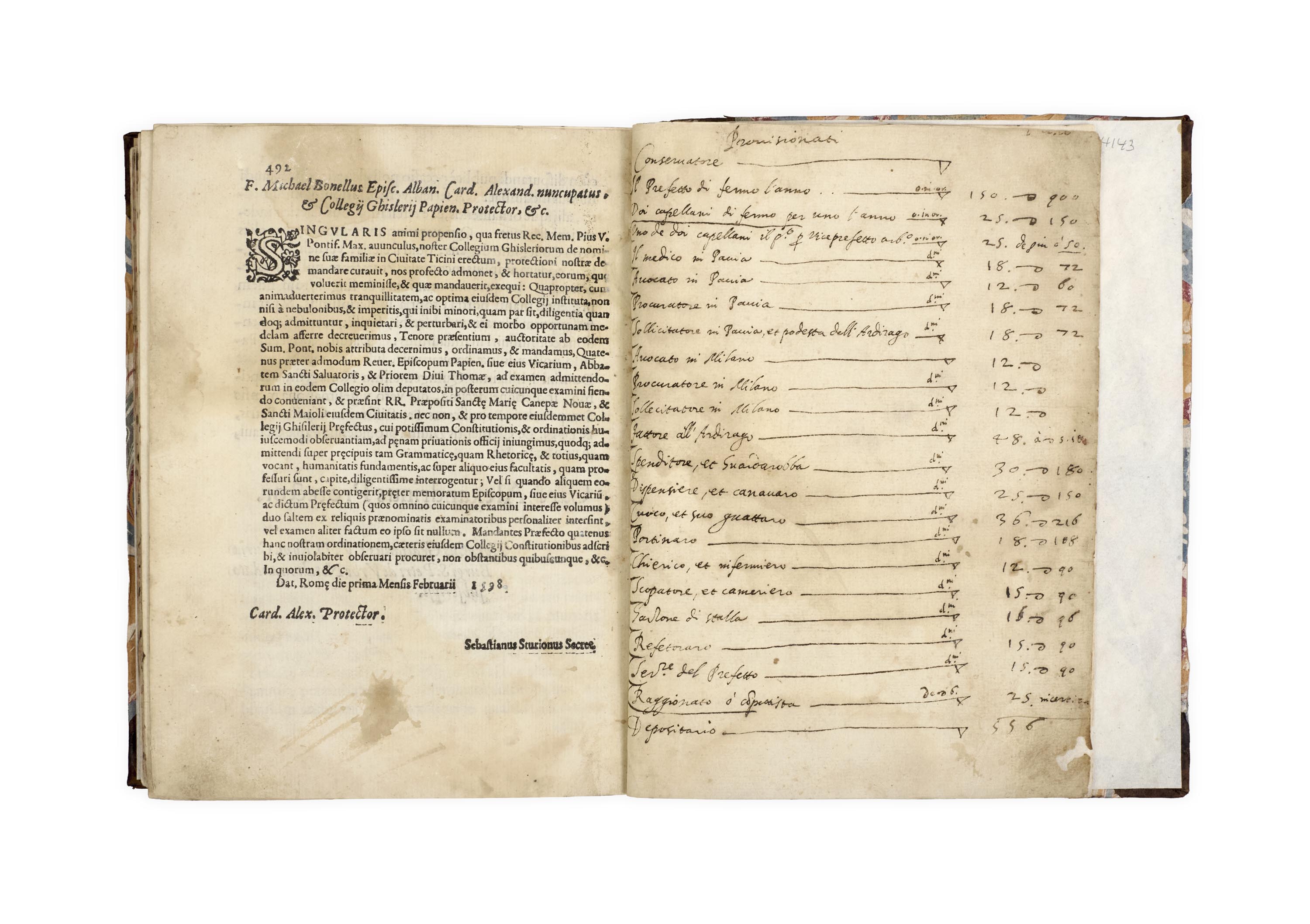
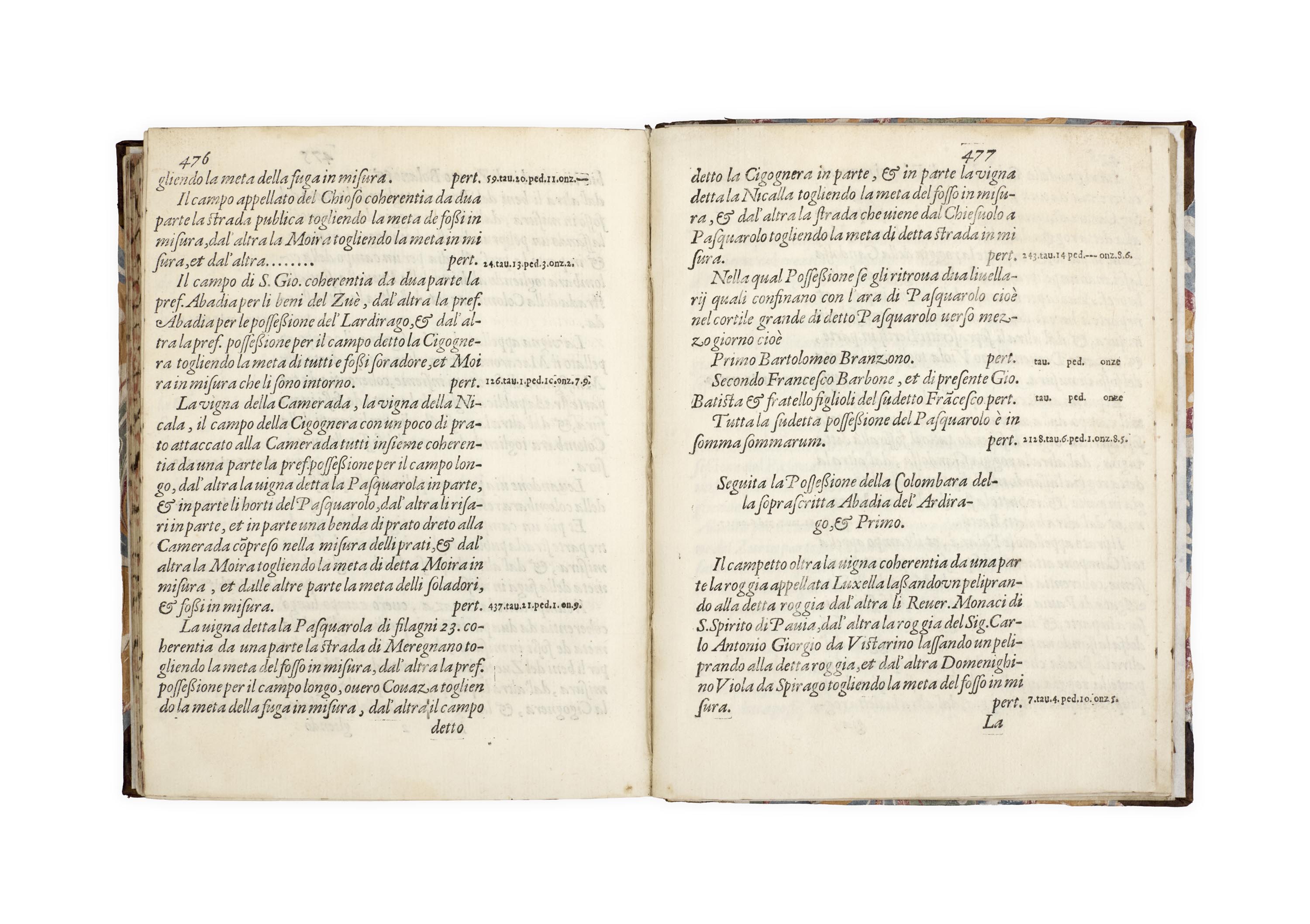
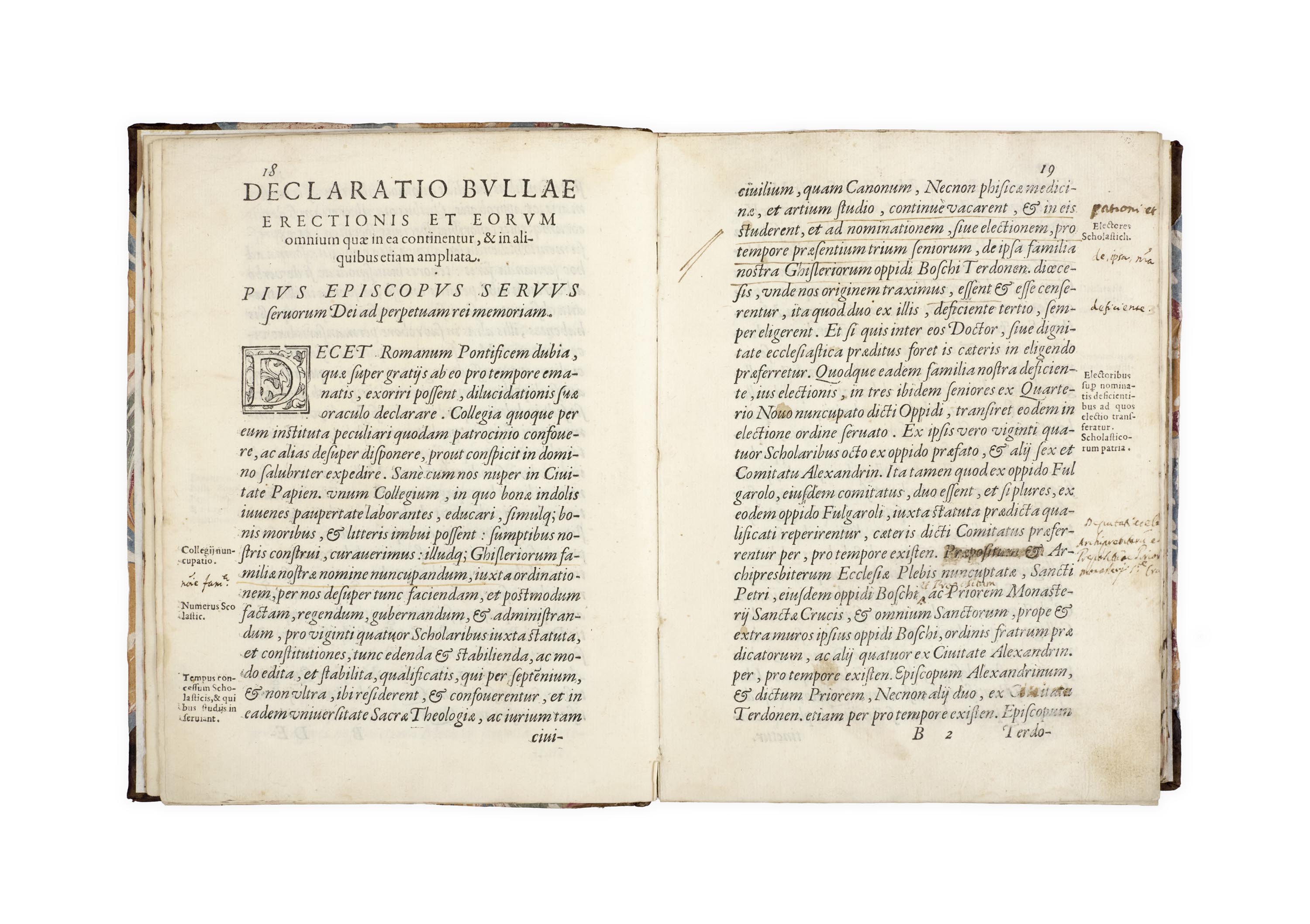
4to, pp. [viii], 492 (second quire in this volume misbound, usually found at end); with large woodcut armorial of Pope Pius V Ghislieri to title, woodcut headpiece and initials; printed in roman and italic type in Latin and Italian; some water-staining to the index and errata, and to the last 2 quires, other occasional light staining, but a very good copy; in a modern binding in eighteenth-century style, marbled paper sides, red and brown mottled edges; seventeenth-century inscription, cropped and faded, to the head of the title and continuing after the title wording, a seventeenth-century manuscript list of College staff and salaries bound at end, later inscriptions on title, one dated 1744 (Bartolomeo, prior of St Michael, formerly provost in Bosco [Marengo]) and the other 1753 (Carlo Borra, parish of St Peter, city of Tortona), traces of a label to front free endpaper.
Added to your basket:
Transumptum omnium, et quorumque iurium, actionum, et bonorum venerandi Collegii Ghisleriorum Papiae, erecti a recolendae memoriae Pio V Pont. Max. Boschense. Mandante illustriss. et reverendiss. Fratre Michaele Bonello Episc. Alban. S. Rom. Eccl. Card. nuncupato Alexandrino ... Una cum legibus quibus scholastici ibi degentes reguntur, & vivunt.
A very rare collection of all the edicts, statutes, privileges and constitutions relating to the foundation of the Collegio Ghislieri, instituted in 1567 in Pavia by Pope Pius V (Antonio Michele Ghislieri), for the education of gifted and upstanding students with insufficient means. The Collegio Ghislieri thrives to this day, now a lay institution for just under two hundred students.
This collection of founding documents was printed in Pavia in 1598. It includes the bull of Foundation, the Constitutions prescribing the rules for and election of the members, the bulls of endowment transferring the properties of the Castle of Lardirago and the church of St Odericus, a bull settling the relationship between the authority of the College and that of the liminal land of the Augustinian church of San Pietro in Ciel d’Oro, similar documents settling boundaries in land and authority with the town of Belgioioso, the castle of Gerenzago, the properties of the Carthusians and other neighbouring institutions, and instruments of governance pertaining to the College. The documentation of a conspicuous string of expensive acquisitions and complex negotiations with local landowning powers indicates a very strong commitment to the founding and, more importantly, to the permanent funding of an elite educational house.
This copy bears manuscript evidence of ownership closely connected with the Collegio Ghislieri itself. Firstly, a sheet with a near-contemporary manuscript list of College staff and their respective salaries is bound at the end, which suggests that this copy was in use at the College, likely kept by the Bursar or the Master; we see the wages of employees, such as a chaplain, a cook and kitchen hands, cleaners, porter, stables hands, but also annual fees for services obtained from professional figures active in the city of Pavia, such as a doctor and several men of the law (recruited both in Pavia and in Milan), as well as a reeve and assistants for the management of the Castle of Lardirago, the College’s largest country estate. Secondly, some of the documents, notably the bull of Foundation, bear manuscript underlining and marginal annotations. Thirdly, the eighteenth-century owners of this volume, named in the inscriptions, show evidence of close ties with the family of the founder: the Bartolomeo who inscribed the book in 1744 had been provost in Bosco Marengo, the birthplace of Michele Ghislieri, and Carlo Borra’s parish was in the city of Tortona, within the same diocese.
Rare: we have traced no copies in the UK or in the US, or indeed any copy outside northern Italy.
EDIT16 CNCE 38467; USTC 807277.