The Scottish Hudibras
[COLVIL, Samuel.]
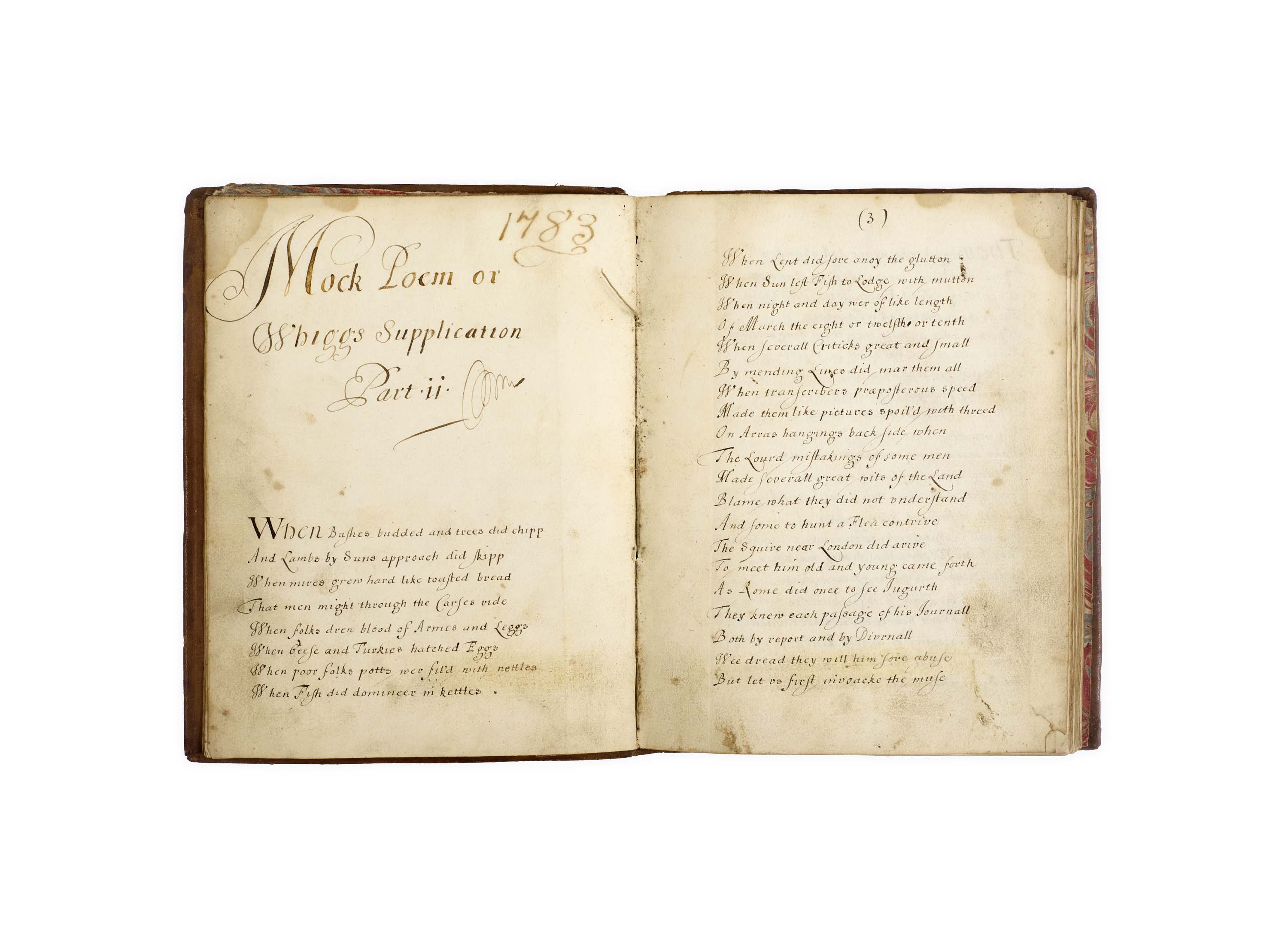
‘Mock Poem, or Whiggs Supplication Part ii’. 1670s?
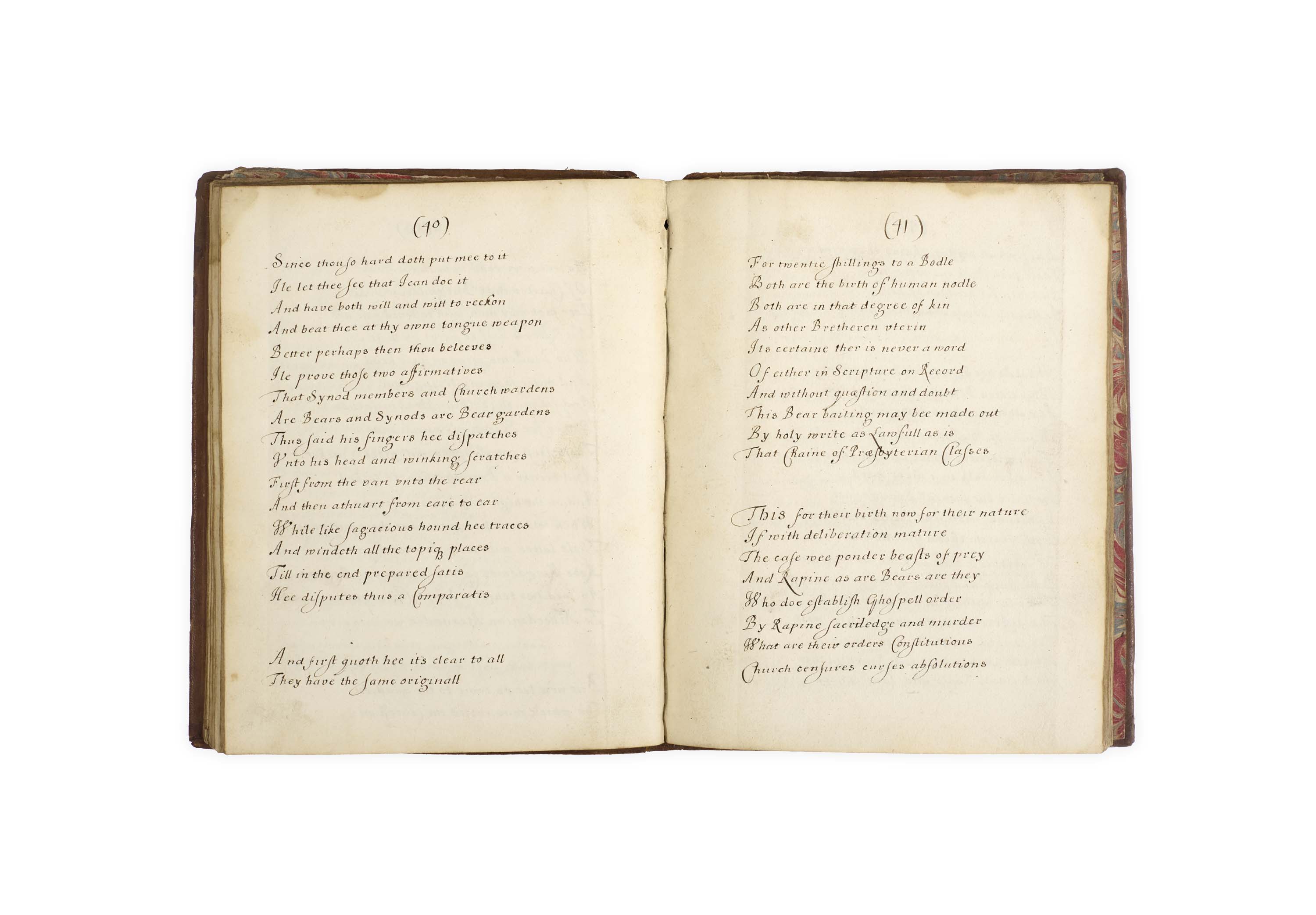
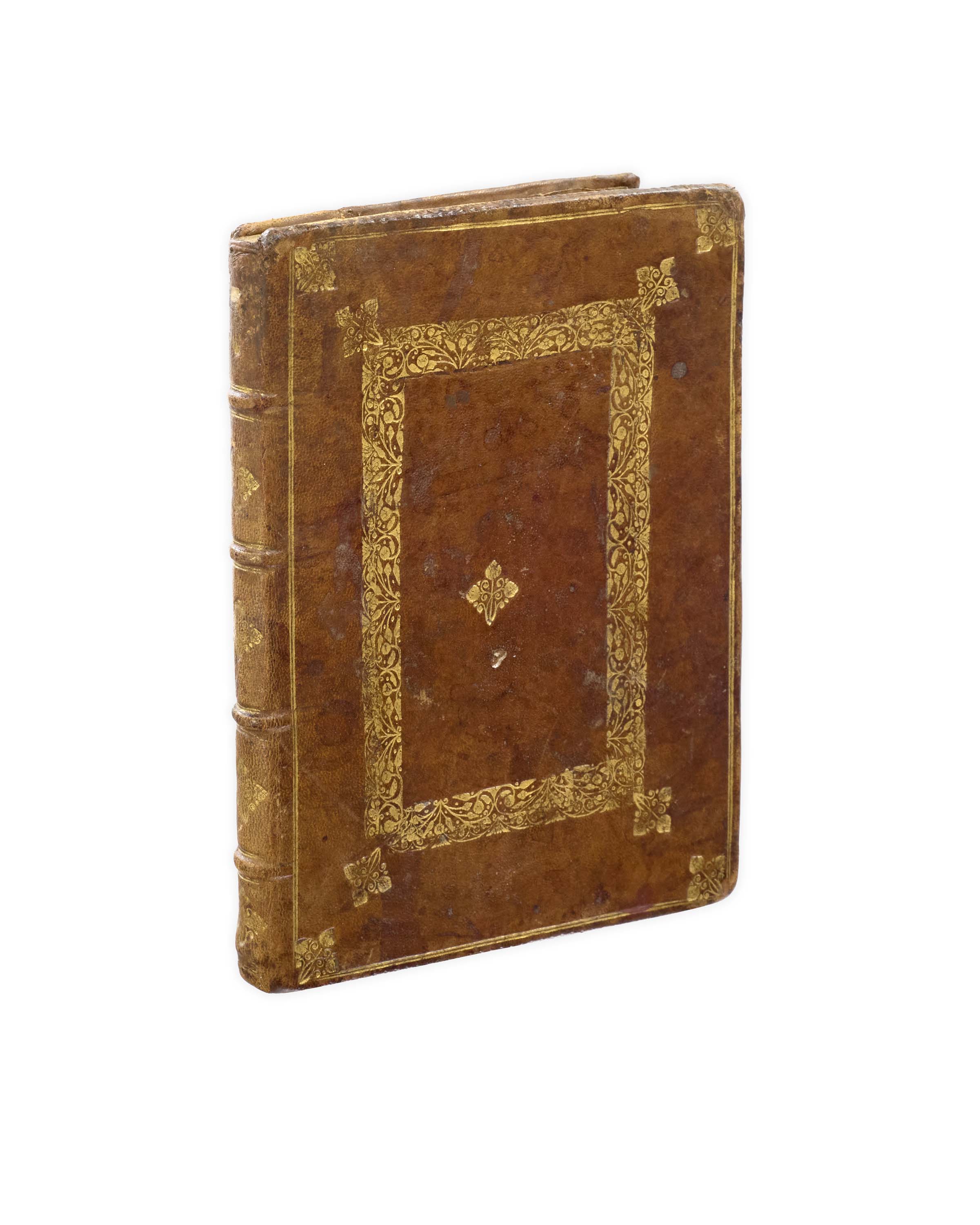
Manuscript on paper (watermark: arms of Amsterdam), 4to, pp. [2]–81, [1]; written in brown ink in a single neat italic hand; erroneous date[?] to title in a different hand (‘1783’); slightly dusty and soiled at the front, one leaf detached and laid in loose with consequent wear to edges, else in very good condition; in contemporary panelled sheep, gilt with floriate centre- and corner-pieces, gilt edges; a little bowed, covers slightly soiled and scraped.
A fine contemporary manuscript of the second part of Colvil’s rollicking ‘Scottish Hudibras’, a satire on Scots Presbyterianism and sectarian wrangling between non-conformists in general.
The text circulated widely in manuscript before its first publication in 1681, when Colvil complained of ‘Transcribers, who stealing Copies of my Lines, have transmitted them everywhere’, and of being ‘wronged by false Copies’, though the text here seems relatively accurate. It derives from another manuscript source as there are some transcription errors, but not from the printed edition, as the orthography is different throughout.
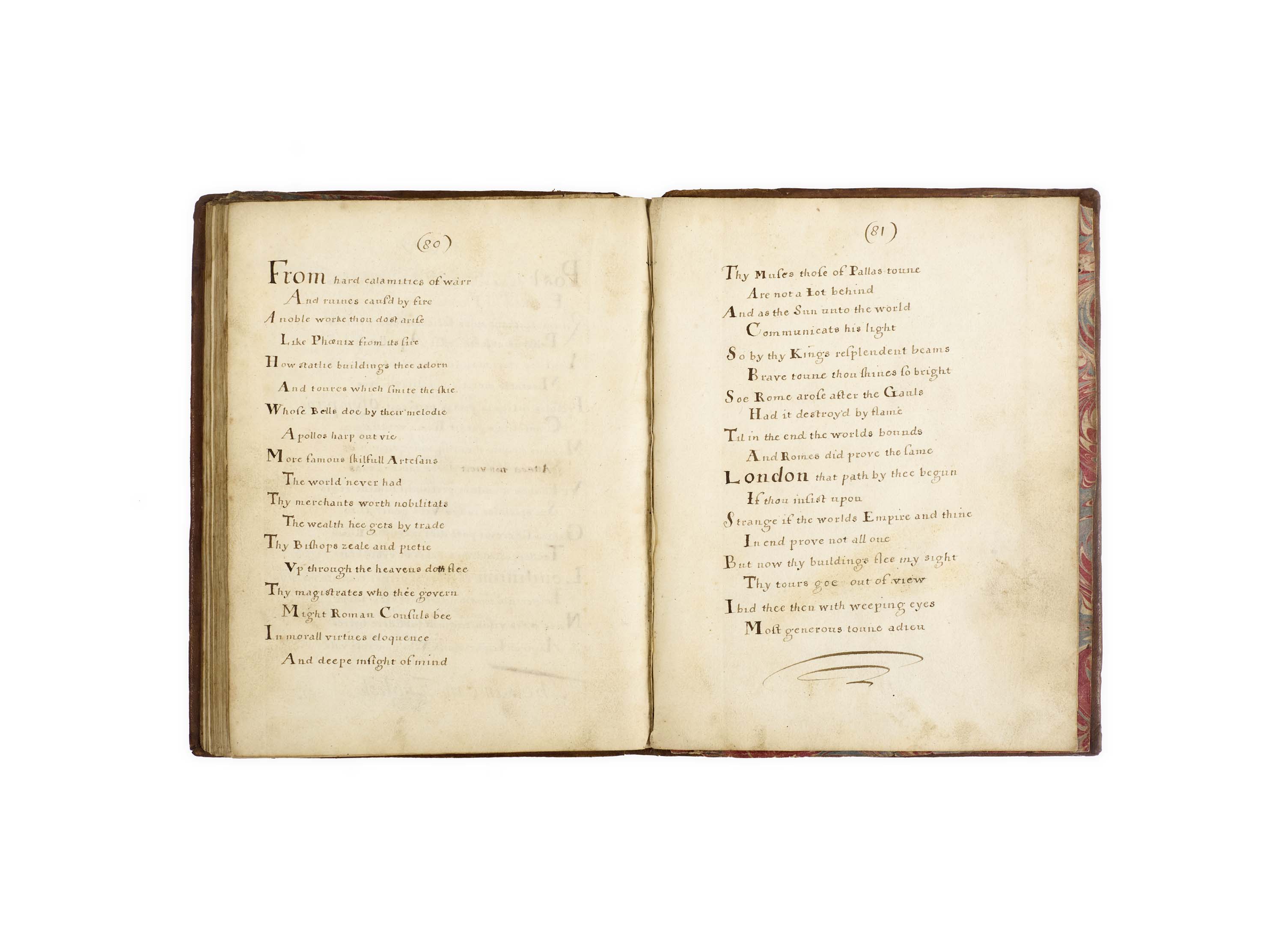
Among the most striking set-pieces is a two-page list of rival sects, ‘those Locusts of th’infirnall Pit … Manichians Novatians / Scepticks Corpocratians / Proclianits Sabellians / Setheans Circumcellians / … / Eutichians Nestorians / And Doctor Henry Morians’. The action finishes in London where the narrator visits Bedlam, and Gresham College with its ‘schoolmen / Discoursing of their pigges and whistles / And strange experiments of muscles’. The rousing poem which ends this second part, on London rising like a phoenix after ‘hard calamities of warr / And ruines caus’d by fire’, is presented here with the English after the Latin (in print the order was reversed).
Colvil (also Colvill or Colville), was the son of Elizabeth Melville, author of Ane Godlie Dreame (1603), and may have spent some time in France, where his brother taught at Sedan until the late 1640s, but he is only known for this work and a few others. The earliest known manuscript of Part I is dated 1667 (Aberdeen, MS 103), and the second part was probably written some time after the first. The extant manuscript record (seven at the Brotherton, two at Bodley, two in Aberdeen, though rarely of both parts together) suggests great popularity.