‘The Town May Da- Da- Da-M Me as a Poet,
but They Sing My Songs for All That’
D’URFEY, Thomas.
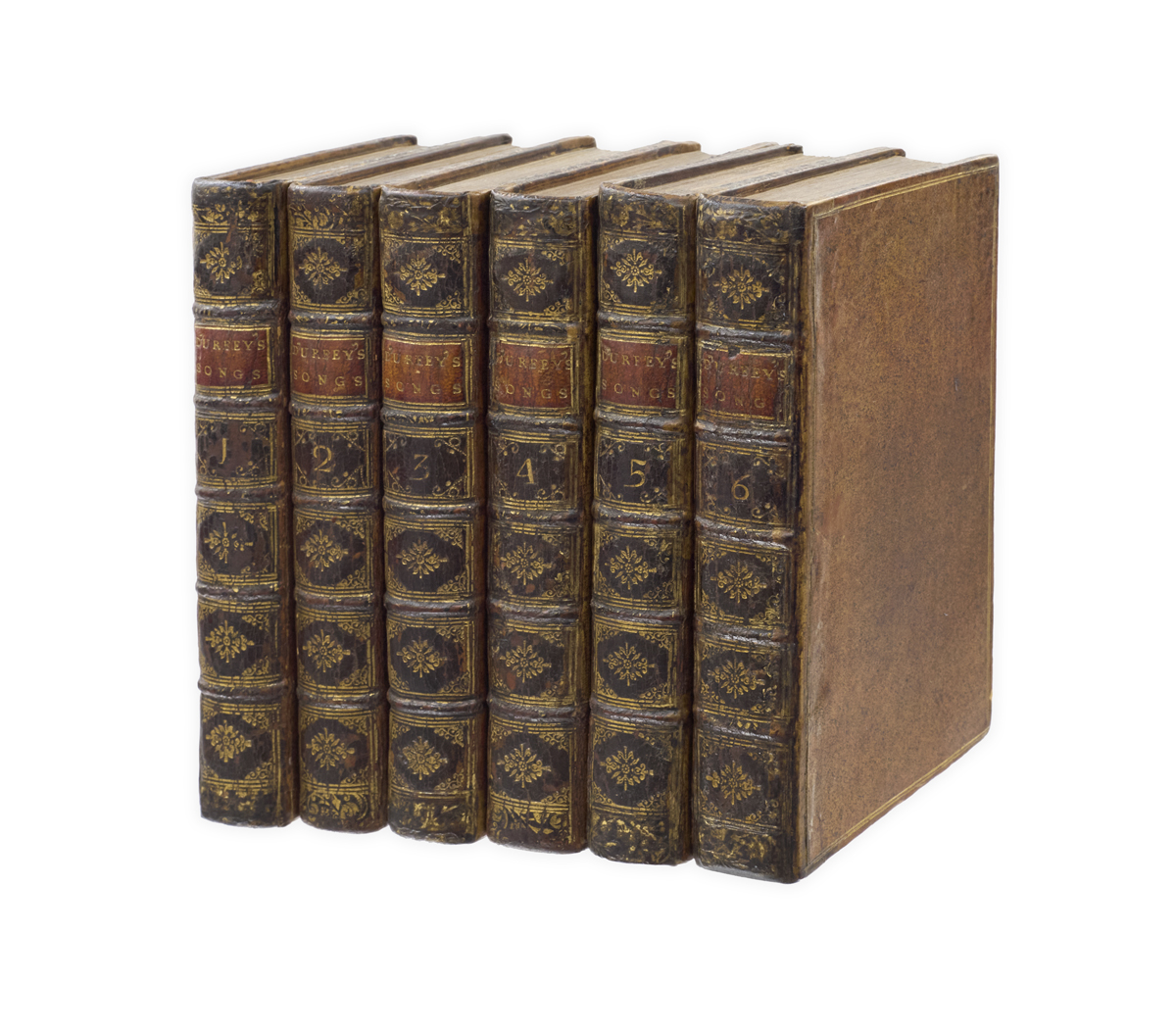
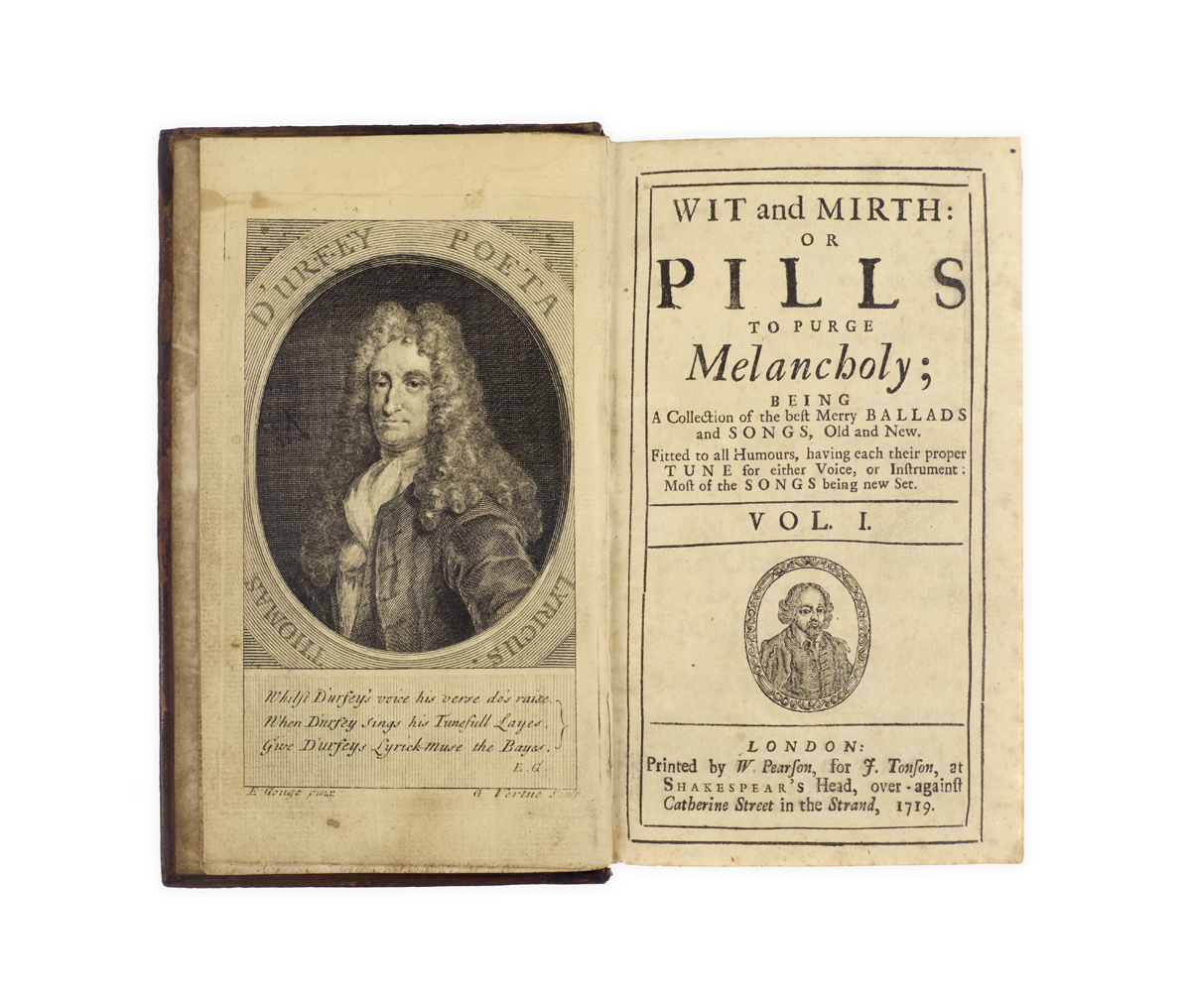
Wit and Mirth: or Pills to purge Melancholy; being a Collection of the best merry Ballads and Songs, old and new. Fitted to all Humours, having each their proper Tune for either Voice, or Instrument: most of the Songs being new set. Vol. I. [– the Sixth and Last]. London, W. Pearson for J. Tonson, 1719 [– 1720].
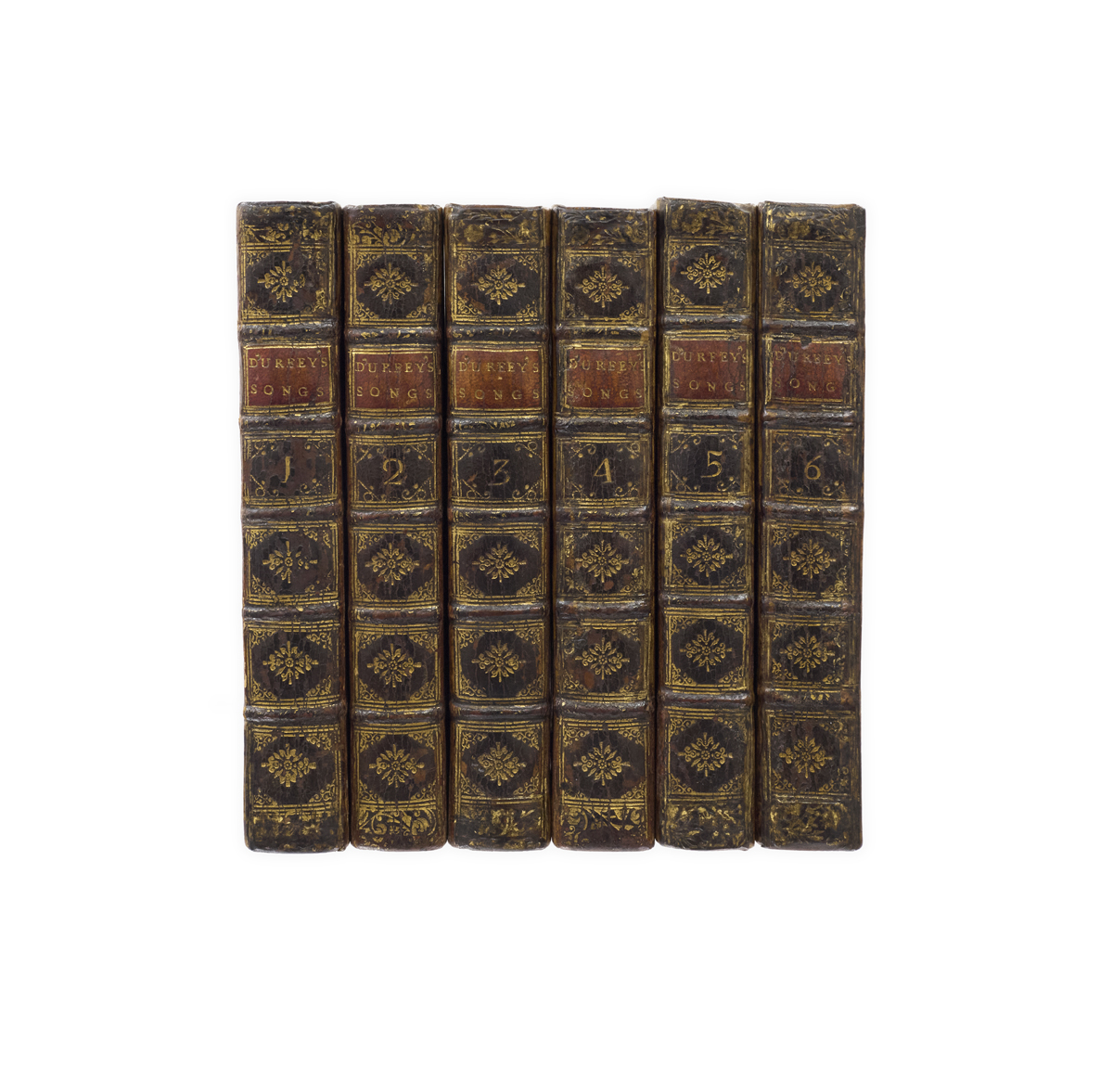
Six volumes, 12mo, with engraved frontispiece portrait of D’Urfey in vol. I, music in the text throughout; contemporary sprinkled calf, spines gilt in compartments, morocco labels, some skilful restoration to joints and headcaps, but a very attractive set.
Added to your basket:
Wit and Mirth: or Pills to purge Melancholy; being a Collection of the best merry Ballads and Songs, old and new. Fitted to all Humours, having each their proper Tune for either Voice, or Instrument: most of the Songs being new set. Vol. I. [– the Sixth and Last]. London, W.
The first complete edition, second issue of volumes I–V, and first issue of vol. VI, of the most famous songbook of its day, the first edition with titles altered to the familiar Wit and Mirth from Songs Compleat, 1719 (a change at the time of the publication in 1720 of volume VI, which is always entitled Wit and Mirth).
The origins of Wit and Mirth: or Pills to Purge Melancholy may be traced back to a single volume of ‘witty ballads, jovial songs, and merry catches’ by an earlier generation of lyricists, published without music in 1661 under the title An Antidote against Melancholy: made up in Pills. For the third edition, still without music but livened up by more recent songs, the title was changed to Wit and Mirth: An Antidote against Melancholy (1682), and in 1699, still in one volume, it was published by Henry Playford with music.
Over the course of the next two decades it was expanded and republished again and again, eventually to become this six-volume definitive edition of contemporary popular comic and bawdy ballads, with an increasing emphasis on the work of the stammering dramatist and lyricist Thomas D’Urfey, whose songs were sung by all the town. Among the composers were Dr John Blow and Henry Purcell.
D’Urfey ‘was known to stutter, except when singing or swearing, and was famed for the apothegram “All animals, except man, know that the principal business of life is to enjoy it” ... Known for his good nature and for being good company, he was the familiar companion of Charles II and James II, and given marks of favour by William & Mary and Queen Anne, as well as being an habitué of Leicester House, Winchendon, and Knole. As well as being honorary librarian of the last, he was given an elaborate funeral by the 1st Duke, and was buried at St James’s, Piccadilly’ (National Trust, online).
Day and Murrie 236–240, & 242.