DE ROSSI, Bastiano.
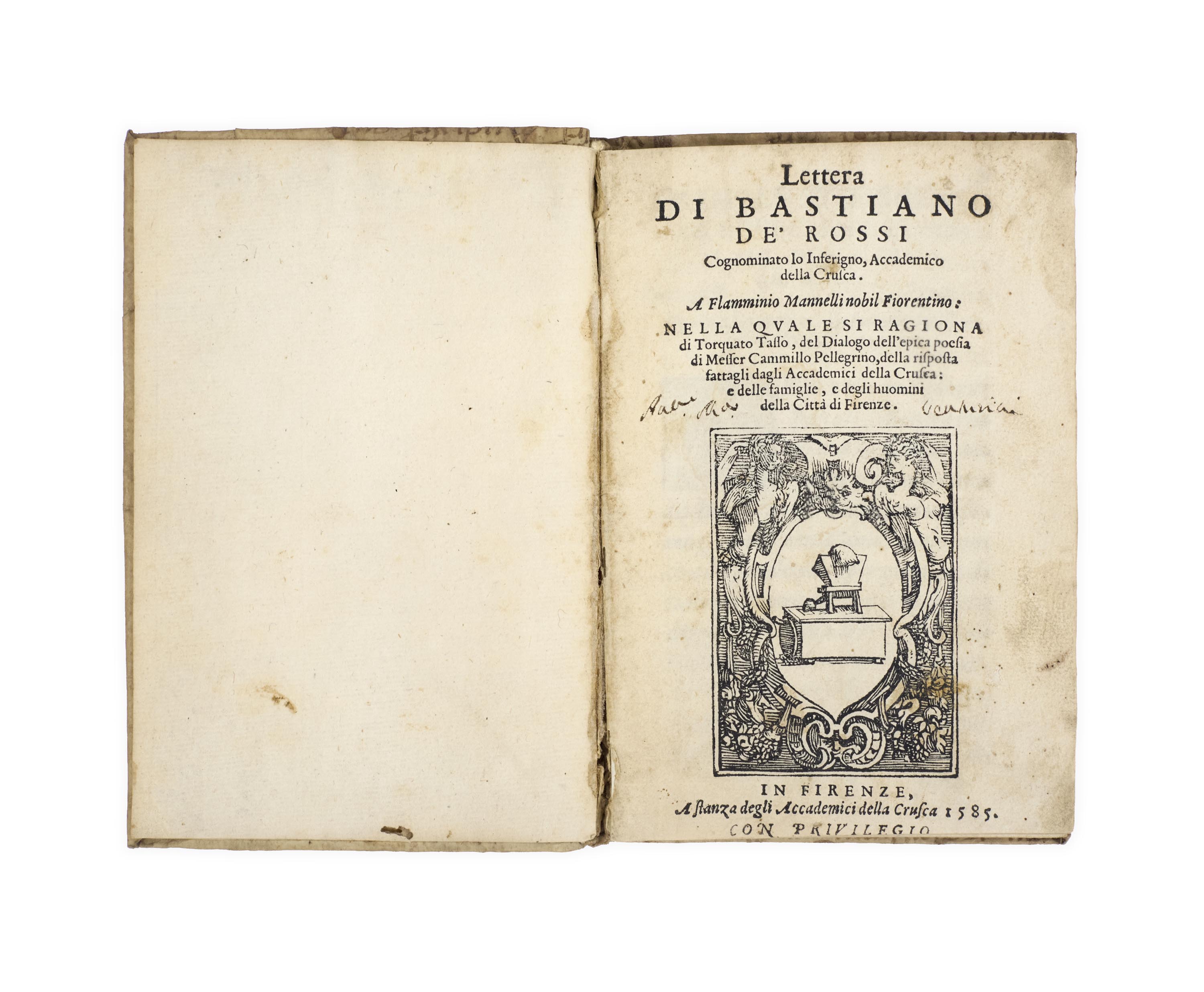
Lettera di Bastiano de’ Rossi cognominato lo Inferigno, Accademico della Crusca. A Flamminio Mannelli, nobil Fiorentino: nella quale si ragiona di Torquato Tasso, del Dialogo dell’epica poesia di Messer Cammillo Pellegrino, della riposte fattagli dagli Accademici della Crusca: e delle famiglie, e degli huomini della Città di Firenze. Florence, Accademici della Crusca, 1585.
Small 8vo, pp. 72, with the woodcut device of the Accademia della Crusca on title, woodcut initials; some light staining and foxing, title just shaved at foot, but a good copy; in contemporary Italian limp vellum formed from part of a tenth-century lectionary leaf (see below); soiled and rubbed; early ownership inscription ‘Ant. Ma. Venturini’ on title.
Added to your basket:
Lettera di Bastiano de’ Rossi cognominato lo Inferigno, Accademico della Crusca. A Flamminio Mannelli, nobil Fiorentino: nella quale si ragiona di Torquato Tasso, del Dialogo dell’epica poesia di Messer Cammillo Pellegrino, della riposte fattagli dagli Accademici della Crusca: e delle famiglie, e degli huomini della Città di Firenze.
Scarce first edition of this defence of Florence and its citizens against the alleged slights of Torquato Tasso.
Bastiano De Rossi was the first secretary of the Academia della Crusca. In the present work, ‘the “most virtuous young man” – as Flaminio Mannelli addresses [De Rossi] – presents readers with various “opinions” substantiating the insulting claims Tasso allegedly made against the city of Florence and the Florentines. The falsehoods attributed to “the bear” thus serve as a pretext for [De Rossi] to examine the Tuscan city’s illustrious historical and cultural tradition, as well as the validity of the principles regarding linguistic purity that guided the Accademia della Crusca’ (DBI, trans.). The volume also includes ‘Lettera di Bernardo Tasso … a m. Vincenzio Martelli’ (pp. 30–8) and ‘Risposta di Vincenzo Martelli alla detta lettera …’ (p. 38–40). A 1585 Mantua edition and an undated edition are also known.
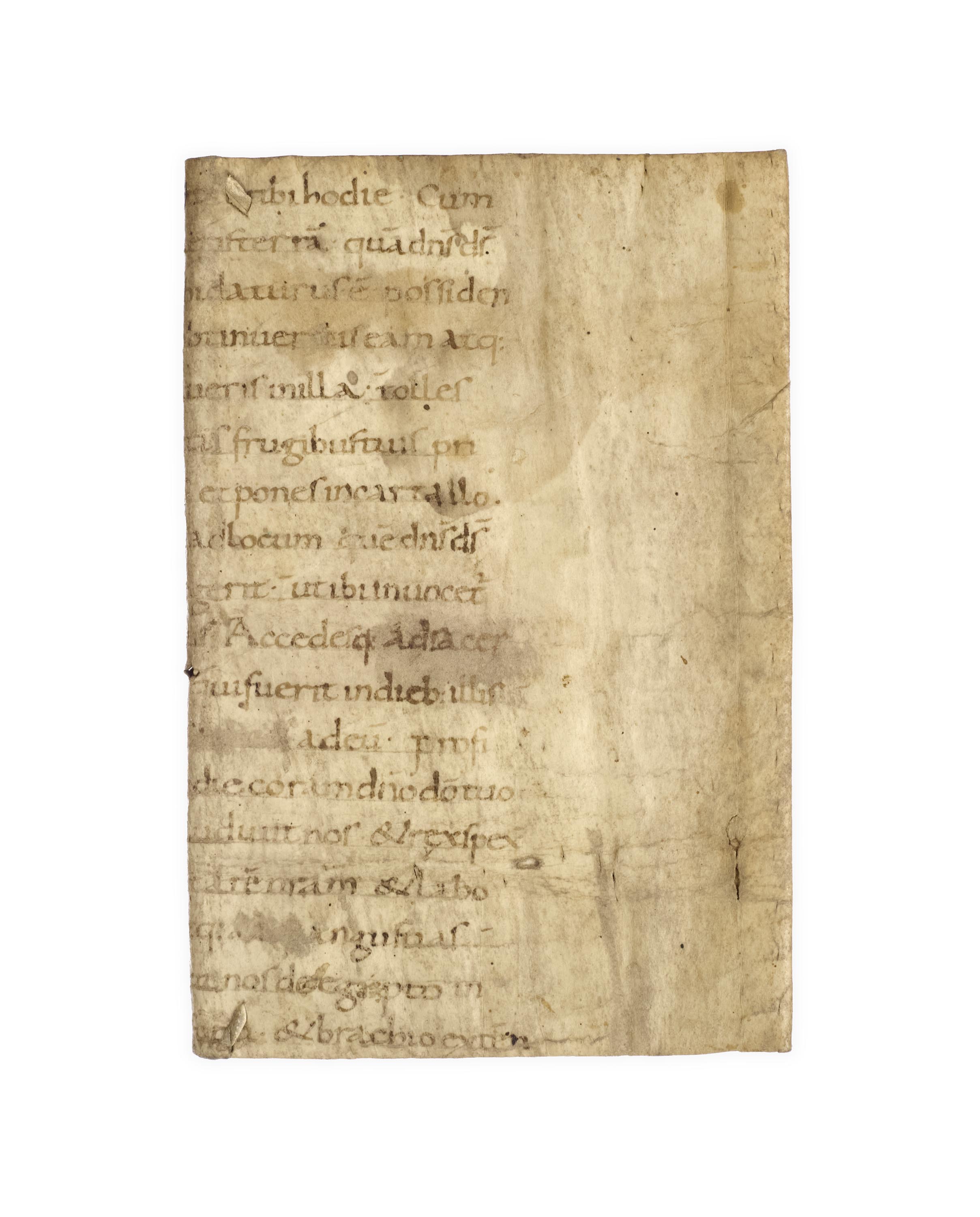
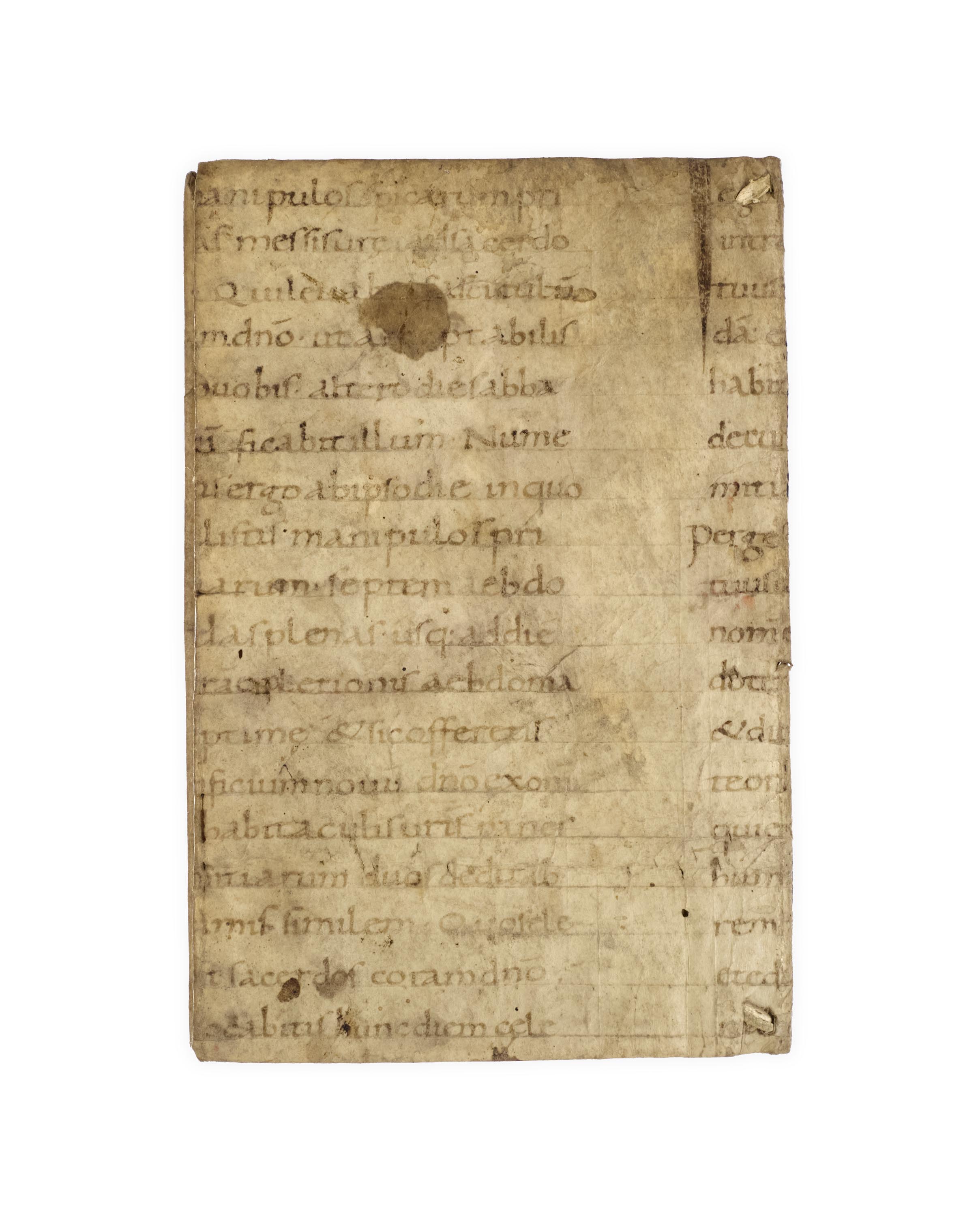
Manuscript fragment
The binding is formed from a fragment (c. 184 x 255 mm, including turn-ins) of a leaf from a Carolingian lectionary or homiliary (Italy, tenth century) in Latin, with passages from Leviticus 23,10–21 and Deuteronomy 26,1–8; text in double columns, 22 lines remaining, written in a good Carolingian miniscule with slightly clubbed ascenders, a punctus elevatus for lesser pauses and a punctus for the final pause, ruled with a hard point; rubbed, a few stains and areas of heavier wear, but almost entirely legible.
The fragment contains abridged readings from Leviticus and Deuteronomy: omitted from Leviticus 23 are verses 12–14 and 18–19, and from Deuteronomy 26 part of 3, 4–6, and part of 7.
Library Hub records four copies (British Library, Cambridge University Library, Rylands, Warburg).
EDIT16 CNCE 46906; Adams R817; Gamba 1618.