DECIO, Filippo.
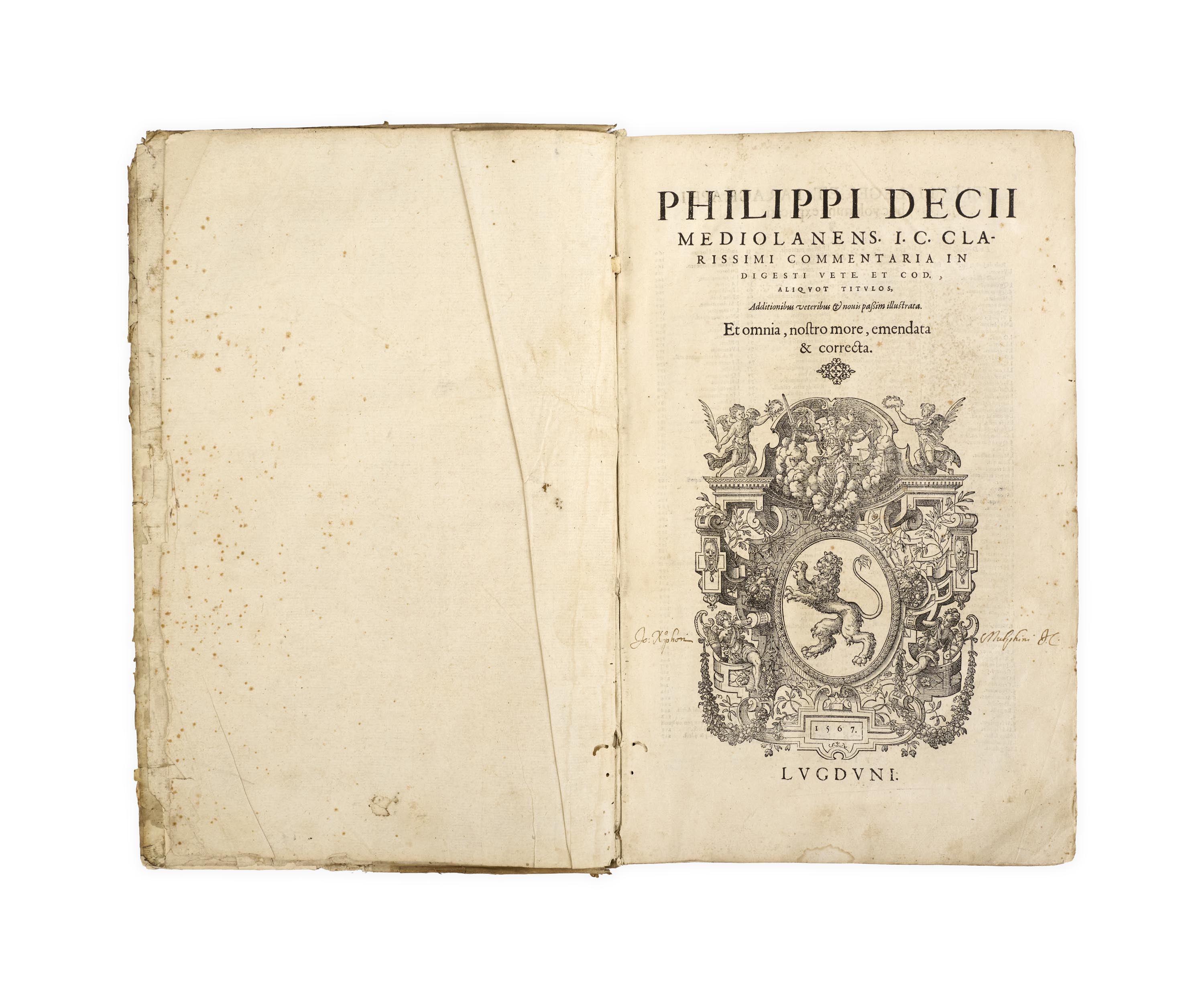
Philippi Decii Mediolanens. I. C. clarissimi commentaria in digesti vete. et cod. aliquot titulos, additionibus veteribus et novis passim illustrata. Et omnia, nostro more, emendata et correcta. Lyon, Jean Liébault, 1567.
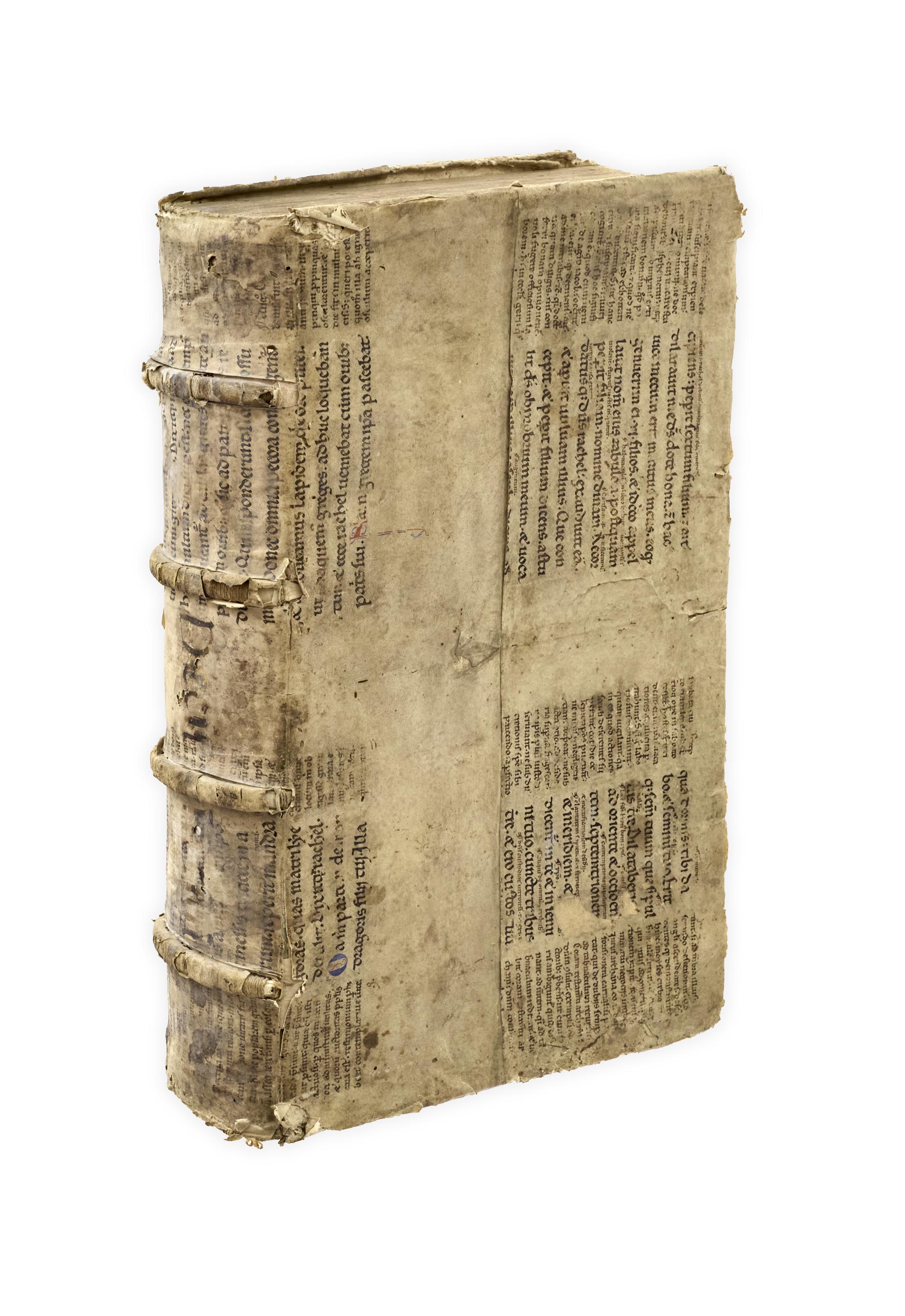
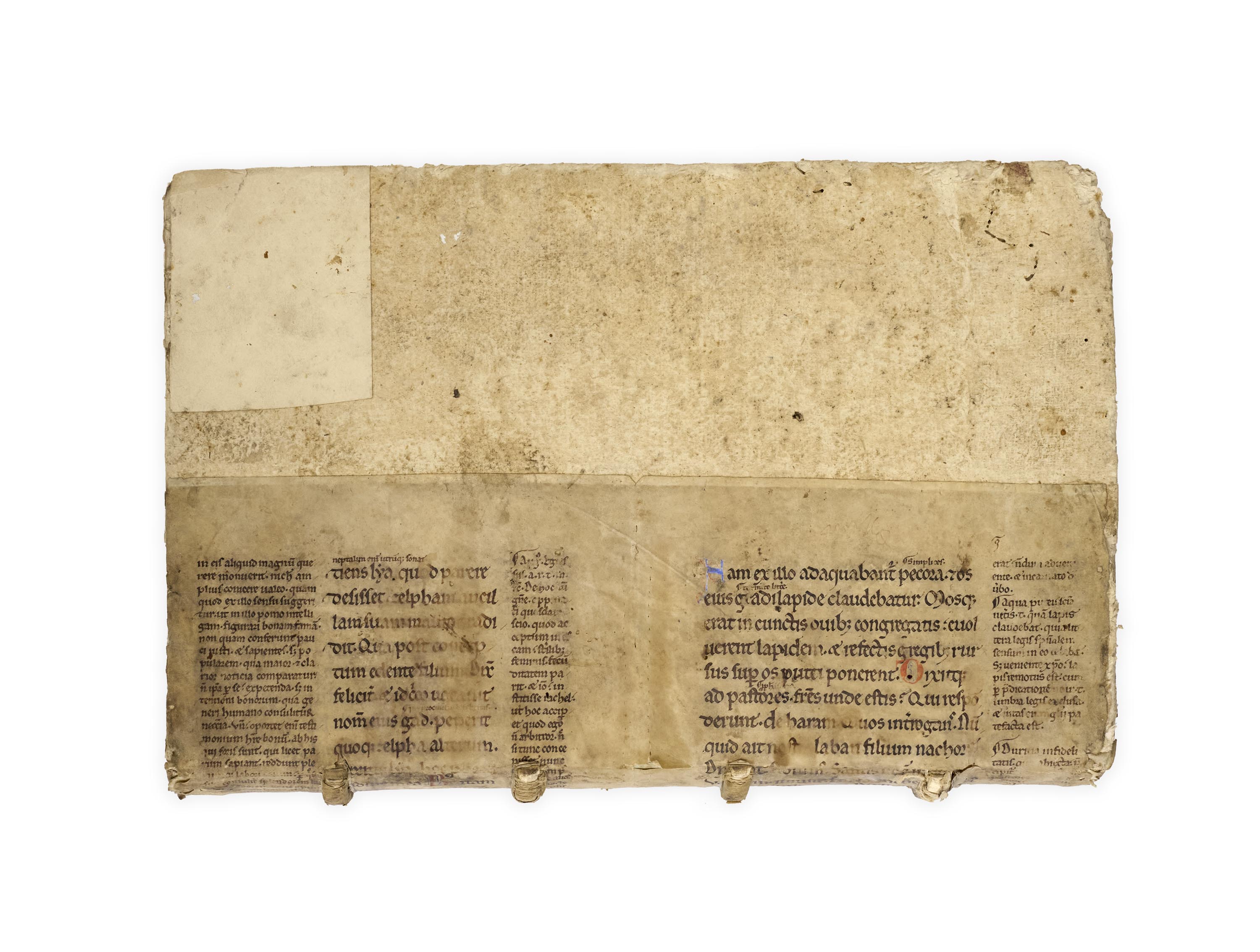
Two parts in one volume, folio, ff. 156, 244, [38, index]; text in double columns, colophon at end of first part, large woodcut device to title, initials; occasional slight worming (affecting a few words), some foxing, spotting, toning, and marginal damp-staining, fore-edges of last quire projecting and slightly worn, otherwise good; in contemporary pasteboards covered with fragments from a medieval manuscript (see below), four raised bands to spine, ‘Decius in Civil’ in manuscript along lower edges; some wear to spine, edges, and corners, some rubbing to covers, a little worming to lower board; inscription to title ‘Jo: [Christ]ophori Mulphini J.C.’, occasional passages in the ‘annotationes’ crossed through in ink.
Added to your basket:
Philippi Decii Mediolanens. I. C. clarissimi commentaria in digesti vete. et cod. aliquot titulos, additionibus veteribus et novis passim illustrata. Et omnia, nostro more, emendata et correcta.
Scarce posthumous edition of an exhaustive commentary on parts of the Digest and Code of Justinian I by the distinguished Italian jurist, political theorist, and teacher Filippo Decio (1454–1535).
Decio ‘studied law at Pavia and Pisa, and subsequently taught at those universities and at Padua and Siena. He became an auditor of the Rota (the papal ecclesiastical court), but his propensity for controversy led at one point to his excommunication and a period of exile in France’ (Oxford Dictionary of the Renaissance).
Manuscript fragment:
The substantial fragments covering the pasteboards come from an attractive glossed Bible (France, last quarter of twelfth century), Genesis 28,13–15, 29,2–9, 30,9–14 and 19–24, with marginal and interlinear Glossa Ordinaria; a bifolium and a partial bifolium (310 x 380 mm, 130 x 380 mm, the text area 205 x 150 mm), 20 lines of Biblical text in Latin per page with 40 lines of gloss to one or both sides in two sizes of a good gothic bookhand in dark brown ink, ruled with plummet, five initials alternately in blue and red with contrasting penwork; some small losses and tears, some areas of text obscured by staining and paper adhesions.
The text comes from the Book of Genesis and covers Jacob’s dream at Bethel, his first encounter with Rachel at Paddan Aram, and his children with Leah and Rachel.
No copies traced in the US. Library Hub records four copies in the UK (King’s College and Trinity Hall Cambridge, Lambeth Palace, Middle Temple).
USTC 158207; Adams D194.