Sylvester’s Du Bartas
DU BARTAS, Guillaume de Salluste.
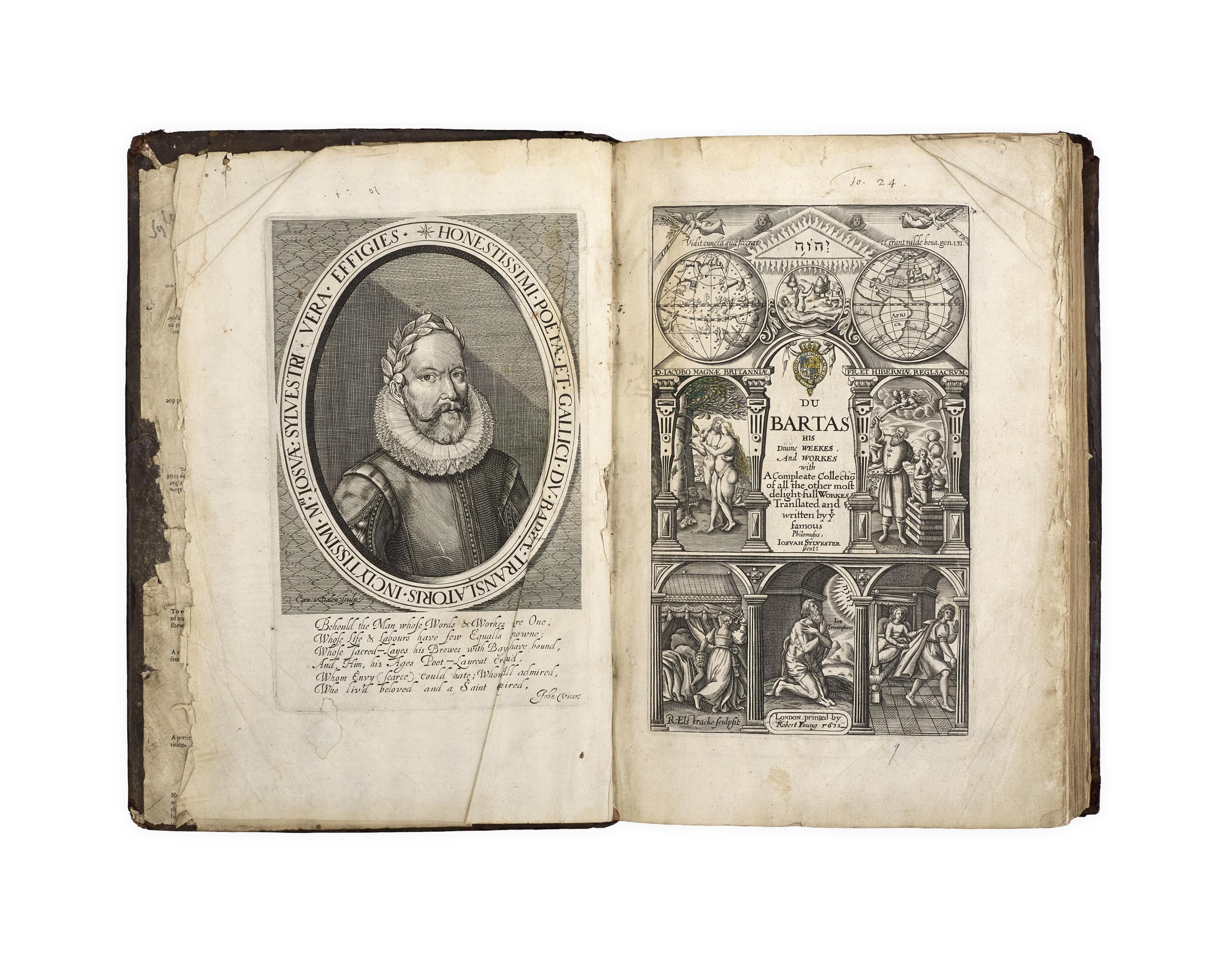
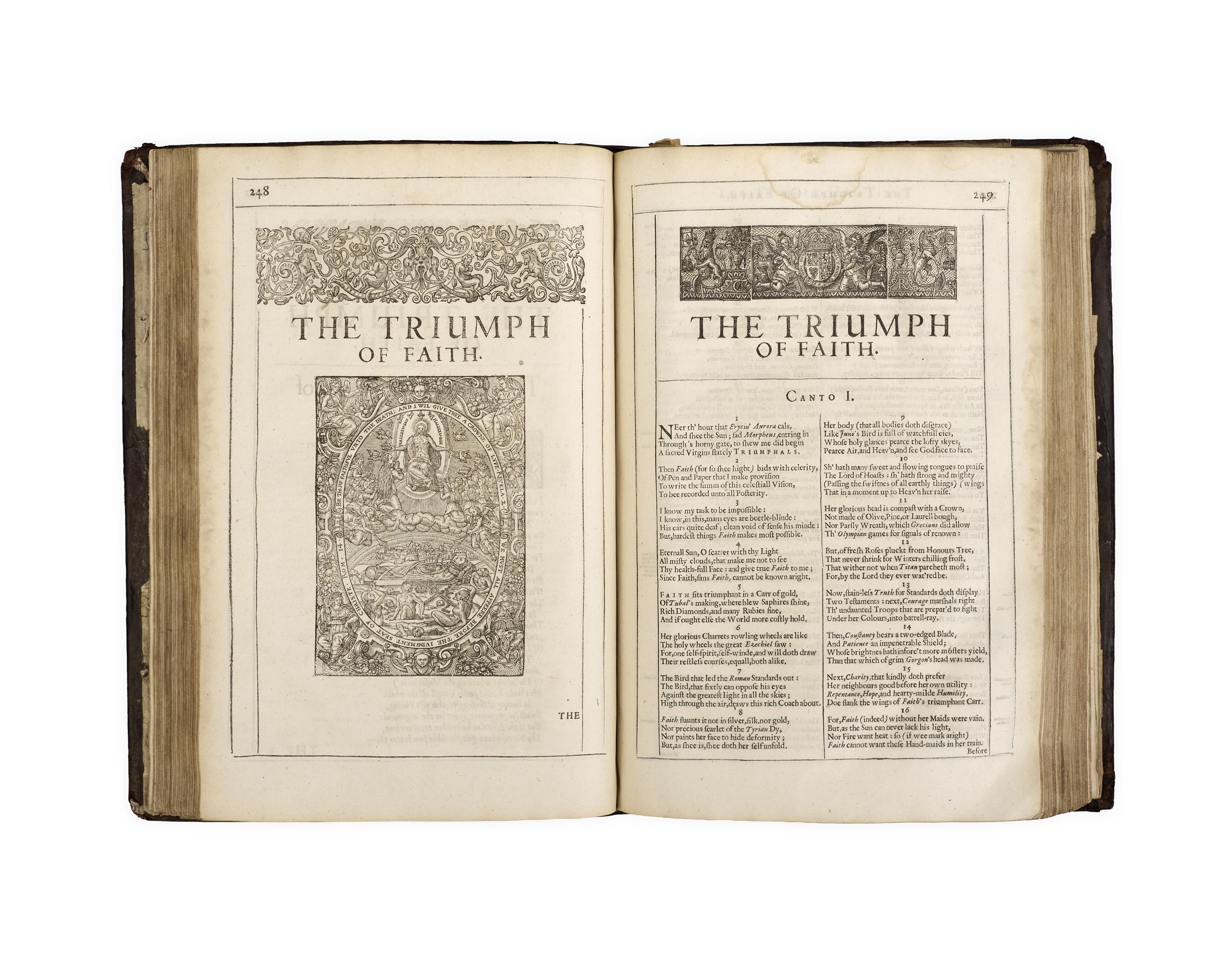
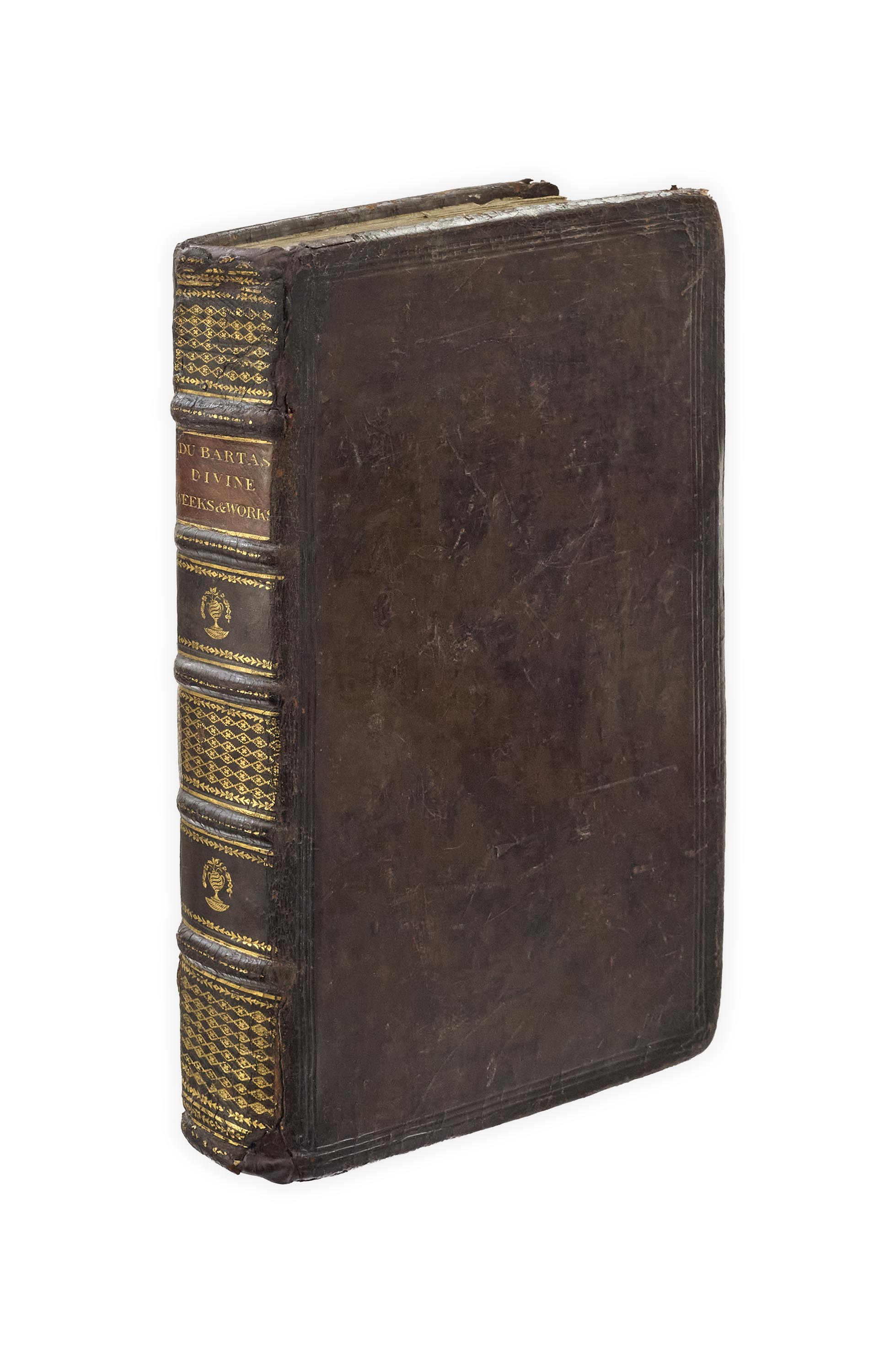
Du Bartas his divine Weekes, and Workes with a compleate Collectio[n] of all the other most delight-full Workes translated and written by yt famous philomusus, Iosuah Sylvester Gent: London, Robert Young, 1633.
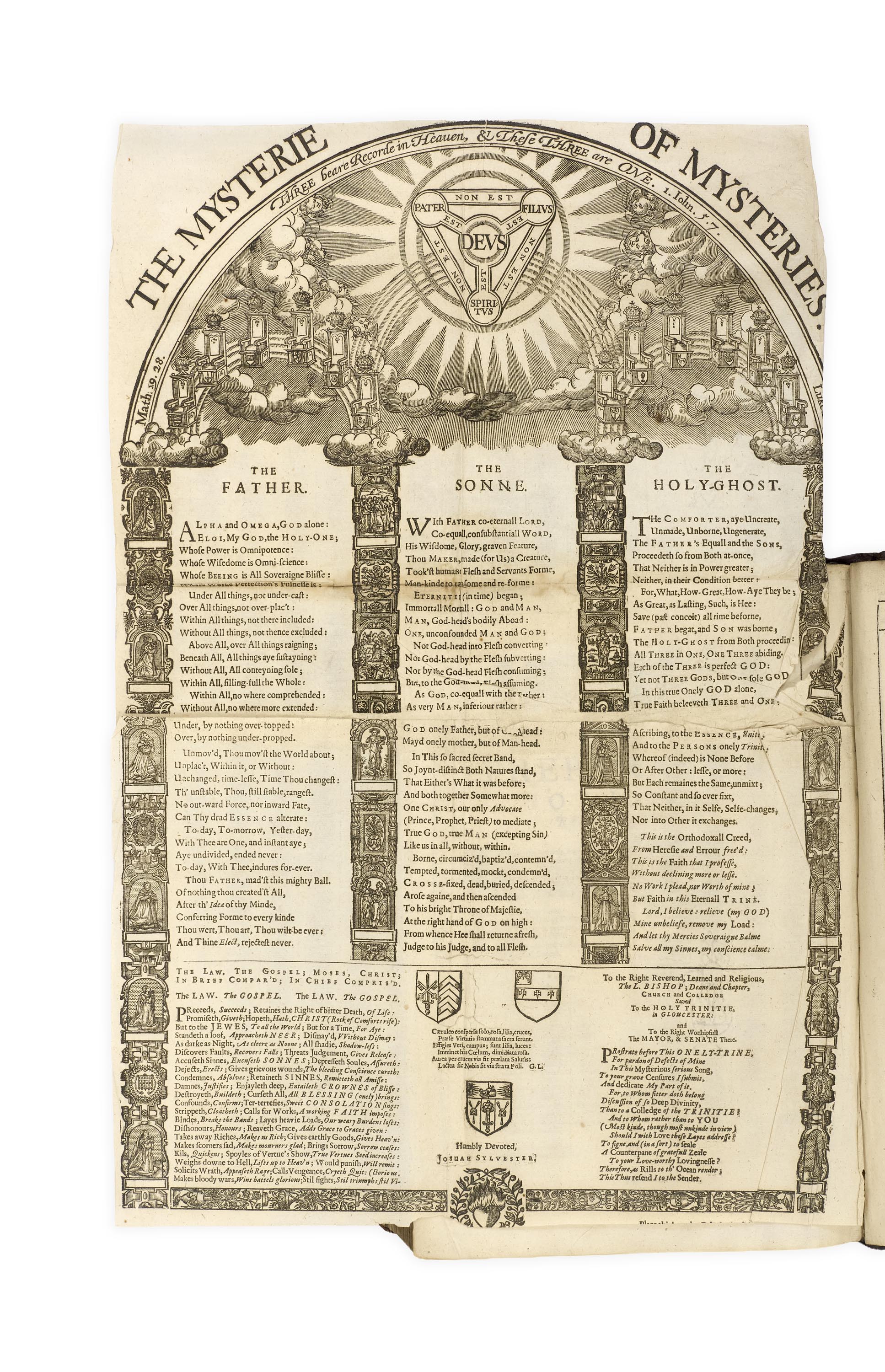
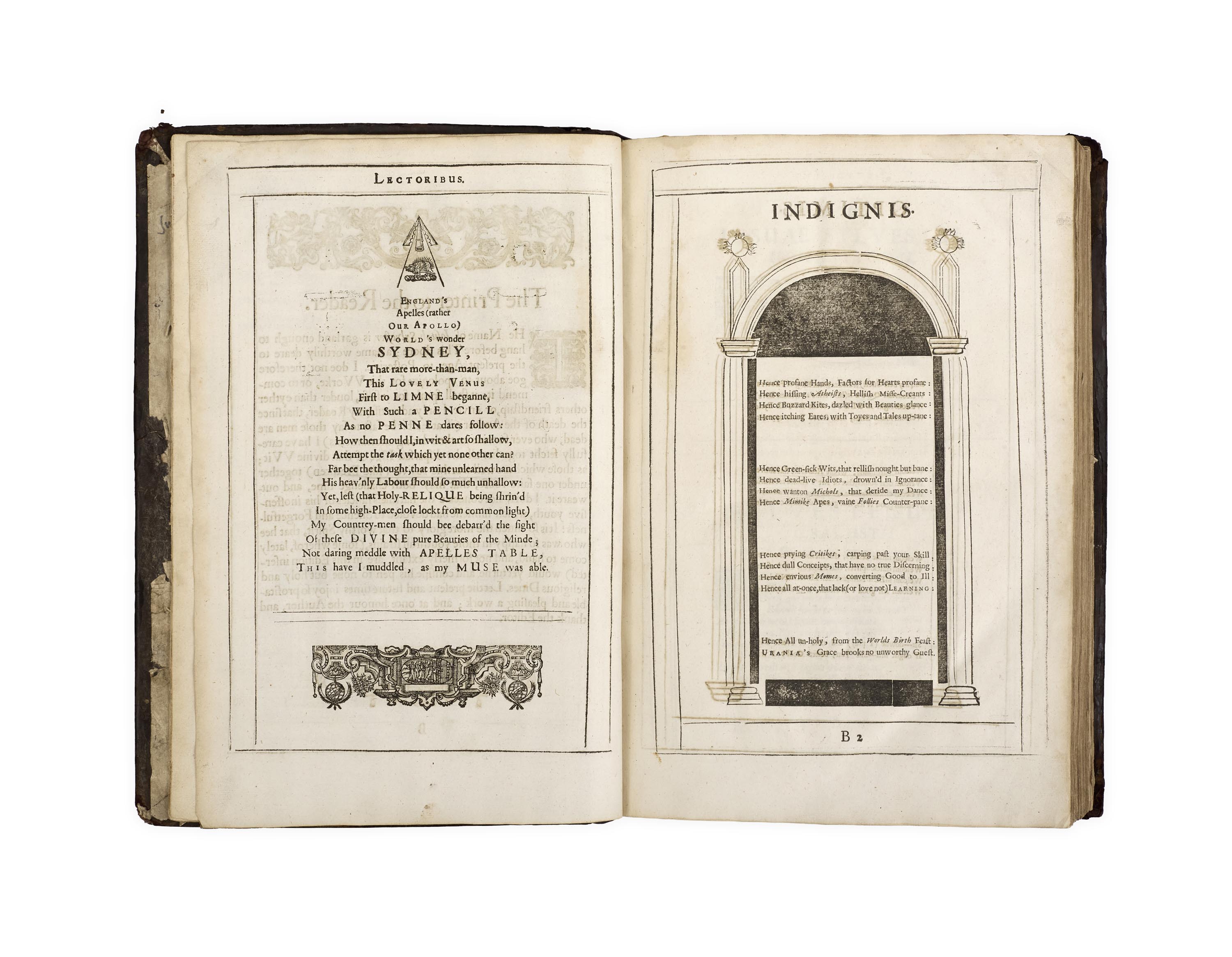
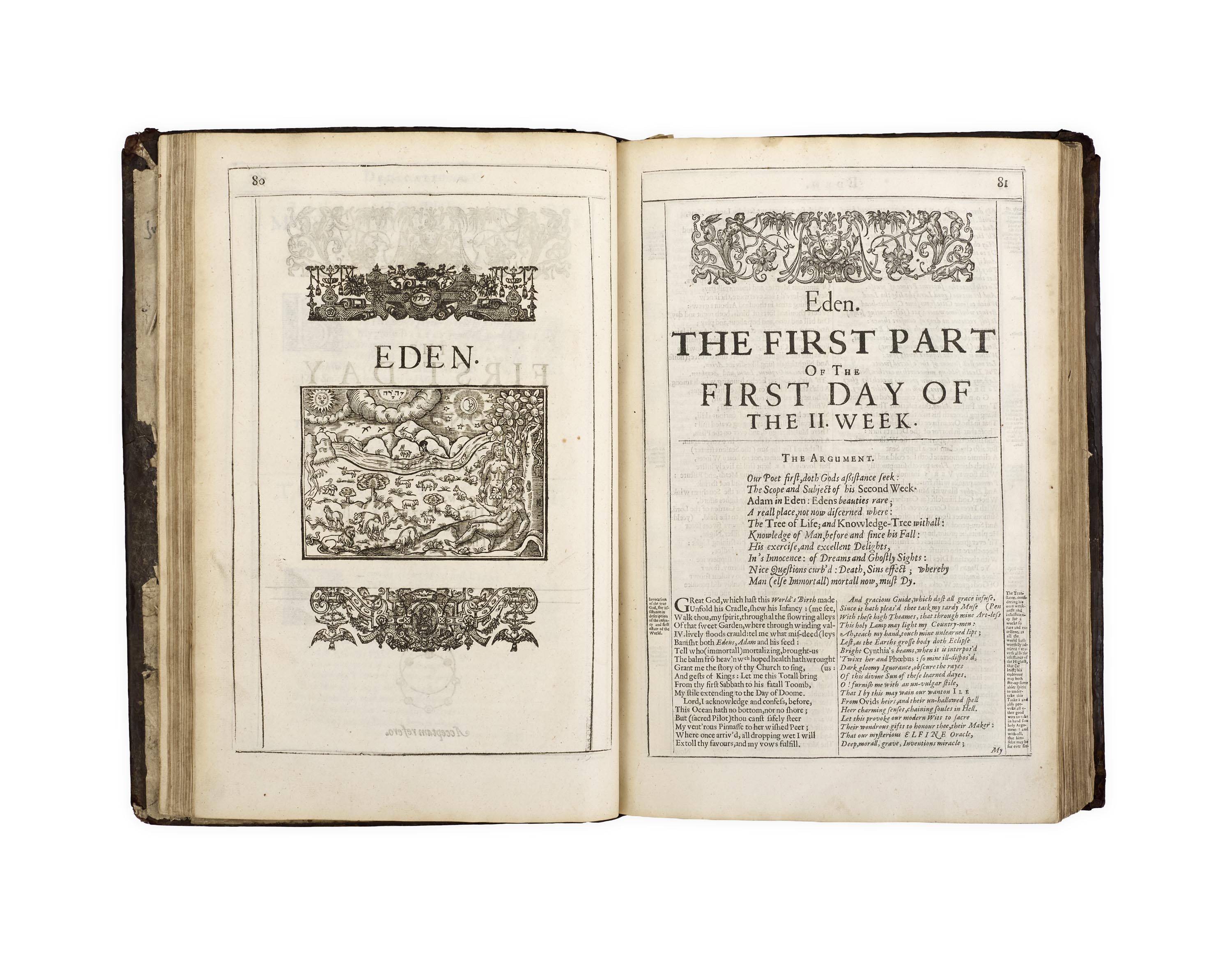
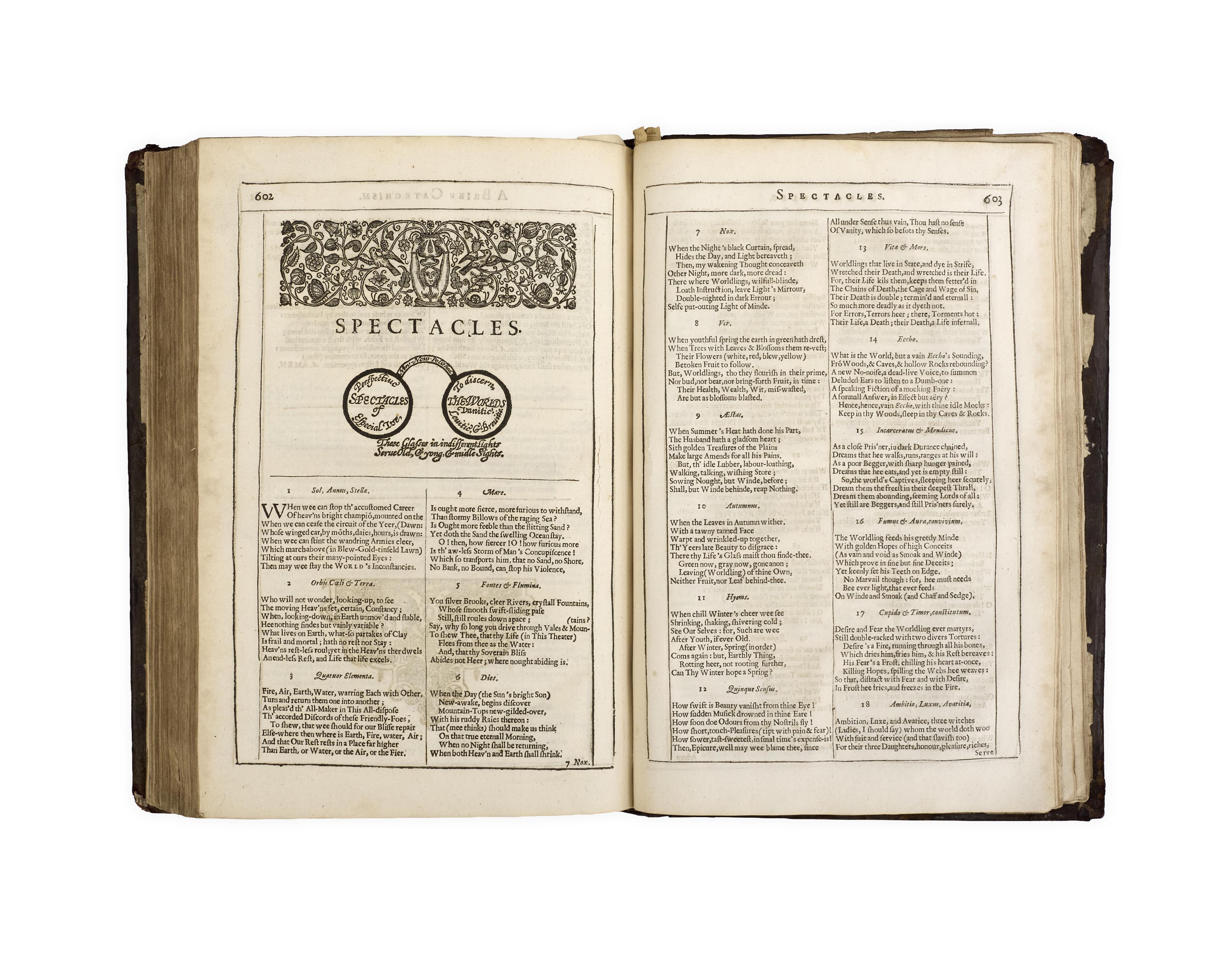
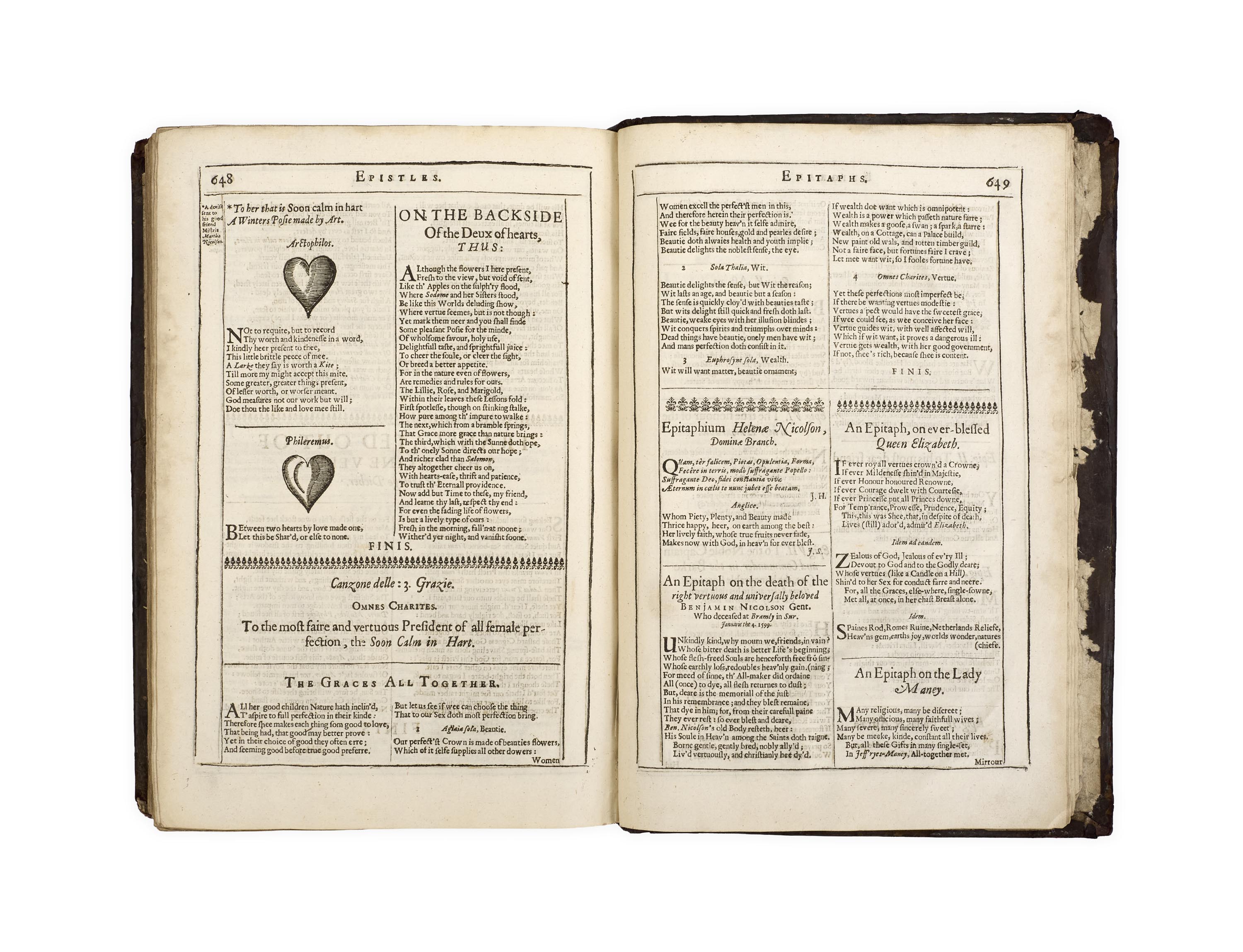
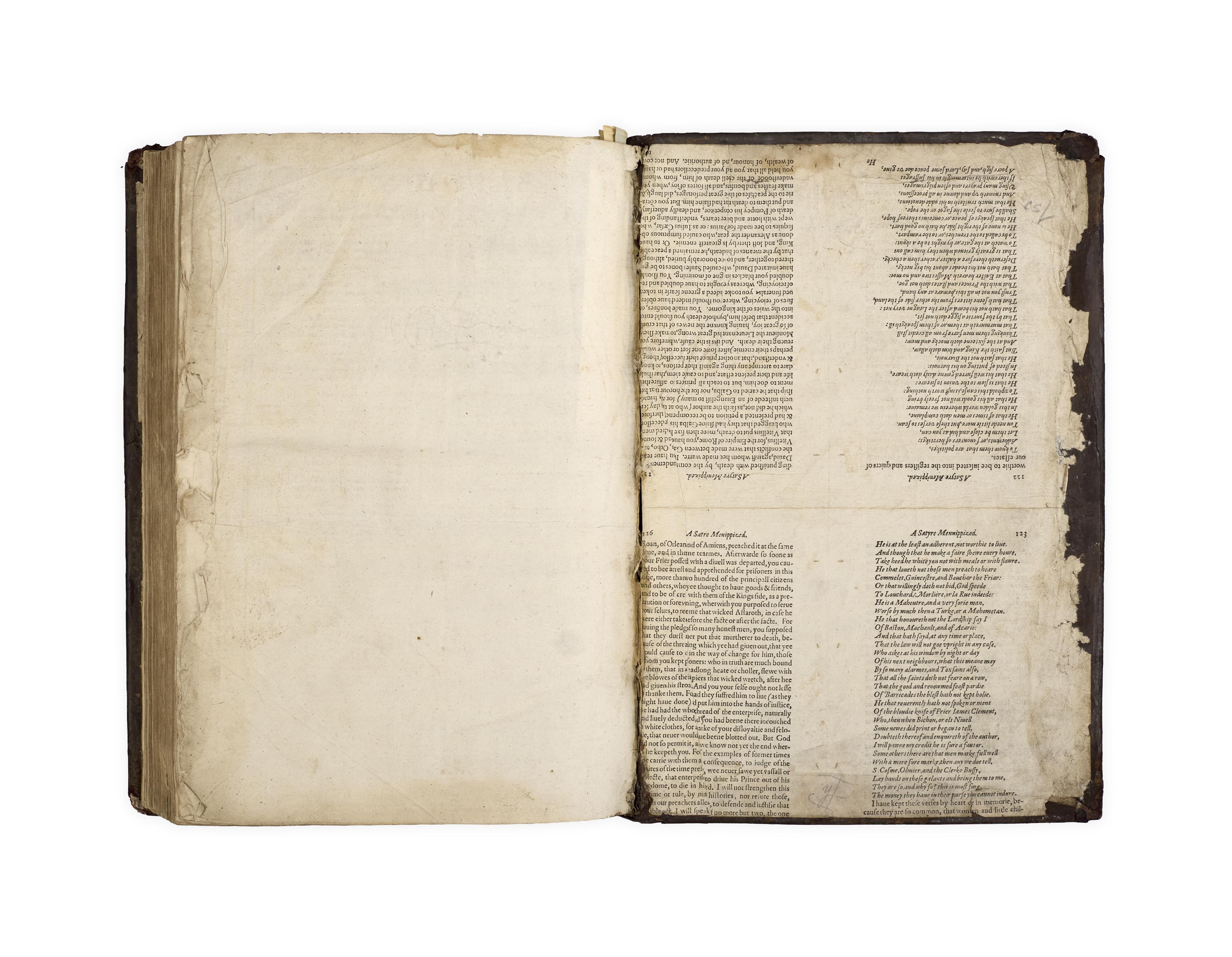
Folio in 4s, pp. [32], 345, [1], 351–416, 415–657, [1], with an engraved title-page, an engraved frontispiece portrait, a woodcut portrait, woodcut head- and tailpieces and initials, woodcut frames and vignettes, and a large folding leaf ‘The Mysterie of Mysteries’ with woodcuts and verses (printed on two leaves, likely once pasted together but now separate, the line of directions to the binder cropped at the foot); fore-edge of title and first and last few leaves frayed, old stain to inner margin of A1–4, closed tears (paper-flaws) in 3K1 and 3K4, else a good copy in contemporary calf, covers ruled in blind, spine gilt in compartments, later morocco label, spine restored at head and foot; pastedowns comprising printer’s waste of two uncut sheets from A Pleasant Satyre or Poesie: wherein is discouered the Catholicon of Spayne, and the chiefe Leaders of the League (1595) – STC 15489.
Added to your basket:
Du Bartas his divine Weekes, and Workes with a compleate Collectio[n] of all the other most delight-full Workes translated and written by yt famous philomusus, Iosuah Sylvester Gent:
Second collected edition (first 1621), newly expanded, printing together Sylvester’s final version of the Divine Weekes with original verse and translations from other poets, including ‘Tetrasticha, or the Quadrains’ of Guy du Faur de Pibrac, ‘The Profit of Imprisonment, a Paradox’ of Odet de la Noue, ‘Micro-cosmo-graphia ... or the Map of Man’ from the Latin of Henry Smith, ‘Tobacco Battered’, ‘Spectacles’, and a number of other pieces. Also included here is ‘The History of Judith’, translated from du Bartas by Thomas Hudson (with a divisional title-page dated 1632). New to this edition are the ‘Posthumi, or Sylvester’s Remains’ on pp. 621–57, namely twenty-six sonnets (including acrostics), elegies, verse epistles, epitaphs, epigrams, and ‘Panthea: or divine Wishes and Meditations’.
C. S. Lewis writes: ‘no one can point to a moment when poetry began to be Metaphysical nor to a poet who made it so; but of all poets perhaps Guillaume de Saluste du Bartas comes nearest ... All the Metaphysicals sound as if they had been brought up on him, or on Sylvester’s translation ... [and] Milton no less’. Extravagance of language and imagery, conceits, even the occasional typographical tricks of the metaphysical poets are all anticipated.
The large folding leaf ‘The Mysterie of Mysteries’ is often missing (e.g. in two of Folger’s three copies). The poem is in three columns, ‘The Father’, ‘The Sonne’, ‘The Holy-Ghost’, framed and separated by woodcut columns, with a large woodcut at the top, and below a further poem (‘The Law, the Gospel’) and a verse dedication to the Bishop, Dean, and Chapter of Gloucester.
ESTC S116390; STC 21654. This is the variant with ‘REGI’ on A1ʳ in large type.