
Neoplatonic Hagiography
EUNAPIUS; Hadrianus JUNIUS, translator; Hieronymus COMMELIN, editor.
Βιοι φιλοσοφων και σοφιστων … De vitis philosophorum et sophistarum … Graeca cum mss. Palatinis comparata, aucta, & emendata … Nunc recens accedunt eiusdem auctoris legationes, e bibliotheca Andreae Schotti Antverpiani. ‘Cologny’ [Geneva], Samuel Crespin, 1616.
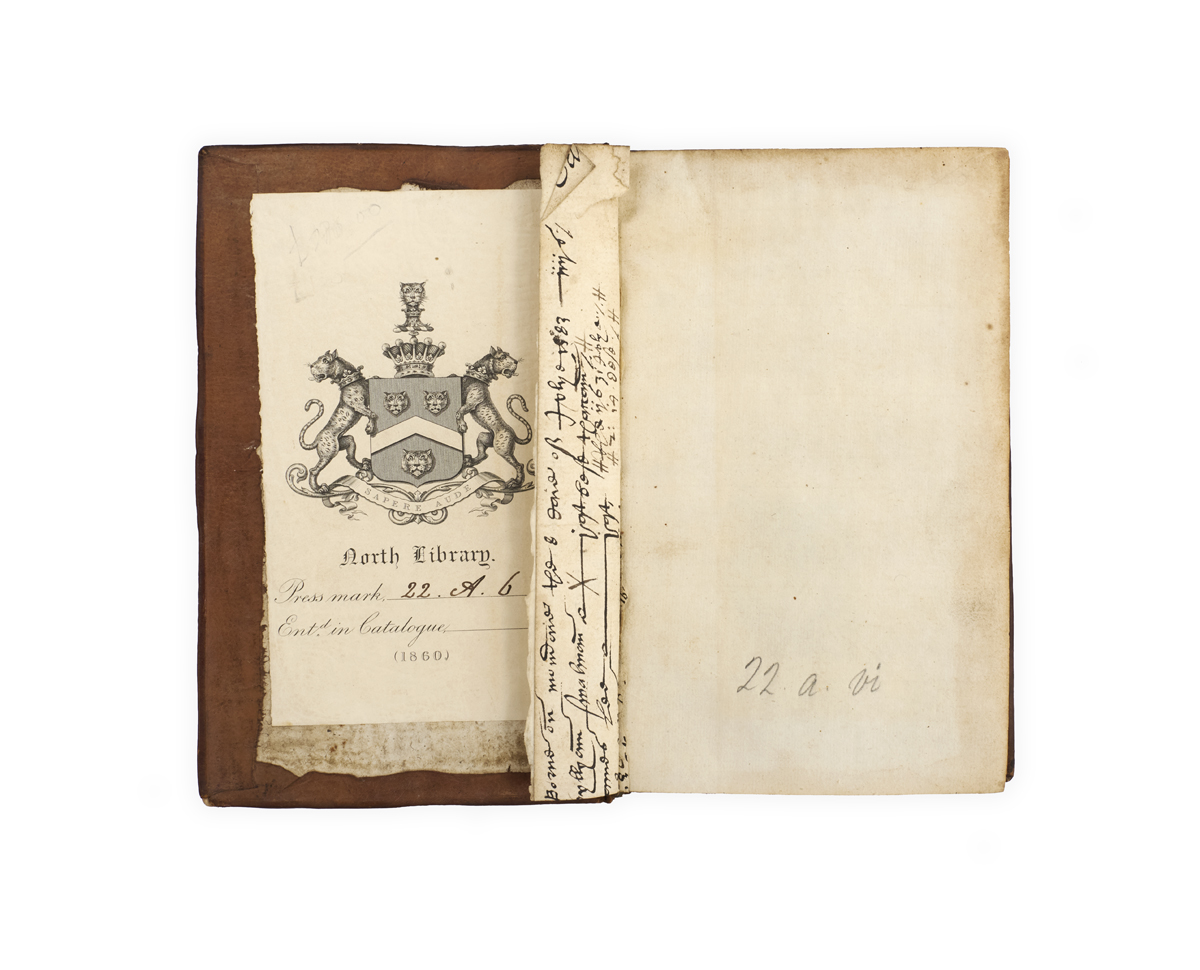
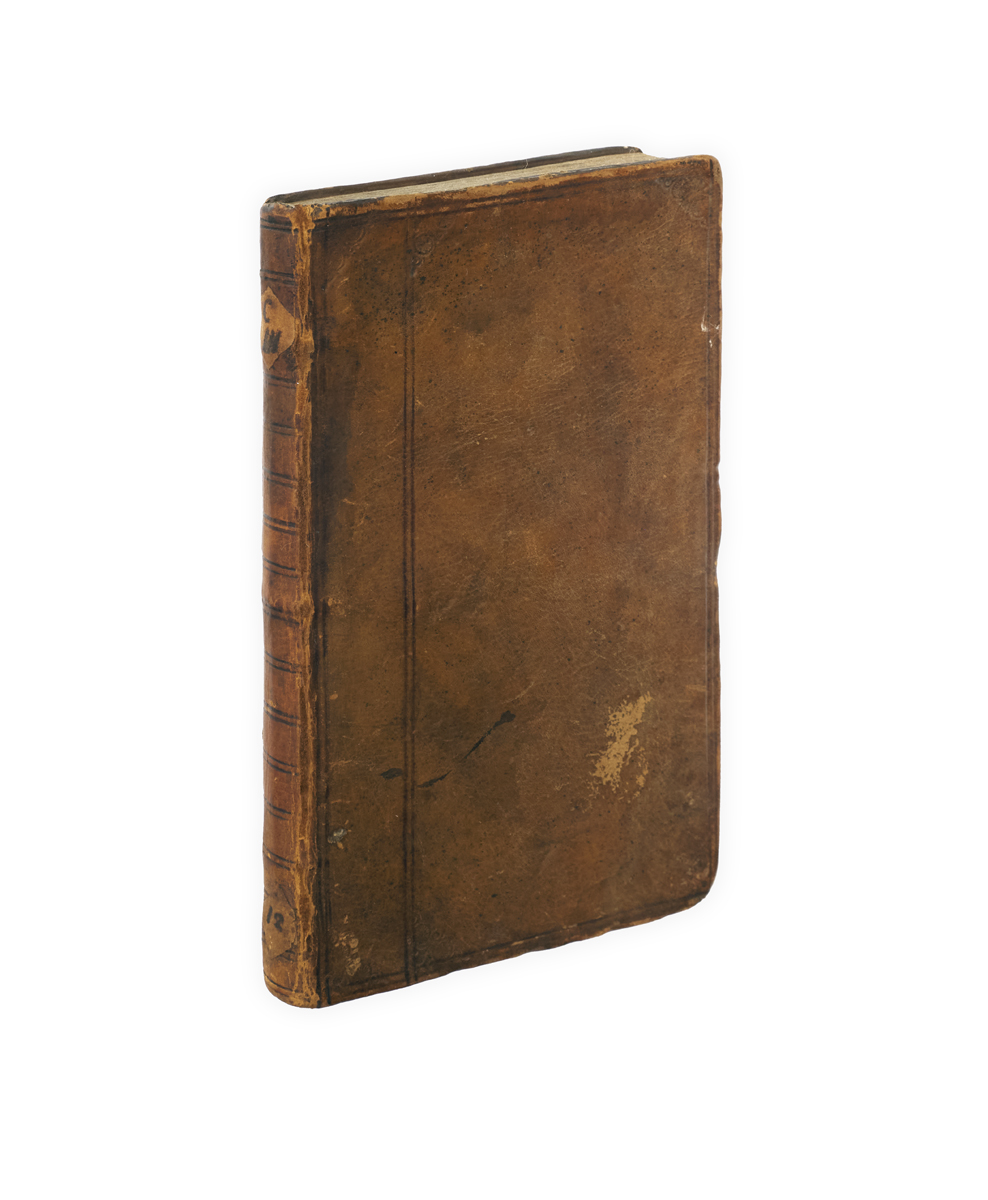
8vo, pp. 169, [6], [1, blank]; printed in Greek and Latin in parallel columns, woodcut device to title, woodcut and factotum initials, woodcut head- and tailpieces; some inoffensive foxing (principally to title-page), some light dampstaining, withal a very good copy; bound in contemporary English speckled and blind-ruled calf, edges speckled red, endguards of late sixteenth-century English archival manuscript waste on paper, sewn on three sunken tawed thongs; lightly rubbed; nineteenth-century armorial bookplate of the Earl of Macclesfield to inside front board, with blind armorial stamp to first two leaves, manuscript shelfmarks in ink and pencil to endpapers and inside boards, and shelf labels to spine.
Added to your basket:
Βιοι φιλοσοφων και σοφιστων … De vitis philosophorum et sophistarum … Graeca cum mss. Palatinis comparata, aucta, & emendata … Nunc recens accedunt eiusdem auctoris legationes, e bibliotheca Andreae Schotti Antverpiani.
An uncommon edition of the twenty-four biographies of Eunapius of Sardis (c. 345–415), valuable as a source for the neo-Platonic, and anti-Christian, philosophy of the fourth century; like the Emperor Julian, whom he admired, he wrote to oppose Christianity and defend his own beliefs. His subjects included Plotinus, Porphyry, Iamblichus, and Epiphanius, ‘of whom Eunapius gives an idealized picture in order to compete with the biographies of Christian saints’ (OCD), and he includes one female philosopher, Sosipatra.
The Latin translation by Hadrianus Junius first appeared alongside the editio princeps of the Greek (Plantin, 1568), though the source text supplied to Junius by Joannes Sambucus was defective. The Lives were extensively corrected by Commelin in 1596, partly using a manuscript in Heidelberg (now Vat. Pal. gr. 209), and for this edition an extract about embassies from Eunapius’ now fragmentary History has been appended. The present edition was issued contemporaneously by Paul Estienne, Jean Vignon, Samuel Crespin, Jacques Stoer and the Chouëts, each under their own imprint, sometimes alongside an edition of Diogenes. As often, this book was given the imprint Cologny (‘Coloniae Allobrogum’) instead of (Protestant) Geneva, though some copies do indeed contain ‘Genevae’ on the title.
USTC 1945793.