Eight Greek Tragedies
EURIPIDES; SOPHOCLES; AESCHYLUS.
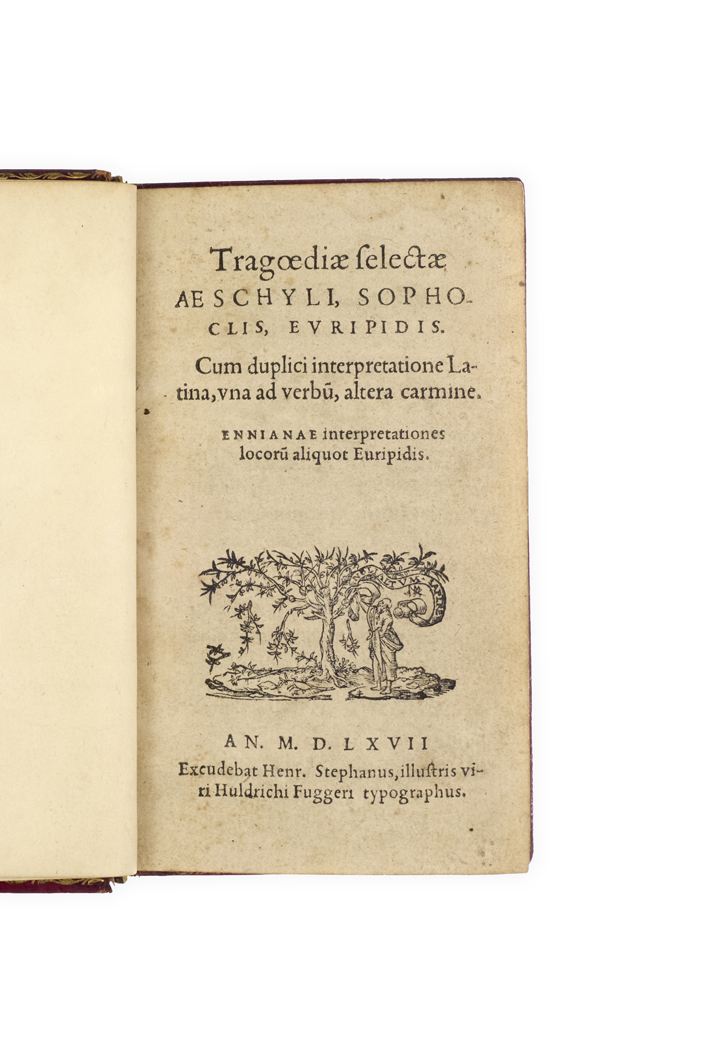
Tragoediae selectae Aeschyli, Sophoclis, Euripidis. Cum duplici interpretatione Latina, una ad verbu[m], altera carmine. Ennianae interpretationes locoru[m] aliquot Euripidis. [Geneva,] Henri Estienne, 1567.
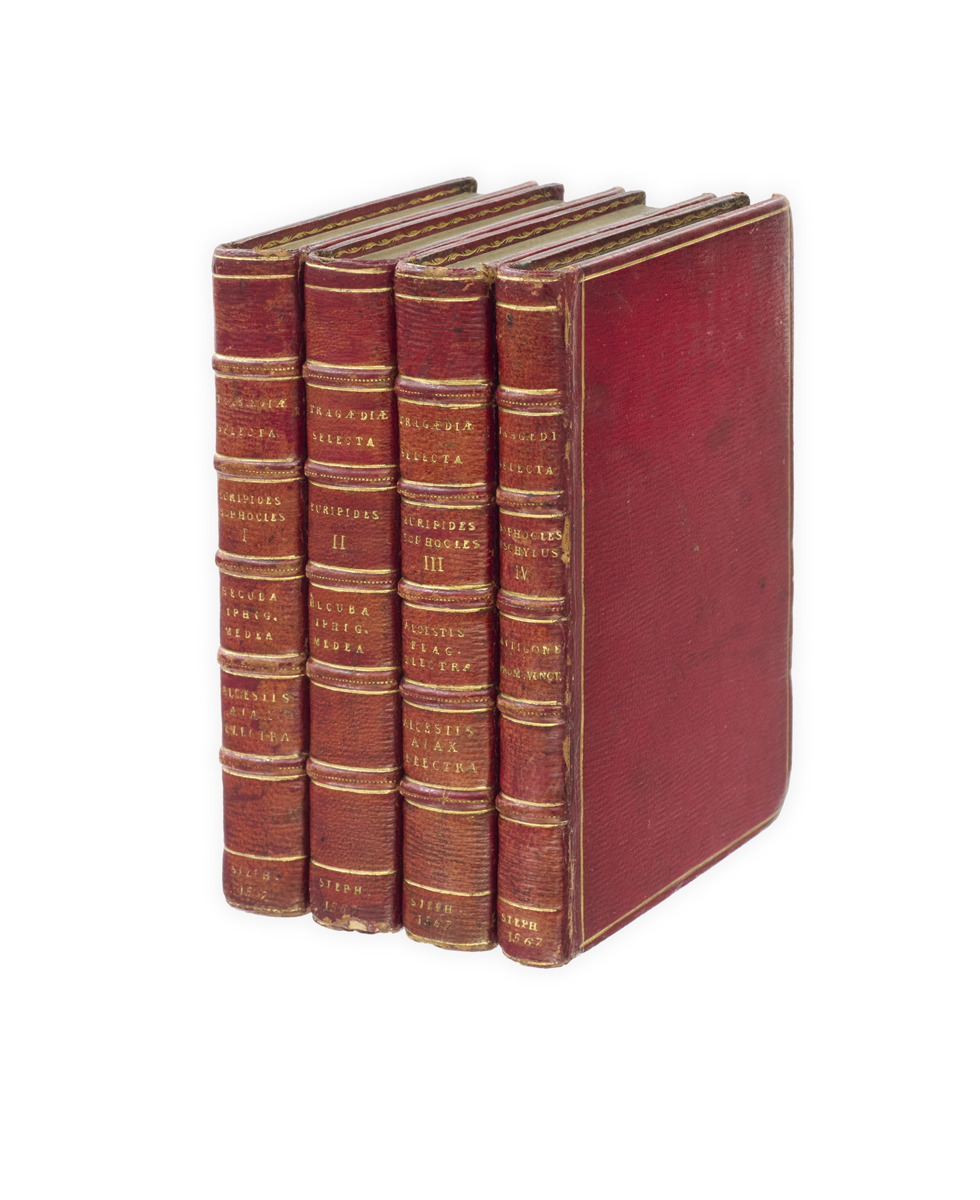
Two parts in four vols, 16mo, pp. I: [4], 279 (recte 379), [5, blank], II: 283 (recte 383), [1, blank], III: 385–735, [1, blank], IV: 337 (recte 737)–955 [1, blank]; text in Greek and Latin, woodcut printer’s device to title; toned, some light foxing, occasional light damp-stains, small loss to fore-edge of pp. 639–40, small stain to pp. 807–8; otherwise a very good set in early nineteenth-century straight-grained red morocco, gilt fillet border to covers, spines in compartments filleted and lettered in gilt, all edges gilt, pale blue endpapers; a little wear to extremities, a few small marks to covers, front endpapers of vol. IV coming loose; contemporary marginalia to c. 100 pp. of vol. I (trimmed).
Added to your basket:
Tragoediae selectae Aeschyli, Sophoclis, Euripidis. Cum duplici interpretatione Latina, una ad verbu[m], altera carmine. Ennianae interpretationes locoru[m] aliquot Euripidis.
Handsome pocket-sized Estienne edition of eight plays by the three great fifth-century BC Greek tragedians, all based on figures and episodes from Greek myth, with interesting contemporary annotations to Euripides.
This edition comprises four plays by Euripides (Hecuba, Iphigenia in Aulis, Medea, Alcestis), three by Sophocles (Ajax, Electra, Antigone), and one by Aeschylus (Prometheus Bound), the Greek text of each play being accompanied by two Latin versions, one in prose, and one in verse (Prometheus having only a prose version). The illustrious translators include Erasmus, Melanchthon, George Buchanan, and Joachim Camerarius. ‘The four plays of Euripides represent the only tragedies of Euripides printed by Henri Estienne, who never published an edition of that author – a lacuna which his son Paul was to fill in 1602’ (Schreiber). Henri describes himself in the imprint as ‘illustris viri Huldrichi Fuggeri typographus’, a reference to Ulrich Fugger, who saved him from financial difficulties following the death of his father Robert.
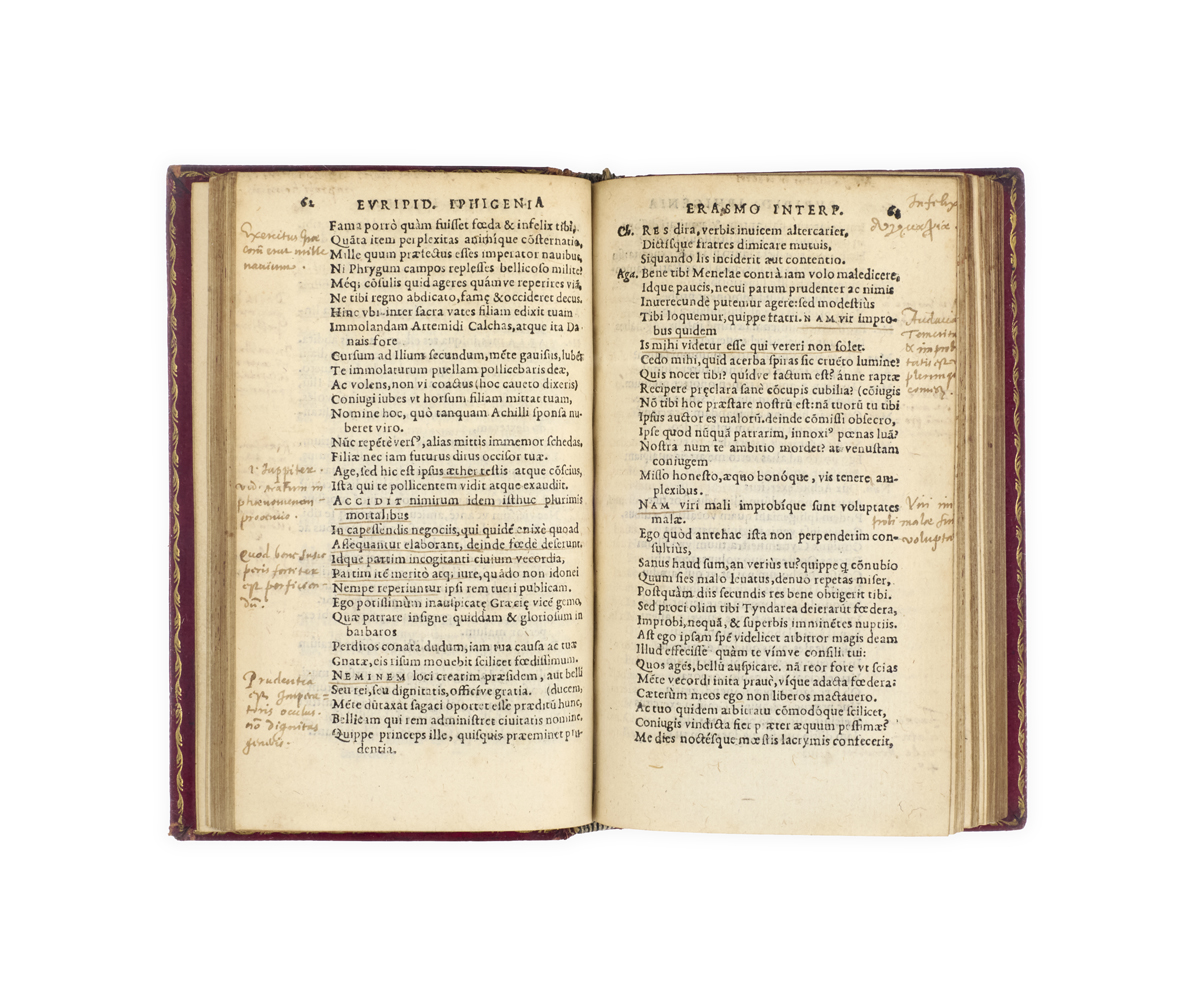
The marginalia in this copy accompany the Latin versions of Euripides’ Hecuba and Iphigenia, and part of Medea. They draw out themes and aphorisms from the text, and show an interest in, for example, ambition, the human condition, fortune, maternal love, the condition of Greek women, and the anger of kings and tyrants. Annotations also appear alongside the brief essay on tragedy and comedy which follows Erasmus’s rendering of Iphigenia.
GLN 15–16 2346; USTC 450564; Renouard, Estienne, p. 130 no. 5; Schreiber, The Estiennes 169.