Orthographically Original
EXPILLY, Claude.
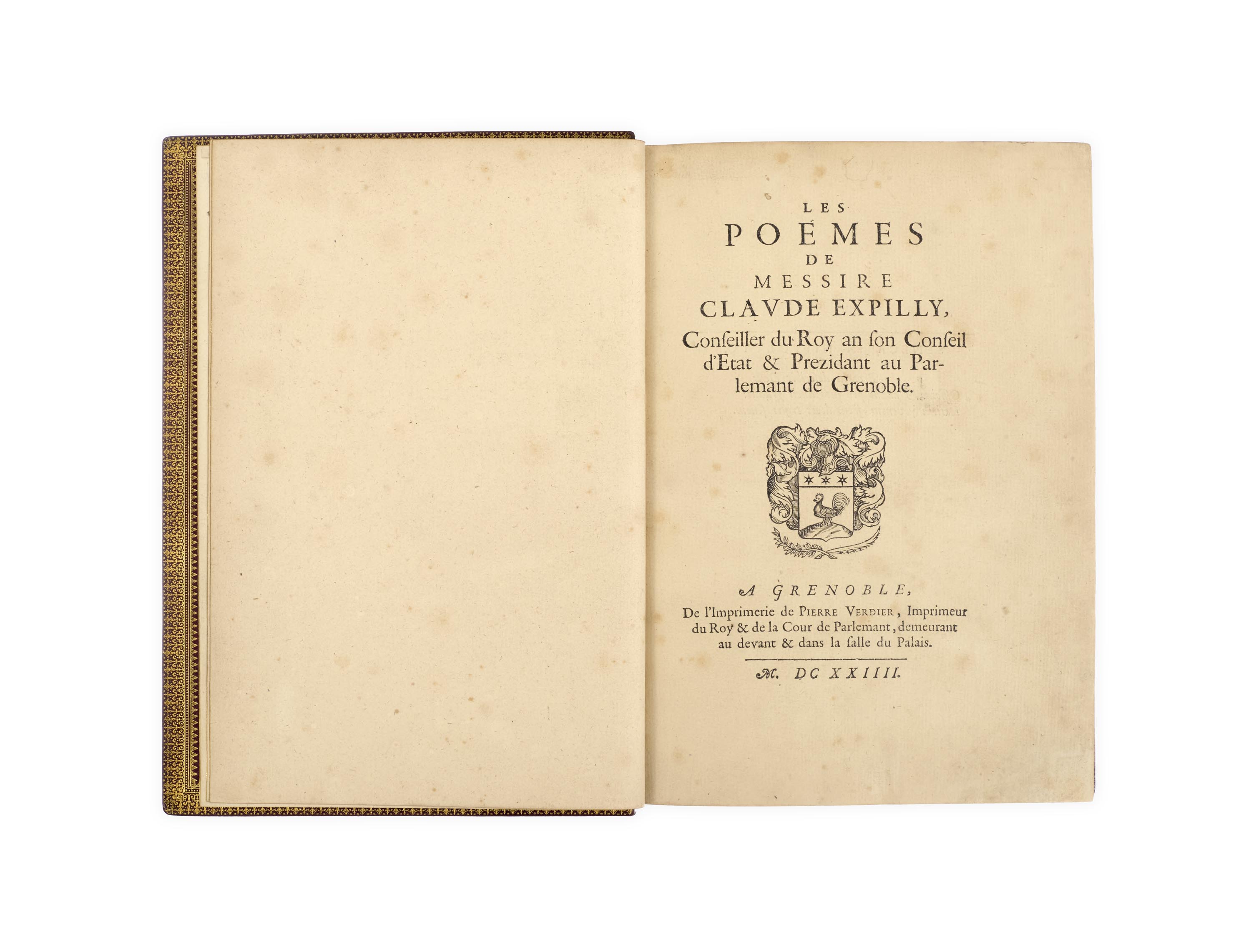
Les poemes de Messire Claude Expilly, Conseiller du Roy an son Conseil d’Etat & Prezidant au Parlemant de Grenoble. Grenoble, Pierre Verdier, 1624.
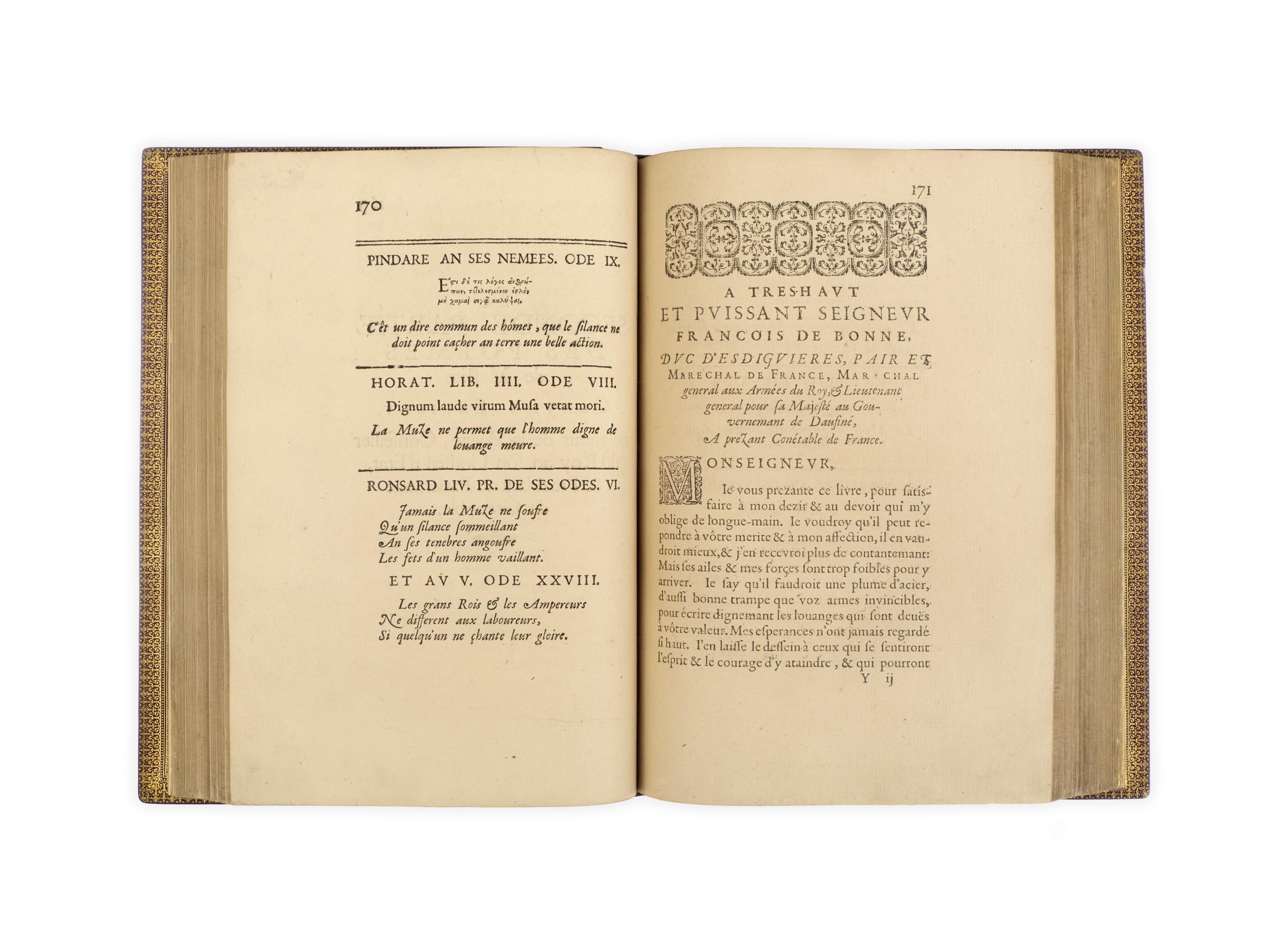
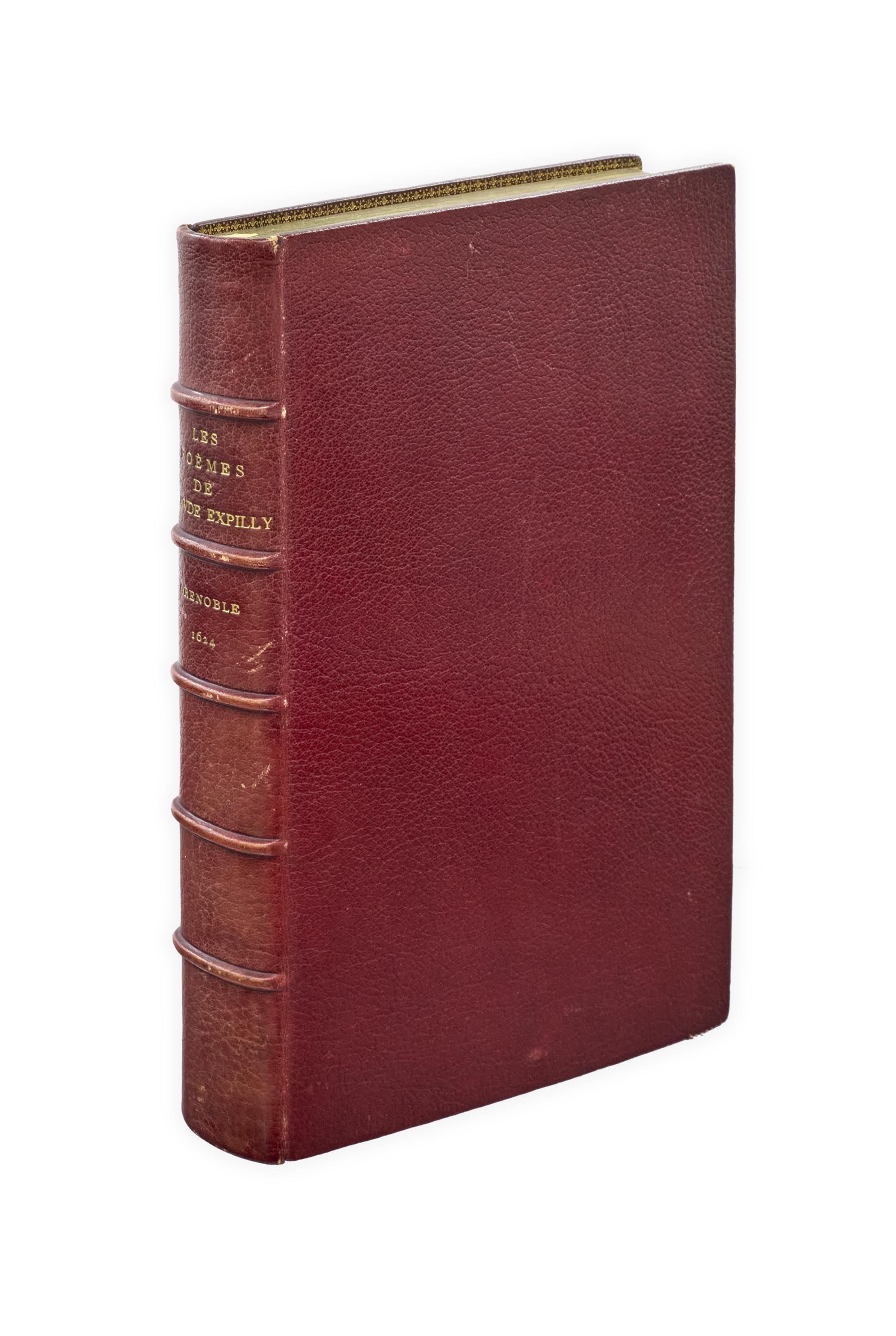
4to, pp. [viii], 461, [5]; without final blank leaf; woodcut arms of Expilly to title-page, woodcut initials, woodcut and typographic headpieces; washed and uniformly browned, small tear to head of title, small repair to lower margin of ā2–3, closed tear to Ggg4 (neatly repaired), nonetheless a very good, wide-margined copy retaining some deckle edges; bound in late nineteenth-century Jansenist morocco by Chambolle-Duru (front turn-in signed in gilt), spine lettered directly in gilt, edges gilt, marbled endpapers, multicoloured ribbon place-marker; spine slightly faded, a little rubbed at extremities; seventeenth-century manuscript correction to p. 459 (washed).
Added to your basket:
Les poemes de Messire Claude Expilly, Conseiller du Roy an son Conseil d’Etat & Prezidant au Parlemant de Grenoble.
A wide-margined copy of the expanded second edition of Expilly’s poetry, composed in a phonetic writing system of his own devising.
Claude Expilly (1561–1636), poet, magistrate, and book collector from Grenoble, studied in Paris and Padua, where he learned Italian and read Italian literature. He lived through the siege of Grenoble during the French Wars of Religion, later taking part in the battle of Pontcharra (1591).
His first selection of poems was published in Paris in 1596, his poem on the battle of Pontcharra in Grenoble in 1621, and his poem on the death of Isaac Casaubon (addressed to James II [sic] of England) in Lyon in 1617. These are all included in this second collected edition, dedicated to Cardinal Richelieu, along with a larger collection of epitaphs, of various French nobles and statesmen for the most part, including an account of Pierre Terrail, Chevalier de Bayard, with verses on his burial (pp. 371–418). The majority of the verses are in French, with a few in Latin, and the index at the end groups the poems together by genre, from sonnets to elegies to masquerades and epitaphs.
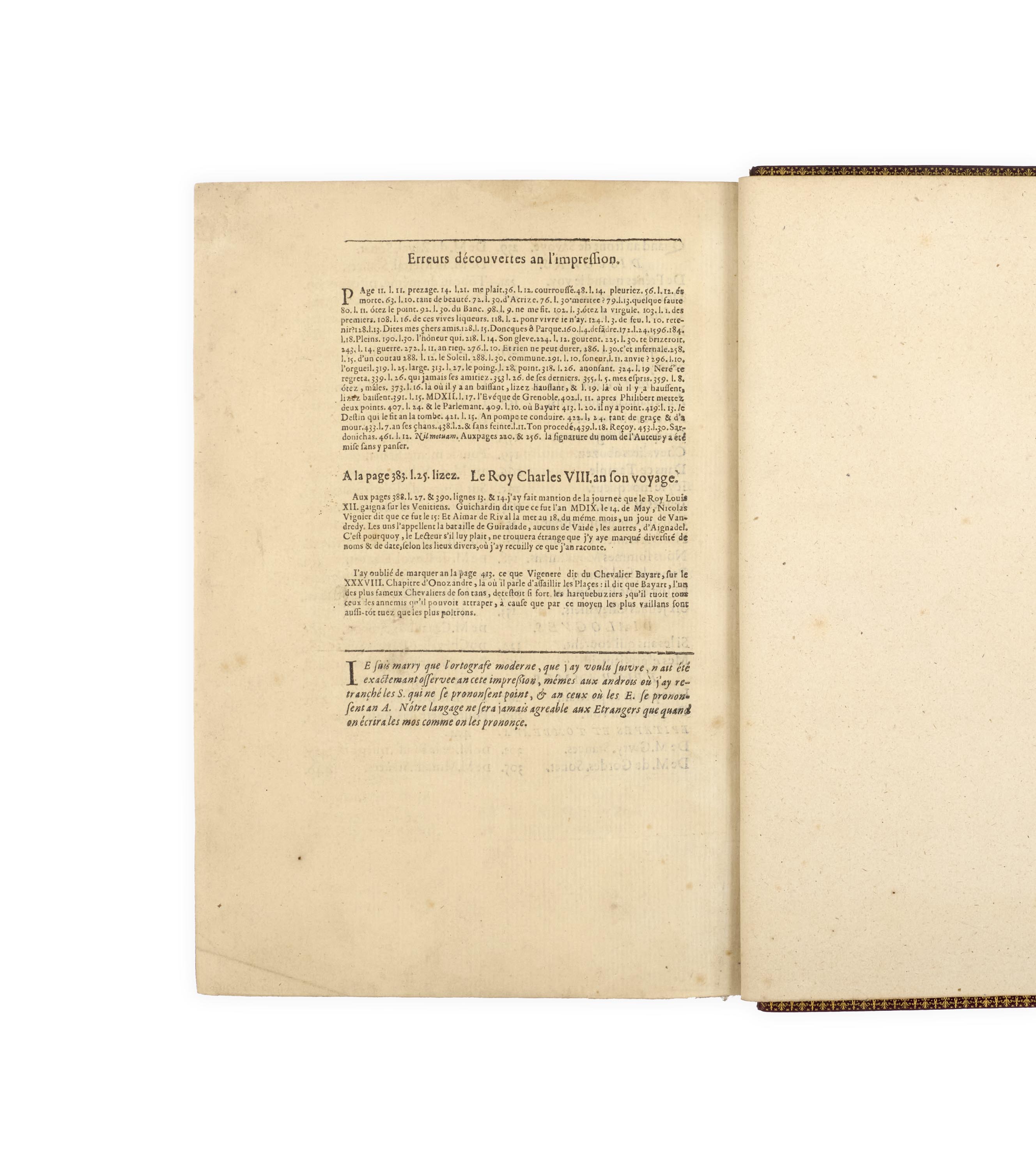
In the preamble to his sonnet on Ronsard, Expilly details Ronsard’s decision to spell his name Ronsard instead of Ronsart (pp. 281–282). And in the final paragraph of the volume, he seeks to explain his own unusual orthography: ‘Ie suis marry que l’ortographe moderne, que j’ay voulu suivre, n’ait été exactemant osservee an cete impression, mémes aux androis où j’ay retrançhé les S. qui ne se prononsent point, & an ceux où les E. se prononsent an A. Notre langage ne sera jamais agreable aux Etrangers que quand on écrira les mos comme on les prononçe’. Expilly was seeking to make his language more comprehensible to non-native speakers by removing an ‘s’ when silent, and using ‘a’ instead of ‘e’ when it aligned with the pronunciation.
We have traced four copies in the US (UCLA, Illinois, Harvard, and Virginia) and only one in the UK (British Library).
USTC 6808835; Arbour, Répertoire chronologique II, 11385. See Graheli, ‘How to build a library across early-modern Europe: the network of Claude Expilly’ in International Exchange in the Early Modern Book World (2016), pp. 171–213.