‘The First Iconographic Treatise of Practical Use’
FABER, Johannes.
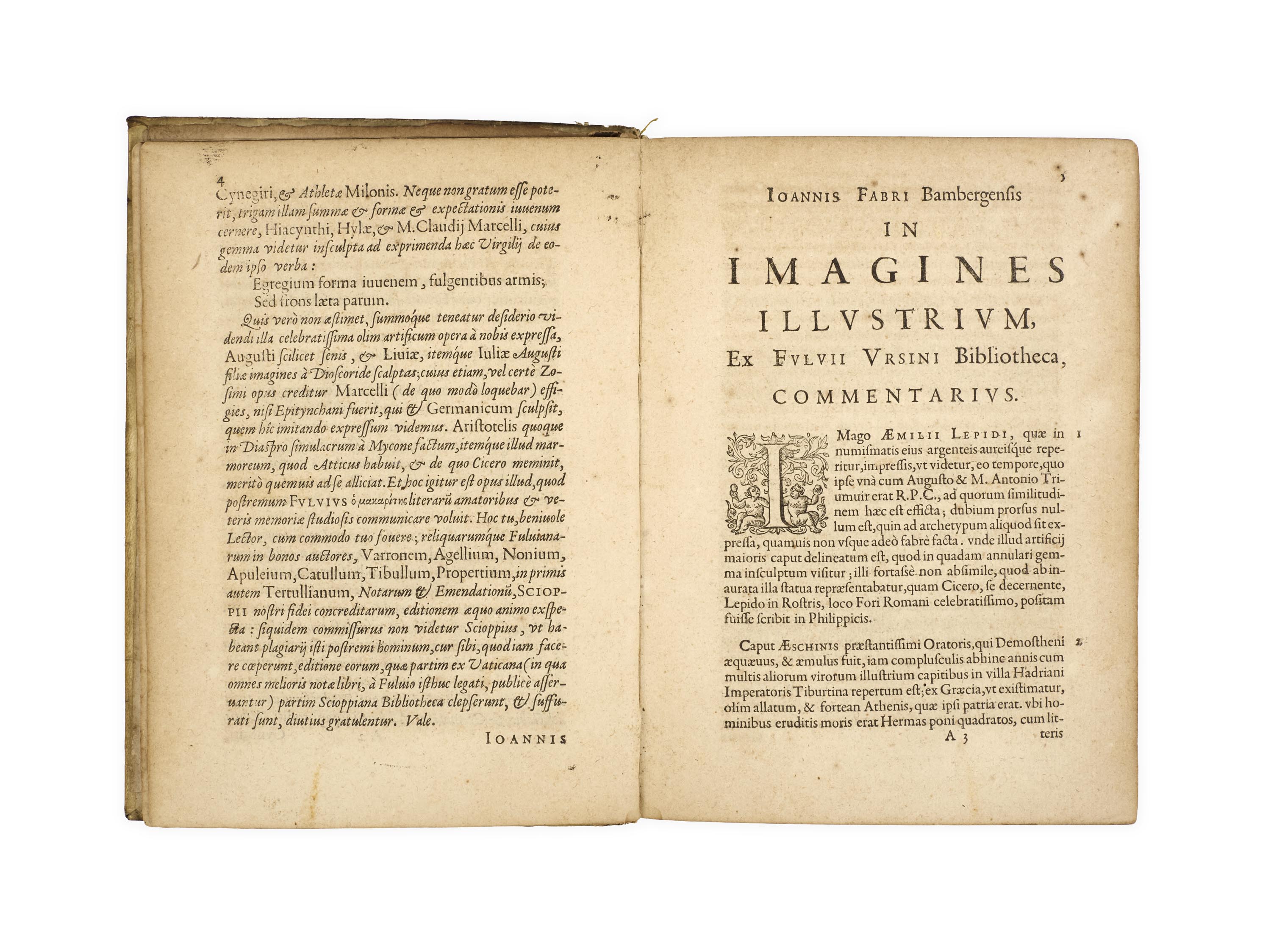
In imagines illustrium ex Fulvii Ursini Bibliotheca, Antuerpiae a Theodoro Gallaeo expressas, commentarius … Antwerp, Jan Moretus ‘ex Officina Plantiniana’, 1606.
[bound with:]
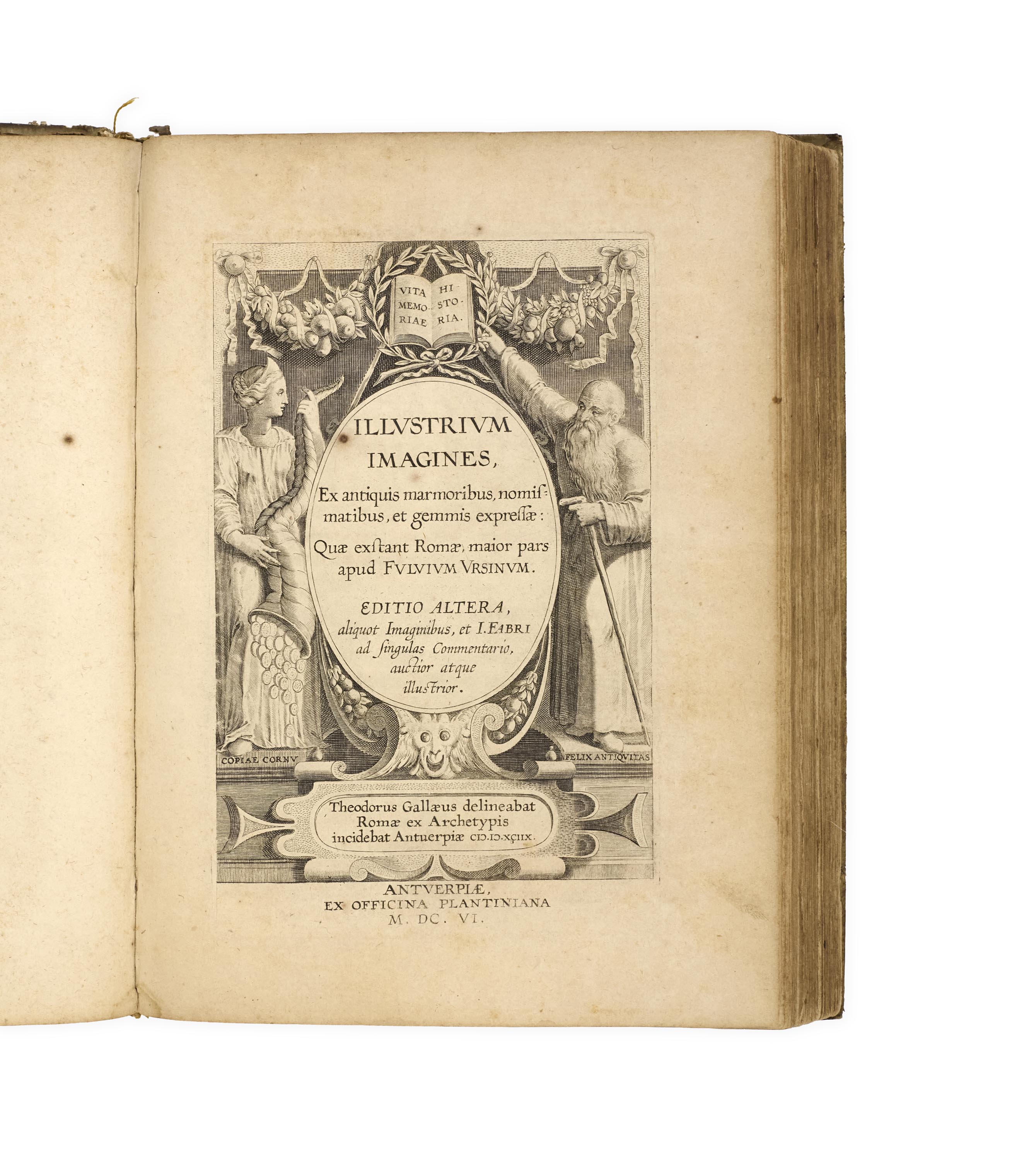
GALLE, Theodoor. Illustrium imagines, ex antiquis marmoribus, nomismatibus, et gemmis expressae, quae exstant Romae, major pars apud Fulvium Ursinum. Editio altera, aliquot imaginibus, et J. Fabri ad singulas commentario, auctior atque illustrior [– Appendix ad imagines illustrium …]. Antwerp, ‘ex Officina Plantiniana’, 1606.Two works in one vol., 4to, Faber: pp. [viii], 88, [6], [2, blank], Galle: pp. 8, [4], with 151 engraved plates and final blank, Appendix: pp. [2], with 17 engraved plates (lettered A to R); Faber with copper-engraved printer’s device to title, woodcut printer’s device to final verso, woodcut initials and tailpieces, Galle title-page copper-engraved; Faber title lightly browned, light marginal browning or spotting throughout, small mark to Faber *2, but nonetheless a good copy; bound in contemporary vellum, later gilt red morocco lettering-piece to spine; spine defective at foot, free endpapers renewed, neat repairs to joints; bookplate of Airey Neave to front free endpaper (see below).
Added to your basket:
In imagines illustrium ex Fulvii Ursini Bibliotheca, Antuerpiae a Theodoro Gallaeo expressas, commentarius …
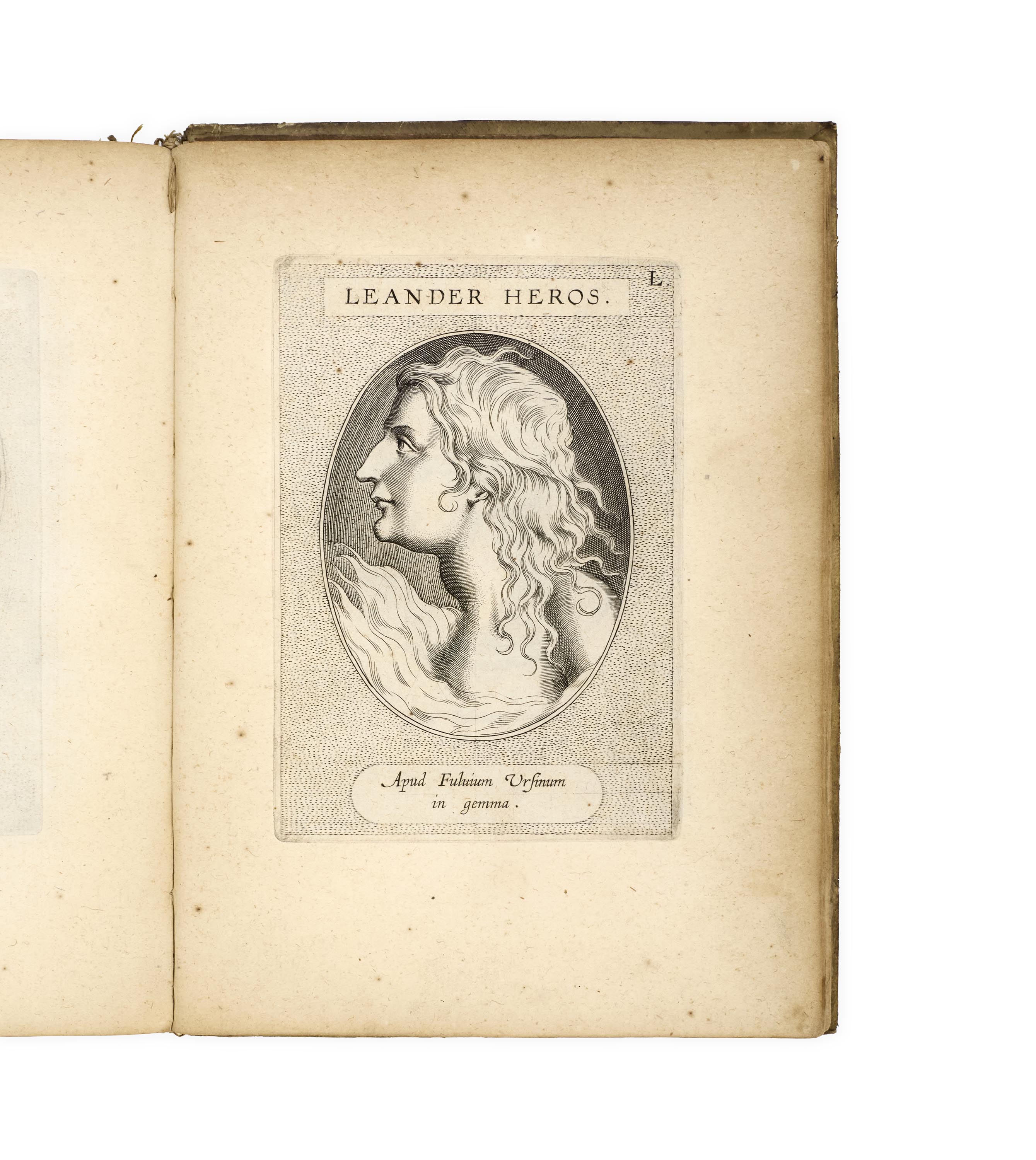
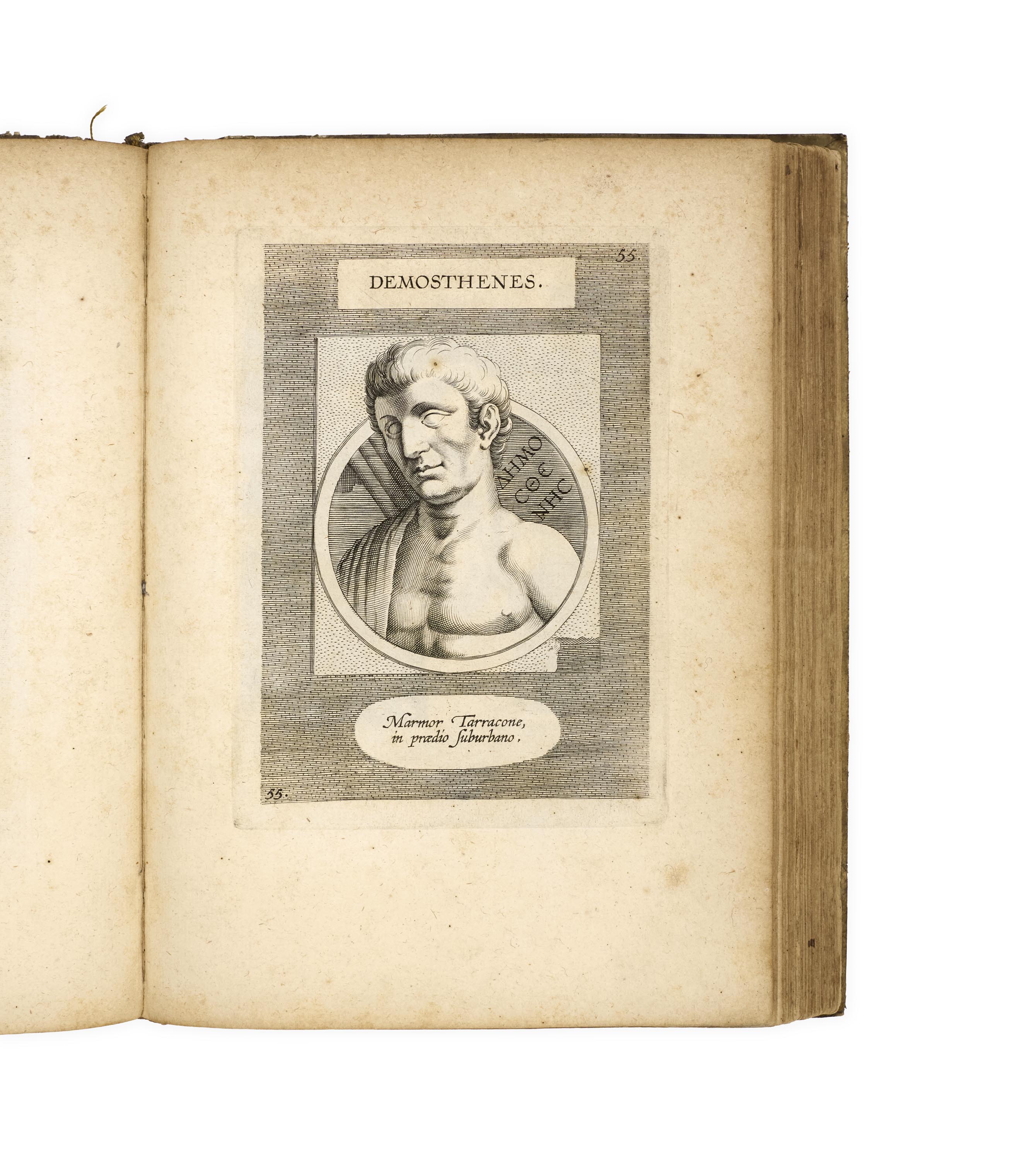
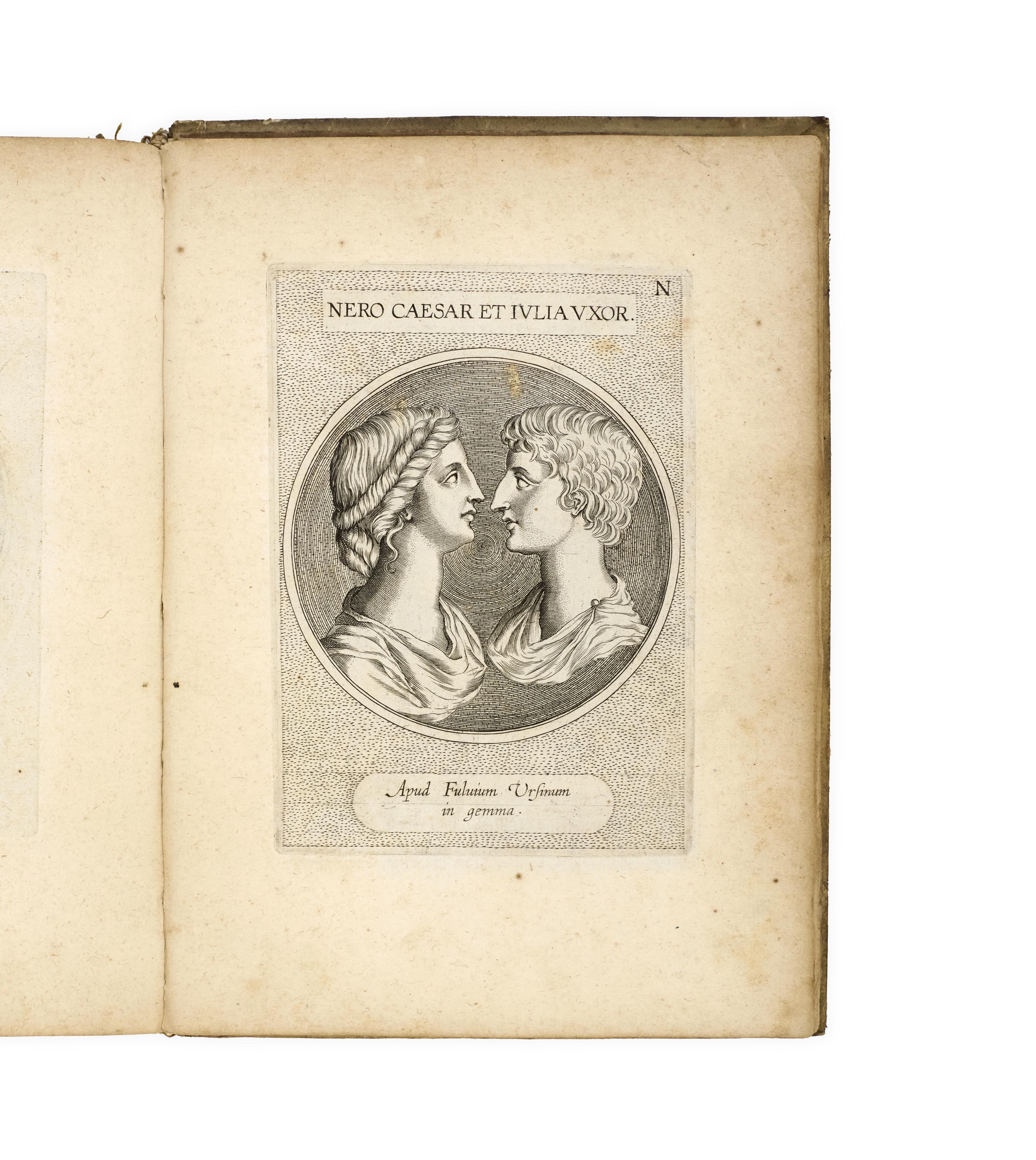
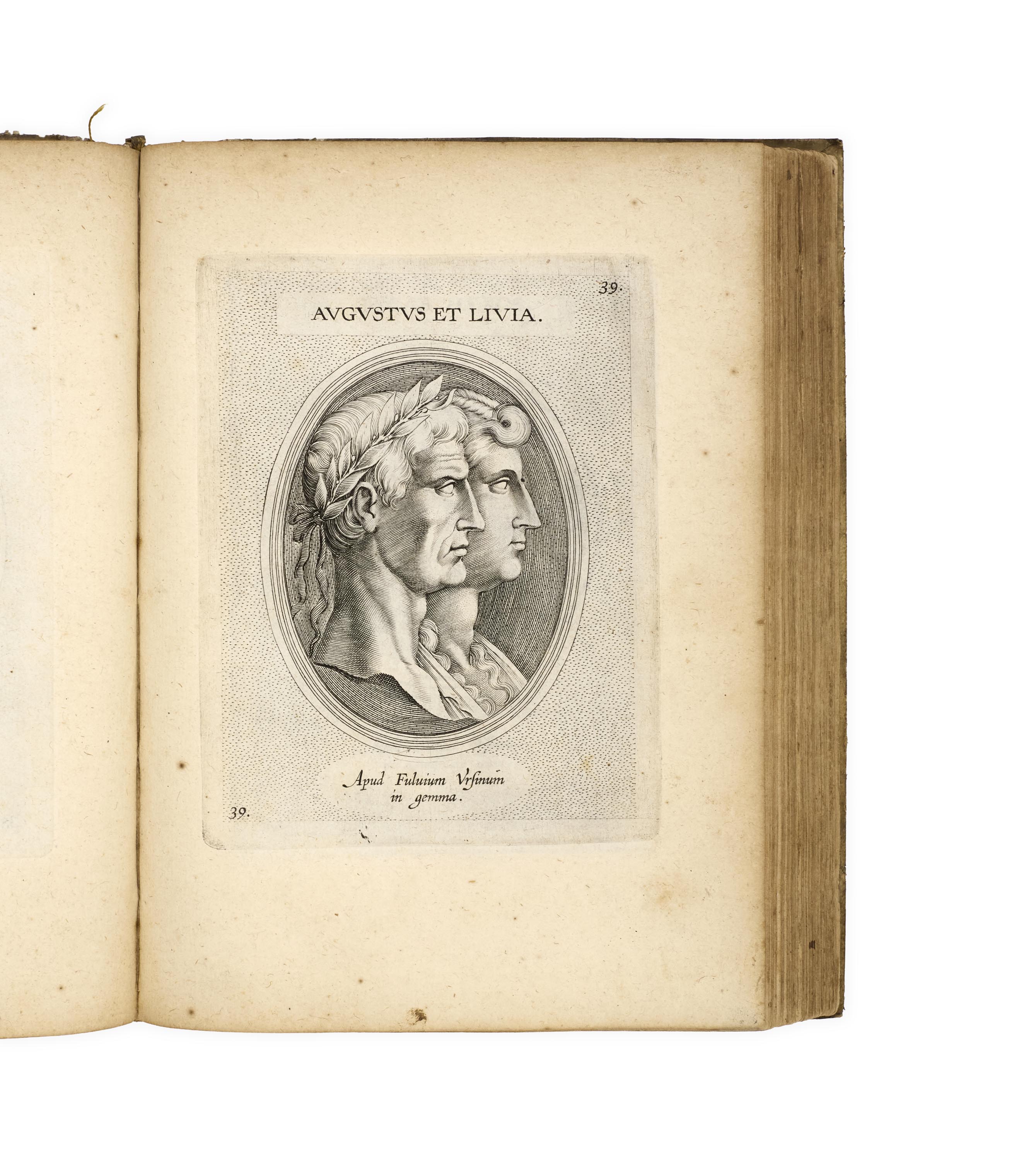
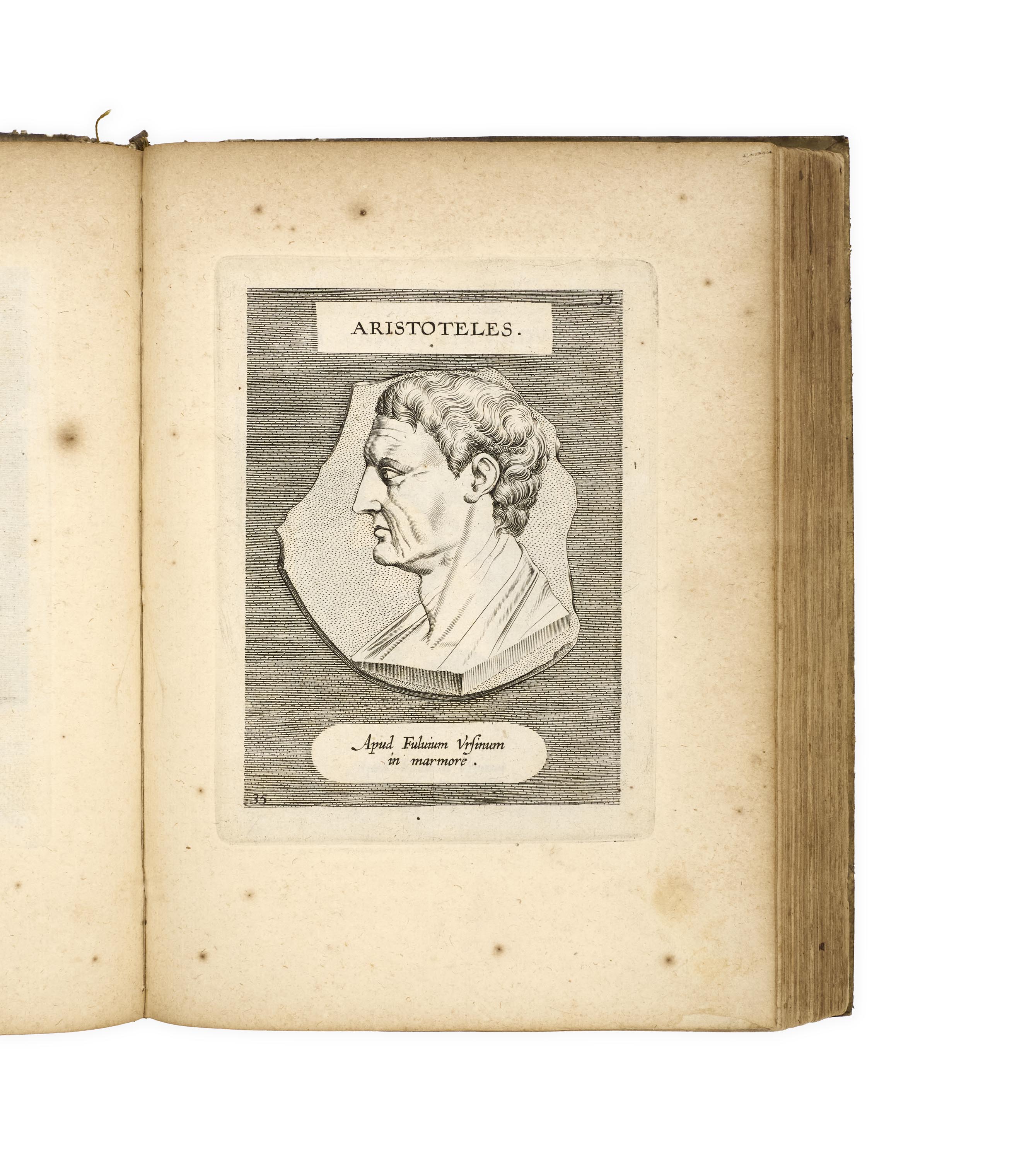
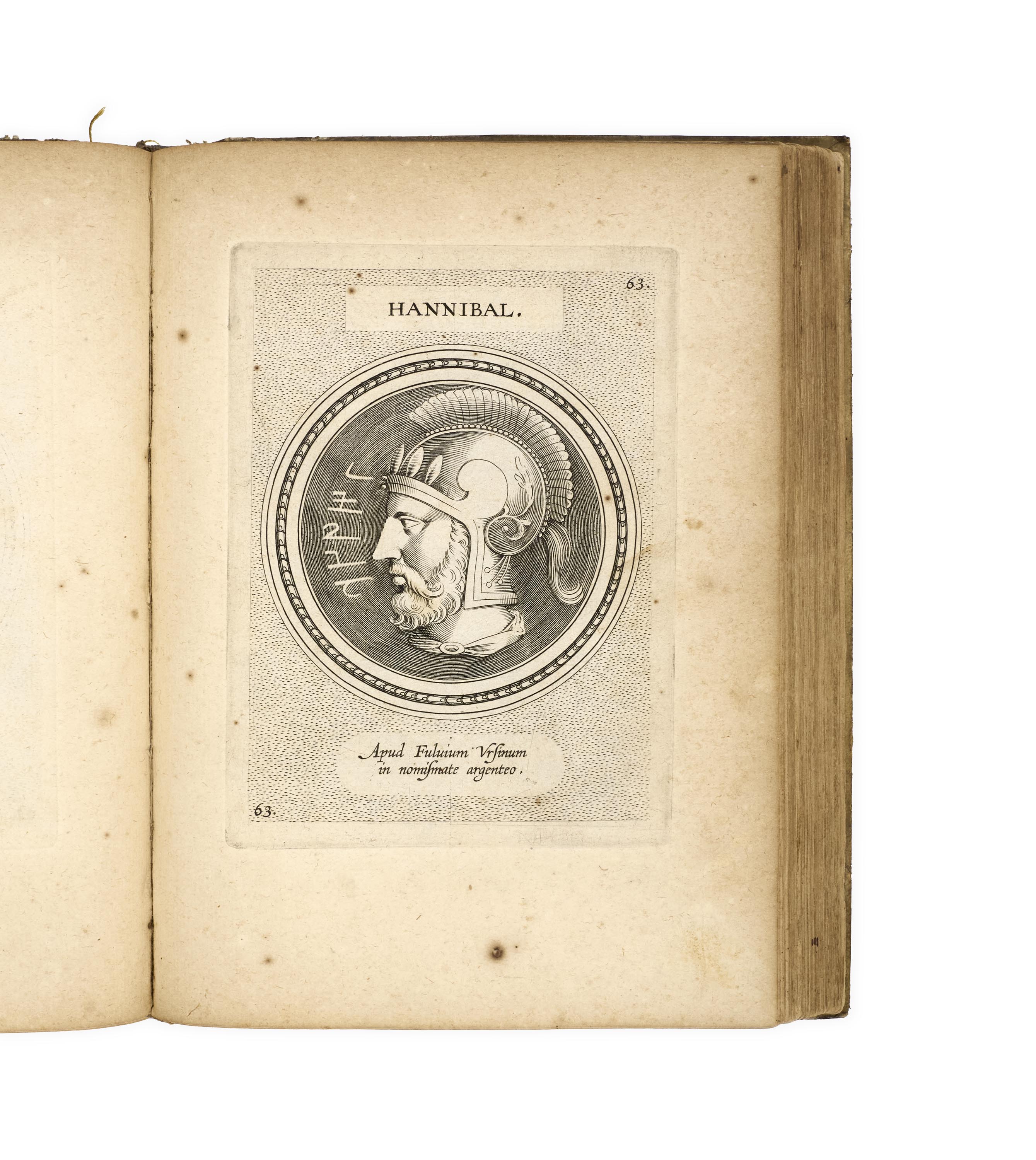
First edition of Faber’s commentary, with the expanded second edition of Galle’s fine engravings, together presenting authentic portraits of Roman and Greek historical figures from ancient coins and sculptures.
The portraits are mostly derived from coins in the cabinet of the Roman antiquary Fulvio Orsini (1529–1600), librarian and curator to several cardinals from the Farnese family; he bequeathed his collections to Cardinal Odoardo Farnese. While visiting Rome in 1596 Galle had made hundreds of sketches from Orsini’s collection from which, on returning to Antwerp, he had published a series of detailed engravings in 1598. Although Orsini had published his own work on classical portraits and associated inscriptions in 1570, he had revised his opinions – including rejecting portraits he had previously considered genuine – in the intervening decades and provided his notes to Johannes Faber (1574–1629) of Bamberg; Faber’s Commentarius was first published in 1606, accompanying an expanded second edition of the Imagines with seventeen new plates.
‘As it is represented by the publications of Galle (1598) and Faber (1606), the last phase of Orsini’s iconographical work is less concerned with celebrating the glory of the ancients … and more concentrated with the practice of authenticating ancient portraits … The new work succeeded in being the first iconographic treatise of practical use to archaeologists and artists and to all those who seek the most authentic portrait of a particular subject’ (Dwyer, p. 469).
Provenance:
The British lawyer, officer, and later politician Lt Col Airey Neave (1916–1979) served in the Battle of France, being captured at the Siege of Calais; after escaping from Toruń he was sent to Colditz Castle whence, after one failed attempt, he became the first British prisoner-of-war to stage a successful escape. On returning to England in 1942 he joined MI9, assisting Allied personnel on the Continent to escape or evade capture, and at the end of the War served in the International Military Tribunal at Nuremberg. Over the course of his military career he was awarded the Military Cross, Distinguished Service Order, Member and later Officer of the British Empire, and the US Bronze Star. He was elected MP for Abingdon in 1953 and remained in Parliament until his assassination at the Palace of Westminster in 1979.
Faber: USTC 1003444; STCV 6620962; Imhof, Moretus F-1. Galle: USTC 1003459; STCV 6621654; Imhof, Moretus G-14. Both: Bowen & Imhof, The Illustration of Books published by the Moretuses (1996), pp. 103–104, item 14. See Dwyer, ‘André Thevet and Fulvio Orsini: The beginnings of the modern tradition of classical portrait iconography in France’ in The Art Bulletin LXXV (1993), pp. 467–480.