GALLARATI, Paolo.
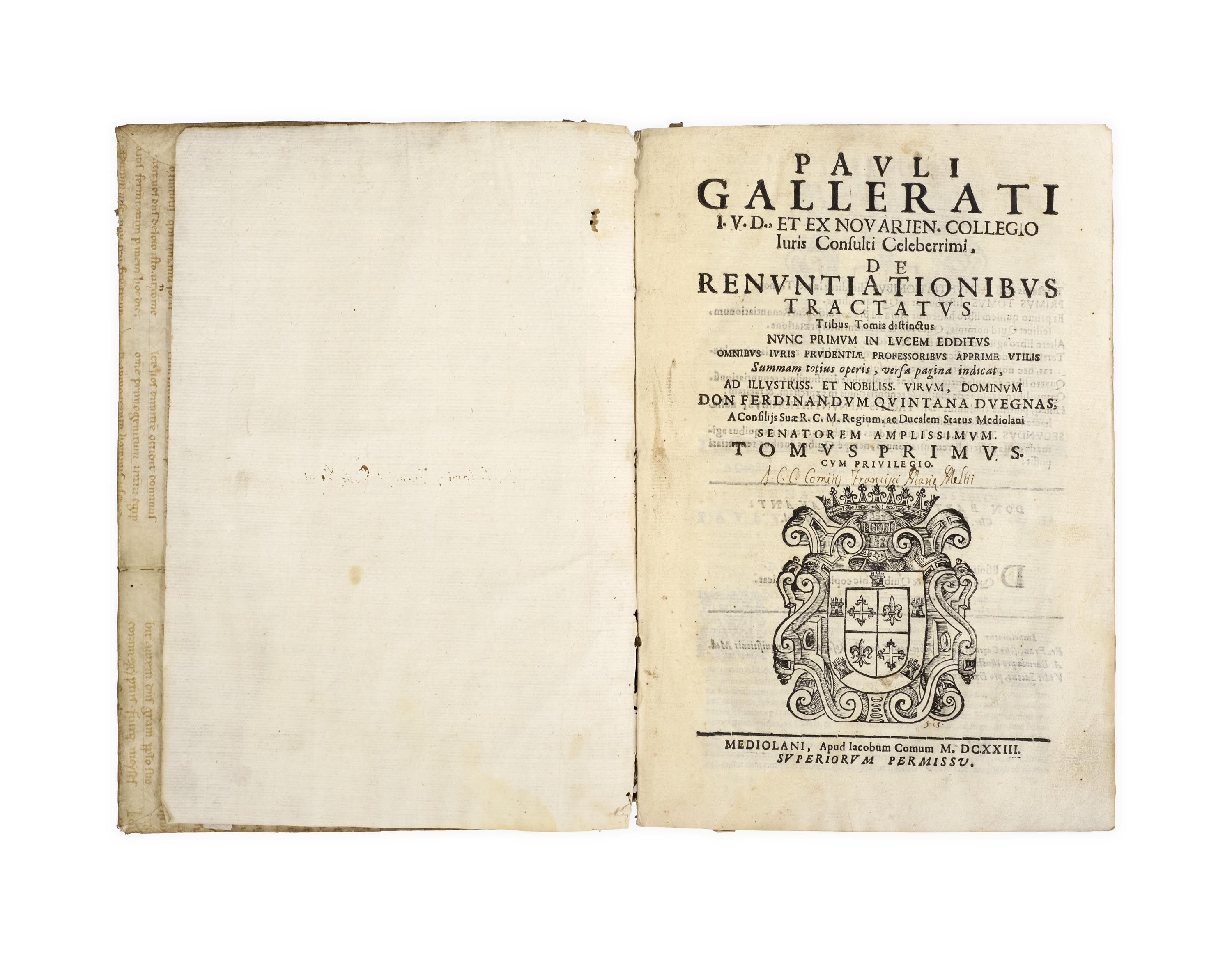
Pauli Gallerati I.U.D., et ex Novarien. Collegio Iuris Consulti celeberrimi, de renuntiationibus tractatus tribus tomis distinctus nunc primum in lucem edditus … Tomus primus [– secundus]. Milan, Giovanni Giacomo Como, 1623.
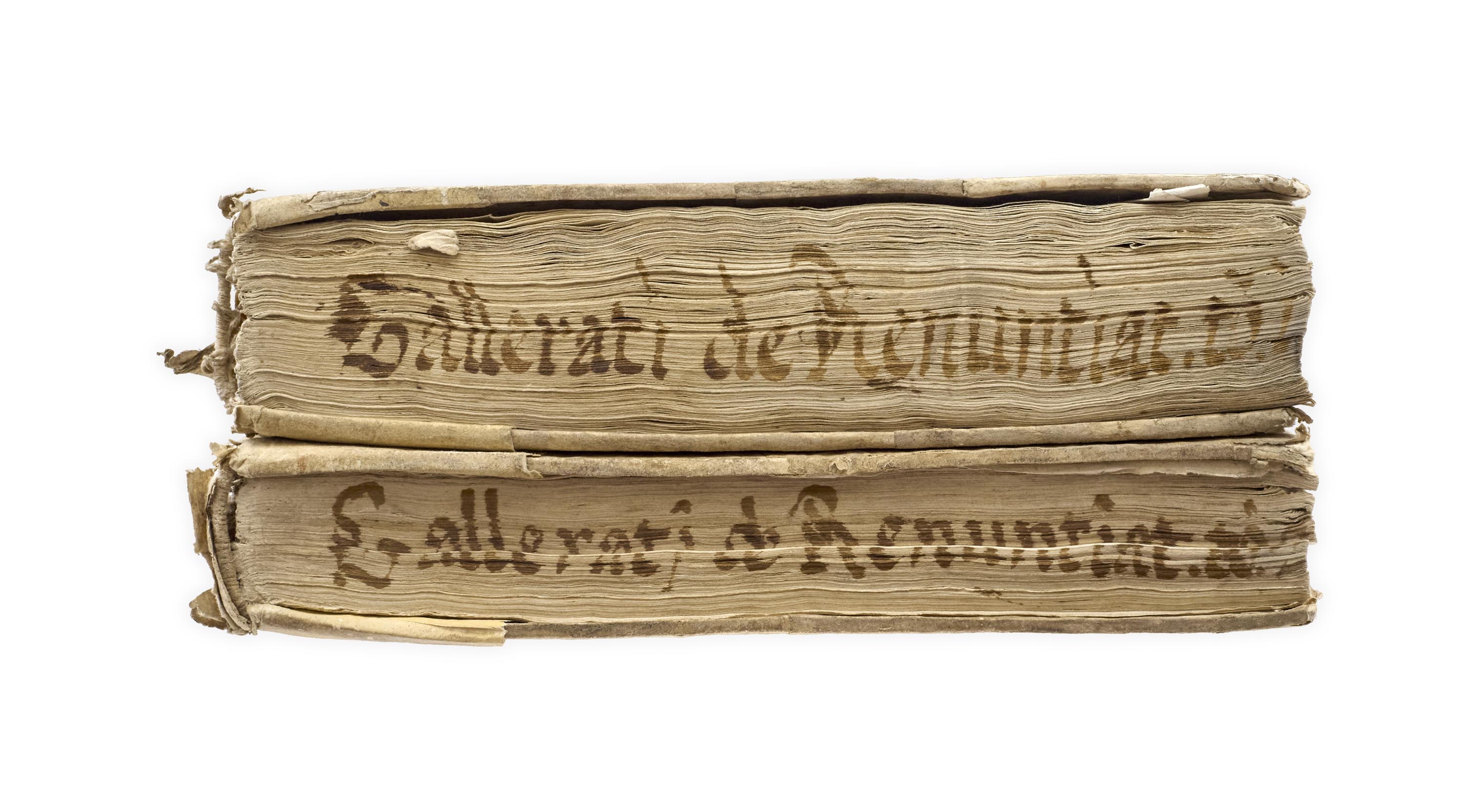
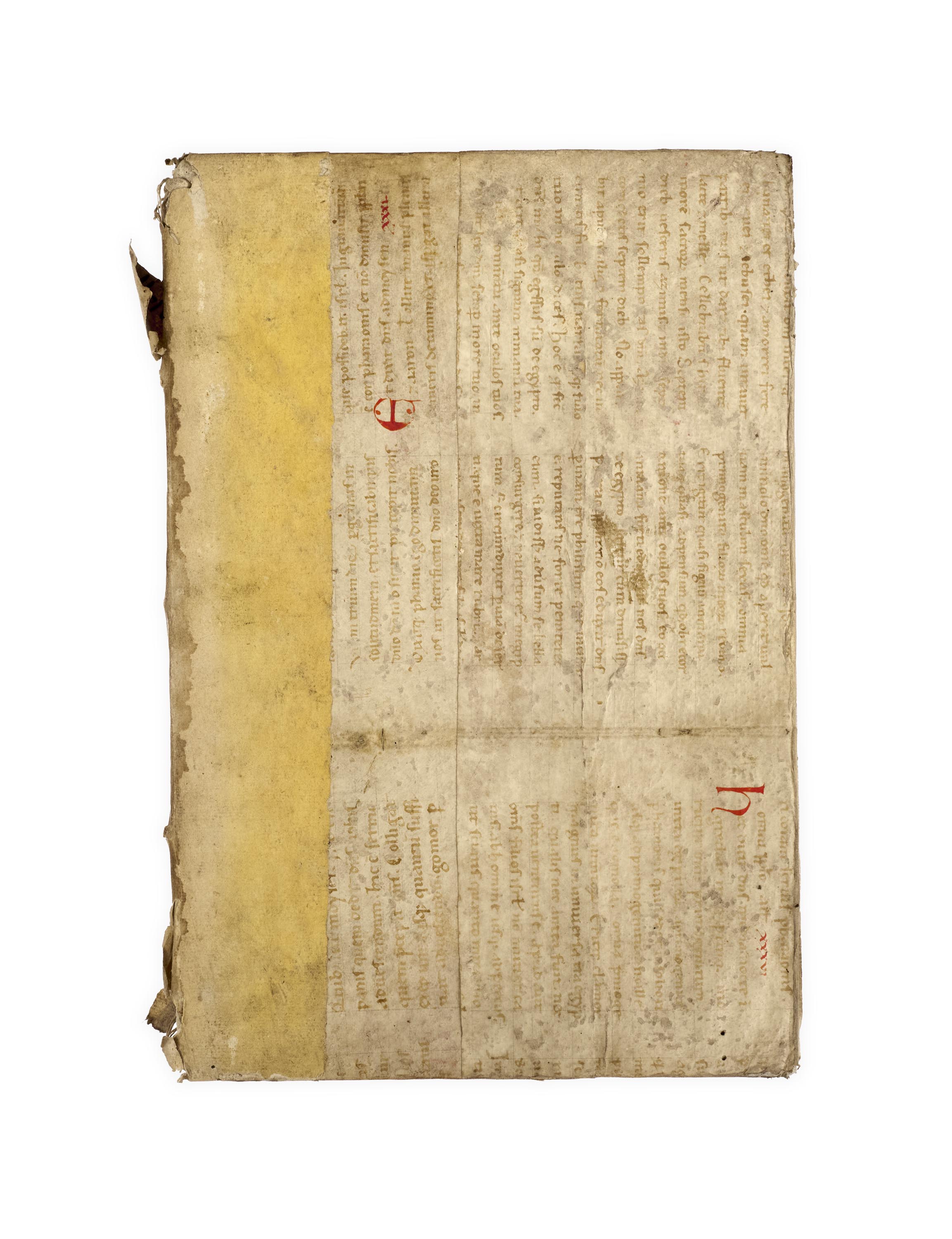
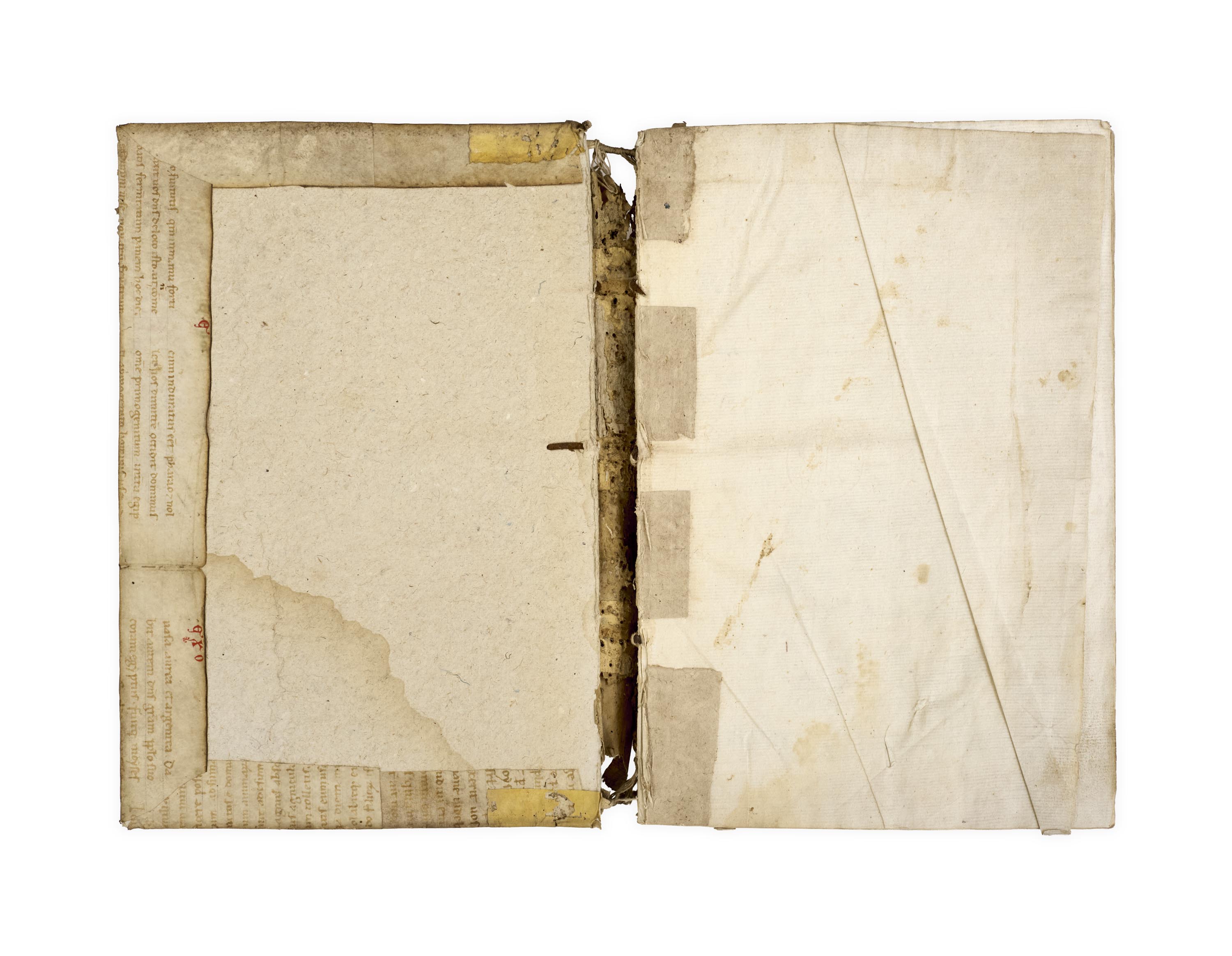
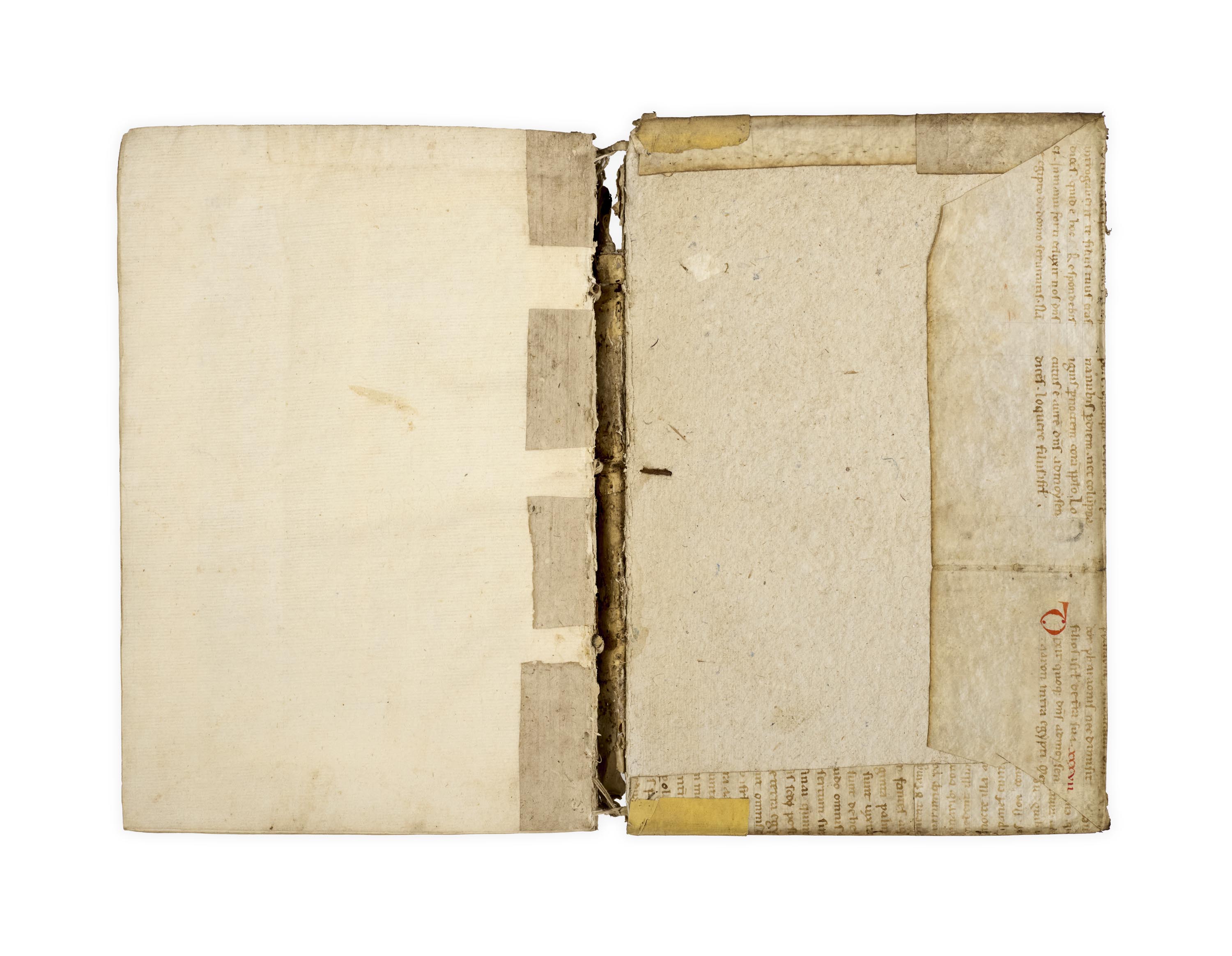
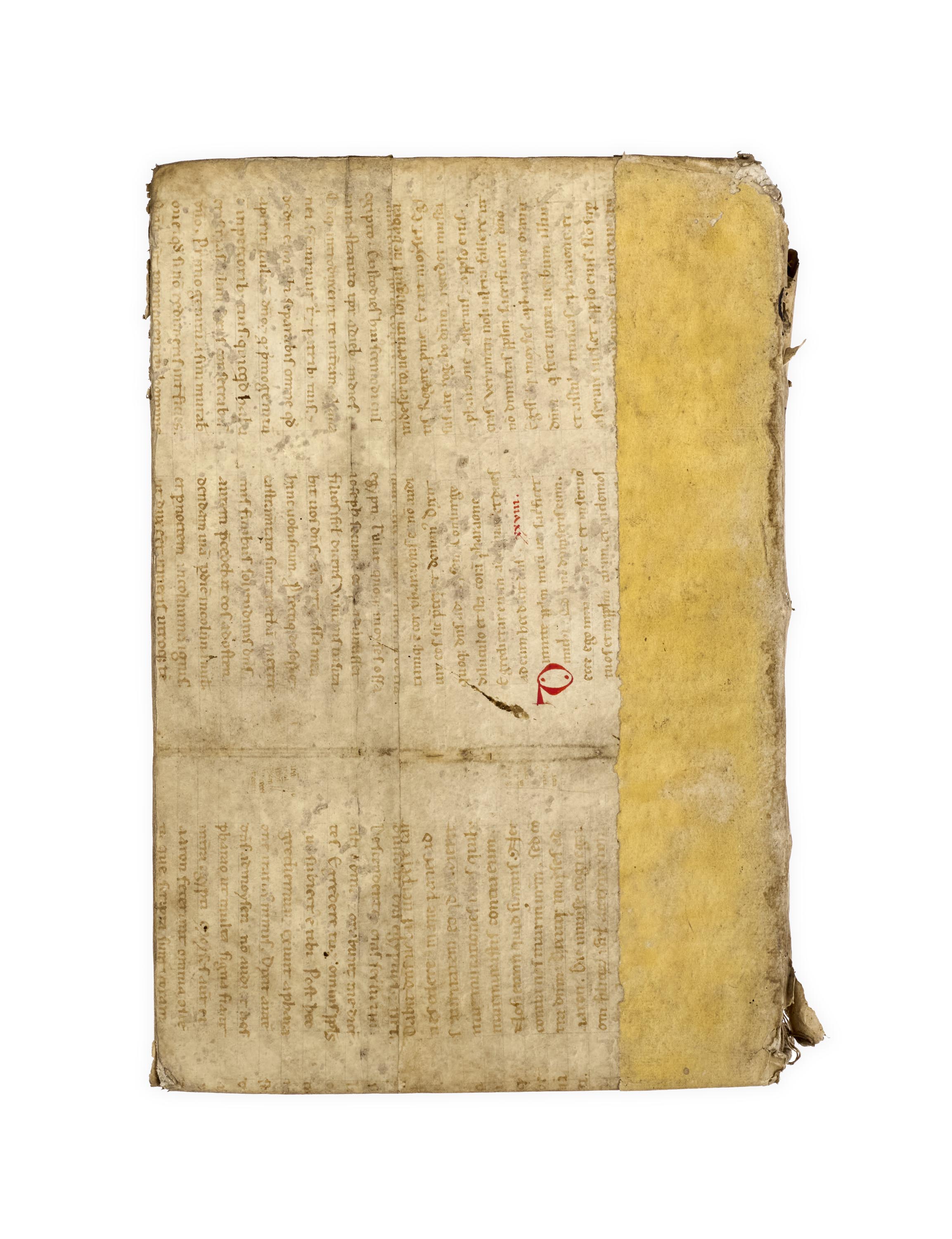
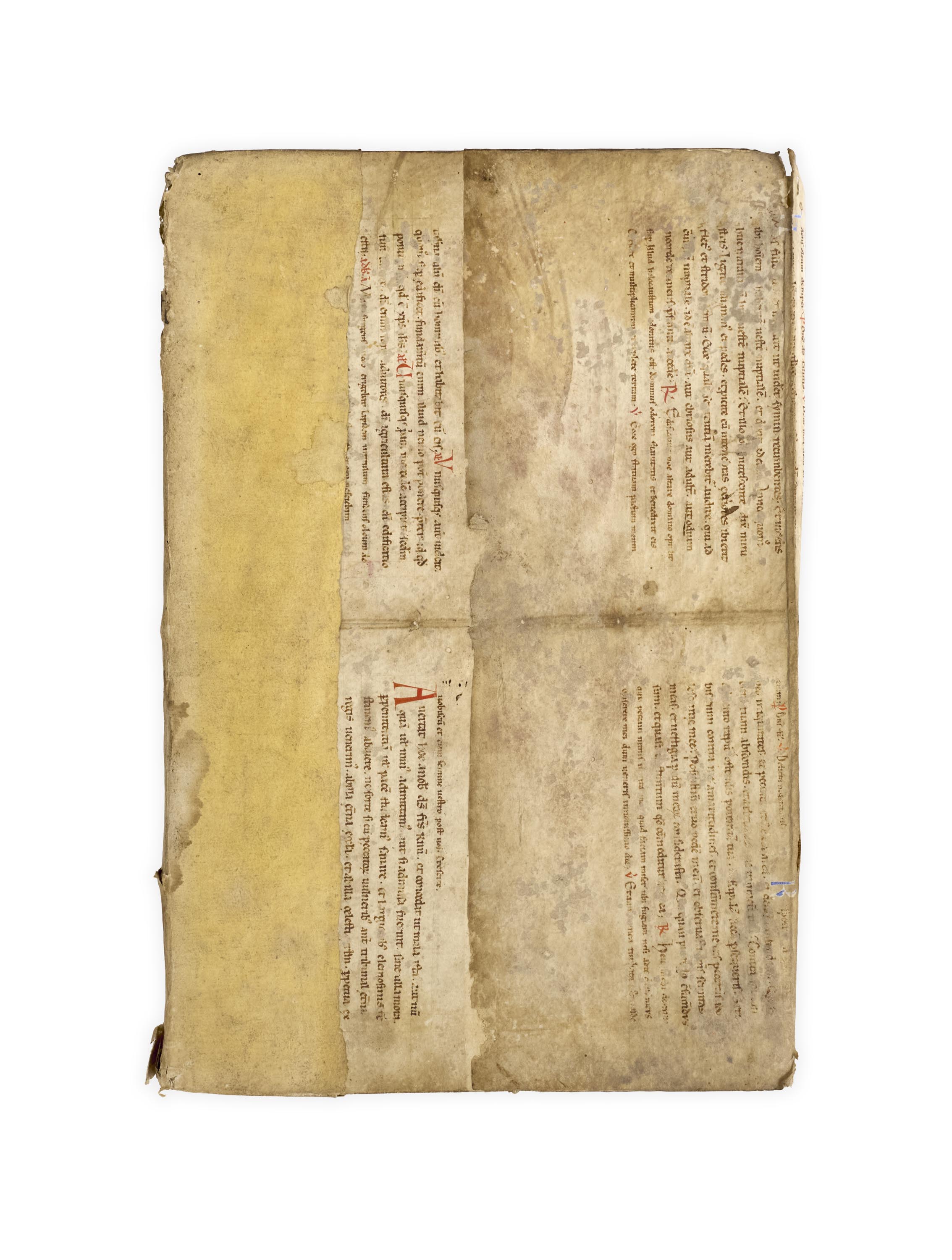
Two vols (of three), folio, pp. [60], 428; [4], 392, [36, index]; text in double columns, woodcut arms to titles and to vol. I dedication, woodcut initials and headpieces; vol. I with small losses to blank lower margins of b4–c2, some damp-staining at beginning and end, vol. II with small paper-flaw to upper margin of GG4, very small worm track to inner margins of quire Ii, and occasional light marks; good copies in contemporary pasteboard, flat spines covered with yellow paper with titles in manuscript, boards covered with fragments from two different medieval manuscripts (see below), ‘Gallerati de Renuntiat to. 1 [–2]’ in manuscript along lower edges; losses at head and foot of spines, some wear to corners and rubbing to covers, hinges of vol. I split, some worming to hinges and endpapers; inscription to titles ‘J.C.C. Comitis Francisci Marie Meltii’, occasional underlining, a few marginal annotations.
Added to your basket:
Pauli Gallerati I.U.D., et ex Novarien. Collegio Iuris Consulti celeberrimi, de renuntiationibus tractatus tribus tomis distinctus nunc primum in lucem edditus … Tomus primus [– secundus].
The first two volumes of the expanded second edition (first Novara 1616) of Paolo Gallarati’s famous and much reprinted work on all aspects of the law surrounding renunciation, bound preserving fragments from a twelfth-century Italian Breviary and a thirteenth-century Italian Bible.
The third volume was published by Como in 1624. Born in Novara, Gallarati taught law at Turin and Pavia, where he died in 1629.
Manuscript fragments:
The first volume preserves four fragments from two bifolia (160/170 x 390 mm, 45/75 x 390 mm) from a Bible in Latin (Italy, early thirteenth century), text in double columns, 38 lines per complete column, written above top line in pale brown ink in a gothic bookhand, ruled with plummet, four two-line initials in red set out slightly into margins, headline ‘Exo’ in red visible to front turn-in; somewhat rubbed and marked, affecting legibility in places.
These substantial fragments contain part of the text of Exodus (parts of chapters 8, 9, 11–14, and 16), the passages here narrating, inter alia, two of the ten plagues of Egypt: the plague of flies and the plague on the firstborn.
The second volume preserves two bifolia (each 260 x 360 mm) from a Breviary in Latin (Northern Italy, late twelfth century); text in single columns written in dark brown ink in two sizes of a gothic bookhand, 30–32 lines, ruled with a hard point, two-line initials alternately in red and blue set out slightly into margins; slightly soiled and rubbed, affecting legibility in places.
The bifolia are from an attractive early Breviary, with readings and prayers for the Dedication of a Church and the Office of the Dead, which are found at the end of the Breviary following the Common of Saints. The readings come respectively from Sermones suppositii de Sanctis 229 and Job chapter 10.
One copy traced in the UK (BL) and three in the US (Library of Congress, University of Michigan, Yale).
USTC 4003007.