Napoleonic Chess
GIACOMETTI, Francesco.
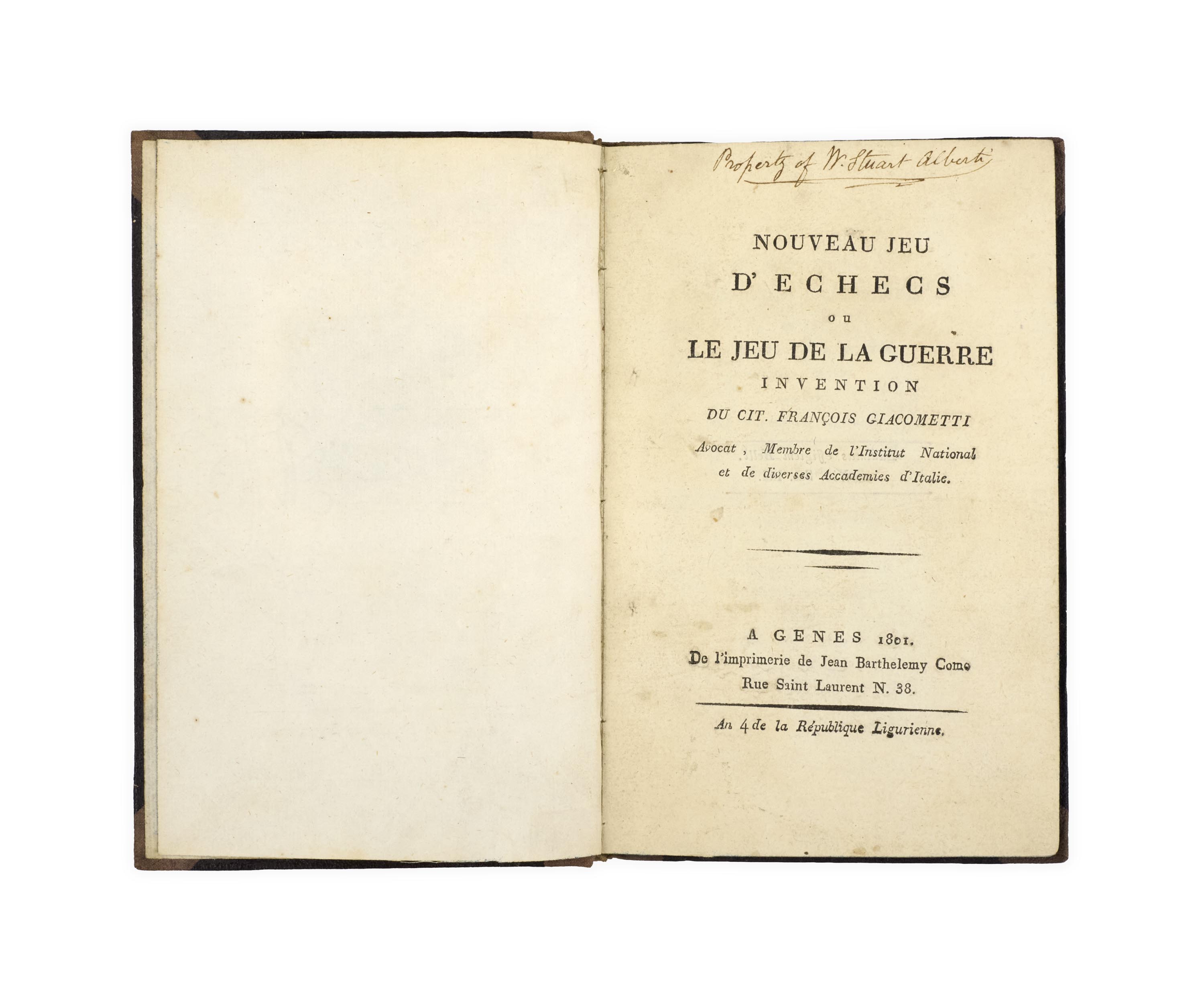
Nouveau jeu d’échecs ou Le jeu de la guerre … Genoa, Jean Barthelemy Como, 1801 (‘An 4 de la République Ligurienne’).
8vo, pp. [iv], 115, [1], with 3 engraved plates (of which 2 folding); occasional light spotting, but withal a very good copy in near-contemporary brown pebbled half cloth with black pebbled cloth sides, title gilt to spine, edges sprinkled blue; a few scuffs, spine a little sunned; contemporary inscription ‘Property of W. Stuart Alberti’ to head of title, errata corrected in an early hand throughout and crossed off errata list, twentieth-century pictorial bookplate of Poul Hage to front pastedown.
Very rare first edition in French, thoroughly revised and expanded from the Italian original of 1793, of this treatise introducing a new, republican form of chess devised by the author, a staunch supporter of Napoleon (the dedicatee) in the new Ligurian Republic.
‘It is remarkable that, ever since it has been played, none has thought to make modifications [to the game of chess]. The art of war has been improved by the inventions of gunpowder and artillery, and military tactics have changed. Chess, which alludes to the wars of ancient times, is susceptible of new combinations, such that the game, by mimicking modern tactics in its play, might in some sense become an image of our modern wars’ (Avant-Propos, trans.).
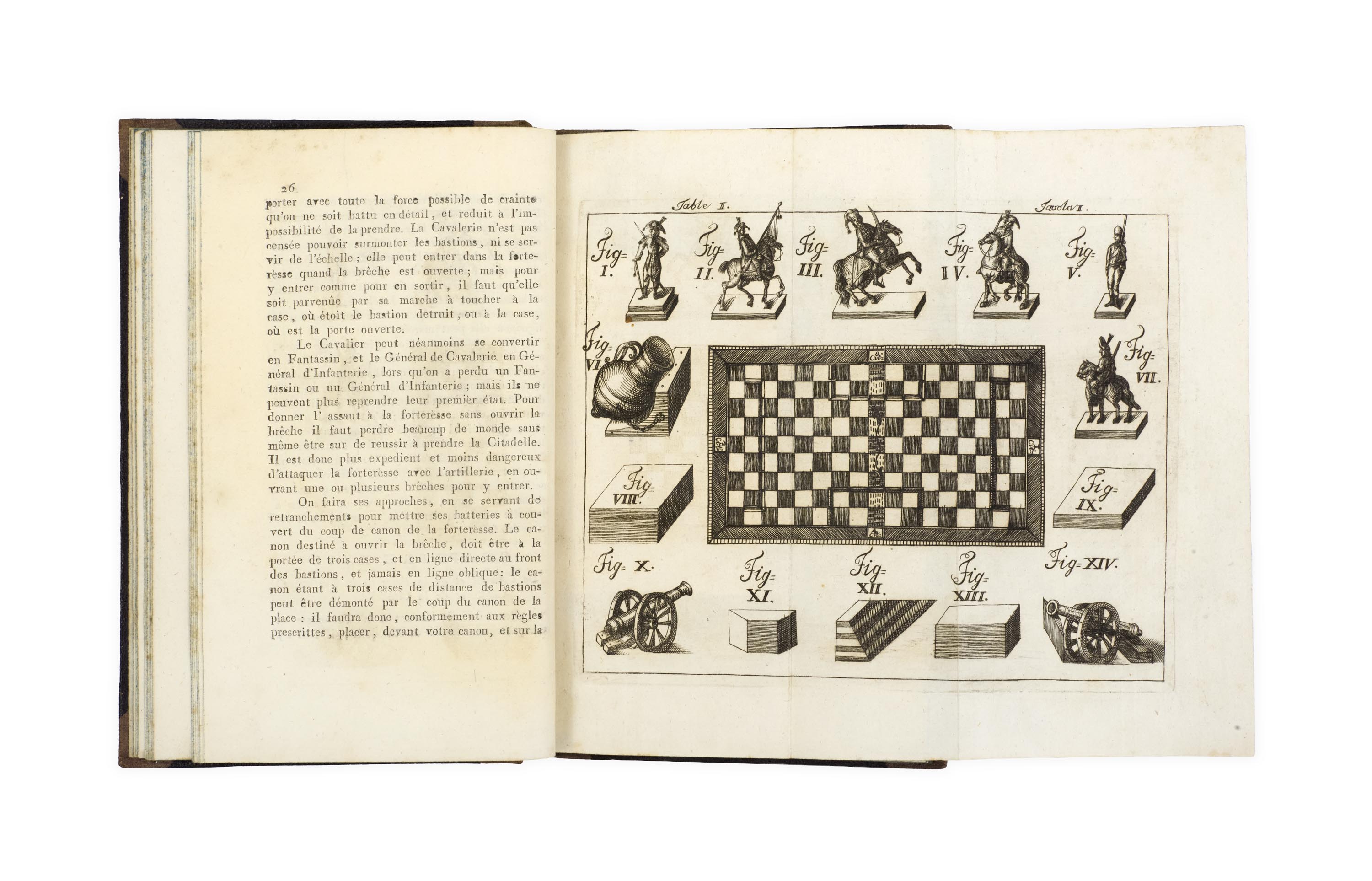
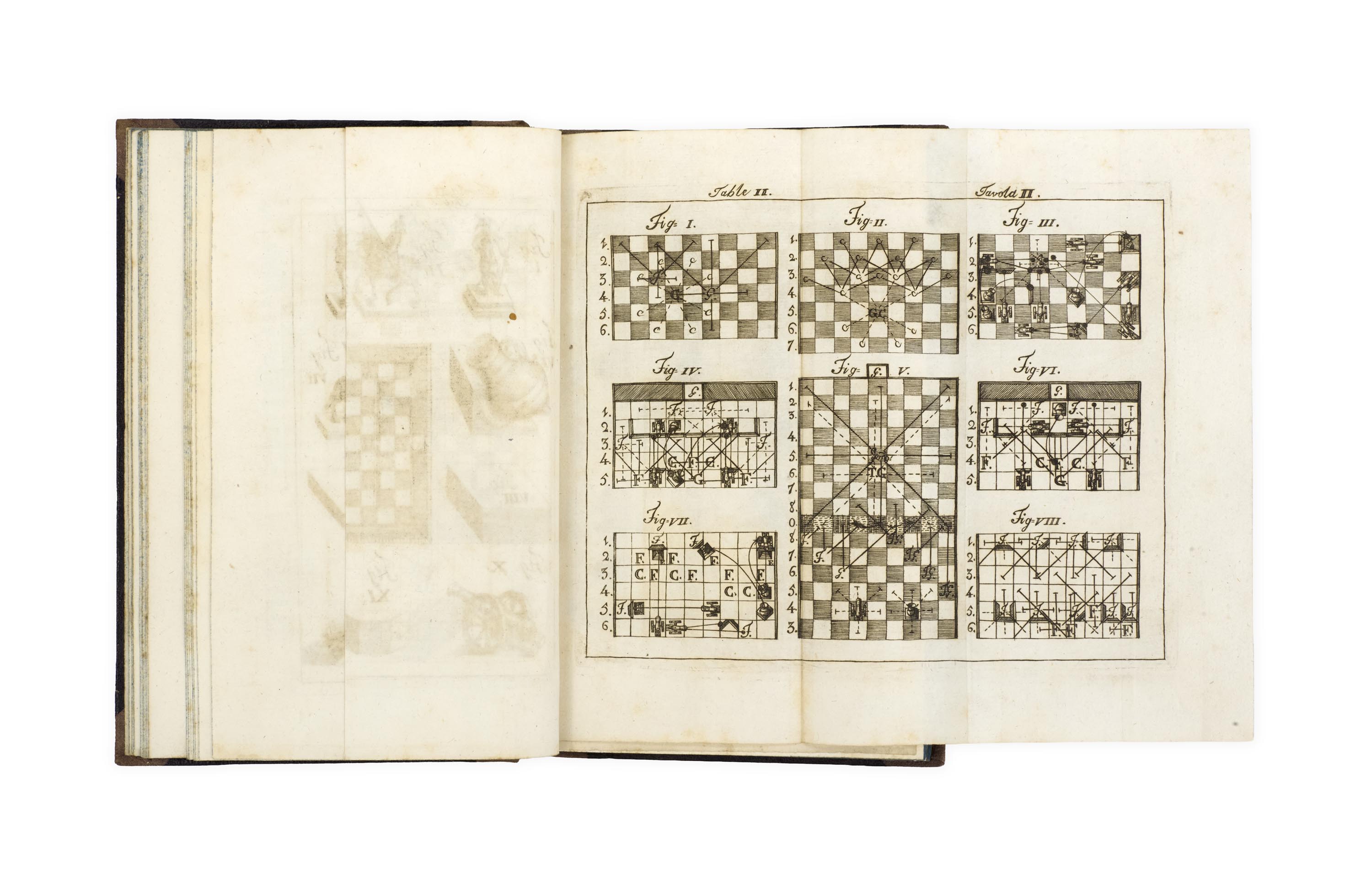
To this end Giacometti, lawyer and secretary of the Genovese Academy of Sciences, introduced a new form of the game: the board would be nine squares by seventeen, divided in the middle by a river; the pieces would include a general, a lieutenant-general, cannon, mortars, bridges, and entrenchments. Most notably, ‘having had the honour to serve my country as consul-general in Provence during the early days of the French Republic, I did away with the king, replacing him with a fortress’ (ibid.) – the capture of which decides the game.
Provenance: Poul Hage (1906–1984), Danish chess master and collector, with his scacchic bookplate.
OCLC and Library Hub find only one copy in the UK (BL) and four in North America (Cleveland Public Library, Harvard, NYPL, Wisconsin-Madison).
Gay, pp. 230–1; Van der Linde, Schachlitteratur 942. Not in L/N; not in Aucta.