Proving the Prowess of a Polyglot Prodigy
GIGLI, Mariano.
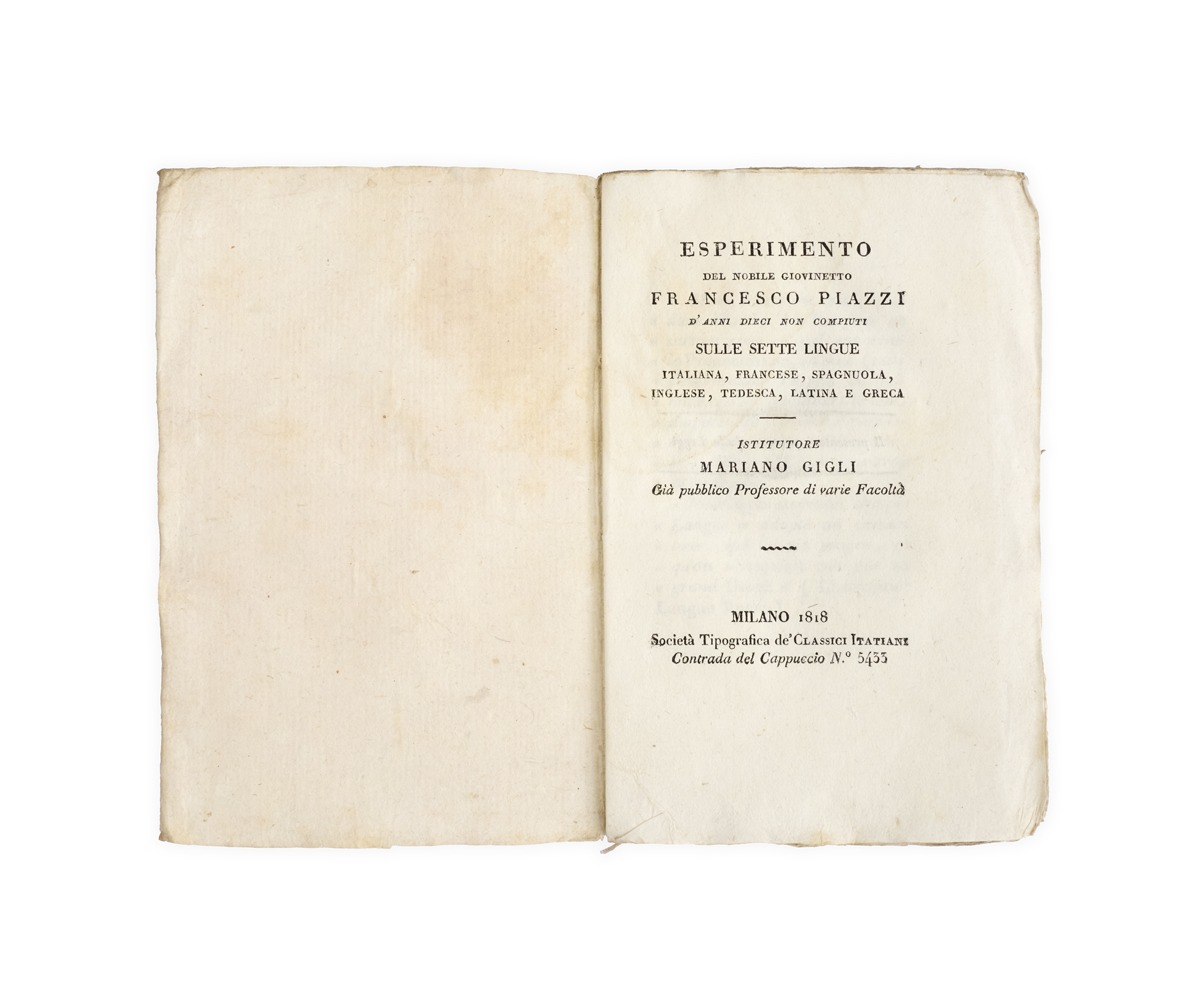
Esperimento del nobile giovinetto Francesco Piazzi d’anni dieci non compiuti sulle sette lingue italiana, francese, spagnuola, inglese, tedesca, latina e greca ... Milan, Società tipografica de’ classici italiani, 1818.
12mo, pp. 196; pale dampstain at inner margin, sporadic light foxing; else a very good copy, uncut, in contemporary pink wrappers; spine sunned.
Added to your basket:
Esperimento del nobile giovinetto Francesco Piazzi d’anni dieci non compiuti sulle sette lingue italiana, francese, spagnuola, inglese, tedesca, latina e greca ...
First and only edition, rare, of a series of 450 translation exercises in French, Spanish, English, German, Latin, Greek, and Italian, posed to the ten-year-old linguistic prodigy Francesco Piazzi by his tutor as the culmination of his highly experimental method of linguistic instruction.
The young Piazzi had been entrusted to the tutelage of the Recanati-born professor of natural sciences and algebra Mariano Gigli (b. 1782) by his aunt, the Milanese countess Teresa Crivelli (née Olgiati). Under the belief that children learn more effectively ‘with less time and less strain’ (trans.), Gigli tutored his pupil for an hour a day over the course of eighteen months, with no rote memorisation or external study required outside of his lessons, during which time Piazzi would frequently play or move about. Also designed to be applicable, with some modifications, to schools, Gigli’s method involves a preliminary passive stage of language learning involving the comprehension of language without the imposition of rules, and the more rigorous second phase (to which one can progress after comprehending with ease 1500 lines of text in the target language) of speaking and writing.
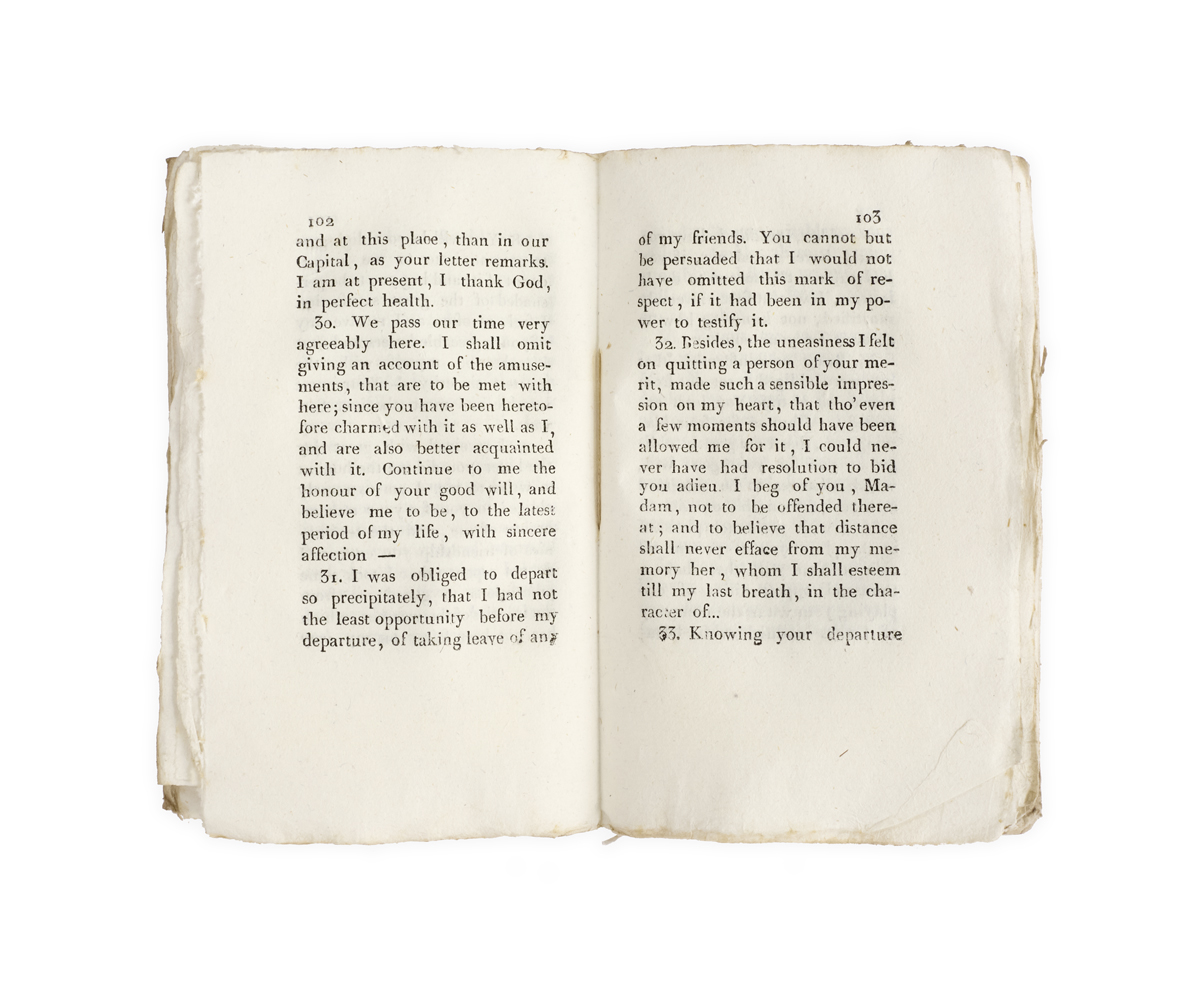
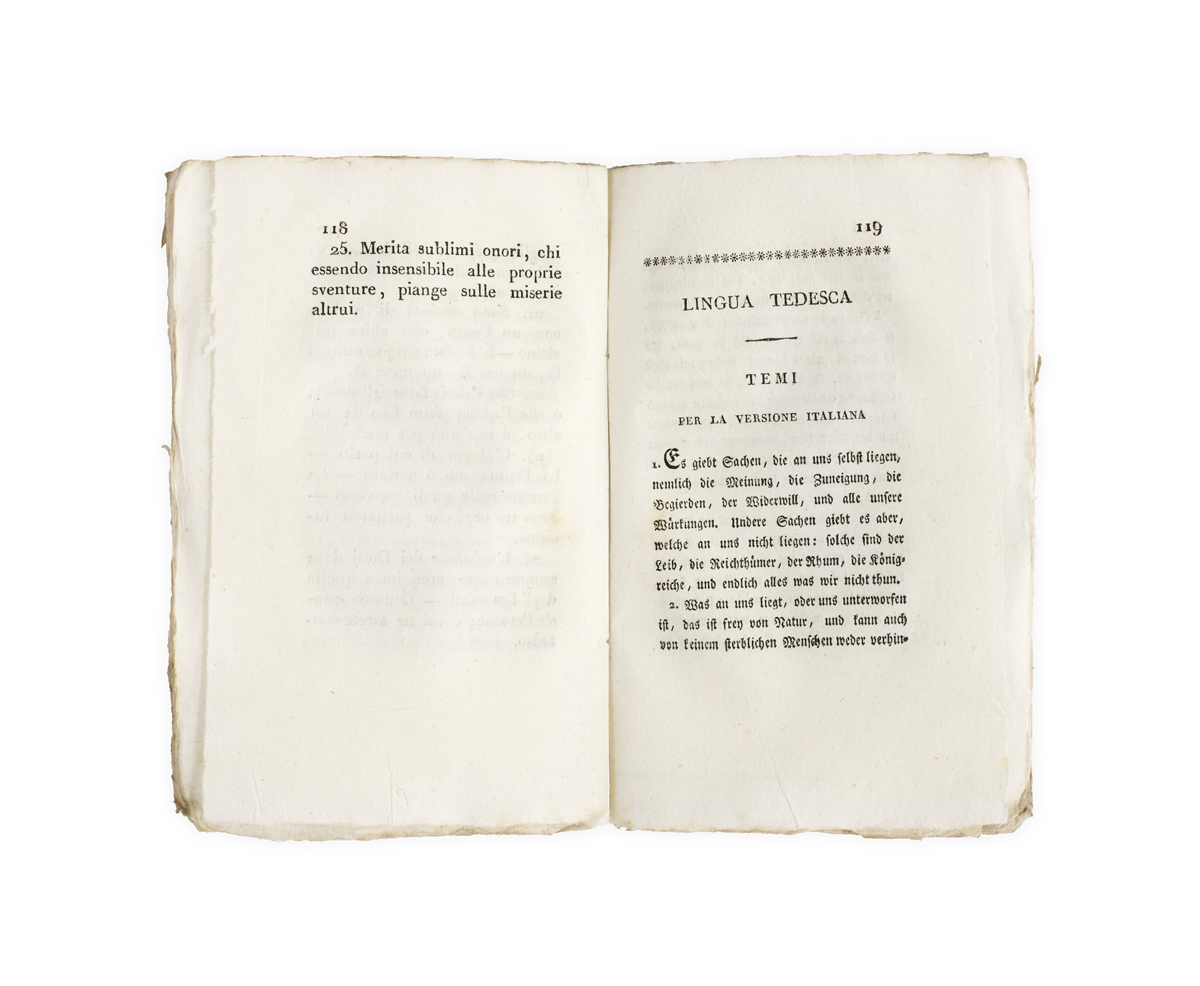
The extracts of text presented here were to be posed to Piazzi, who would then provide a free or literal translation on the spot at the examiner’s request, taking a much-needed break between each language; each portion consists of fifty extracts in each foreign language to be translated into Italian, followed by twenty-five short (but linguistically challenging) phrases in Italian to be translated into the source language. Among the source texts are German moral tales abridged from Borroni’s 1794 Dialoghista italiano-tedesco, extracts from Lessing’s fables, English excerpts from Goldsmith’s History of Rome and Porny’s Models of Letters in French and English, and Fénelon’s Aventures de Télémaque in French and Spanish.
Gigli wrote extensively on the philosophy of language and 1808 Analisi delle idee ad uso della gioventù had been an important early source on the function of the brain for the young Giacomo Leopardi, who responded to Gigli at the age of fourteen with his essay Dialogo filosofico sopra un moderno libro (see Ferri, ‘Giacomo Leopardi’s Poetry of the Embodied Imagination’, in RISL 12 (2019), pp. 39–64).
We find no copies in the UK or the US.