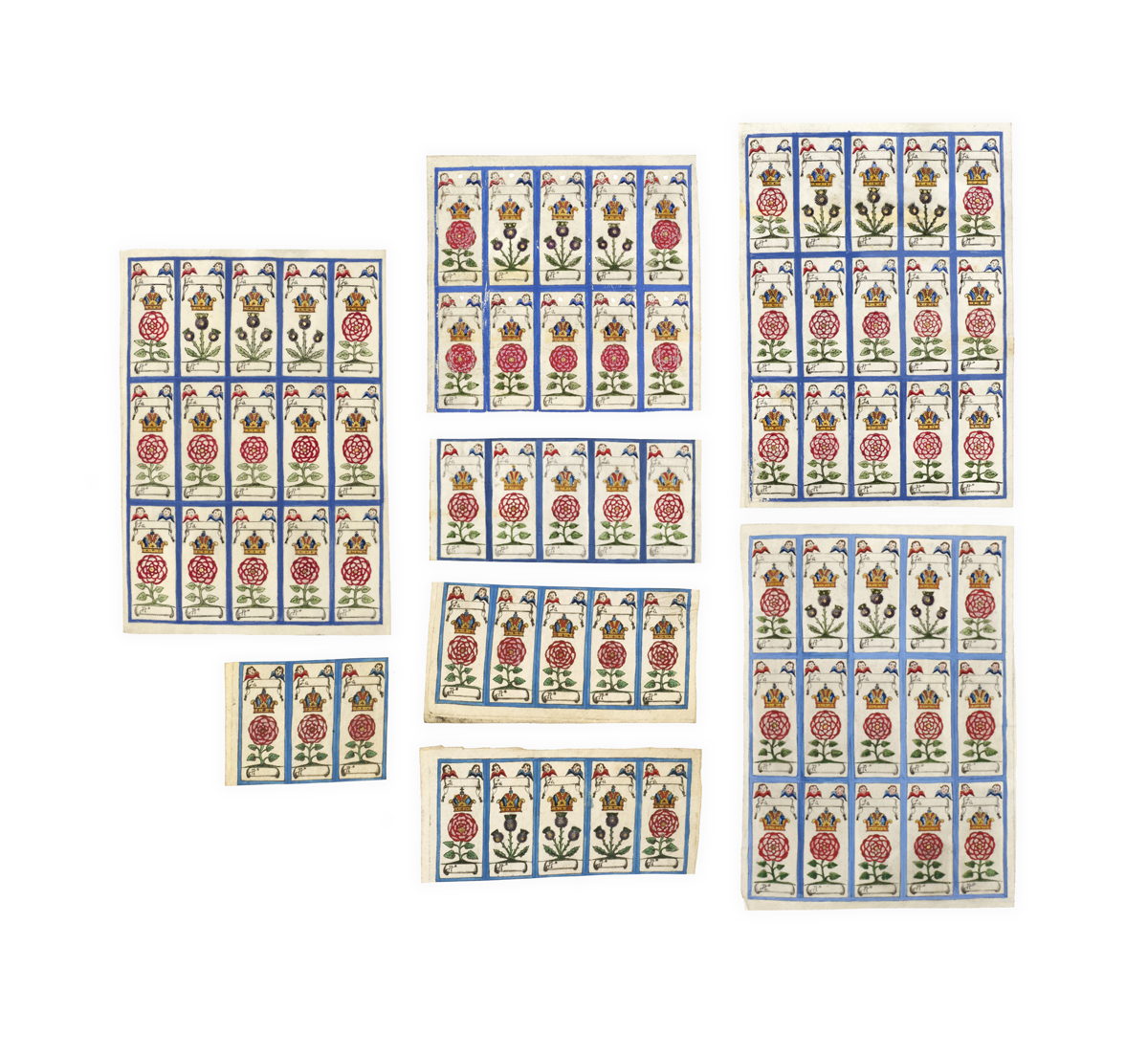
Calligraphic Key-Labels Hand-Illuminated and Printed on Vellum
[GREVENSTUK Brothers.]
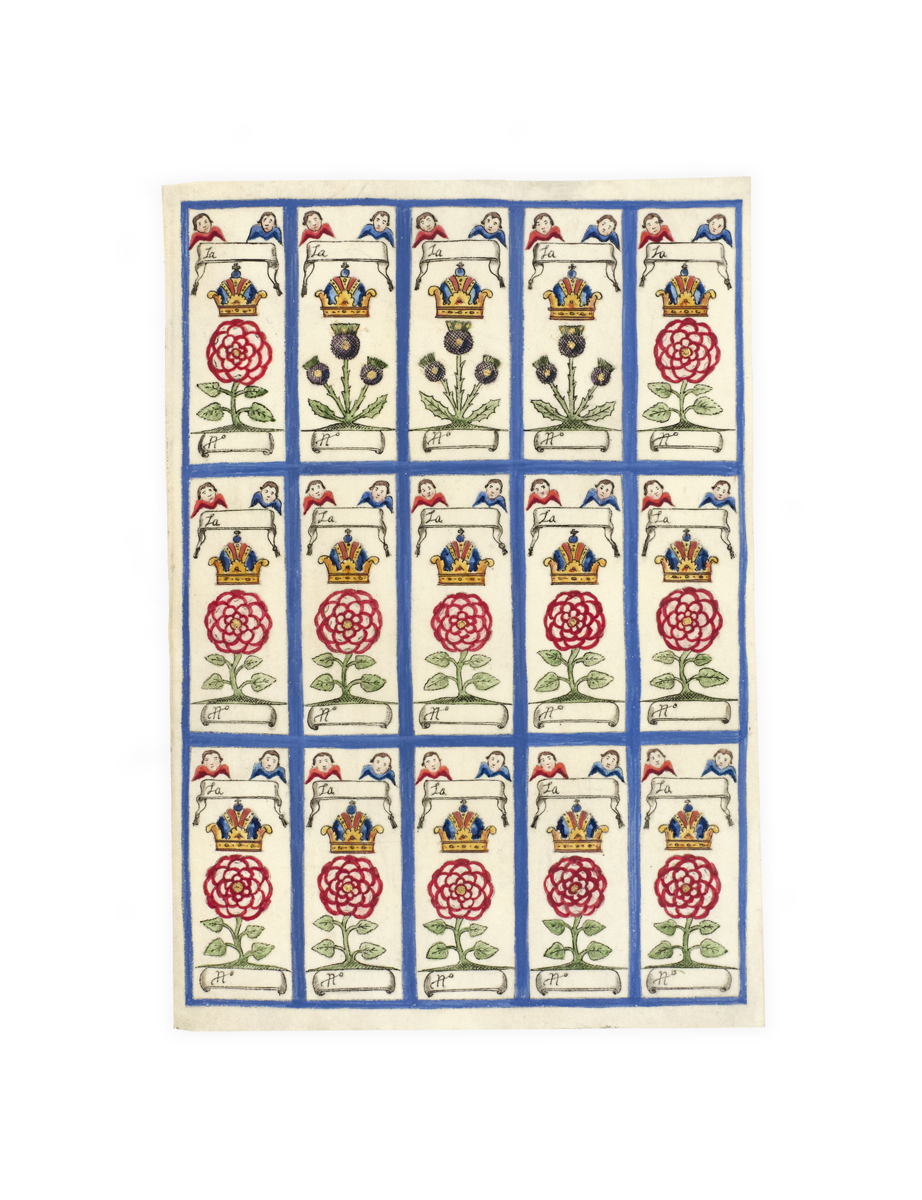
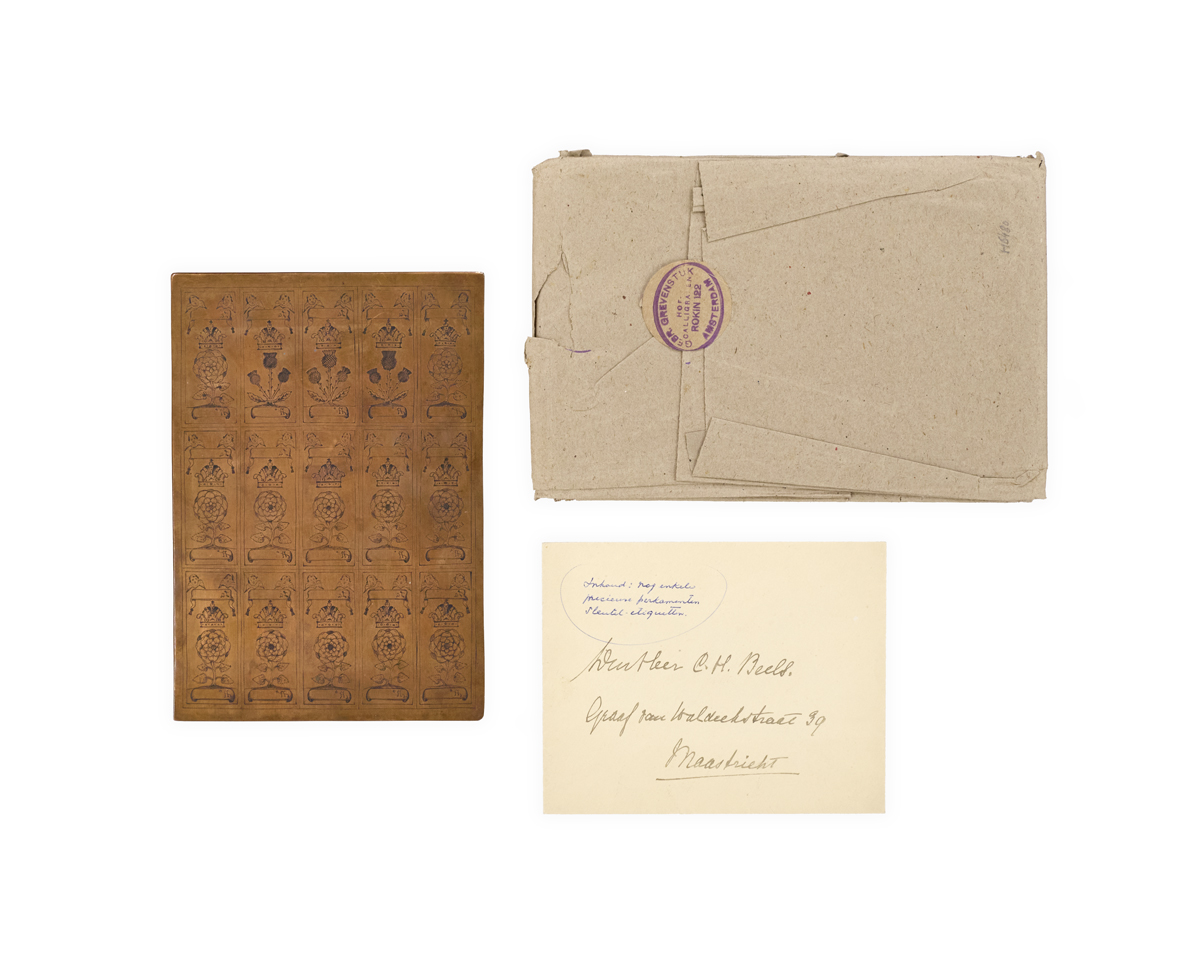
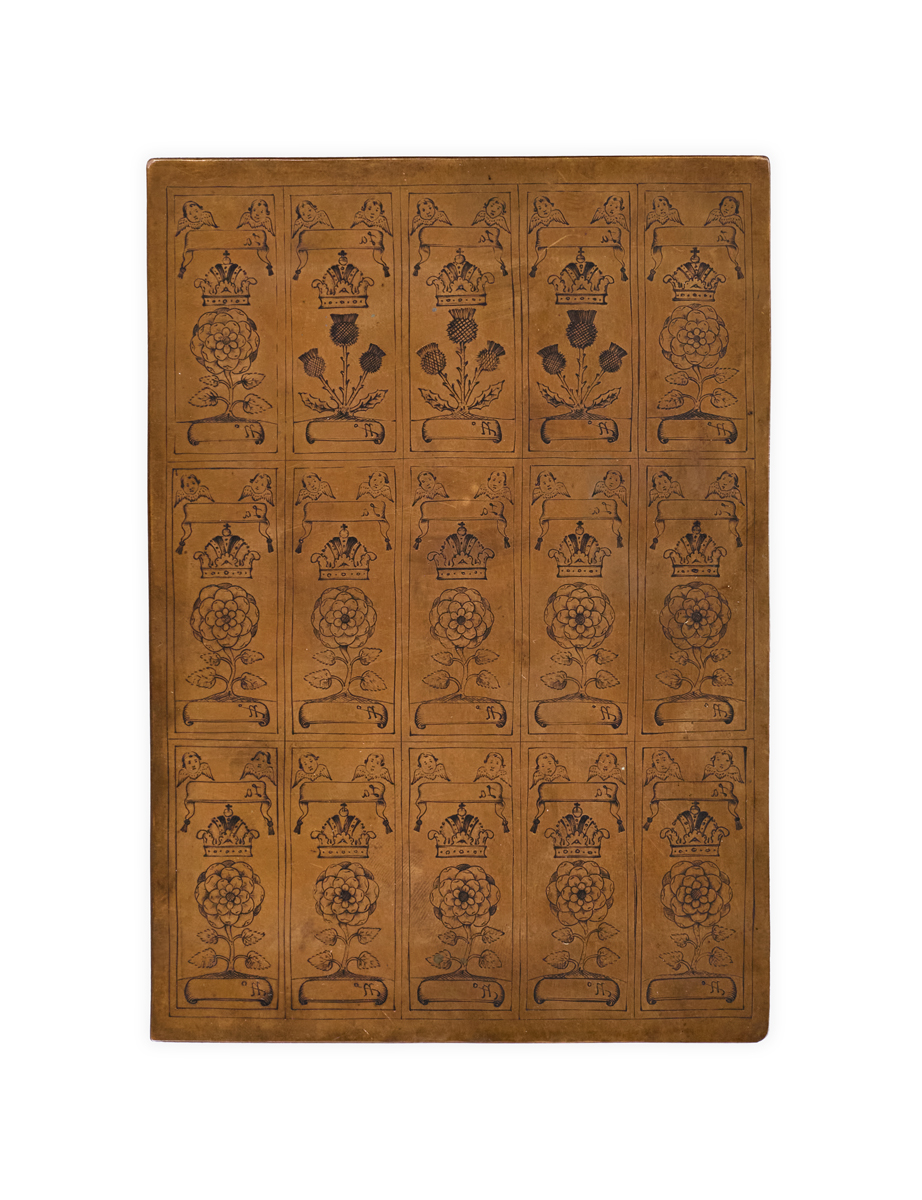
Hand-coloured parchment key labels, with the original engraved copper plate. Amsterdam, [c. 1875–1900].
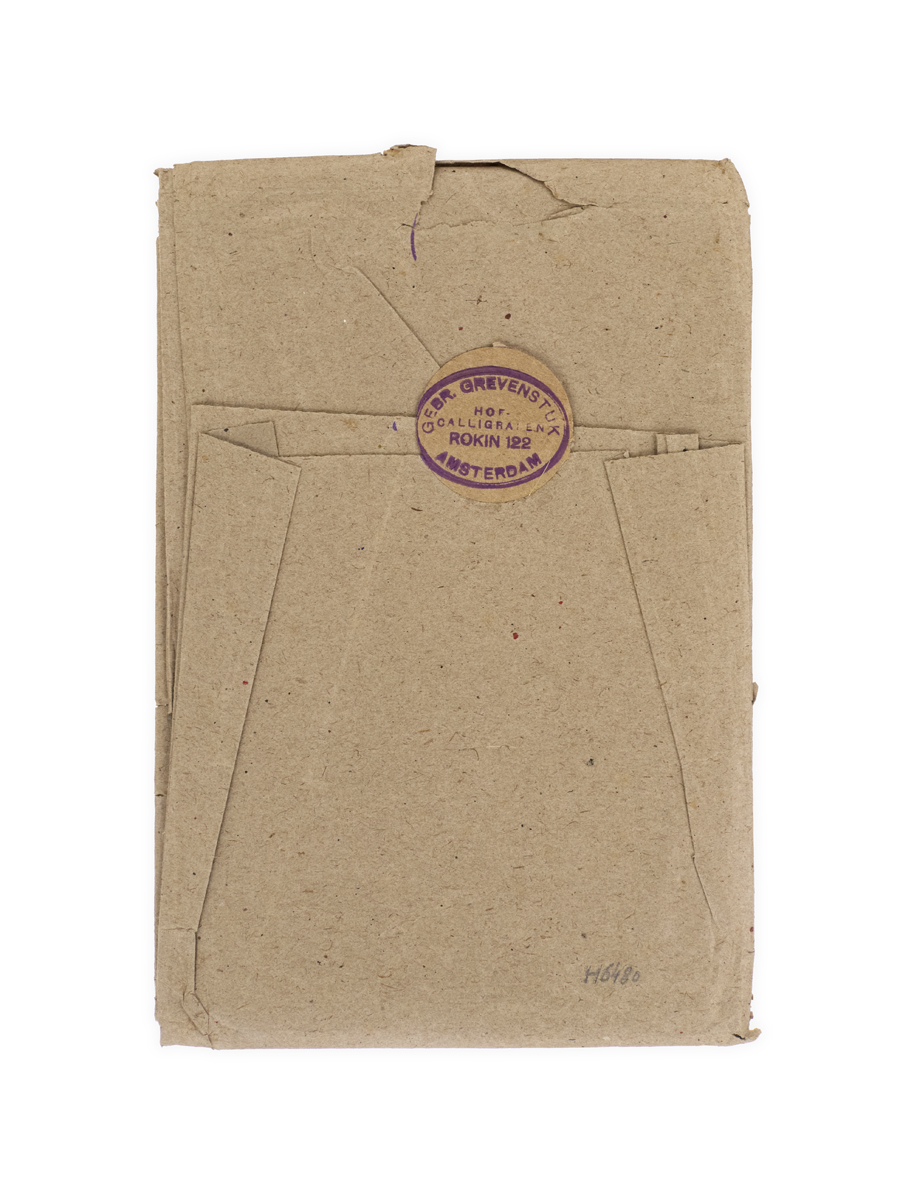
Three full sheets (c. 182 x 128 mm) with 15 labels each, with 5 part-sheets of 3–10 labels and the original engraved copper plate (189 x 131 mm); hand-coloured and heightened in gilt, one part-sheet with a hole punched in each label; traces of adhesive to the verso of one sheet; in a brown paper wrapper addressed ‘Den Wel Edel Geboren Heer | Chr. Beels’ in ink and sealed with the label of the Gebroeders Grevenstuk, with an envelope addressed ‘Den Heer C. H. Beels | Graaf van Waldeckstraat 39 | Maastricht'.
Added to your basket:
Hand-coloured parchment key labels, with the original engraved copper plate.
A rare and curious survival: some seventy key labels, printed on fine vellum and hand-coloured by royal calligraphers for a fin-de-siècle Dutch gentleman, splendidly preserved with the engraved copper plate from which they were printed.
Adorned with Tudor roses and Scottish thistles, these labels were produced by the Brothers Grevenstuk, calligraphers to the Dutch court, for one ‘Chr. Beels’ of Maastricht – likely of the Protestant gentry family of that name. Originally of Rotterdam, the Beelses were great collectors of art, at one point owning the Imhof Prayerbook, the earliest dated work by Simon Bening (1483/84–1561), regarded in his day as ‘the greatest master in the art of illumination in all of Europe’ (Kren, p. 448); part of the family’s collection is now in the Rijksmuseum. Two members of the Beels family by the name of Christiaan appear in the Nederland’s Patriciaat (III, pp. 17–18) of 1912: one born 1862, formerly lieutenant-at-sea second class in the Dutch Navy and now of the firm Testas en Waller, the other working for a forestry firm in Surabaya in the Dutch East Indies.
Active in the late nineteenth and early twentieth centuries, the Brothers Grevenstuk of Amsterdam here advertise themselves as ‘Hof-Calligrafen’. Examples of their calligraphic work survive in several Dutch collections, including the Koninklijke Verzamelingen, but we find no other examples of key labels on parchment either by them or by other craftsmen of the period.
See Kren, ‘New directions in manuscript painting, circa 1510–1561’, in Kren and McKendrick eds., Illuminating the Renaissance: the Triumph of Flemish Manuscript Painting in Europe (2003).