
Epitome of Pythagoras
HIEROCLES of Alexandria.
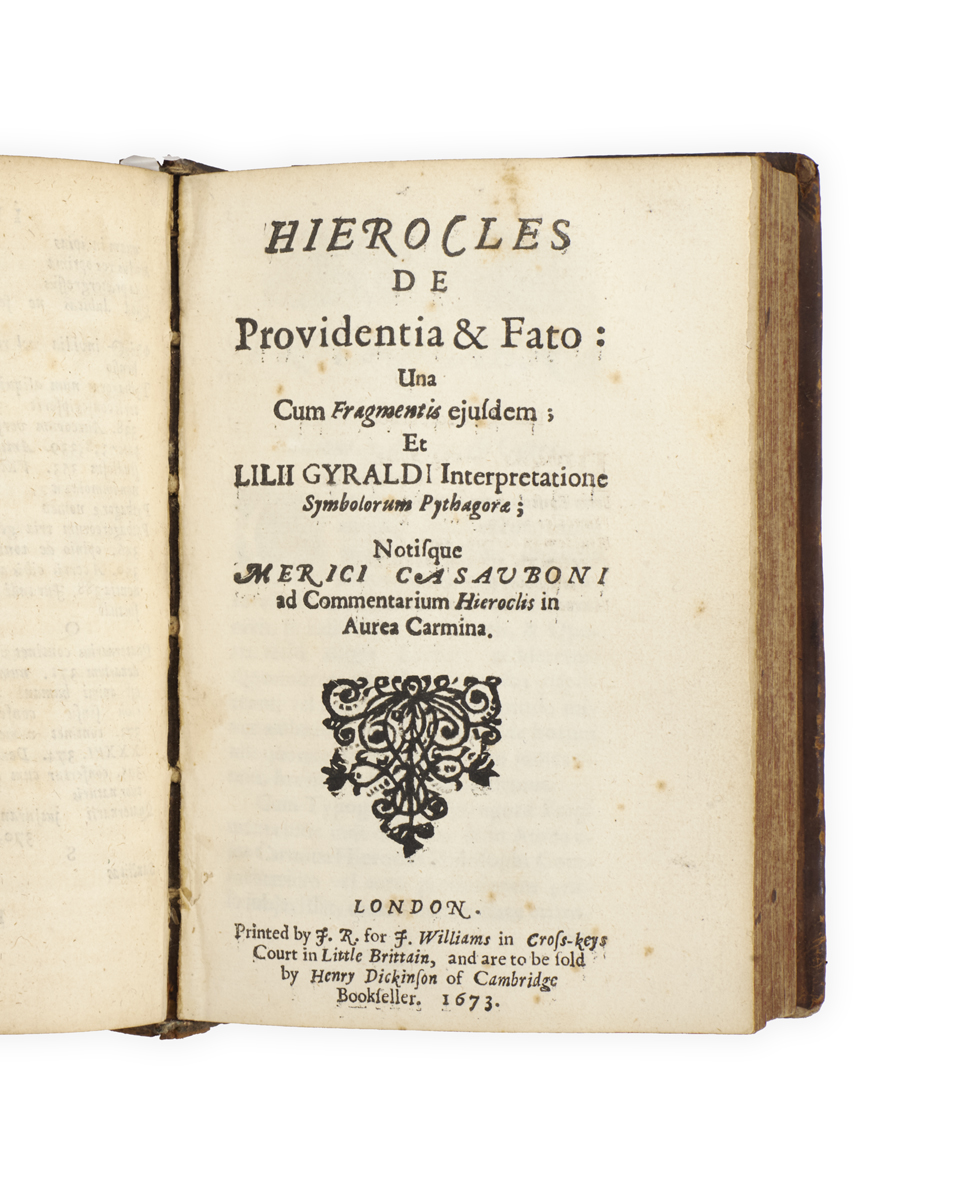
Ύπομνηνα εις τα των Πυθαγορειων επη τα χρυσα … commentarius in aurea Pythagoreorum carmina. Joan. Curterio interprete … London, J. R. [John Redmayne] for J. Williams, and Henry Dickinson, Cambridge, 1673.
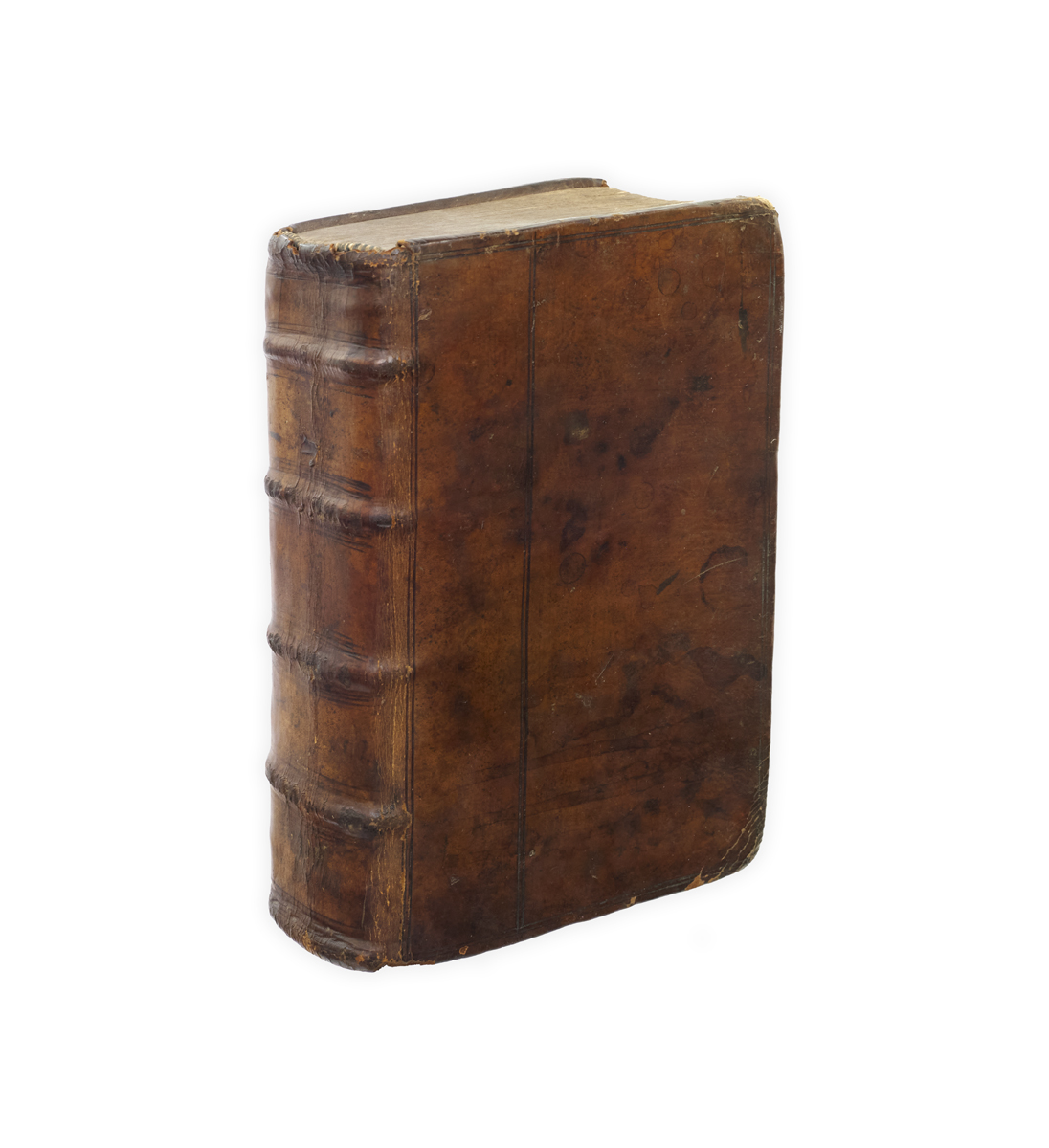
8vo, pp. [32], 433, [3], [64], 189, [1], 193–271, [1]; separate title-pages for ‘Aurea Pythagoreorum Carmina. Latine conversa’, ‘Αστεια … Facetiae’, ‘De Providentia’, and ‘M. Casauboni, Isaaci filii, in Hieroclis Commentarium’, each dated 1673; some foxing to general title-page, else a very good copy in contemporary calf, covers ruled in blind, edges rubbed, headcaps chipped.
Added to your basket:
Ύπομνηνα εις τα των Πυθαγορειων επη τα χρυσα … commentarius in aurea Pythagoreorum carmina. Joan. Curterio interprete …
London edition of the only complete work of Hierocles, his commentaries on the Golden Verses, a valuable epitome of Pythagorean ethical teachings, printed here in the original and in a Latin translation. According to tradition they were put into their present form by Lysis, one of the most eminent of the Pythagoreans, and it is possible that he embodied in their metrical form many of the actual sayings of his master.
The philosopher Hierocles of Alexandria, who flourished about the middle of the fifth century AD, states in his commentary that the Golden Verses ‘are not the private opinion of any particular person, but the doctrine of the whole sacred body of the Pythagoreans, and as it were the common voice of all their assemblies. For this reason there was a law which enjoined each of them, every morning when he rose, and every night at his going to bed, to have these Verses read to him as the oracles of the Pythagorean doctrine’. The Commentaries enjoyed a great reputation among Neoplatonists throughout the middle ages and Renaissance, and there were numerous translations, including one into English in 1657.
Wing H 1935.