Embossed London Panorama
[HORNOR, Thomas.]
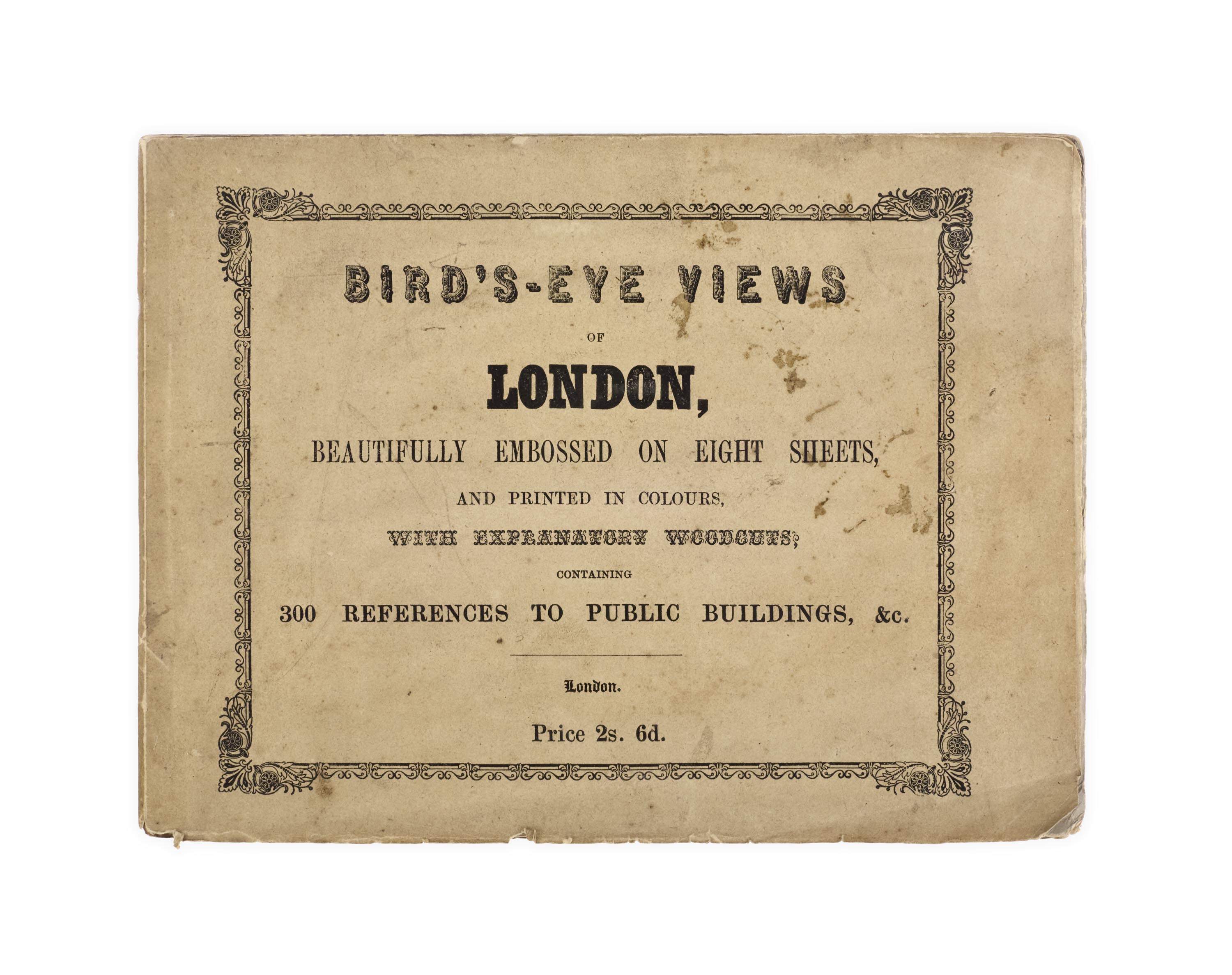
Bird’s-Eye Views of London, beautifully embossed on eight Sheets, and printed in Colours, with explanatory Woodcuts, containing 300 References to public Buildings, &c. London, [c. 1845–1847].
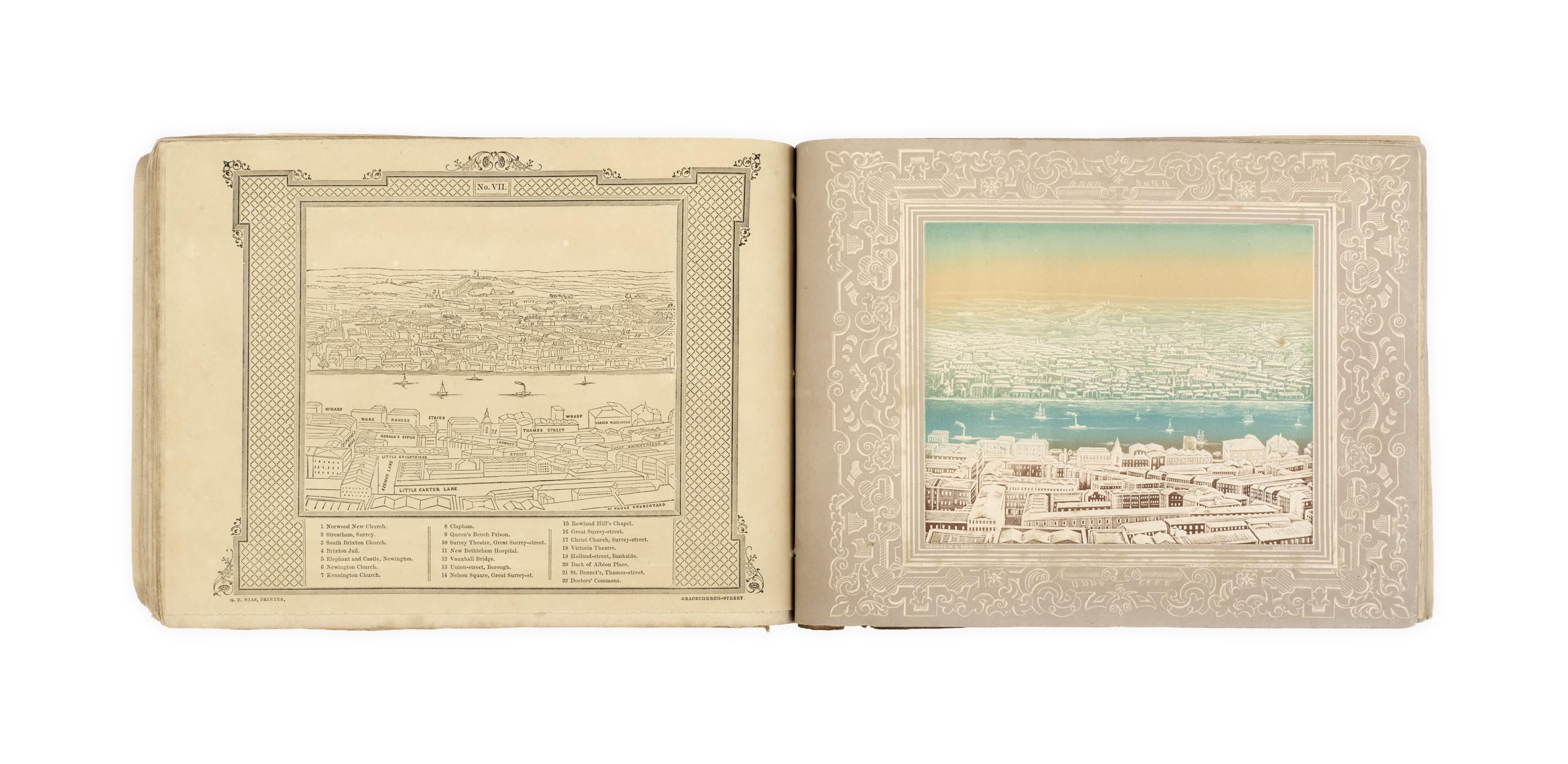
Oblong 8vo, comprising 8 geomontographic plates (‘Kronheim & Skirving Sc.’, ‘Dobbs, Bailey & Co’) within embossed borders, each with a facing wood-engraved view in outline with letterpress captions (‘G. E. Nias, Printer, Gracechurch-Street’); very slight wear at corners, a few unobtrusive spots, but generally very well preserved; stab-stitched in publisher’s printed wrappers; a few marks and minor chips to wrappers.
Added to your basket:
Bird’s-Eye Views of London, beautifully embossed on eight Sheets, and printed in Colours, with explanatory Woodcuts, containing 300 References to public Buildings, &c.
A very rare panorama of London in eight panels, based on the views taken from the dome of St Paul’s by Thomas Hornor and embossed in white onto strikingly coloured sheets.
Begun around 1822, Hornor worked on his panorama from a cabin atop St Paul’s dome, balanced on scaffolding constructed for repairs. Attempts to print the panorama, however, proved uncommercial, and it was transferred to a forty-two thousand-square-foot canvas to be exhibited in a dome – second in size only to St Paul’s itself – designed for the purpose by Decimus Burton and built in Regent’s Park with the backing of the banker and politician Rowland Stephenson. This, too, proved costly: Stephenson fled to America in 1828 to escape debts, Hornor was forced to open the unfinished panorama to the public in 1829, was himself left in debt and forced to sell the so-called Colosseum in 1835, and similarly fled to the USA, dying ‘in penury (and possibly insane) in New York city’ in 1844 (ODNB). The project was eventually completed in 1844 and reopened in 1845; it saw considerable success in the early years, but waned in popularity in the 1850s and was finally demolished in 1875.
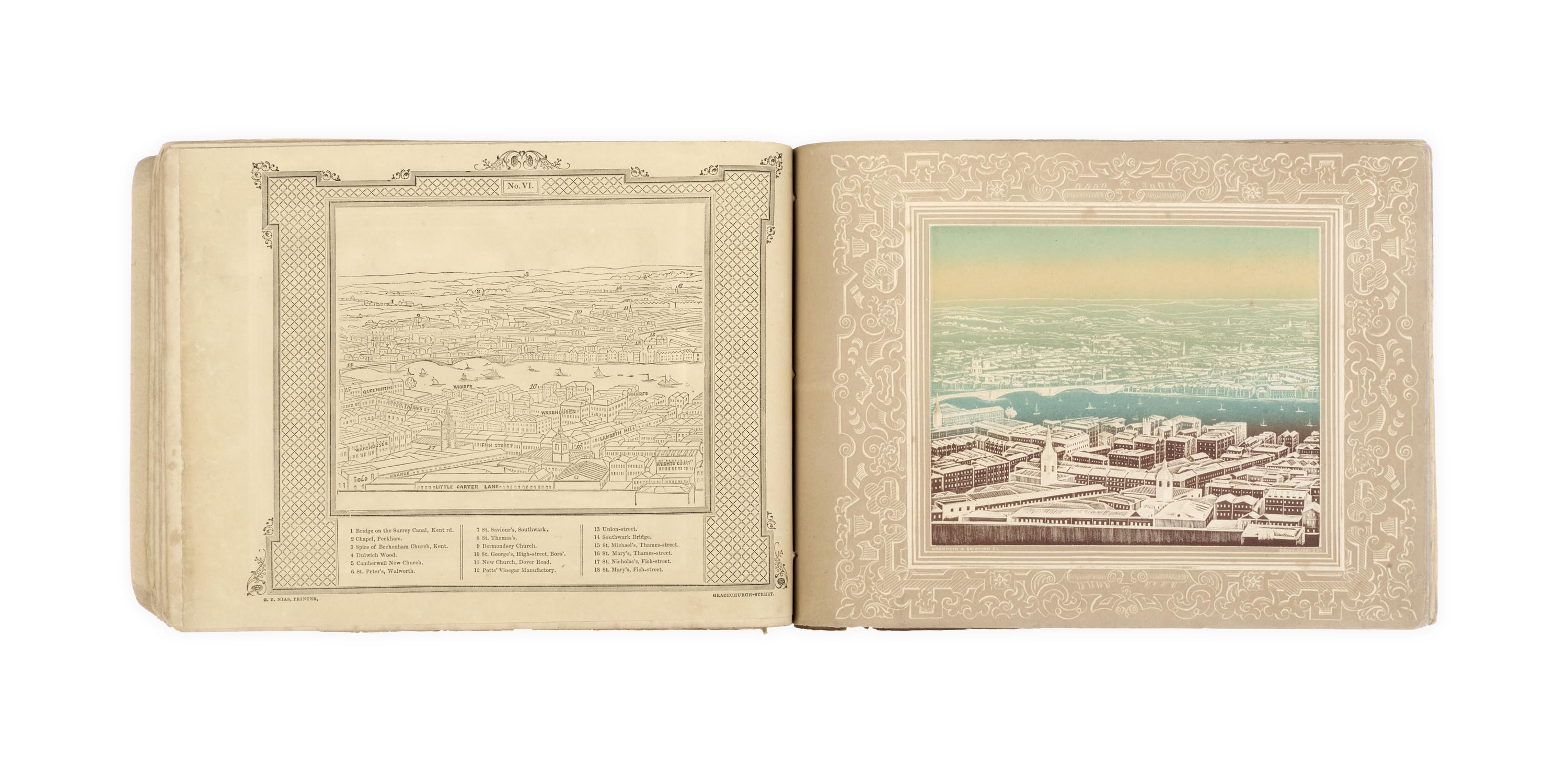
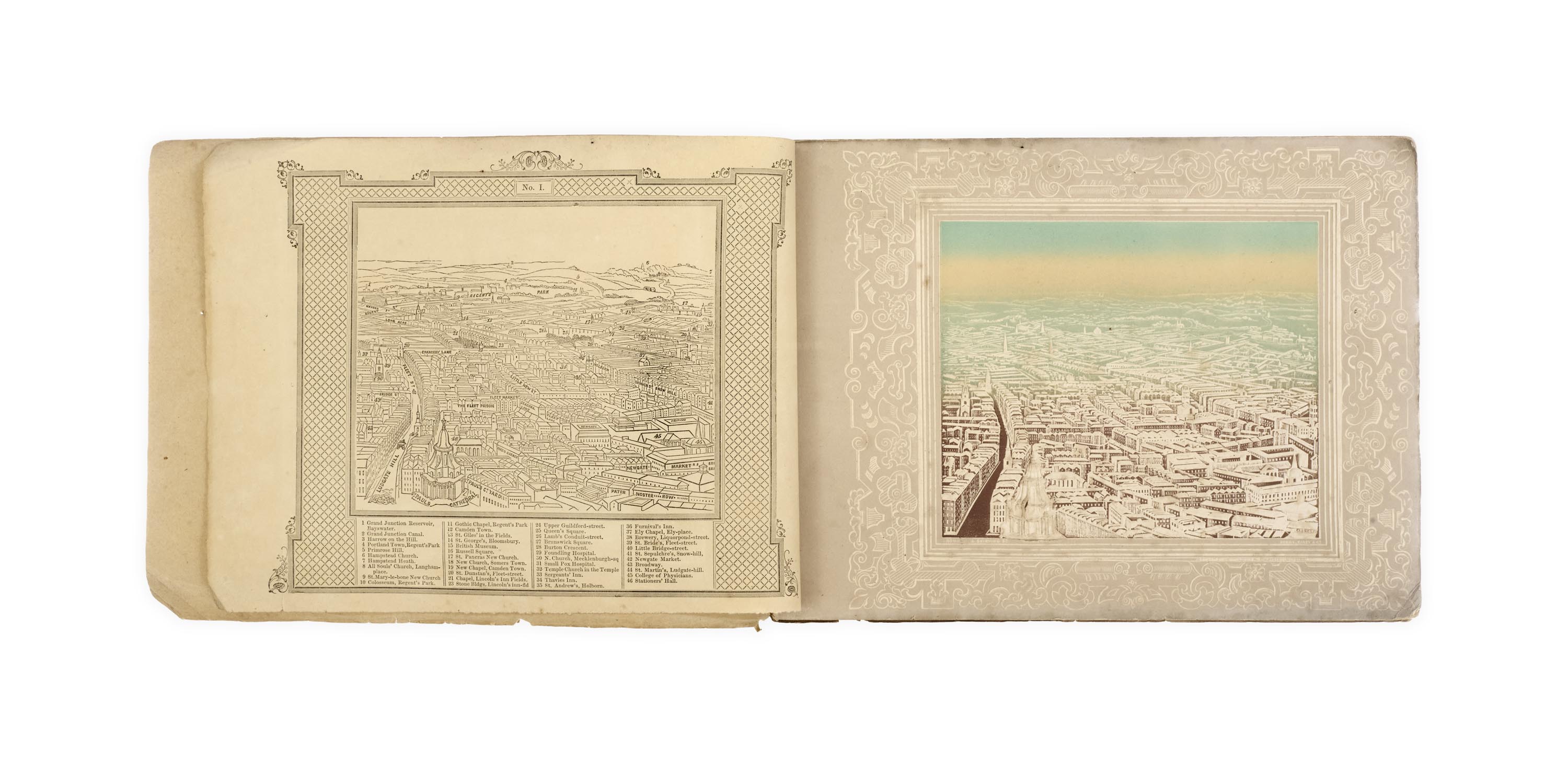
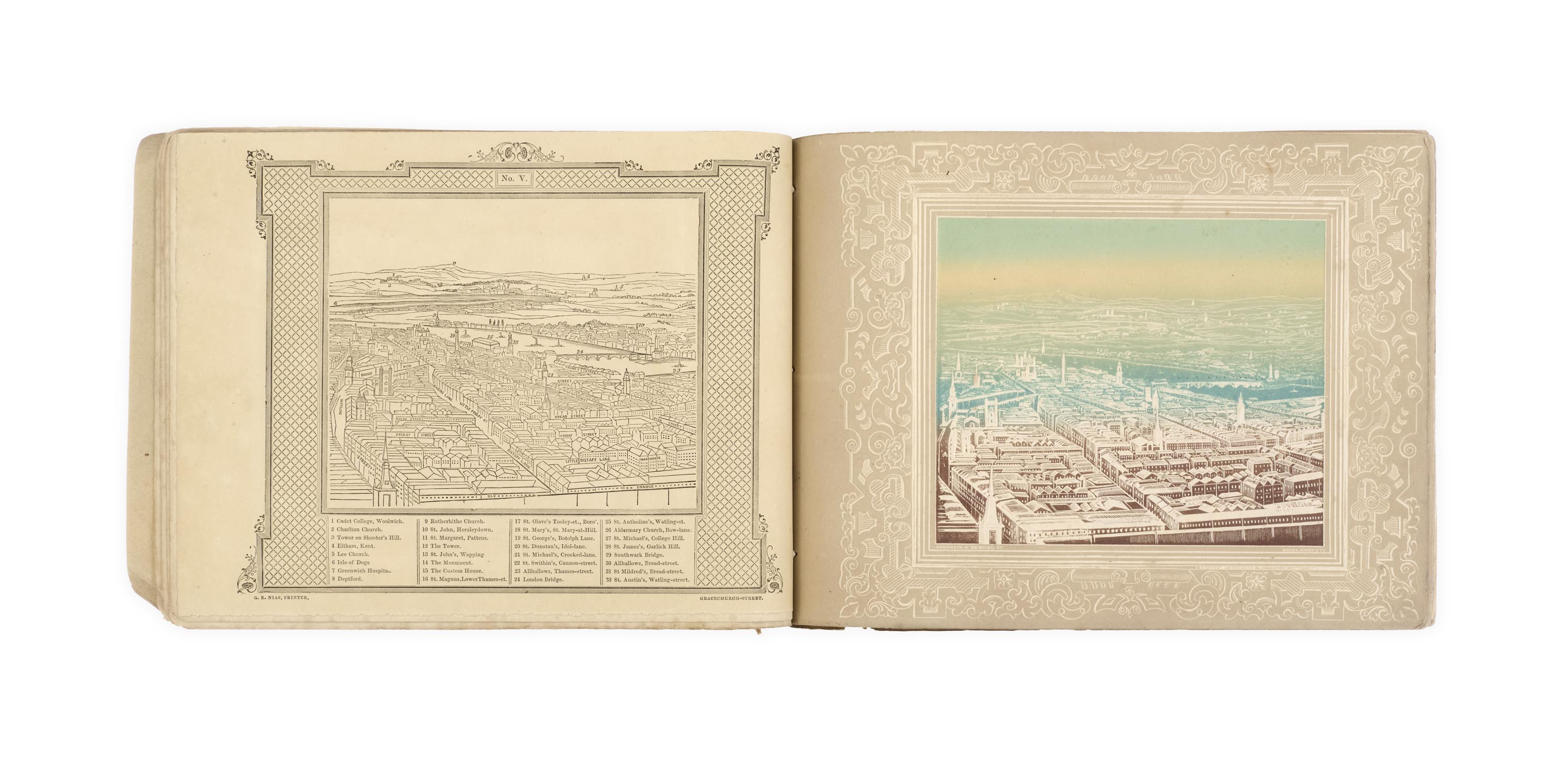
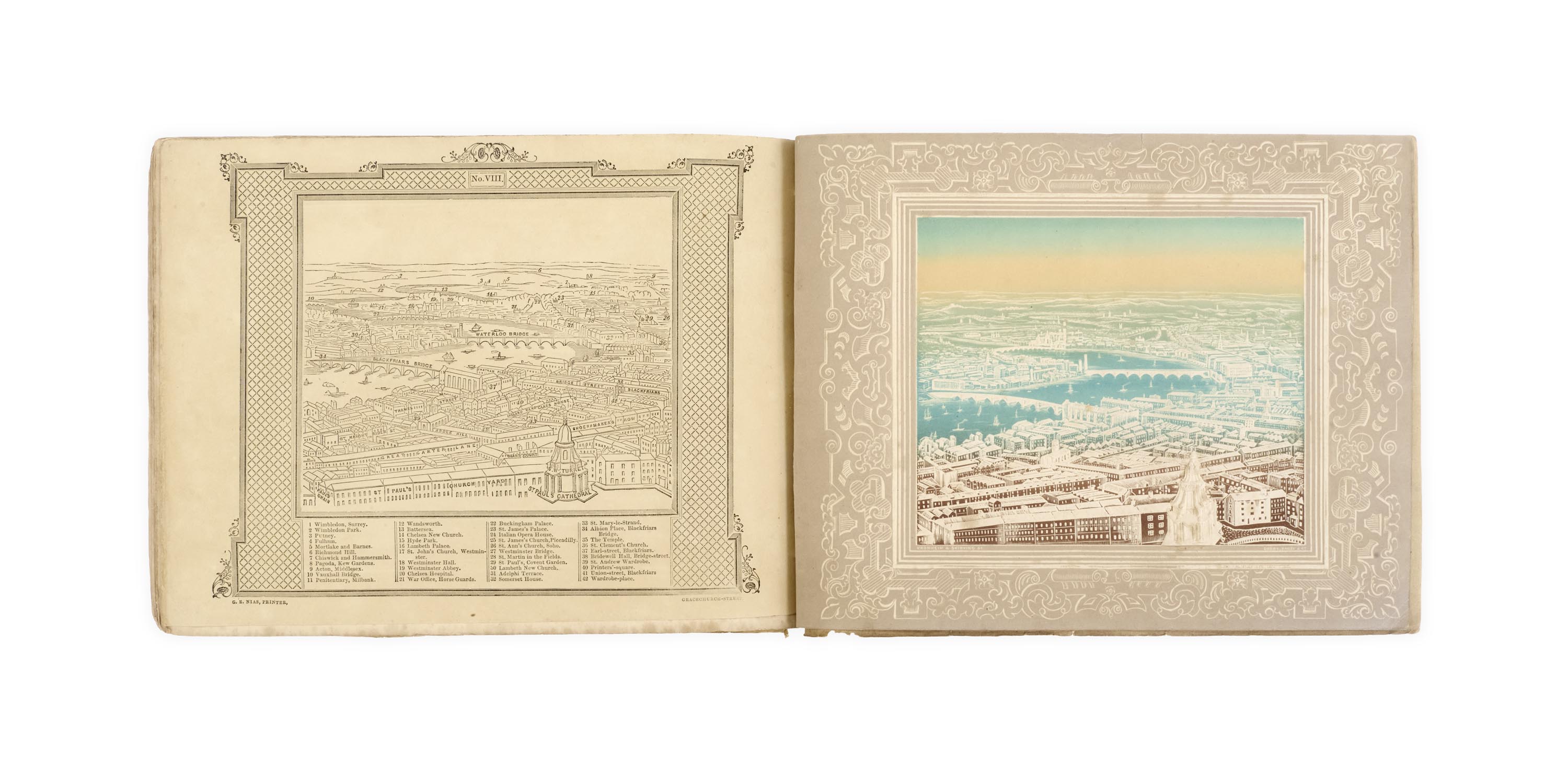
The panorama is here divided into eight sections, each with a printed key: the first looks West over Fleet Street, Chancery Lane, and the Inns of Court, with Harrow-on-the-Hill, Primrose Hill, and Hampstead Heath in the distance, and the Colosseum itself added in Regent’s Park; the next looks out over Paternoster Row towards Highgate, Kentish Town, and Holloway, with Smithfield, St Bartholomew’s, and Little Britain, and the literary meeting-point Dolly’s Chop House prominently marked in the foreground; the third looks North towards the developing suburbs of Hackney, Stoke Newington, and Bethnal Green; the fourth and fifth show an unrecognisable view over the Isle of Dogs and Thames Estuary beyond Blackwall and Woolwich, with the Tower and the Monument prominent above their surroundings; the sixth and seventh show a variety of steam- and sailships and a throng of wharves and warehouses along the river upstream of Southwark Bridge (completed 1819) and St Saviour’s (the future Southwark Cathedral), and beyond it roads and settlements continuing towards Streatham; in the final and most impressive section we see, over St Paul’s south-west tower, the Thames bending towards the Strand, the West End, Whitehall, and Westminster, a view up the Mall to Buckingham Palace, with Waterloo Bridge (1817) and Westminster and Blackfriars Bridges (both demolished in the 1860s).
The present version of Hornor’s panorama is printed by geomontography, a technique developed at the end of the 1830s by Georg Michael Bauerkeller (1805–1886) which, although more often used for maps, is exceptionally well-suited to a panorama, with the bands of colour imitating light on the horizon and the embossed outlines giving a sense of depth. The sheets of the panorama were produced by short-lived partnership of Kronheim & Skirving, formed in August 1845 and dissolved in January 1847; they appear to have been issued both as here and also as plates to A Description of the Colosseum as re-opened in MDCCCXLV; unsold copies were likely bought up by Benjamin Wertheim, who marketed them as a continuous panorama – having cut short the sides of each sheet – in December 1847.
Library Hub finds no copies under this title in the UK; OCLC records only two copies in the US (Folger, Yale).