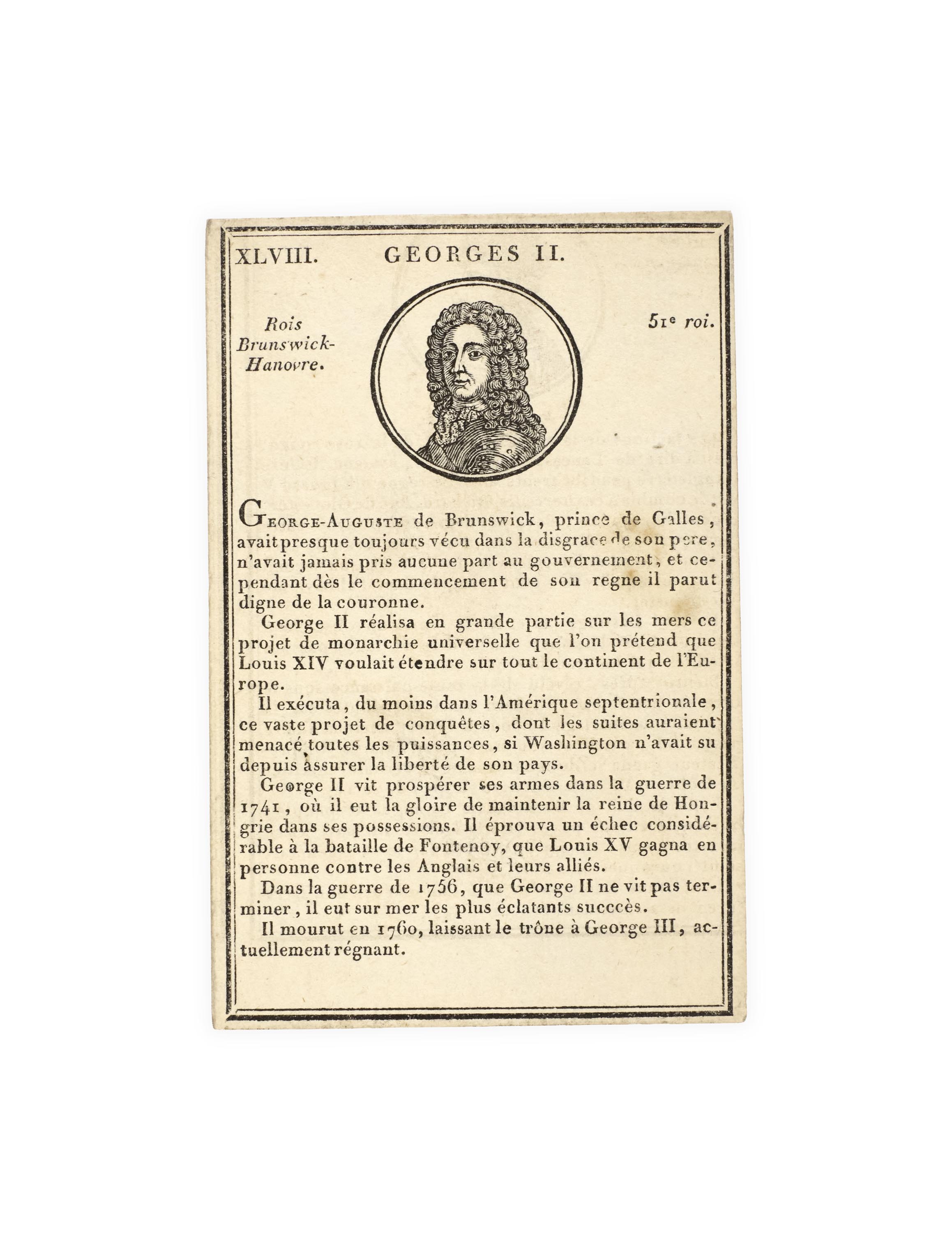
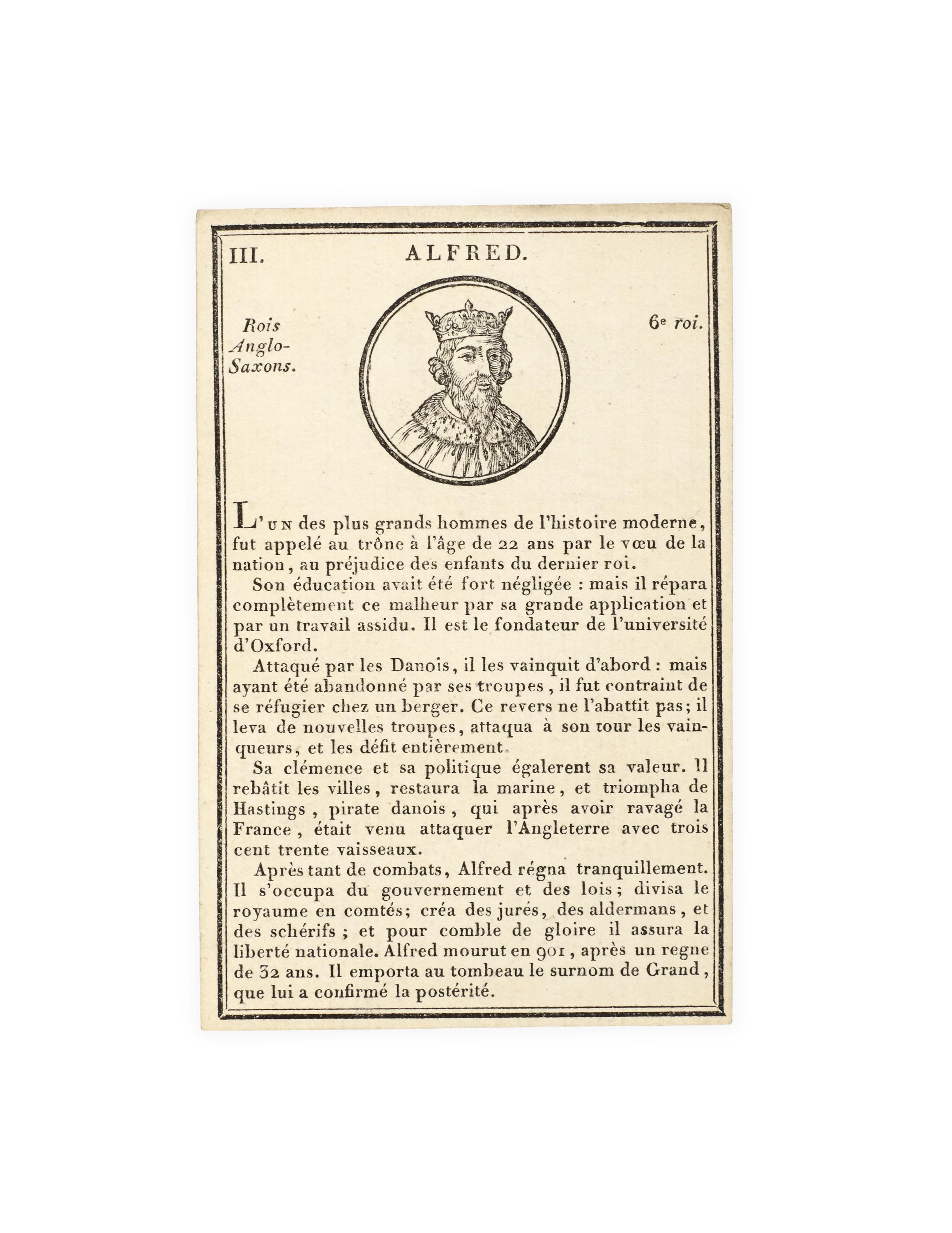
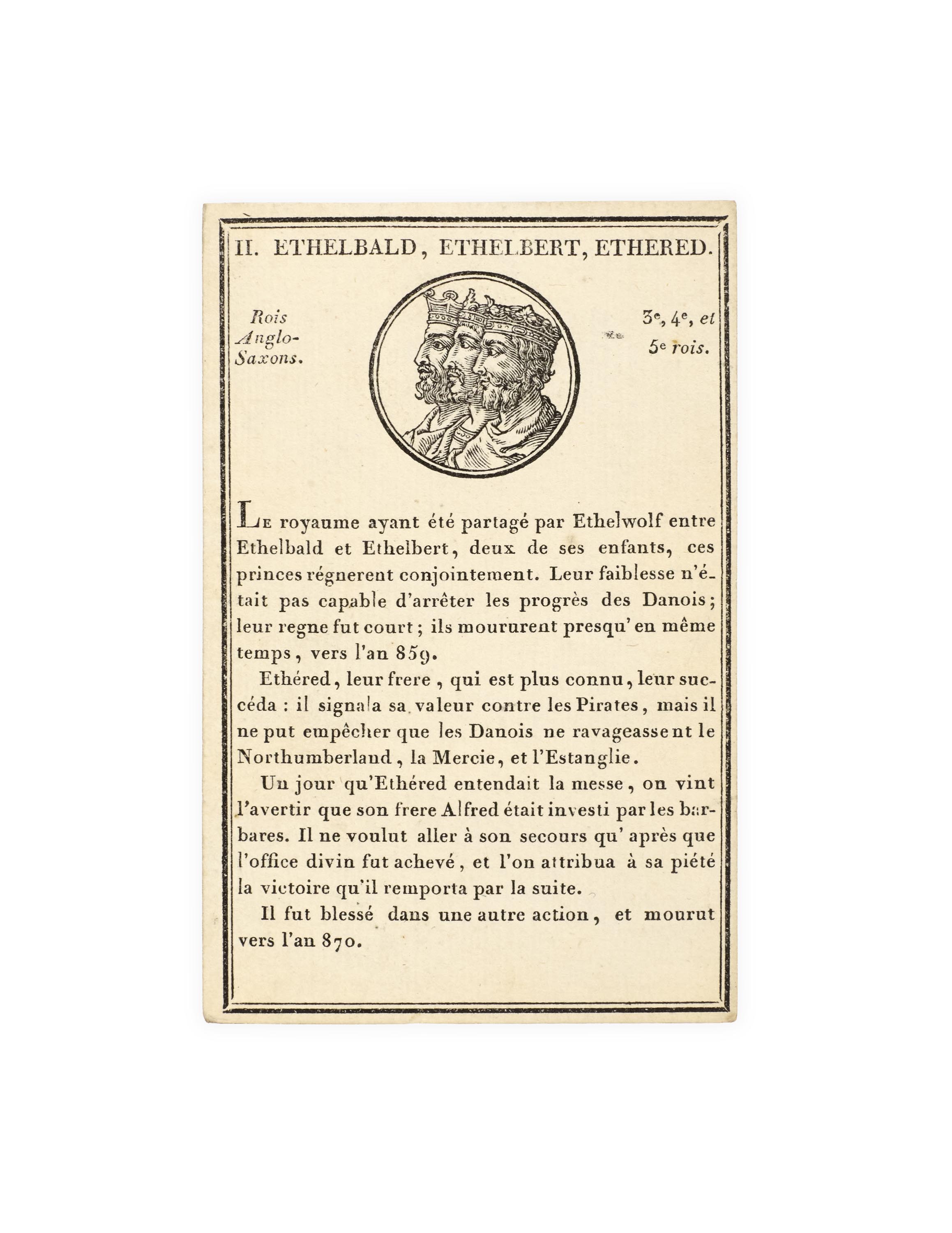
Kings and Queens on Cards
[JOUY, Étienne de; Pierre-François GODARD.]
[Jeux de cartes instructives. Histoire d’Angleterre.] N.p., n.d. [France, c. 1800–1815].
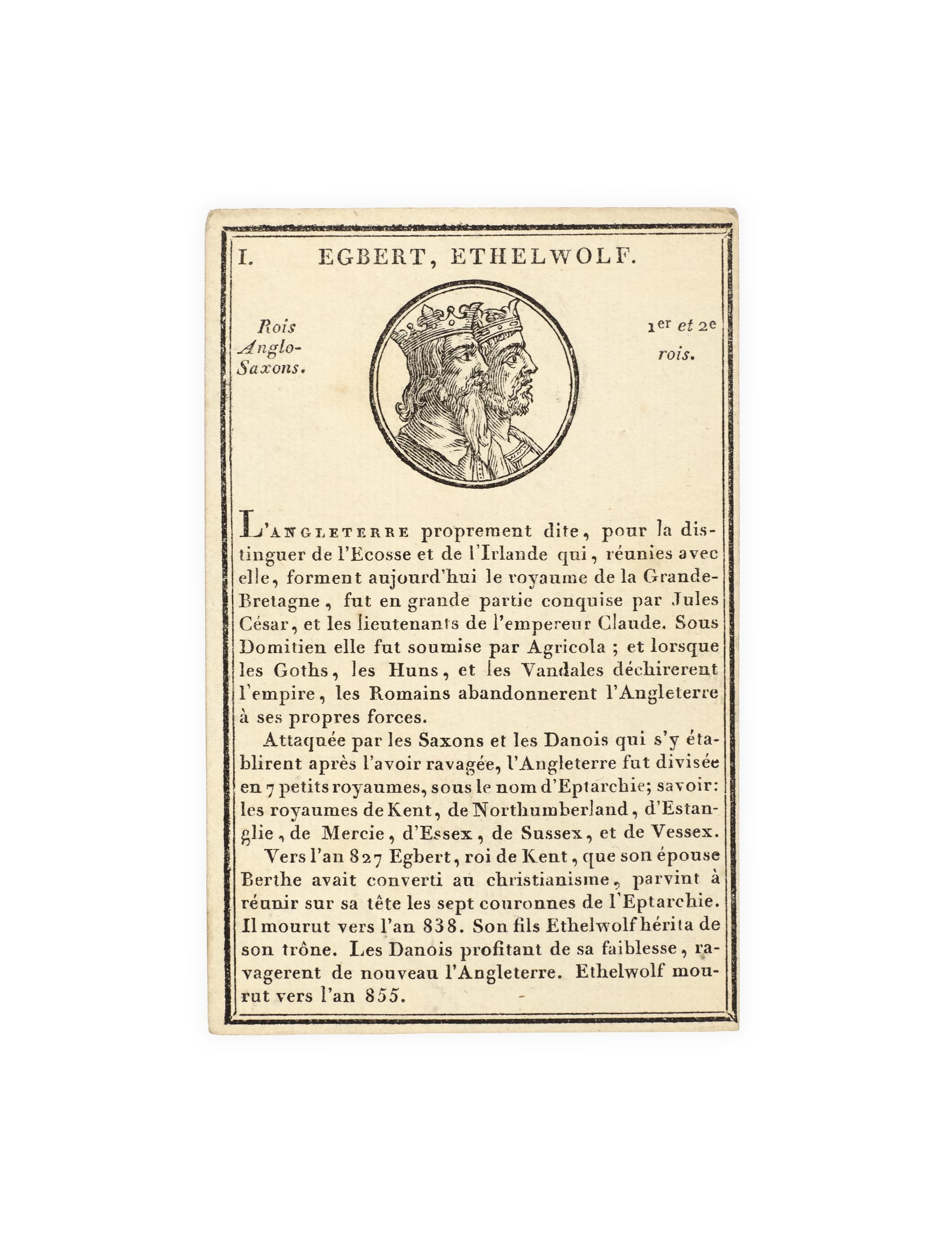
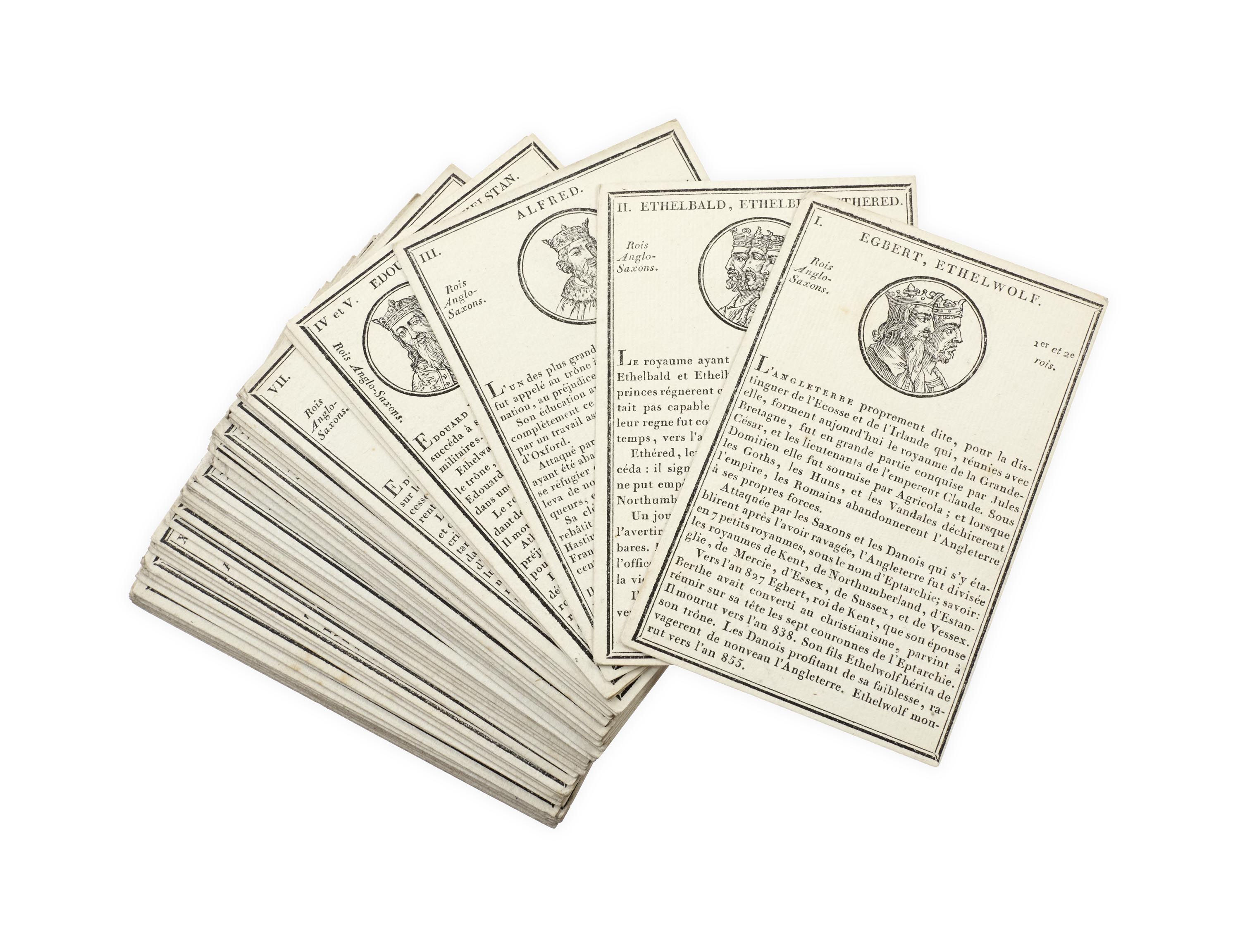
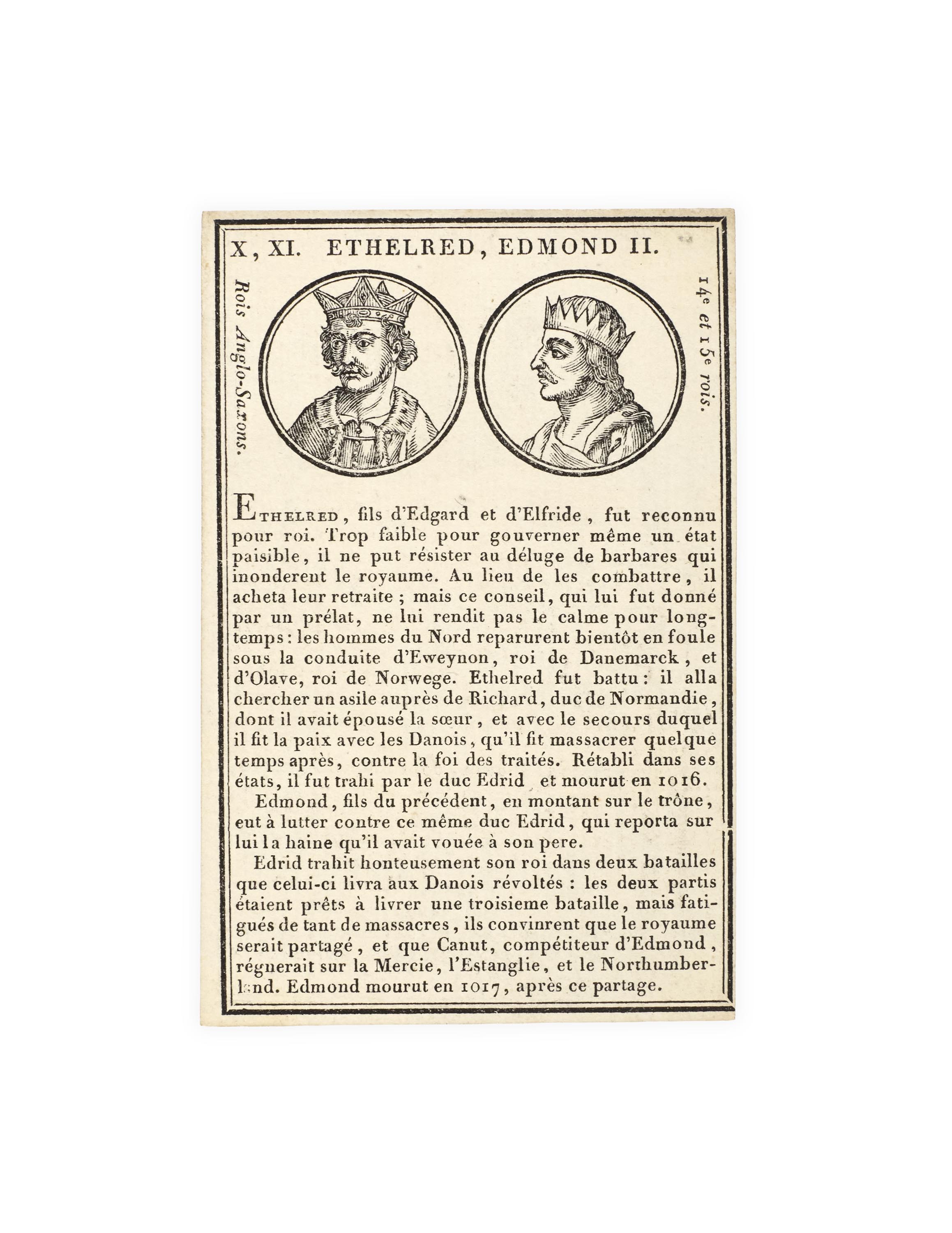
47 cards (105 x 68 mm), comprising an unnumbered card ‘Avis aux peres de famille et aux instituteurs’ and cards numbered I to XLVIII (with one card each for ‘IV et V’ and ‘X, XI’), each numbered card with woodcut medallion portrait(s) and letterpress text within double-ruled border; a very few small marks, occasional slight foxing to blank versos; a very good set in contemporary black card wraparound and slipcase with gilt border; both worn and rubbed, slipcase lacking spine, some loss to wraparound.
A rare early nineteenth-century French set of ‘instructive playing cards’ for teaching children about the kings and queens of England.
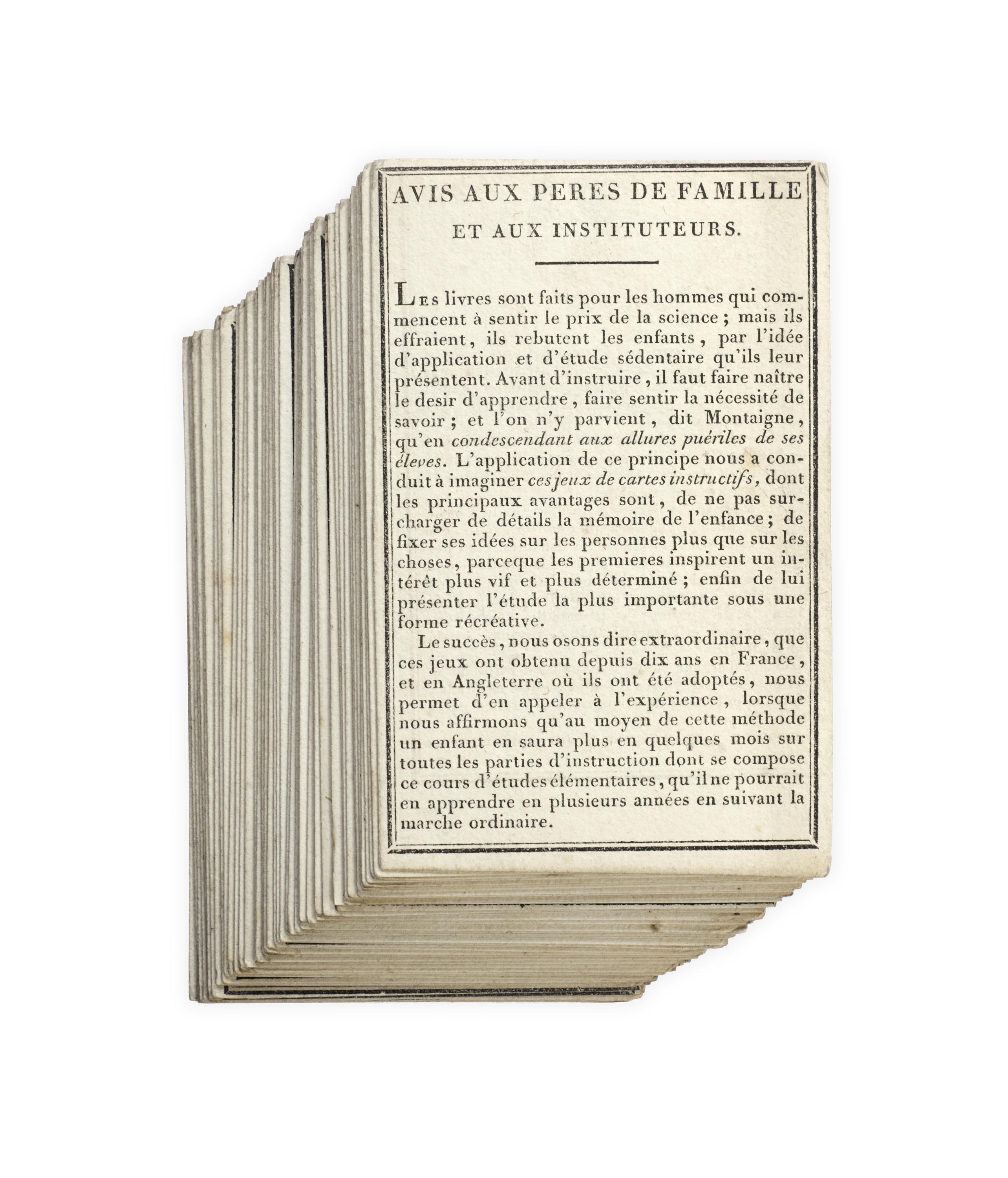
With woodcut portraits by Pierre-François Godard (1768–1838), this is one of a series of card games designed by the writer and dramatist Étienne de Jouy (1764–1846), best remembered as one of the librettists of Rossini’s Guillaume Tell (1829). The subjects of his other decks include French kings, Roman emperors, Greek mythology, geography, and music. Though presented as a means to cultivate a love of learning without ‘overloading the memory of a child with details’ (trans.), these are in fact rather sophisticated flashcards.
Beginning with the Anglo-Saxon and Viking kings from Egbert and ‘Ethelwolf’ to Harold Godwinson, they continue up to George II, with a few unexpected details and omissions along the way. There is a lengthy biography of the uncrowned Edward V (really a chronology of the Wars of the Roses); Cromwell and his son Richard receive a card of their own; and William of Orange is not accompanied by Mary. The character descriptions are often pithy and amusing (‘Henry VIII stopped at nothing to satisfy his every need’); some, including Henry V, are remarkably nuanced.
The ‘Avis aux peres de famille et aux instituteurs’ points to the ‘extraordinary’ success enjoyed over a period of ten years, in both France and England, by these cards, boasting that they allow children to learn more in a few months than they would over several years using traditional book-based methods.
OCLC and CCFr both only record copies at the BnF. One of the sets digitised by the BnF ends at Cromwell, showing only Oliver and not Richard; the other continues up to George III (sans portrait).