Shoes, Inkpots, and Brotherly Love
JUSTINUS, Marcus Junianus, Lucius Annaeus FLORUS, and Sextus RUFUS.
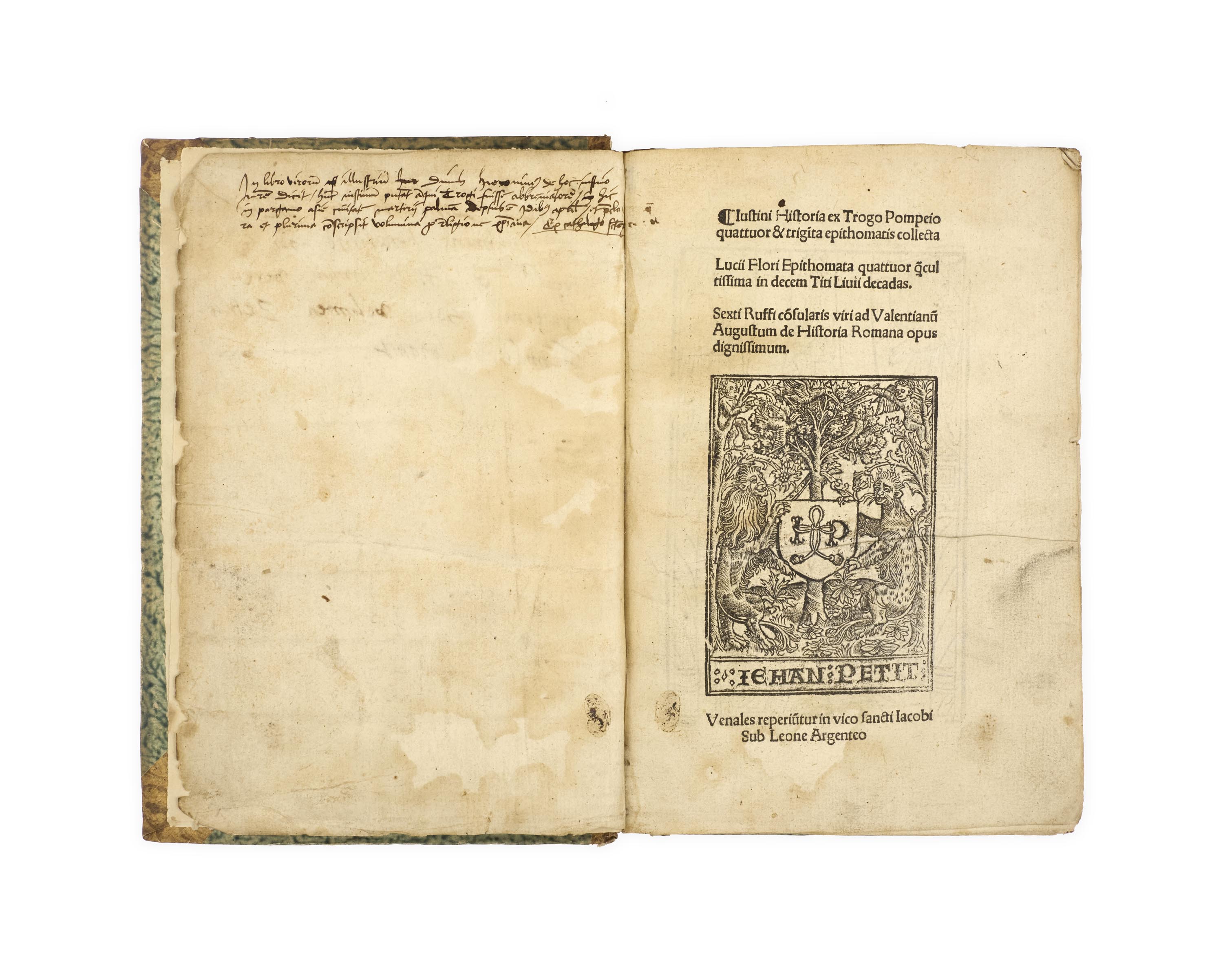
Iustini Historia ex Trogo Pompeio quattuor & triginta epithomatis collecta. Lucii Florii Epithomata quattuor q[uam] cultissima in decem Titi Livii decadas. Sexti Ruffi consulatis viri ad Valentinianum Augustum de Historia Romana opus dignissimum. Paris, Jean Petit [and Jean Marchant], [1509].
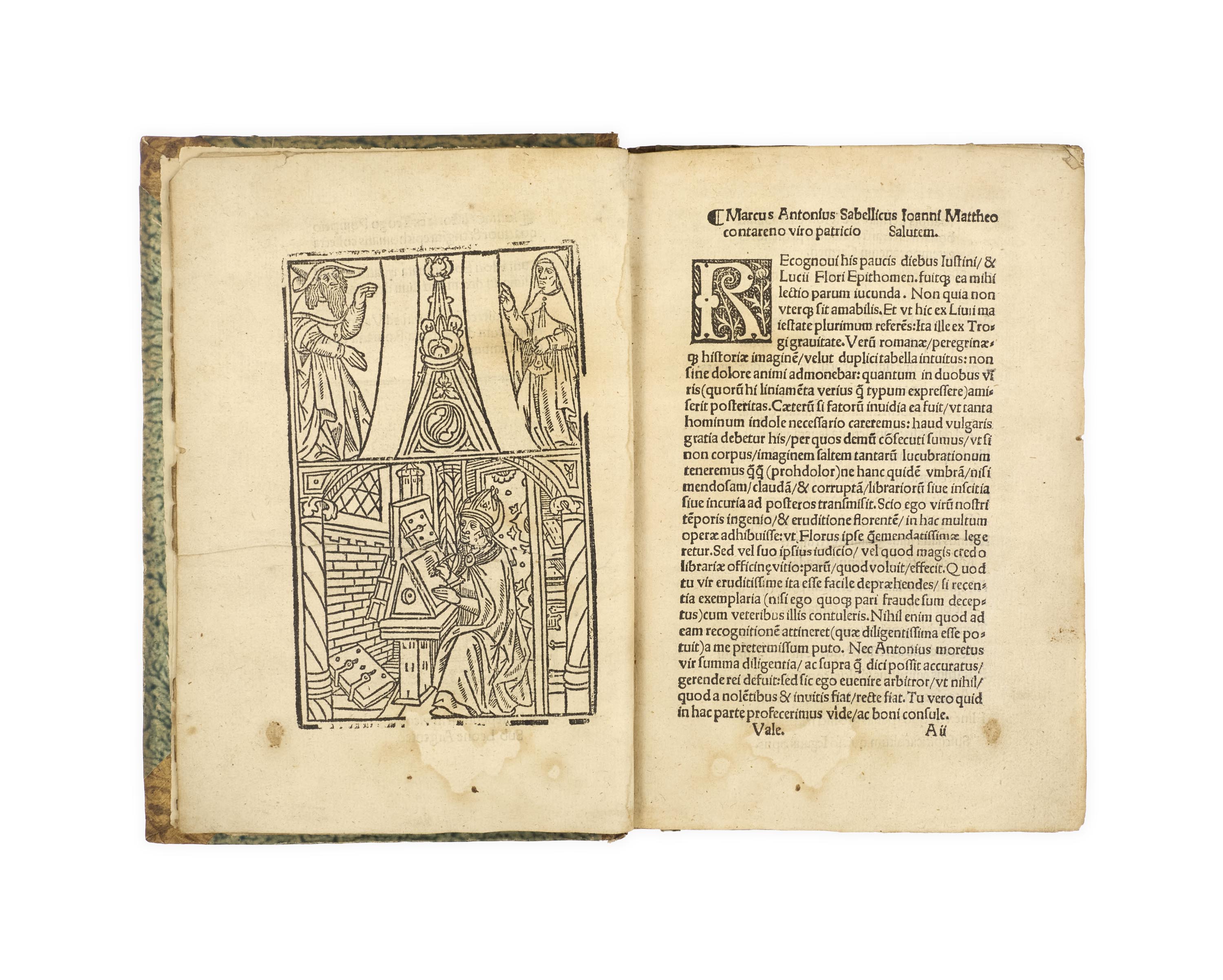
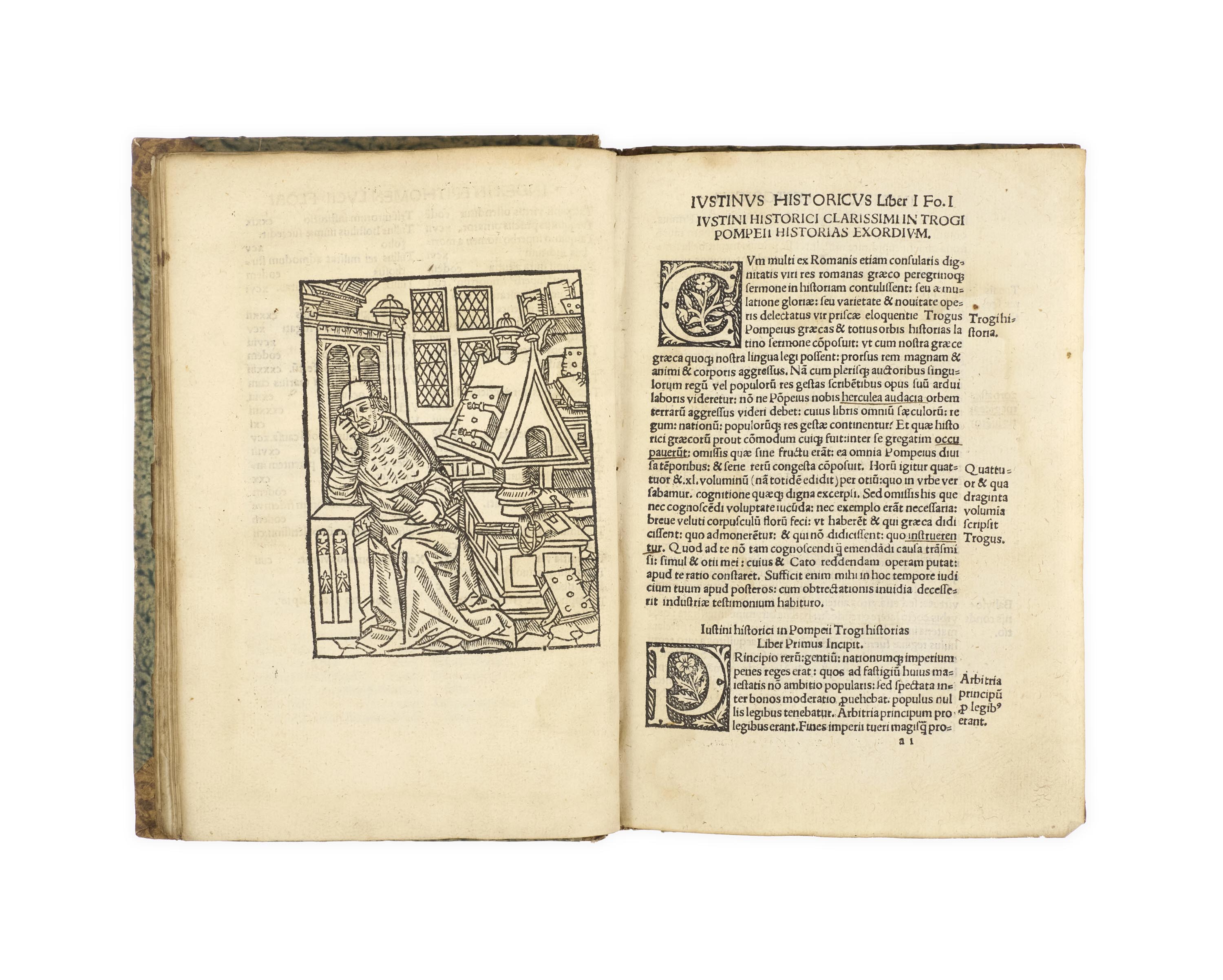
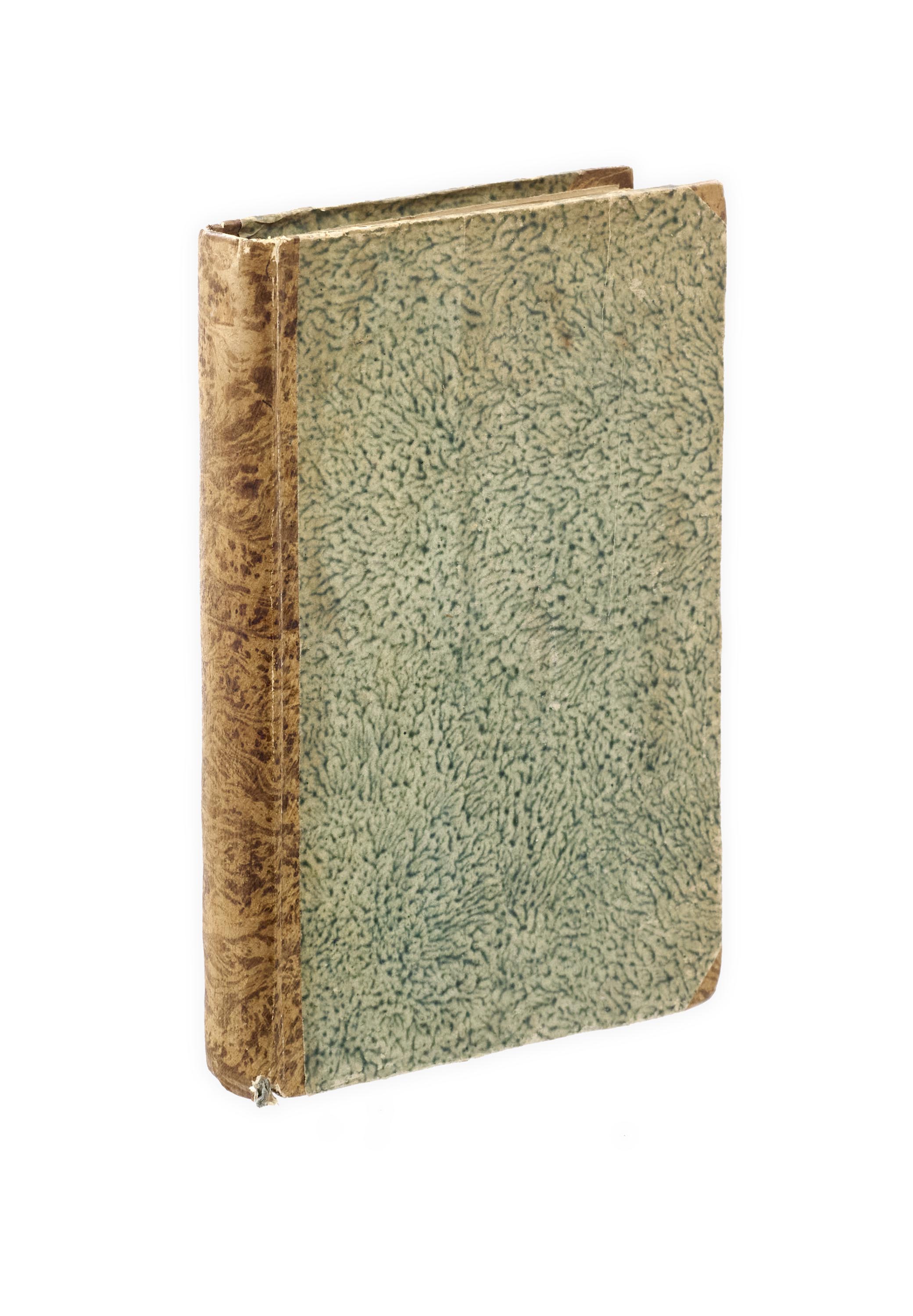
4to, ff. [18], CXL (i.e. 141), [1]; woodcut device of Petit to title-page, woodcut of a bishop writing in his study to title verso, woodcut white-on-black initials, full-page woodcut of a writer at his desk opposite the start of the text and repeated on final recto, woodcut device of Jean Marchant to final verso; light damp-staining to first and last few leaves, marginal paper flaw in o2, occasional staining along gutter, slight damage to a few words on i1v, but overall a good copy retaining some deckle edges; bound in late eighteenth-century brown marbled paper-backed boards with blue paste-paper sides, title lettered along head of textblock, retaining a flyleaf from an earlier binding; extremities slightly rubbed; four-line manuscript note about the text written on the verso of the original flyleaf in a contemporary cursive hand, underlining and marginal reading marks throughout, c. 79 pp. of marginal annotations mostly in a contemporary French cursive hand, later presentation inscription to recto of flyleaf from Petrus Flander to Carolus Lombardus, ‘Carolo Lombardo pro multis innumeris beneficiis in se collatis & affectu anime vere fraterno hoc volumen Petrus Flander donavit'.
Added to your basket:
Iustini Historia ex Trogo Pompeio quattuor & triginta epithomatis collecta. Lucii Florii Epithomata quattuor q[uam] cultissima in decem Titi Livii decadas. Sexti Ruffi consulatis viri ad Valentinianum Augustum de Historia Romana opus dignissimum.
A collection of abbreviated Roman histories, edited by Marcantonio Sabellico, with two different woodcuts depicting a scholar in a study with books and writing implements.
The three short histories in this volume are by Justinus, based on Pompeius Trogus’s now lost account of the Macedonian kings; Florus’s epitome of Livy; and the fourth-century summary by Sextus Rufus, based on Eutropius and other late Roman abbreviated histories.
The first woodcut shows a bishop writing at a lectern, a quill in his right hand and a knife in his left, with a cupboard of books just visible in the background, and two books with bosses and long-strap bindings on the lectern and on the floor. The second woodcut depicts a scholar with his face resting on one hand and a sheet of paper in the other, turning away from the lectern, on which his portable ink pot (with pen) and pencase are resting, and with books visible on shelves and on the floor; again, most of these books have bosses and long-strap bindings, a style of binding which fell out of fashion with the rise of printing. The latter woodcut also appears in Jean Petit’s richly illustrated Le vergier dhonneur of [1503] (USTC 57041).
The date of printing is based on the printer’s device of Jean Petit on the title-page. The device at the end, for Jean Marchant (Renouard 708A), depicts an open book surmounted by clasped hands and a bar of music, beneath which two craftsmen are working, one cutting leather and the other sewing shoes, with a pile of shoes and lasts on the floor between them.
The annotations mostly draw out words and phrases from the text, or summarise the action of a passage, seemingly showing particular interest in Alexander the Great and Carthage. There are also some corrections to typographical errors. The four-line note on the flyleaf, opposite the title-page, states that St Jerome, in his Lives of Illustrious Men, mentions this Justinus as an abbreviator of Pompeius Trogus; he actually mentions them in his commentary on the Book of Daniel as sources for Greek and Persian history.
The inscription on the flyleaf, in a seventeenth-century hand, records the gift of this book from Petrus Flander to Carolus Lombard, in appreciation for the many benefits bestowed upon him by Carolus and with true fraternal affection.
We have located six copies in the US (Yale, Huntington, Pennsylvania, Harvard, Bryn Mawr, Illinois).
USTC 180267; BP16 101356; ISTC ij00623000.