‘Arise, Fair Sun …’
LA RUE, Charles de.
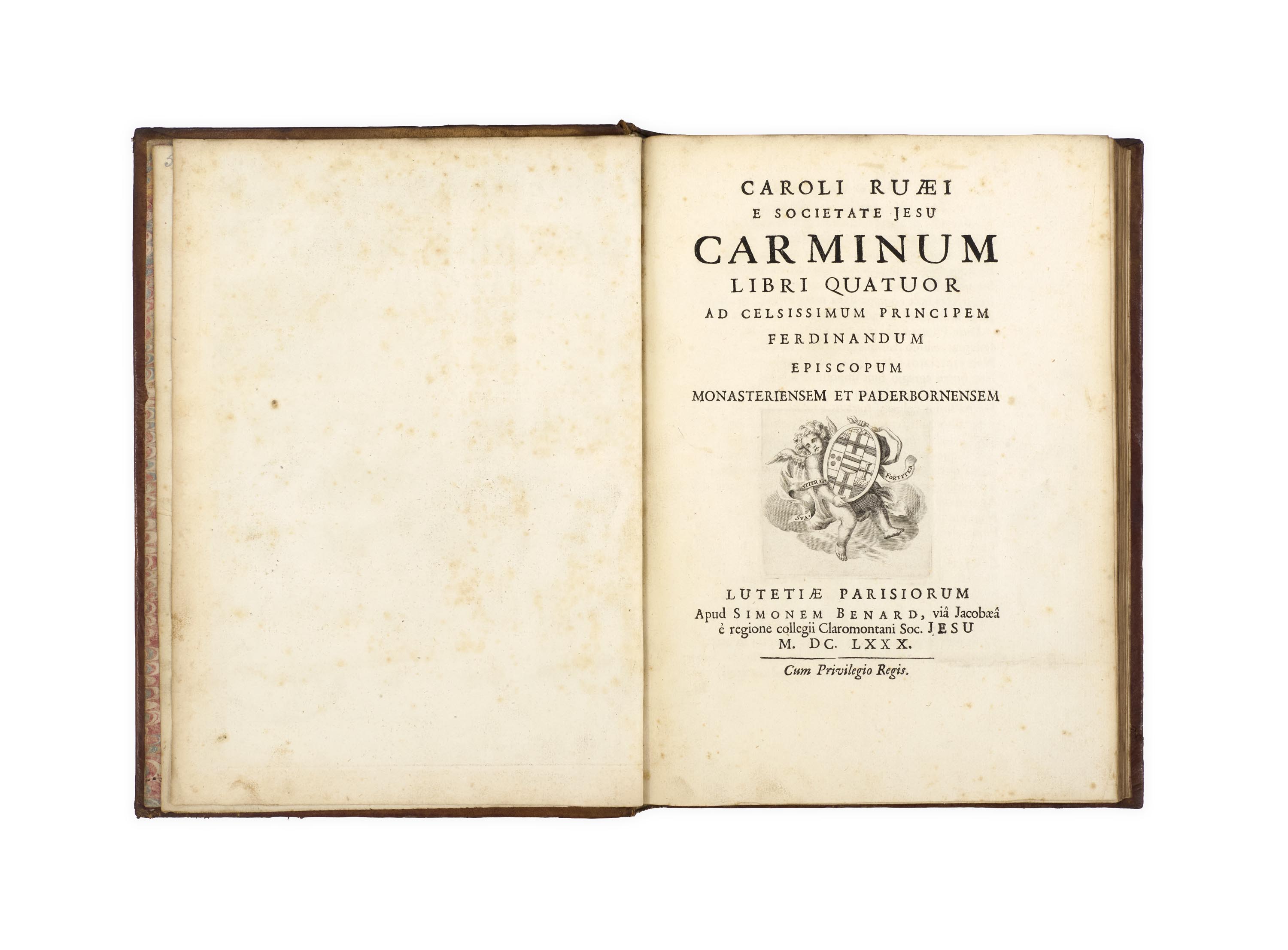
Carminum libri quatuor … Paris, Simon Benard, 1680.
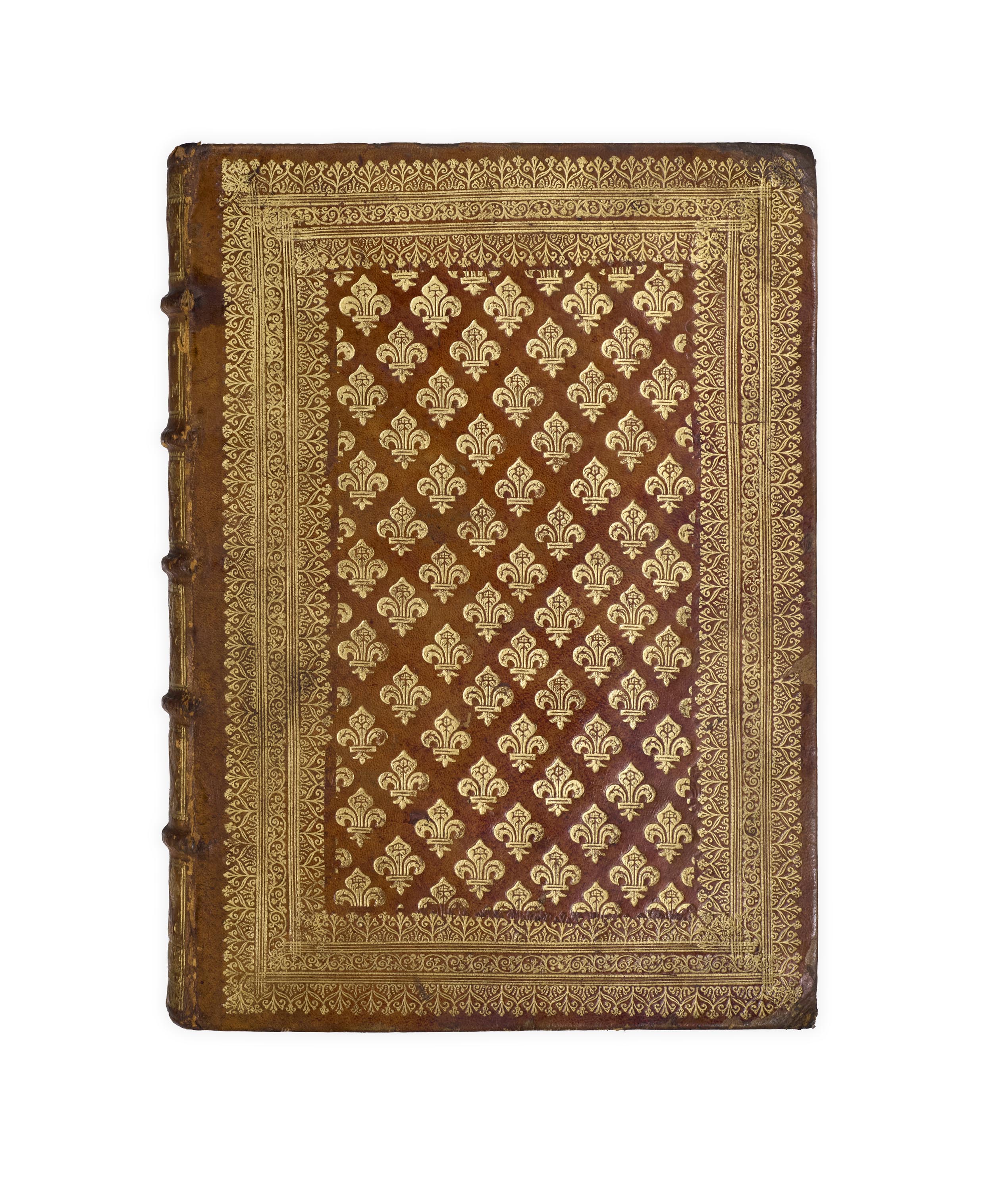
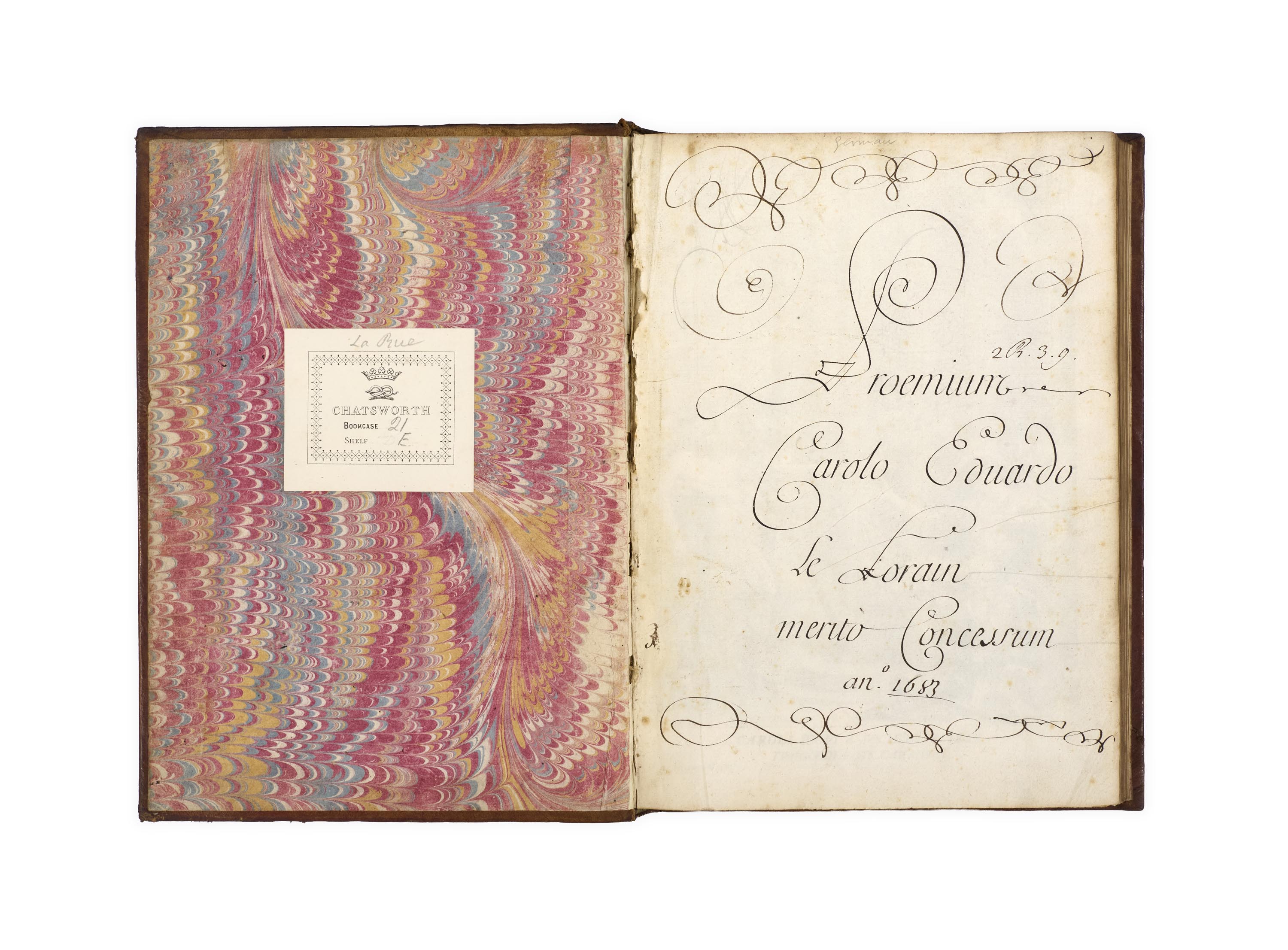
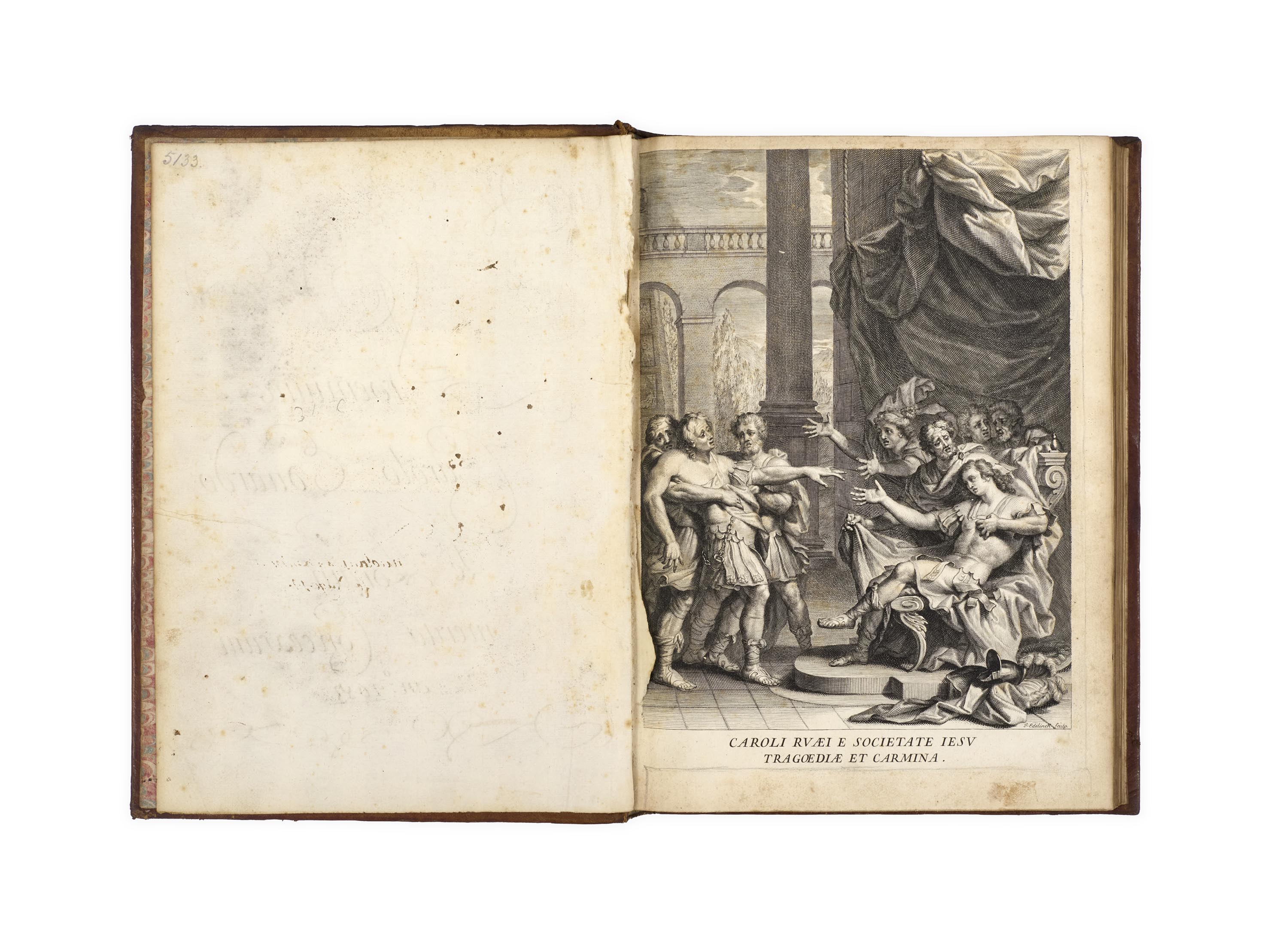
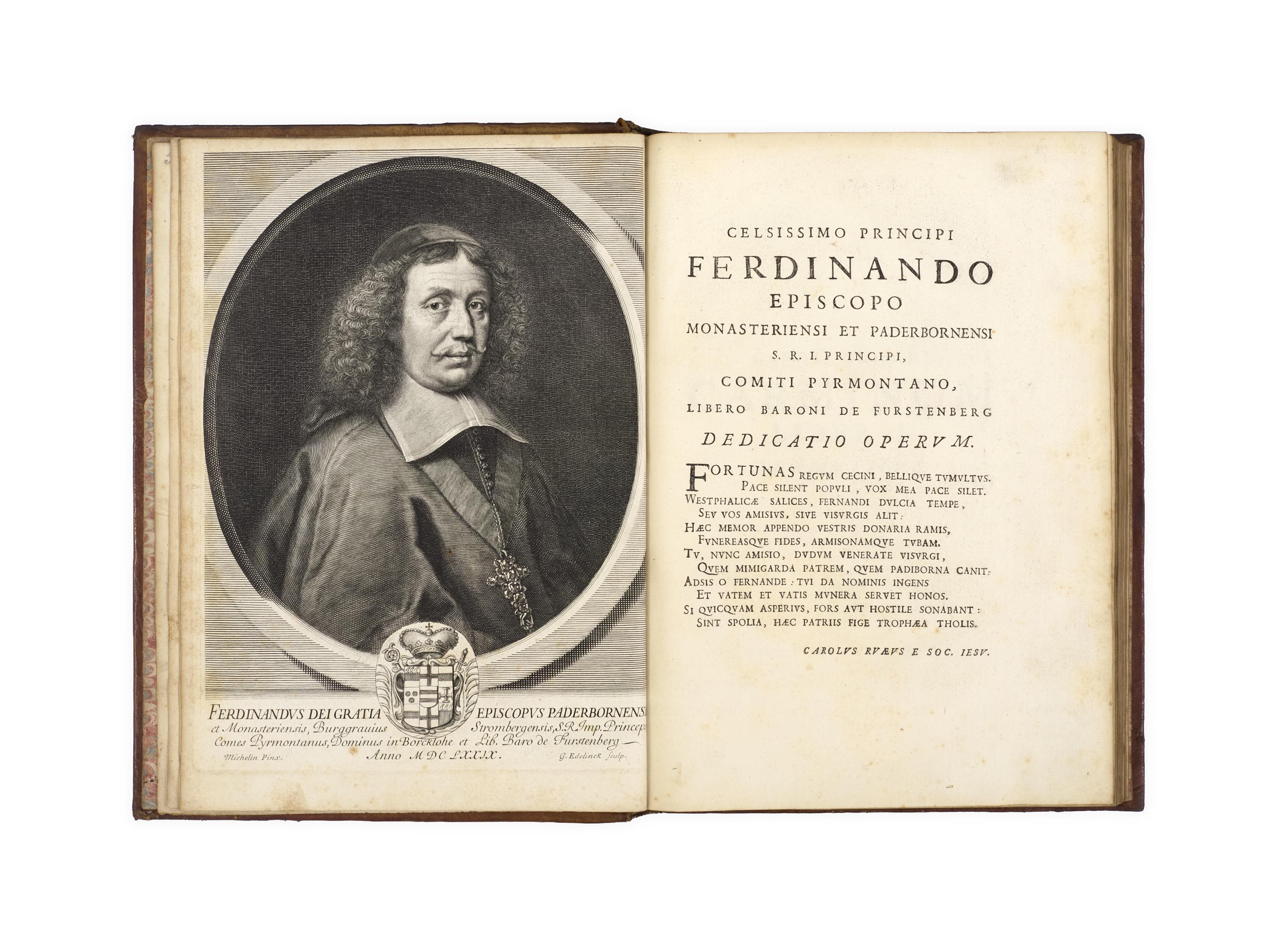
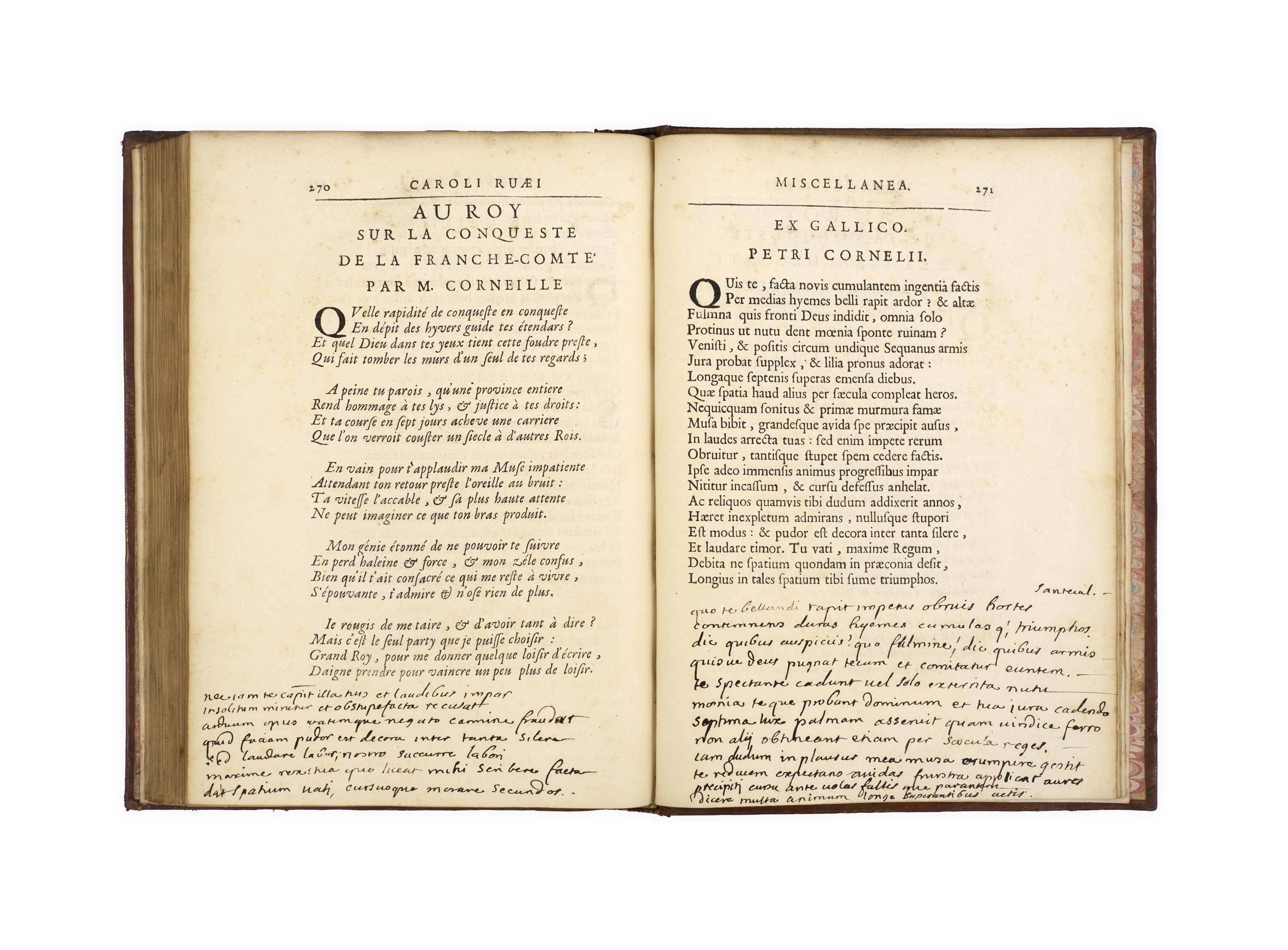
Large 4to, pp. [vi], 284, with engraved title and engraved portrait of the dedicatee; 27 copper-engraved illustrations printed in-text, engraved arms to title, engraved initials, engraved head- and tailpieces; occasional light staining or spotting, nonetheless a handsome copy; bound in contemporary French tan morocco gilt, covers with a semé of fleurs-de-lys within a border of three rolls, spine gilt in compartments with fleurs-de-lys and lettered directly in gilt, edges gilt, marbled pastedowns; lightly rubbed and a little worn at extremities; calligraphic inscription ‘Proemium Carolo Eduardo le Lorain merito Concessum ano 1683’ to front free endpaper, 19 lines of Neo-Latin verse in a contemporary hand to pp. 270–271, Chatsworth book label to front pastedown.
First collected edition of the works of the Jesuit scholar Charles de La Rue, containing tragedies, a panegyric, a miscellany, and a series of emblems distinctly flavoured by the ‘incense of flattery that imbued the Court of the Sun King, Louis XIV’ (Manning), our copy in a handsome contemporary prize binding with additional manuscript verse.
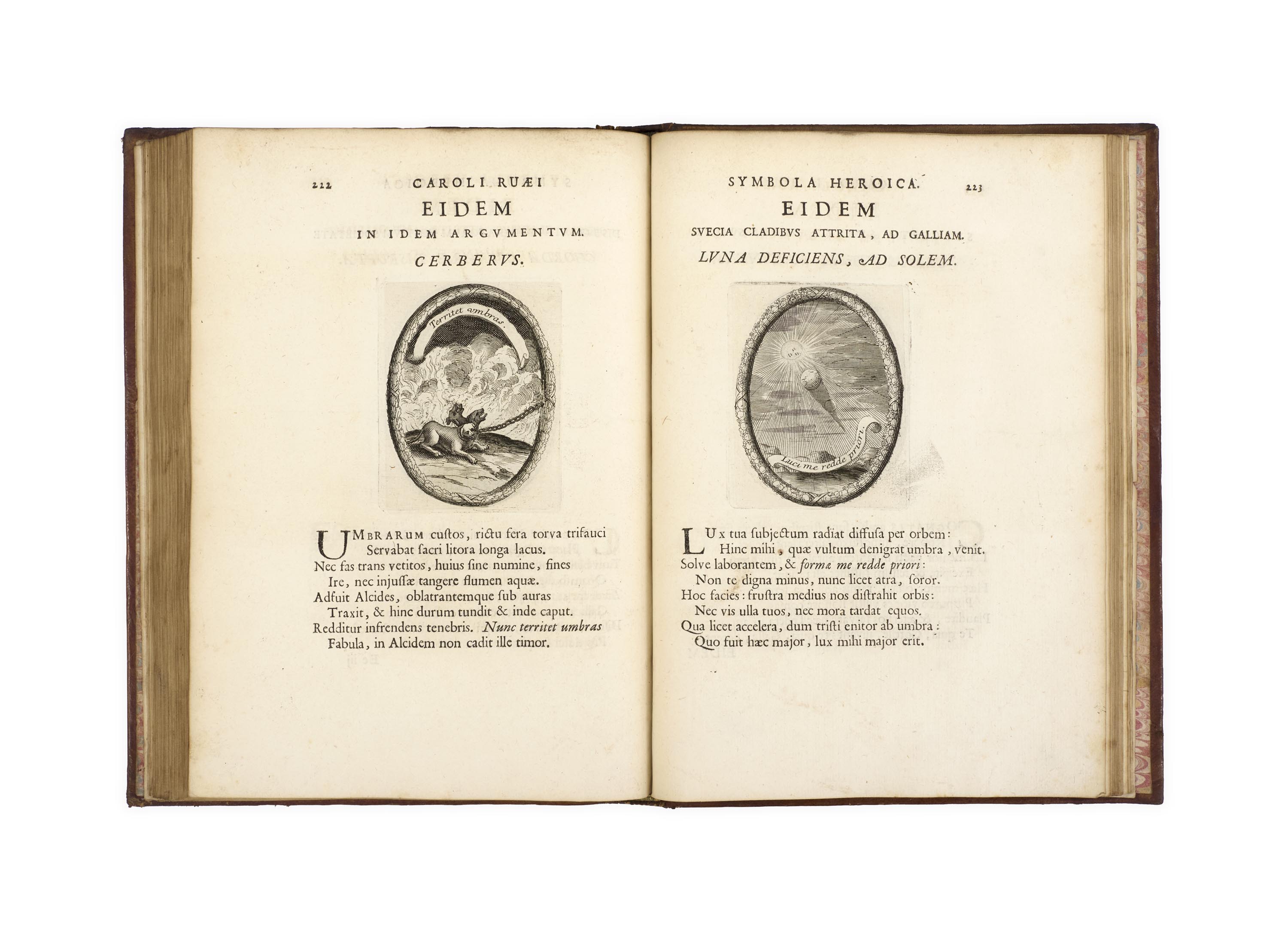
The twenty-seven emblematic engravings are by Gérard Edelinck (1640–1707) after Michelin and H. Watele, of which twenty-five appear in oval frames, the second signed by Louis Cossin. The majority of the emblems sequentially represent significant moments in the Franco-Dutch War: the Siege of Cambrai, the cession of Ypres, treaties with Sweden, etc., alternating between natural, geometric, and mechanical iconography: a violin with snapped strings, for instance, represents the disharmony produced by discordance among allies. The supremacy of Louis XIV is asserted through repeated images of smiling suns, shown conquering the moon, shining upon the nobles, or a pair of suns shining at one another to commemorate the baptism of Louis, Grand Dauphin of France.
Many of the emblems had appeared previously in La Rue’s Idyllia, first published in Rouen in 1669. Beneath Pierre Corneille’s poem ‘Sur la Conqueste de la Franche-Comté’ (and its accompanying Latin translation by Corneille) is a near-contemporary manuscript transcription of Jean-Baptiste de Santeul’s (1630–1697) Latin translation in hexameters of the same poem (‘Quo te bellandi rapit impetus …’), perhaps written out by the recipient of the book. It seems likely that the prize came from a Jesuit college in Paris.
Provenance:
1. Presented to Charles Edouard le Lorain in 1683, with a calligraphic prize inscription.
2. From the library of the Dukes of Devonshire at Chatsworth; listed in the Catalogue of the Library at Chatsworth (1879), p. 249.
Landwehr, Romanic 459; Praz, p. 396; Sommervogel VII, 291 no. 10. See Manning, The Emblem (2002), pp. 333–338.