[LANDO, Ortensio; Paulo MASCRANICO, editor.]
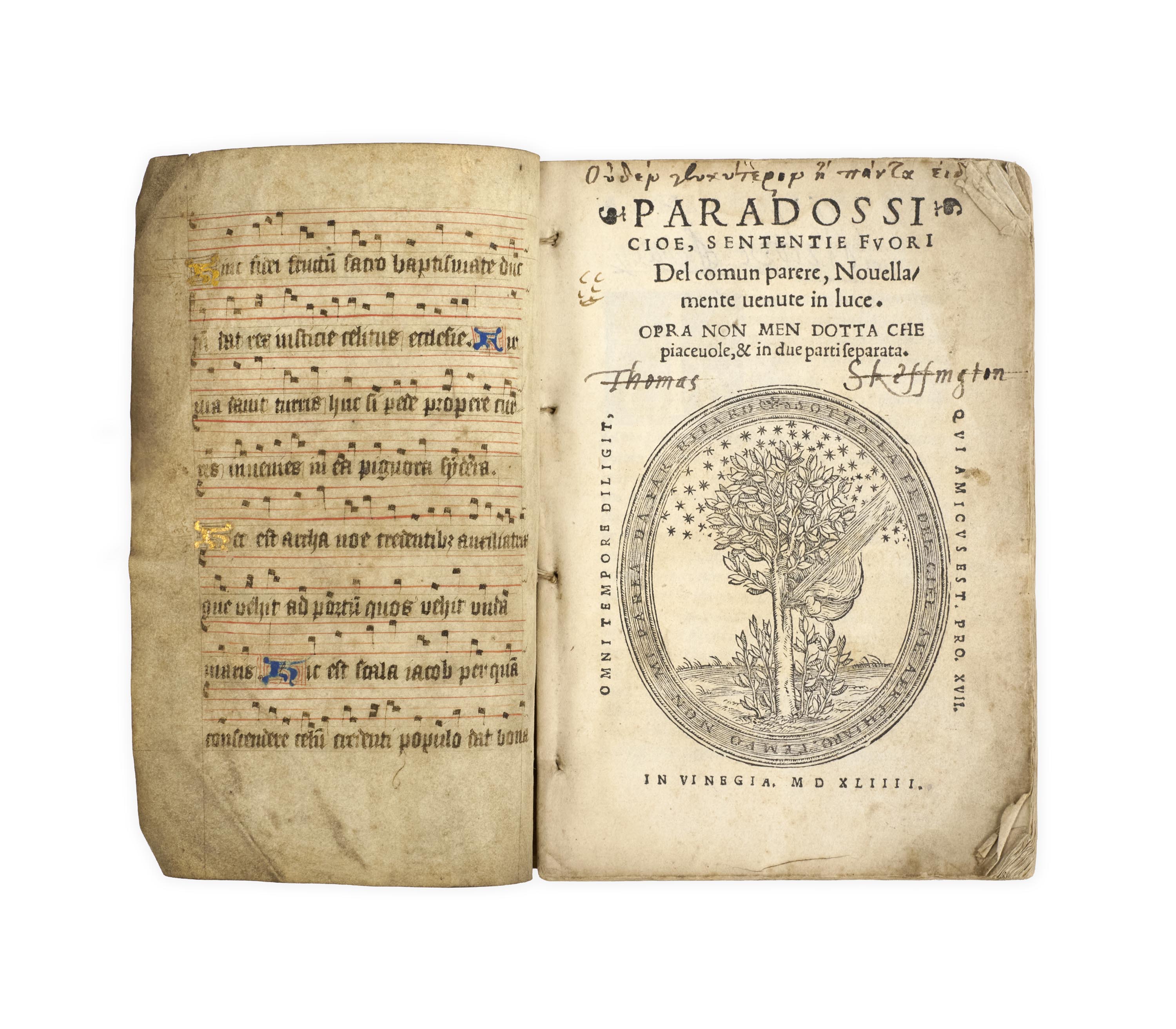
Paradossi cioe, sententie fuori del comun parere, novellamente venute in luce. Opra non men dotta che piacevole, & in due parti separata. Venice, [s.n.], 1544.
8vo, ff. 104 (recte 106), [2, table]; woodcut device to title (tree struck by lightning), woodcut initials; small losses to f. 7 (touching a few letters), chips to fore-edge of last leaf, creasing to corners at beginning and end, some damp-staining; otherwise good, stab-stitched in a limp vellum wrapper formed from a manuscript fragment (see below); covers rubbed and soiled, stitching coming loose; sixteenth-century inscription to title ‘Thomas Skeffington’ (crossed through), Greek motto at head of title, seventeenth-century inscription to title verso ‘Walter James’, purchase note to final blank ‘2d Maye xxth 1625 Hol: Br'.
Added to your basket:
Paradossi cioe, sententie fuori del comun parere, novellamente venute in luce. Opra non men dotta che piacevole, & in due parti separata.
Attractive Venetian edition of Ortensio Lando’s Paradossi, with a binding preserving two leaves from a once fine English Processional.
Lando (c. 1505–c. 1555) ‘was the author of three Latin and several Italian prose works which all show, in different ways and to different degrees, his learning, love of paradox, and disrespect for established reputations and institutions … His most successful work, the Paradossi, first published in Lyons in 1543, humorously subverts accepted truths … His religious views … were always suspect to the authorities, and all his works were put on the Index in 1564’ (Oxford Companion to Italian Literature).
Manuscript fragment:
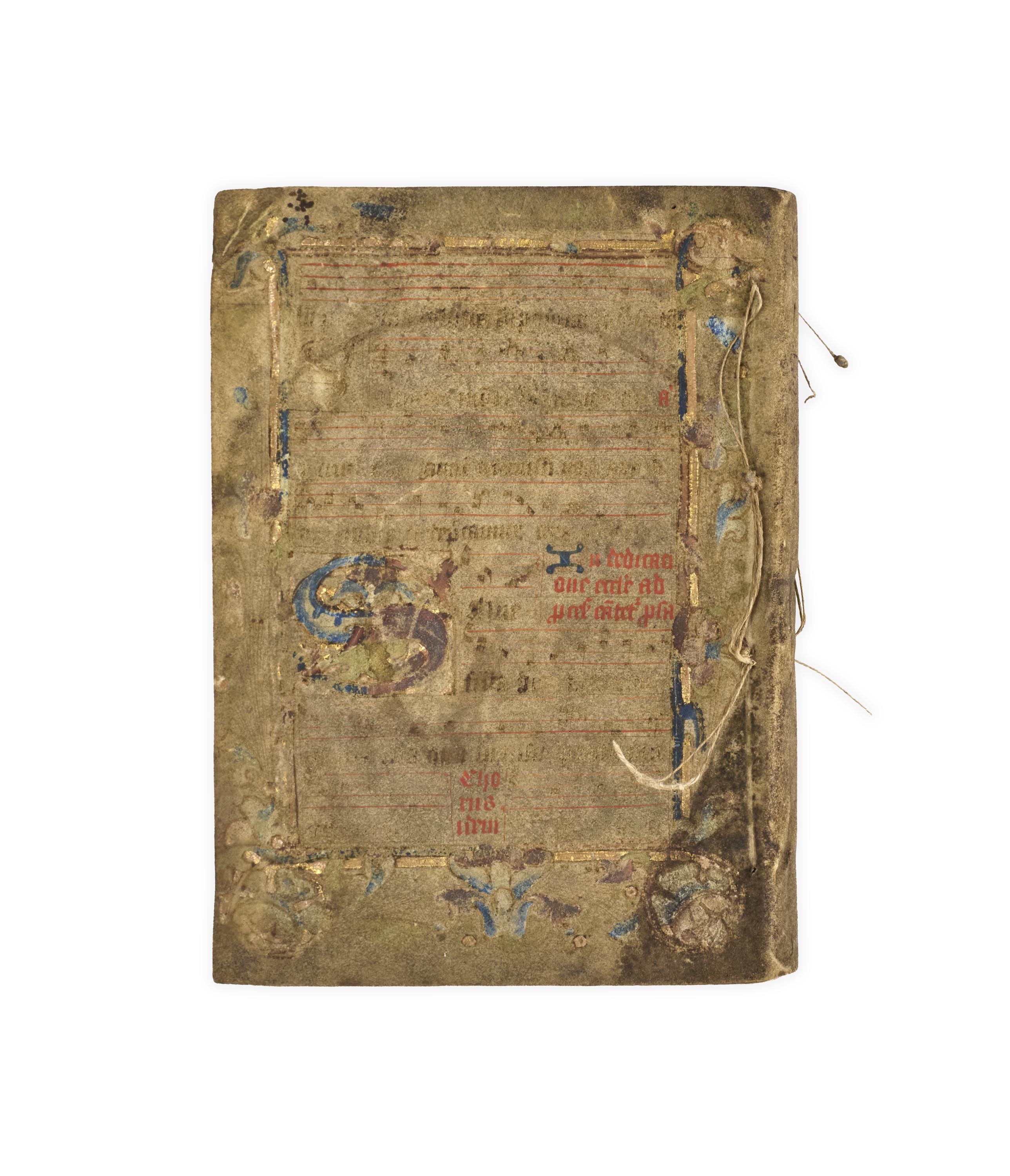
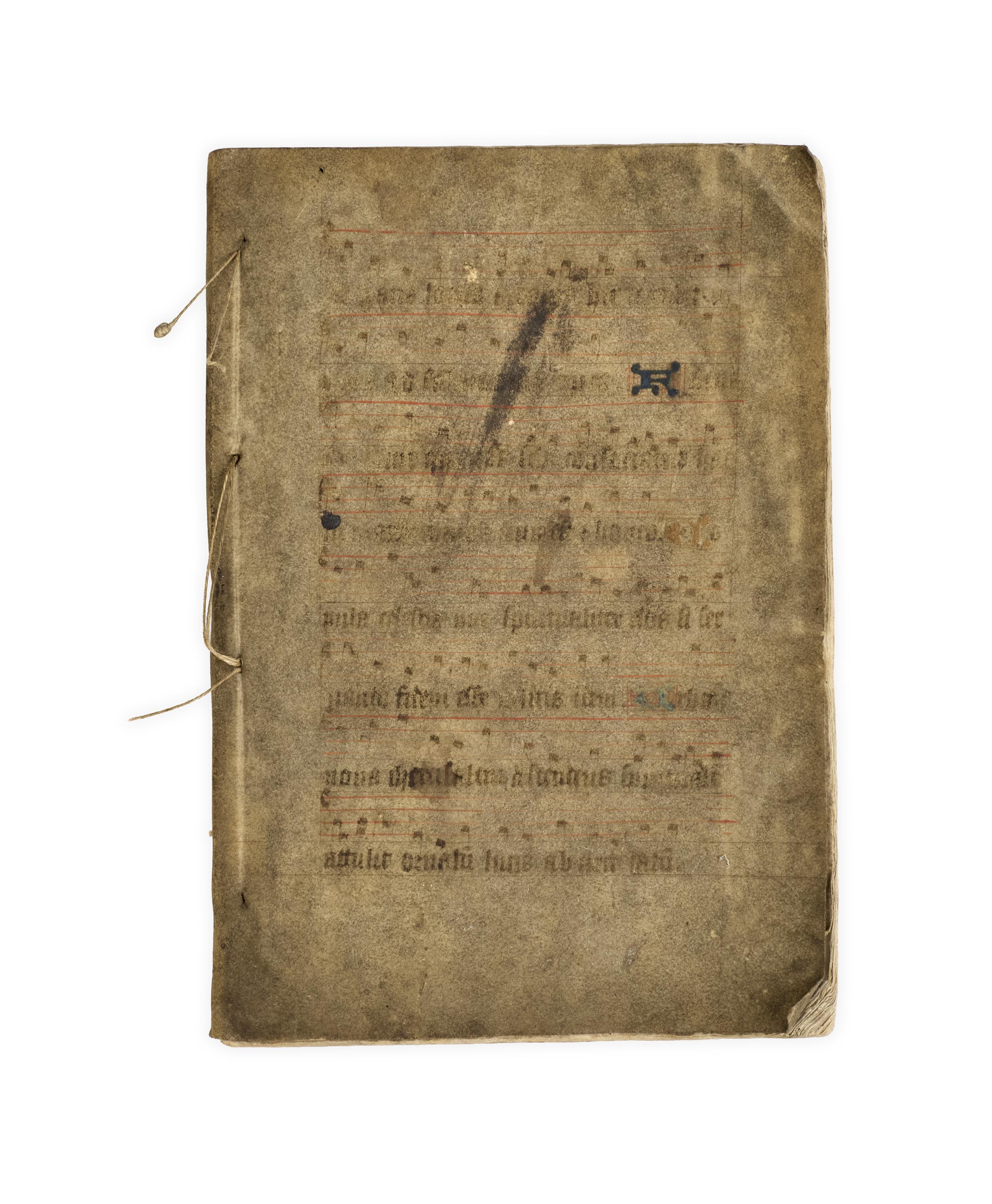
The wrapper is formed from a complete bifolium (154 x 220 mm, leaves consecutive) from a Sarum Processional, in Latin (England, mid-fifteenth century); single columns of text and music, four-line staves ruled in red with notation in dark brown ink, accompanying text in a neat gothic hand, eight lines of music and eight lines of text per page, a six-line initial ‘S’ (Salve festa dies) with full-page border on verso of first leaf, the initial in a leafy design in colours on a burnished gold ground, bar decorated with flowers and acanthus in shades of blue and pink, a two-line initial ‘A’ (Adoremus crucis signaculum) in blue with red pen flourishing, smaller initials in blue and gold, rubrics in red; verso of first leaf and recto of second leaf soiled and worn with text and decoration rubbed, corners slightly creased.
The two leaves are from an English Processional; a small portable book of chants used on the feasts of the year when the liturgy required priests and choir to walk in procession singing around the church. Much of the text here comprises the chant ‘Salve festa dies’ sung at the dedication of a church (with the rubric ‘In dedicacione ecclesie’). This is preceded by the chant ‘Adoremus crucis signaculum’, with the rubric ‘In dominicis diebus in stacione ante crucem’, and by ‘Benedictus es domine in firmamento celi’.
Provenance: the inscription to the title is perhaps that of Thomas Skeffington (1550–1600), Fellow Commoner of Jesus College, Cambridge, and sheriff of Leicester. ‘He raised 2,000 troops to send to Tilbury at the time of the Armada’ (History of Parliament).
EDIT16 CNCE 64346; USTC 837259; Adams L119.