Catholic Manuals in Reformation Germany
LORICH, Gerhard.
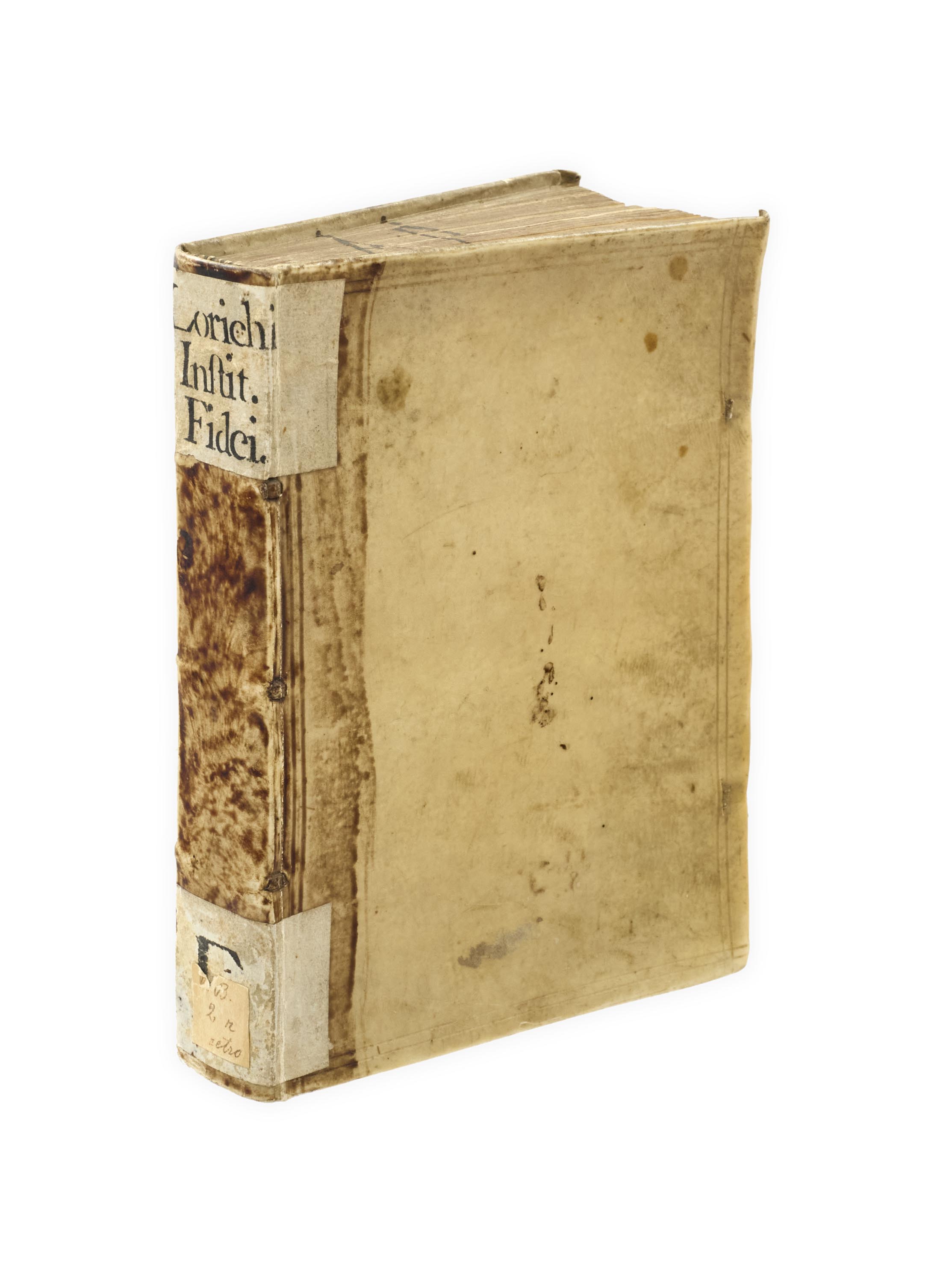
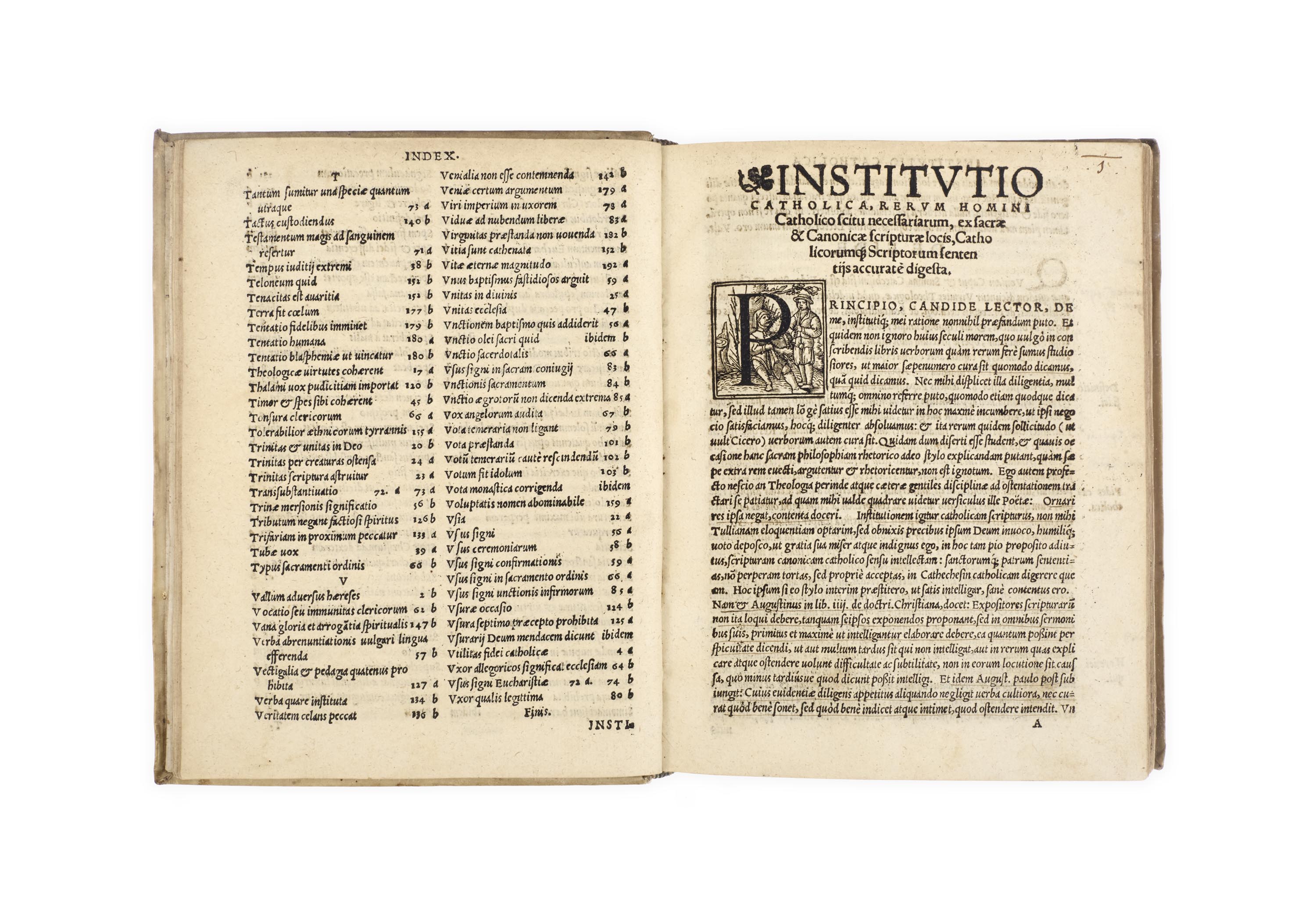
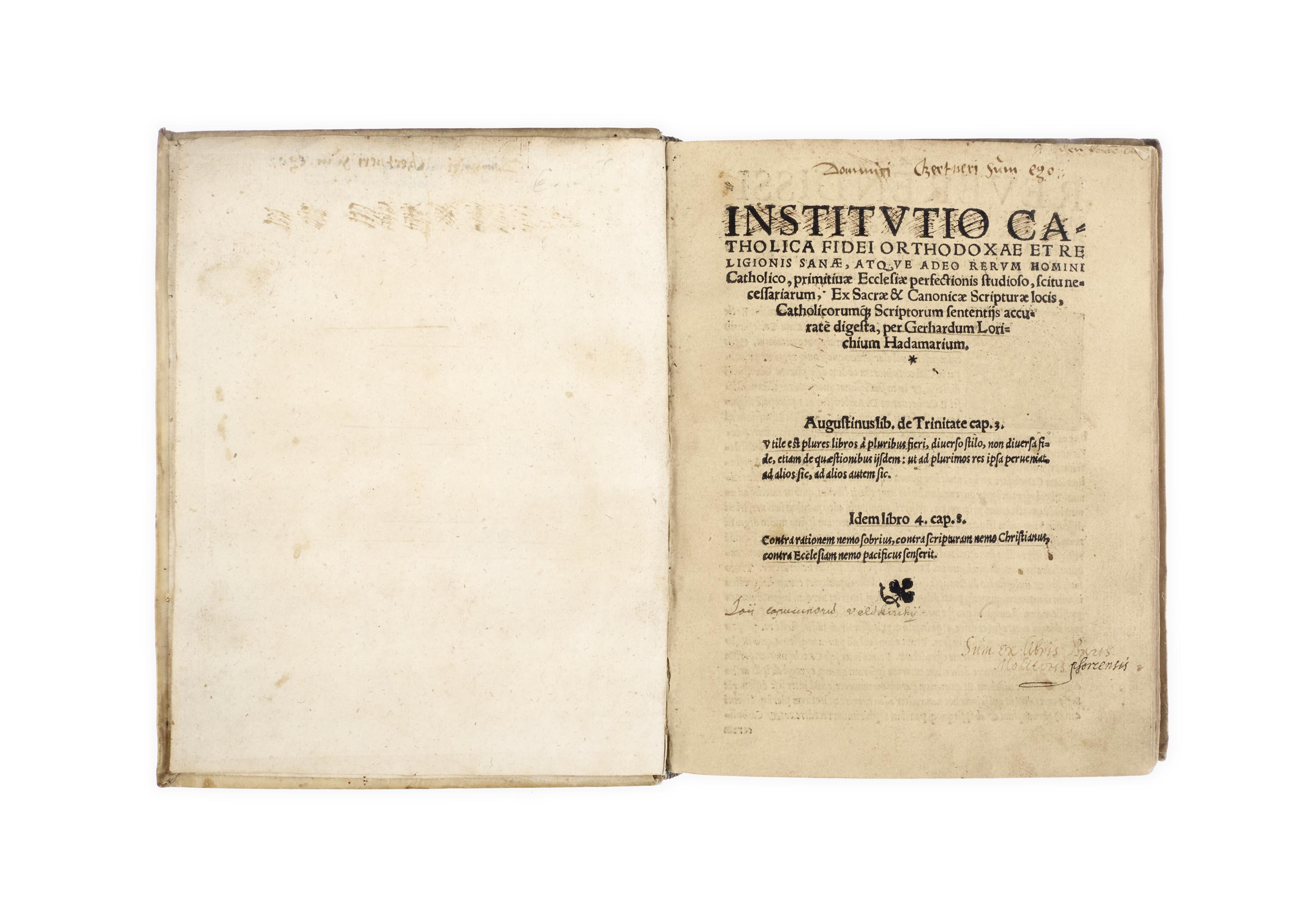
Institutio catholica fidei orthodoxae et religionis sanae, atque adeo rerum homini Catholico, primitivae Ecclesiae perfectionis studioso, scitu necessarium ... [Frankfurt am Main], [(colophon:) Christian Egenolff, 1536].
[bound with:]
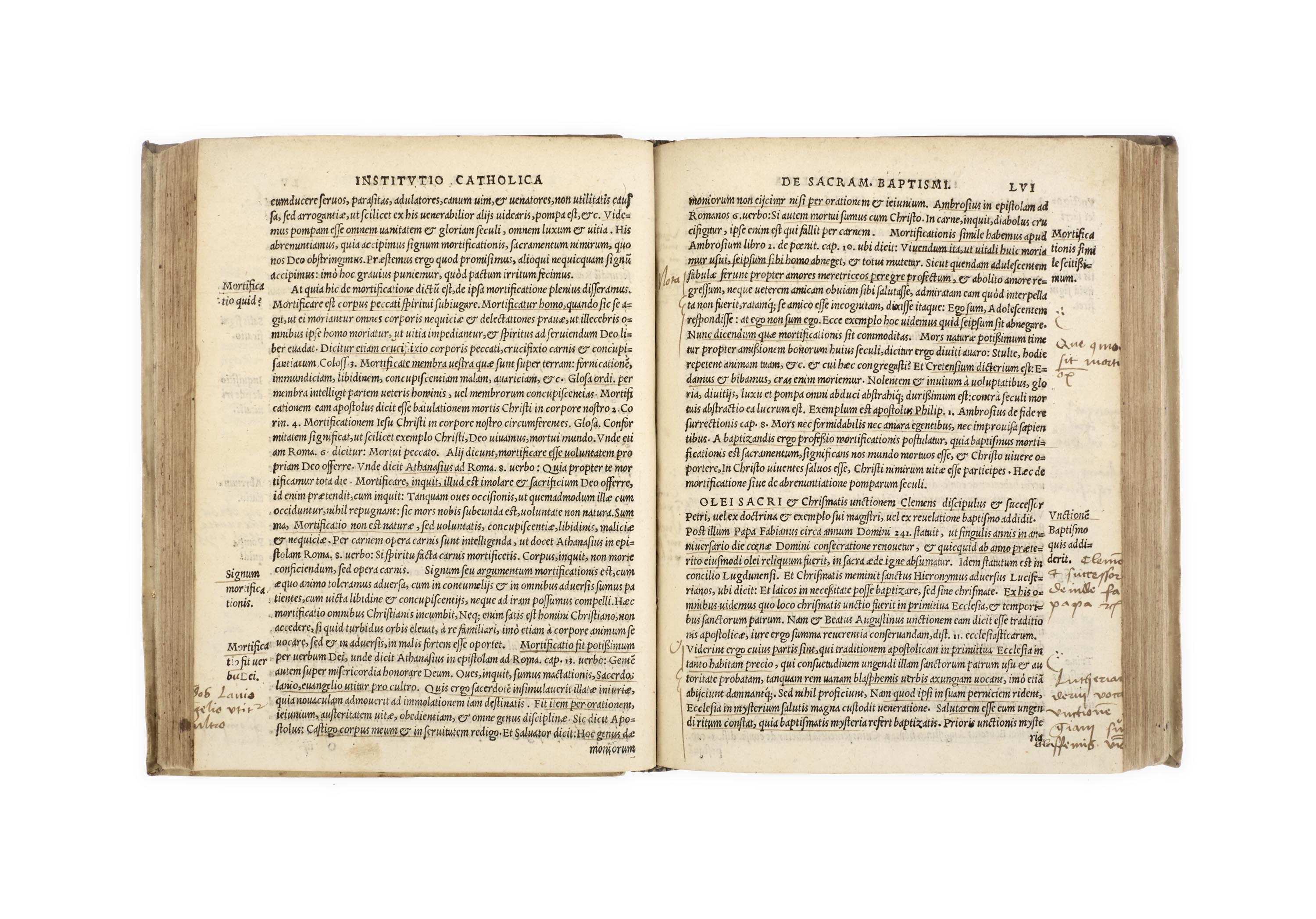
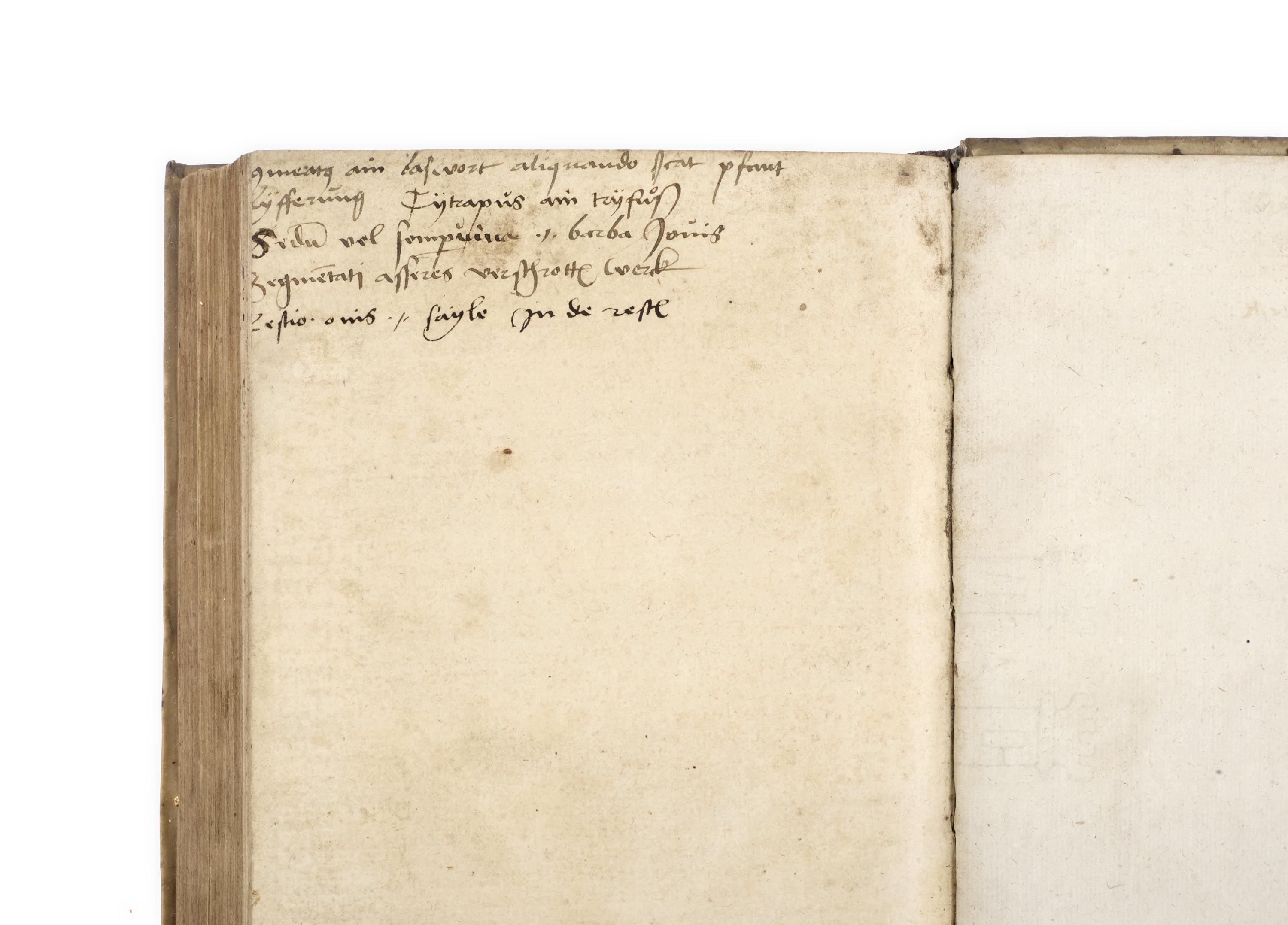
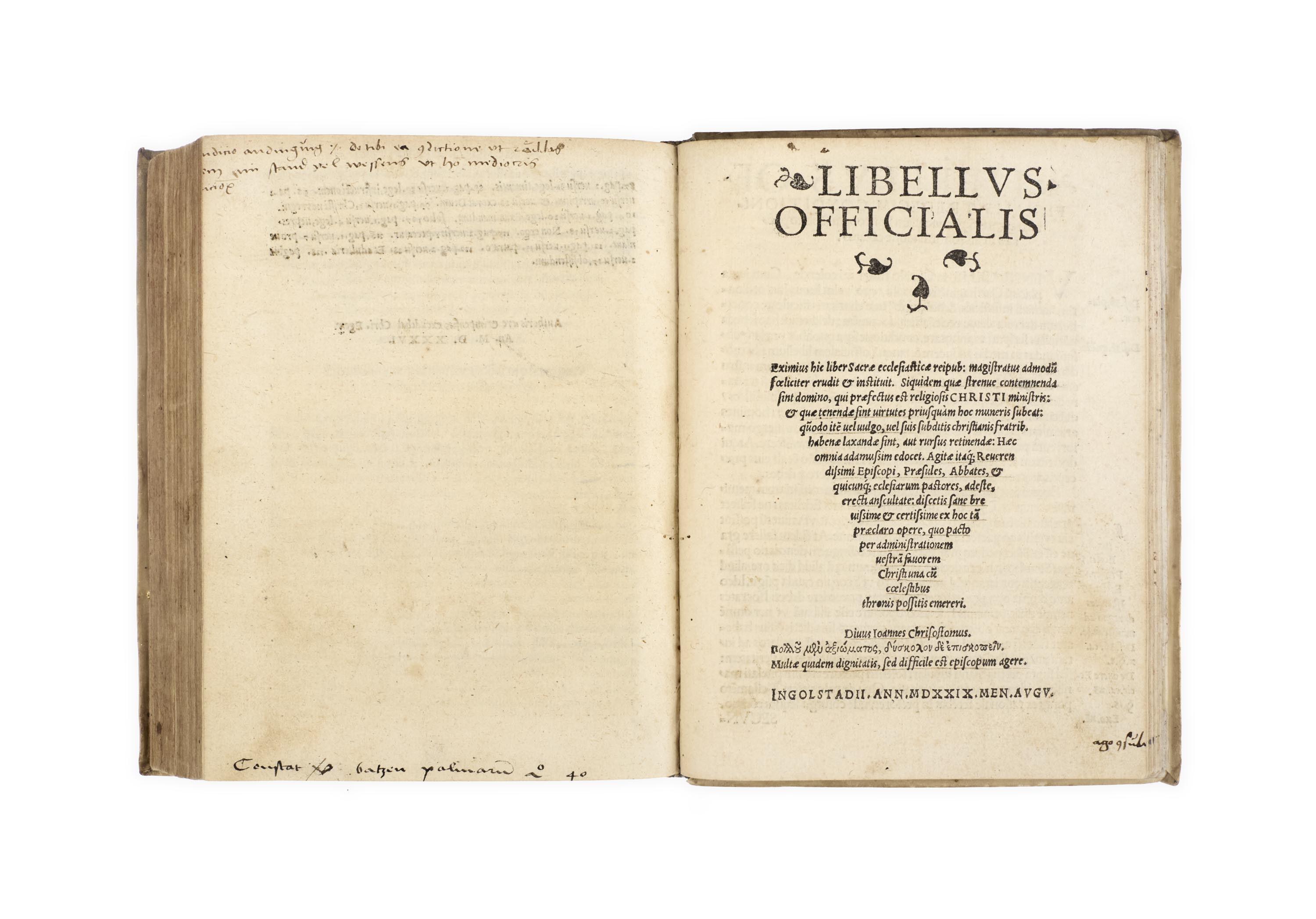
[ECK, Johannes, editor.] Libellus officialis. Ingolstadt, [Georg Apian and Peter Apian], August 1529.Two works in one vol., 4to, I: ff. [8], CXCIII, [1]; II: ff. [13], [1, blank]; both with woodcut initials; first title-page slightly soiled, a few leaves slightly dusty at head, a few small stains, but very good copies; bound in early seventeenth-century vellum, spine with later brown wash and paper labels, stubs from two pairs of tawed ties, edges speckled red, letters A P written on top-edge; binding slightly dust-stained and very slightly warped; various sixteenth- and seventeenth-century inscriptions to first title-page, ‘Dominici Bertneri sum ego’, ‘Sum ex libris Barth. Molitoris pforzensis’ (Bartholomaeus Molitor of Pforzheim), ‘Loci capuccinorum veldkirchii’ (Capuchins of Feldkirch, Austria), first line of title crossed through in ink, early note of price to final verso of first work (in batzen, a Swiss/south German coinage), five lines of early manuscript text to final verso of second work, annotations in a few early hands to c. 133 pp. (some cropped or shaved).
Added to your basket:
Institutio catholica fidei orthodoxae et religionis sanae, atque adeo rerum homini Catholico, primitivae Ecclesiae perfectionis studioso, scitu necessarium ...
First editions of a pair of Reformation-era Catholic manuals, one by a sympathetic and conciliatory author, the other by a renowned polemicist.
Gerhard Lorich (c. 1485–after 1559) had studied in Wittenberg but later renounced his Lutheranism and composed this humanist treatise in support of Catholic reform at a pastoral level. The result was ‘a transitional work that served as a link between the late medieval pastoral manual and those intended for Protestant clergy … Lorich’s goal was to find the proper way of reform between the two extremes represented by Catholics who rejected any criticism whatsoever of the church and Lutherans who threw out the good with the bad in their attempts to reform the church’ (Nelson Burnett, p. 541). Like his hero Erasmus, however, his ideas were subject to criticism from both sides of the religious divide. This was one of three works he published in 1536.
Johann Eck (1486–1543), a theologian from Swabia, vigorously upheld the authority of the papacy in the face of Lutheranism. Although the Libellus officialis was issued anonymously, its compilation is attributed to him. It contains thirteen ‘conditions’ that prelates should of necessity remember, including truthfulness, justice, monastic virtues, performing visitations, and frugality. Eck’s humanist scholarship is indicated by references to the princely conduct manuals of Erasmus and Isocrates, though mention is also made of St Catherine of Siena and Gregory the Great.
The annotations, in both the inner and outer margins of the pages, seem to be in more than one sixteenth- and seventeenth-century hand. One annotator certainly knew Greek, and a few of the notes are in German. A later annotator corrected (almost) all the errata, which were crossed through one by one, and they also made other textual corrections. While ‘Lutheriani’ are mentioned a few times, the notes do not seem to be polemical. There is a fair amount of light underlining of text throughout the volume, and a few manicules and other reading marks (such as groups of three dots with a tail).
The five lines of text on the verso of the final blank leaf seem to contain Latin phrases with German translation; ‘segmentati asseres’ has the translation ‘verschrotten werck’ (as it appears in Dasypodius’s sixteenth-century Latin-German dictionary) and ‘Restio omnis’ is ‘sayle zu de reste’. The middle line provides alternative names of plants, ‘Sedum vel semperviva / barba Jovis’; sempervivum and Jupiter’s Beard are both names for houseleeks.
OCLC finds only two copies of the Institutio catholica fidei in the US (Illinois and Emory), and only one copy of the Libellus officialis (Illinois); no copies of either work traced in the UK.
USTC 666786 & 2212953; VD16 L 2509 & L 1525. See Nelson Burnett, ‘The evolution of the Lutheran pastors’ manual in the sixteenth century’, Church History 73 (2004), pp. 536–565.