Breton Lucan
LUCAN.
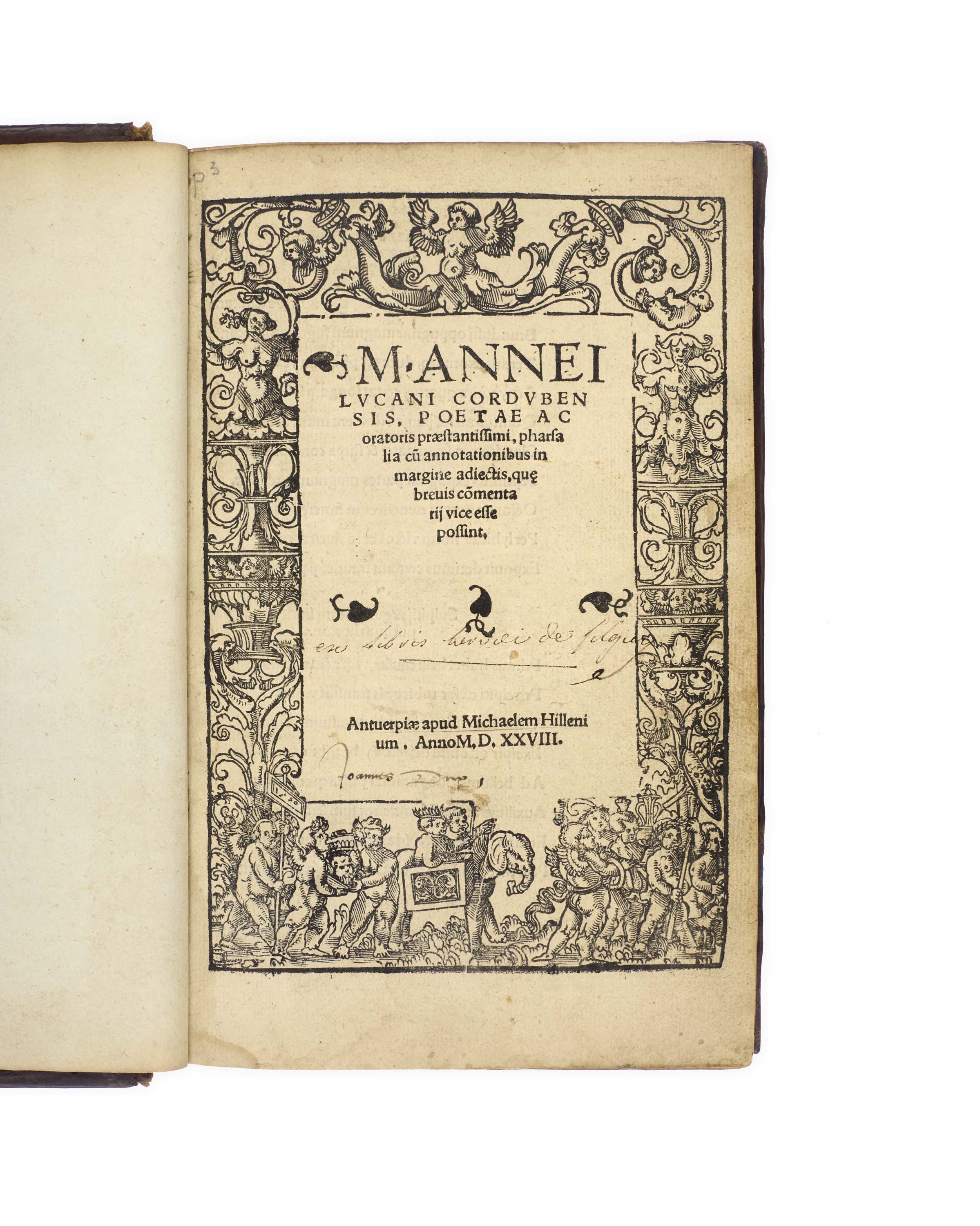
Pharsalia cum annotationibus in margine adiectis, quae brevis commentarii vice esse possint. Antwerp, Michael Hillenius, 1528.
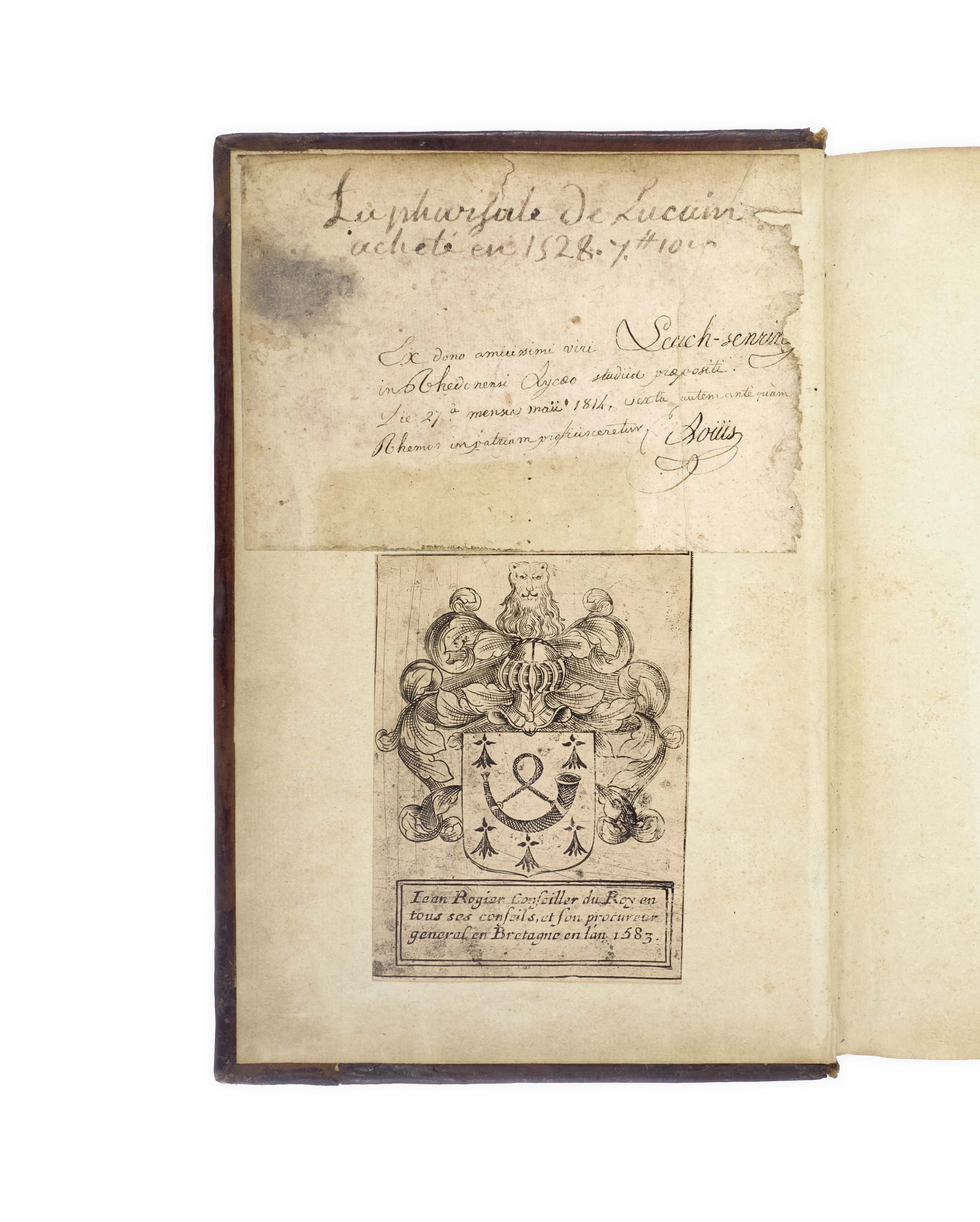
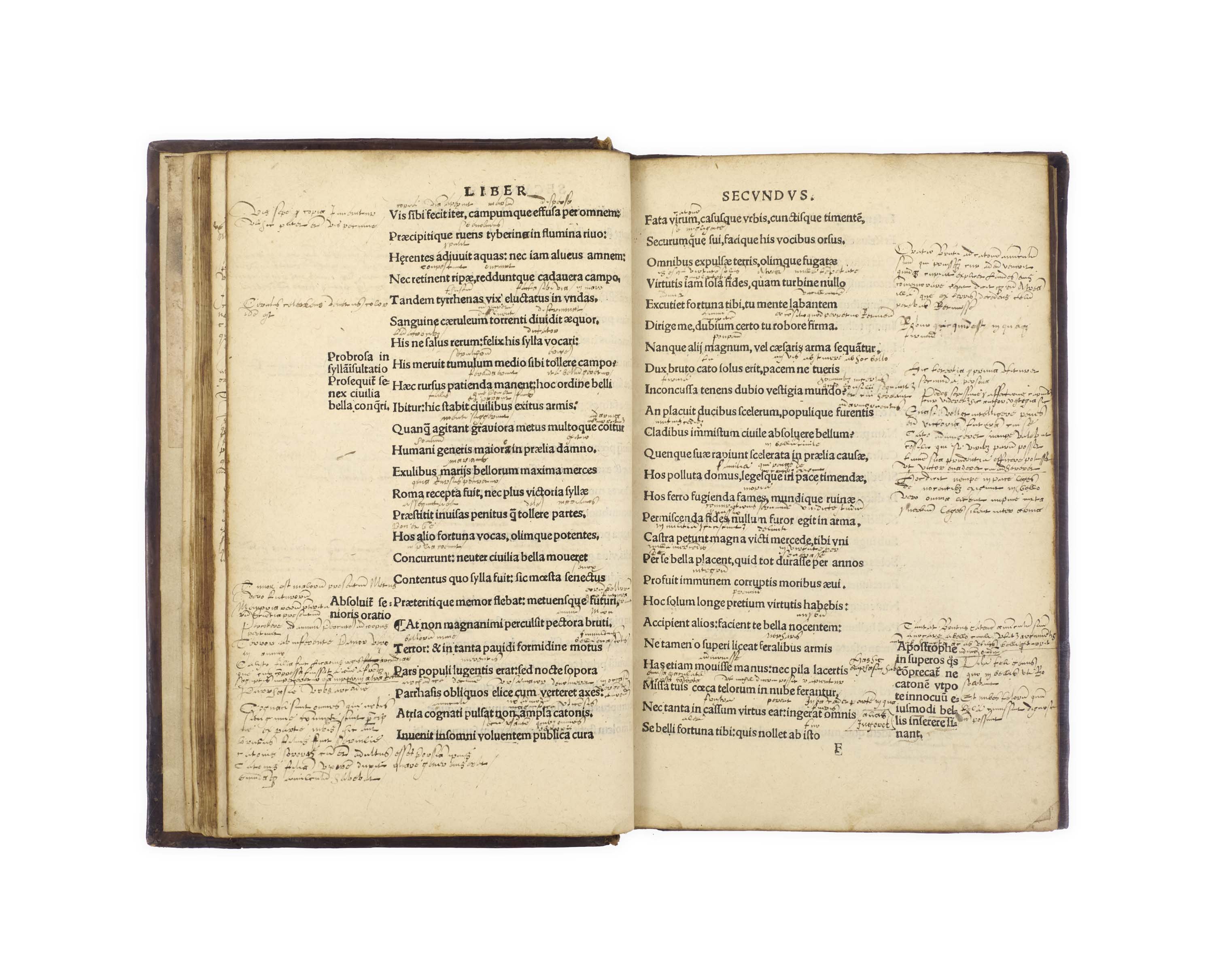
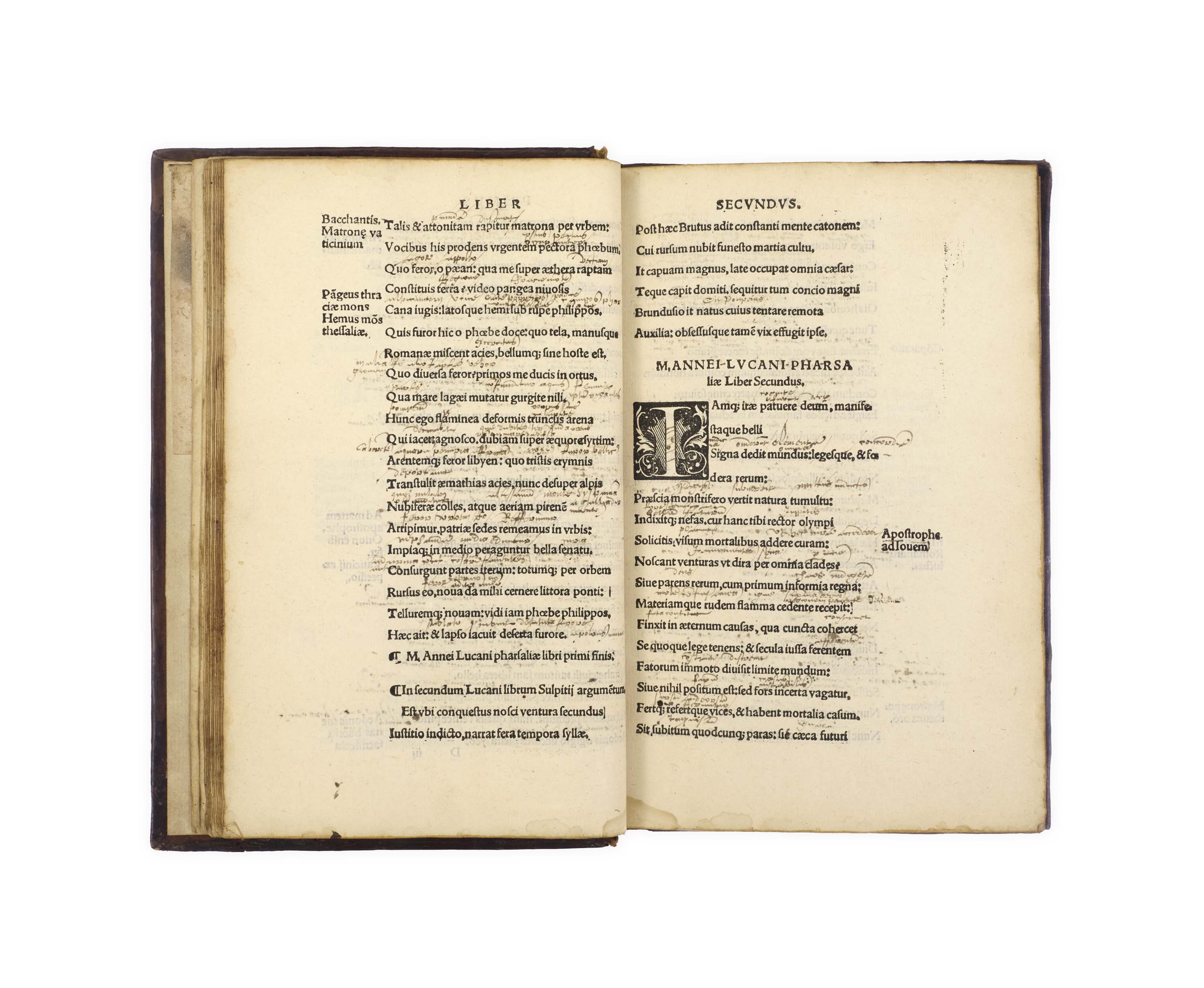
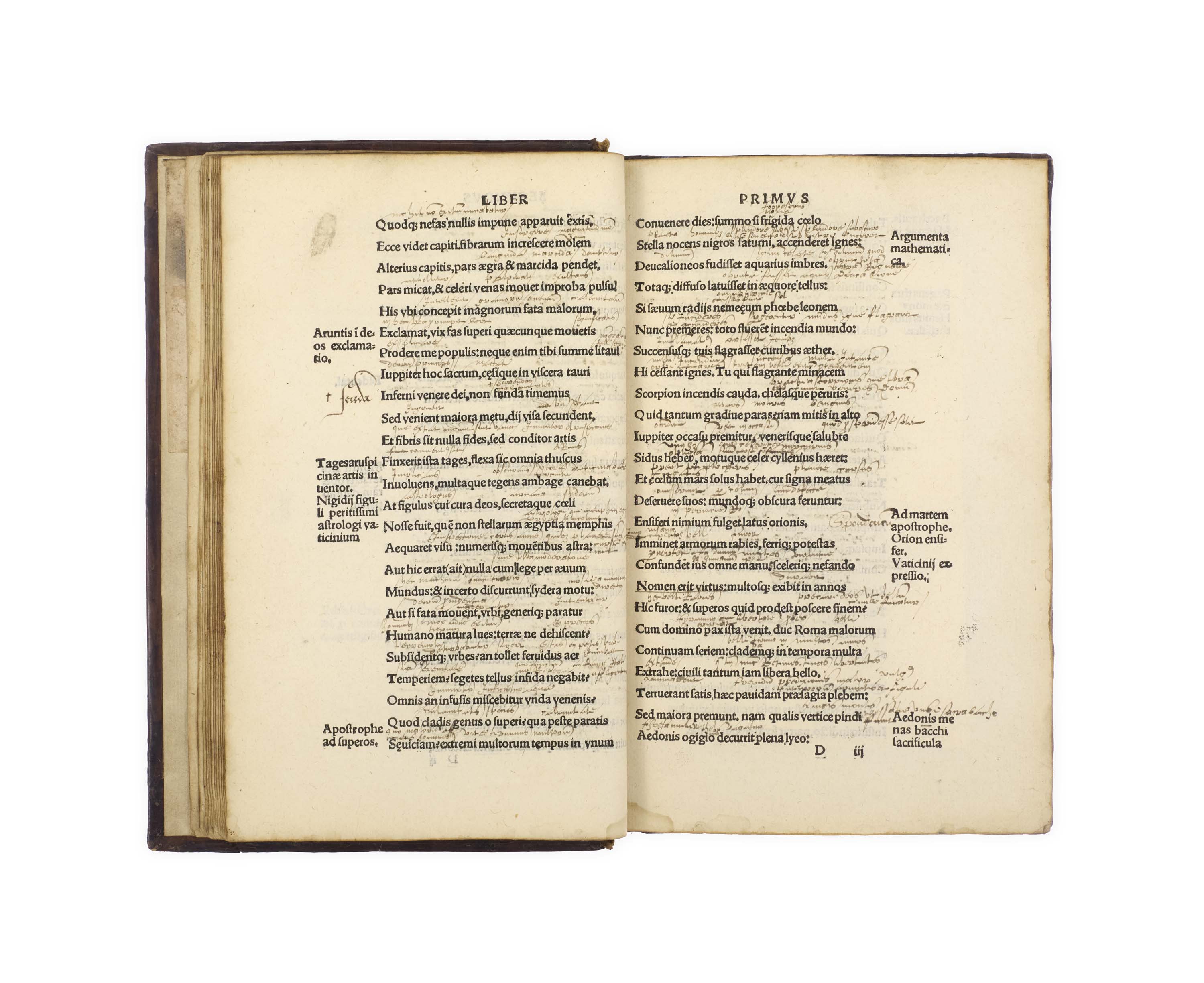
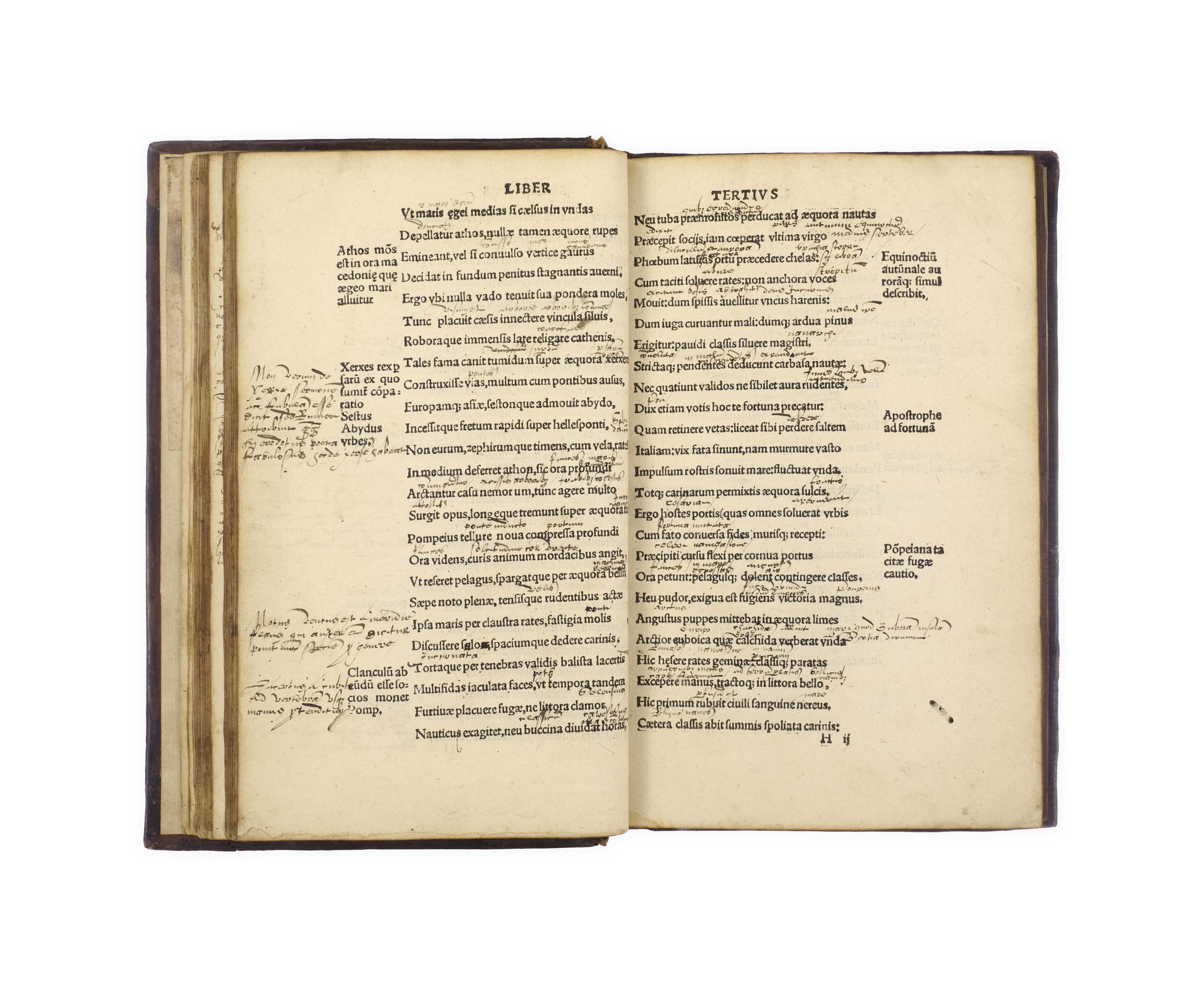
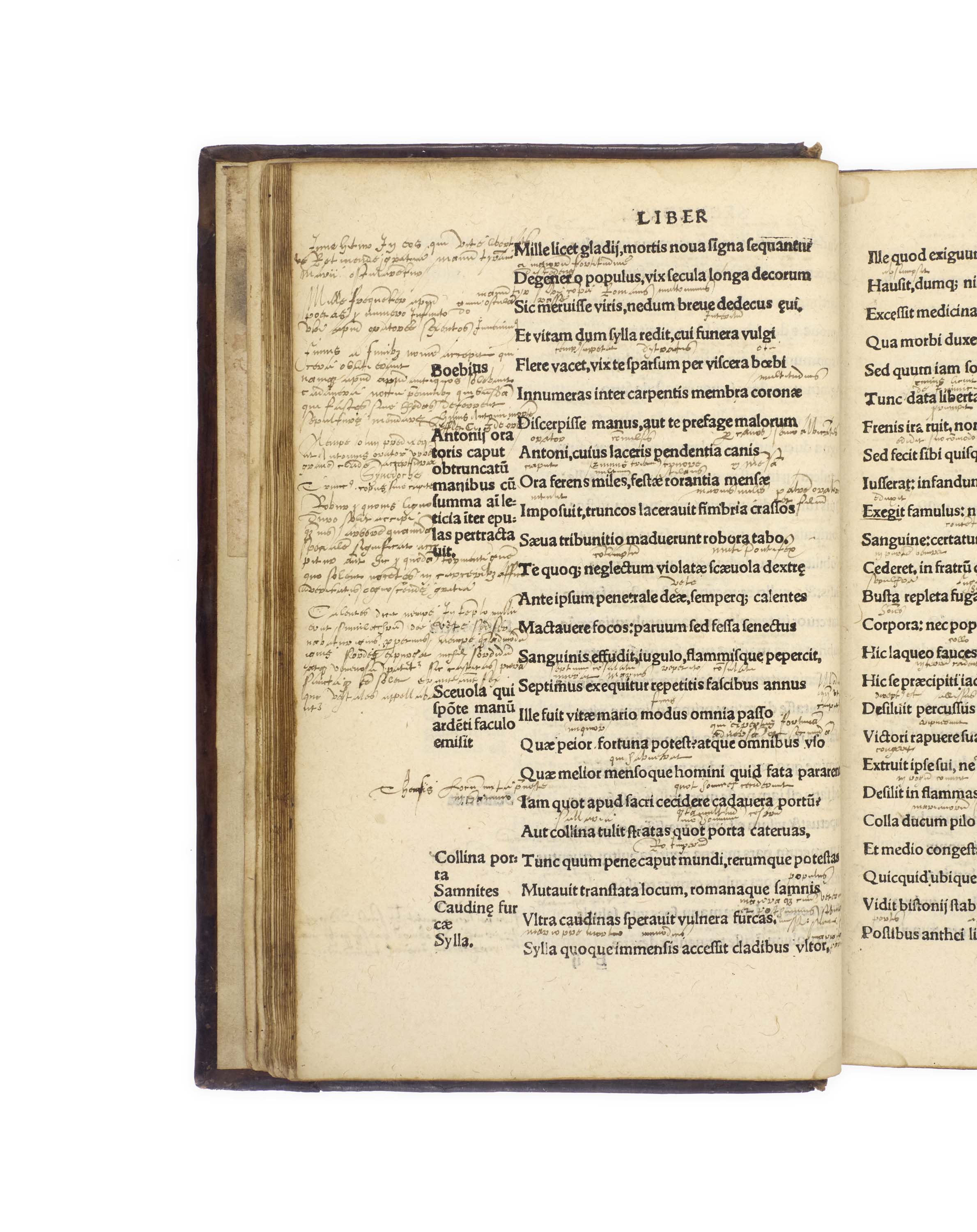
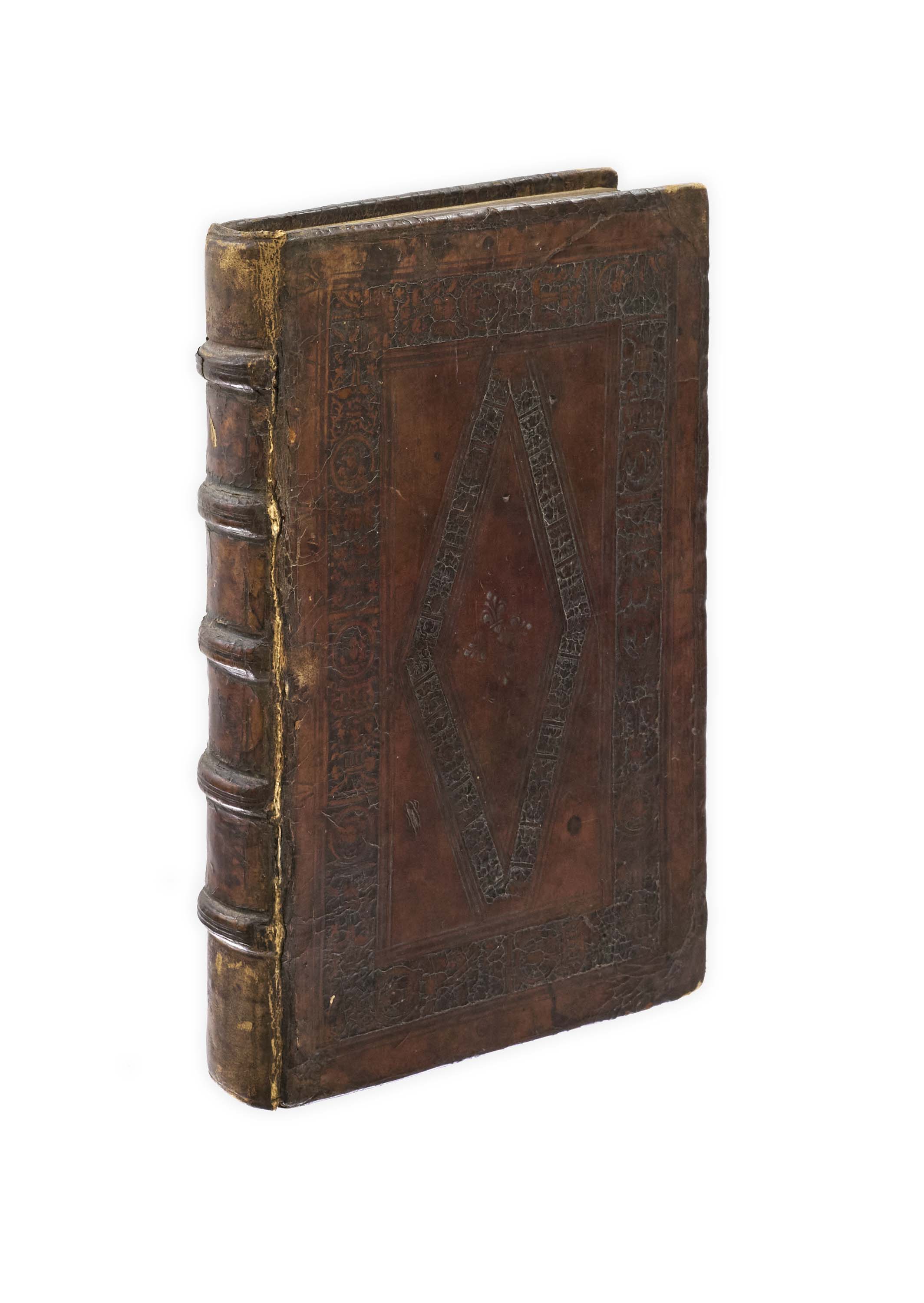
4to, ff. [168]; A–Z4 Aa–Tt4; title within woodcut border, woodcut initials; very occasional light marginal staining, short worm-track at lower corner affecting a few characters, else a very good, wide-margined copy; bound in contemporary blind-tooled calf, a roll-tool forming a lozenge in the centre of each cover with an outer border of cherub heads and vases, all framed within blind fillets, a small centrepiece composed of a group of four fleurs-de-lys stamps, spine blind-ruled in compartments; binding somewhat rubbed with a few superficial cracks to lower board, skilful repairs to endcaps, joints, and corners, endpapers renewed; contemporary annotations to c. 58 pp. in the first two books (see below), contemporary inscription (apparently that of the annotator) ‘Joannes Duy[?]’ to foot of title-page, engraved armorial bookplate of Jean Rogier dated 1583 to inside front cover (apparently a modern facsimile), eighteenth-century inscription in French recording the purchase of a copy (this copy?) of Lucan on 7 December 1528 (from original pastedown or flyleaf?) pasted to inside front cover, an inscription recording a gift to Louis from his friend Leuchsenring on 27 May 1814 beneath (see below), eighteenth-century inscription to title ‘ex libris hervei de silguy'.
Added to your basket:
Pharsalia cum annotationibus in margine adiectis, quae brevis commentarii vice esse possint.
An uncommon edition of Lucan’s poem on the Civil War between Caesar and Pompey, with extensive Breton provenance and contemporary annotations, in a contemporary binding.
The printer, Michael Hillen von Hoochstraten (c. 1476–1558), established himself as a bookbinder in Antwerp in 1506 before becoming a printer, serving both the local market for official publications and educational books (as here), and the English market.
The first two books contain interlinear Latin glosses and paraphrasing with some marginal annotations, covering fifty-eight pages. A few lines have marks to indicate the metre and there are some rhetorical terms such as ‘anastrophe’, ‘apostrophe’, ‘metaphora’, ‘synecdoche’ and ‘hypallage’ added at the relevant places. The names of people and places have been added to epithets and other inferences in the text, making it clear that this book was in use by a student whose annotations sought to explain and interpret the meaning.
Provenance:
1. Jean Duy or Le Duy(?), apparently the author of the annotations, contemporary inscription on title-page. The surname ‘Le Duy’ is frequently recorded in Brittany.
2. Possibly Jean Rogier, of Ploërmel (d. 1593), who was a conseiller du roy in Brittany in 1583, according to his bookplate (here a modern copy, perhaps made from an original before the pastedowns were renewed).
3. A Hervé de Silguy is recorded in Quimper in the eighteenth century (he died in 1768).
4. F.-L.-C.-L. Leuchsenring was professor of languages at the University of Reims; the inscription states that he studied at the Lycée de Rennes and he gave this book to a certain Louis before he returned home to Reims in 1814.
No copies of this edition are recorded in the US or UK by OCLC or Library Hub; USTC lists four copies, all in Continental Europe.
USTC 407341; Nijhoff & Kronenberg 1384.