Relief for the Poor in Patterned Paper
MONTE DI PIETÀ DI MILANO.
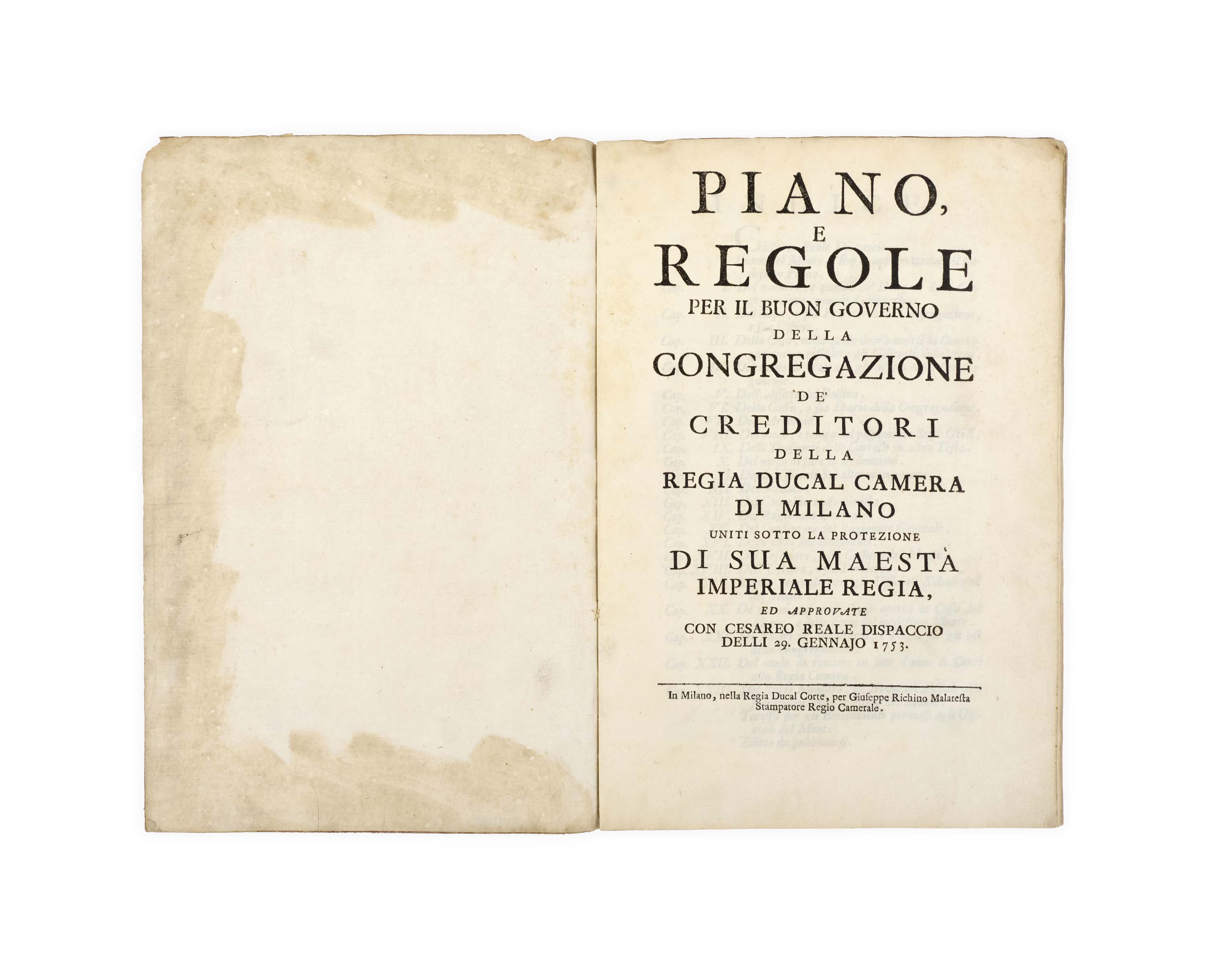
Piano, e regole per il buon governo della congregazione de’ creditori della Regia Ducal Camera di Milano uniti sotto la protezione di Sua Maestà Imperiale Regia, ed approvate con cesarea reale dispaccio delli 29 Gennajo 1753. Milan, Giuseppe Richino Malatesta, [1753].
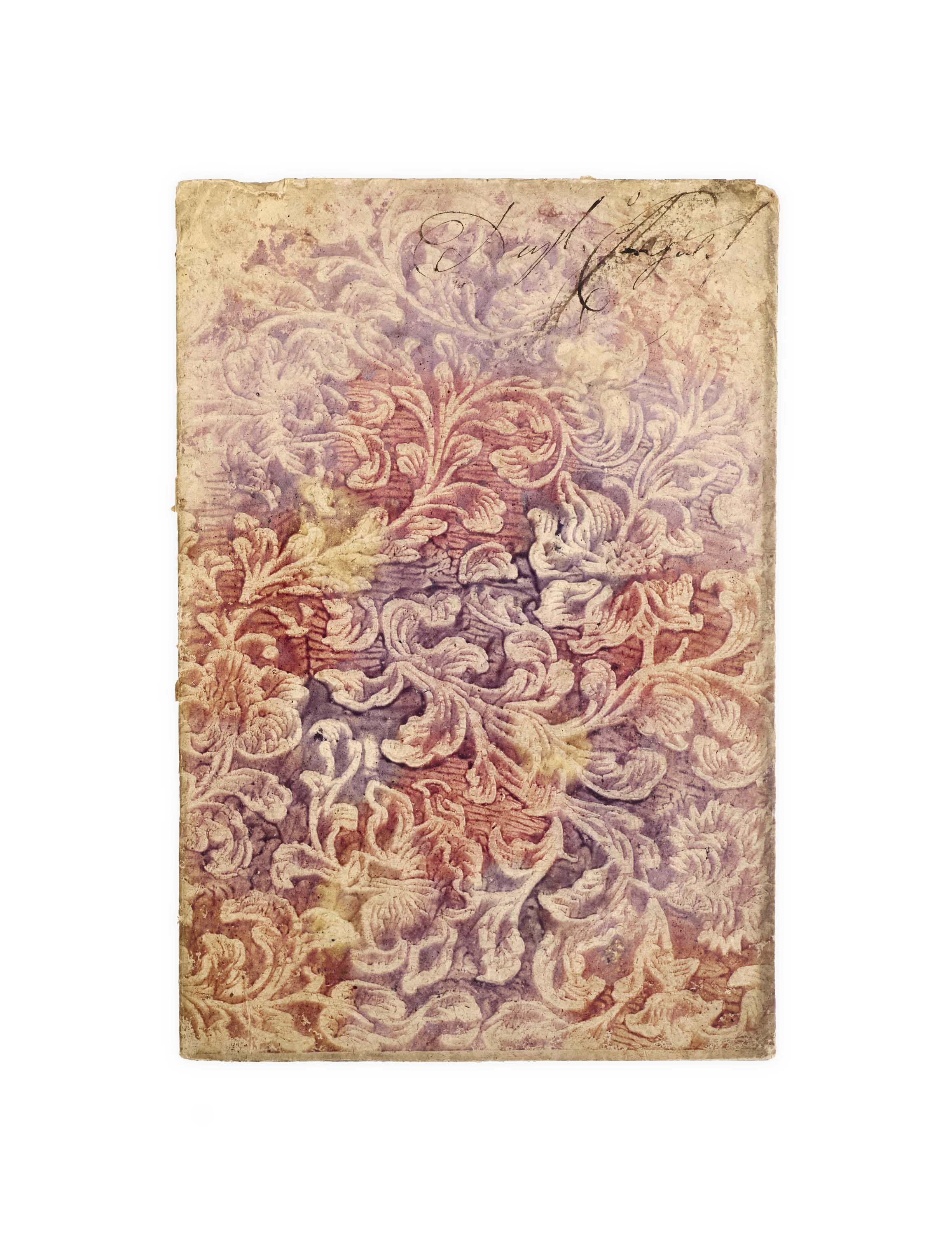
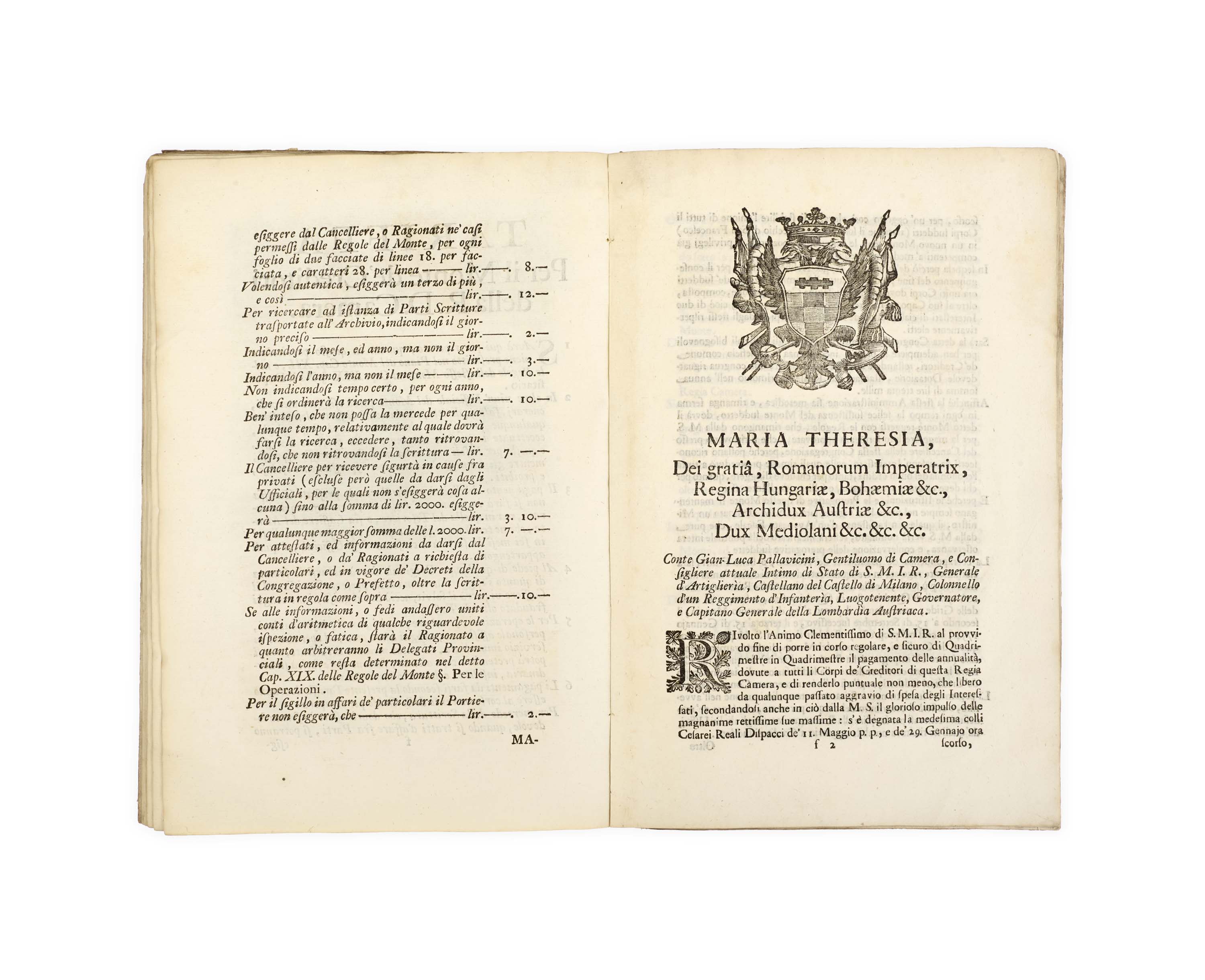
Folio, ff. [25], [1, blank], π2 a2 b–d4 e6 f4; last leaf blank; woodcut initials and tailpieces, woodcut armorial of Gian-Luca Pallavicino to f2r; light staining to e1, otherwise a good copy; bound in contemporary wrappers of paste-paper with impressed floral decoration in pink and purple, lettered ‘Dupl. C[onsul?]’ in a calligraphic hand to head of upper cover; extremities a little rubbed.
Added to your basket:
Piano, e regole per il buon governo della congregazione de’ creditori della Regia Ducal Camera di Milano uniti sotto la protezione di Sua Maestà Imperiale Regia, ed approvate con cesarea reale dispaccio delli 29 Gennajo 1753.
An uncommon description of the workings of an eighteenth-century Italian charitable organisation, bound in a contemporary paste paper wrapper.
The Monte di Pietà of Milan was established in 1496 to provide financial assistance to the poor, and its activities continued uninterrupted until the French occupation in the early nineteenth century. At the time of publication, Milan was under the rule of the Habsburgs, who had taken possession from the Spanish in 1706; Conte Gian Luca Pallavicino, whose woodcut arms appear on f2r, was the Habsburg governor of Milan. The Monte di Pietà flourished under Habsburg administration; the Empress Maria Theresa, who enacted numerous and wide-ranging reforms of taxation and finance across the Austrian territories, sought to regulate the charitable work of the institution, and later brought the charity under the control of a single appointee, chosen by the governor.
We have located only one copy outside Italy, in Illinois.