Proverbs and Philanthropic Pleas by Philip Ii’s Physician
PÉREZ DE HERRERA, Cristóbal.
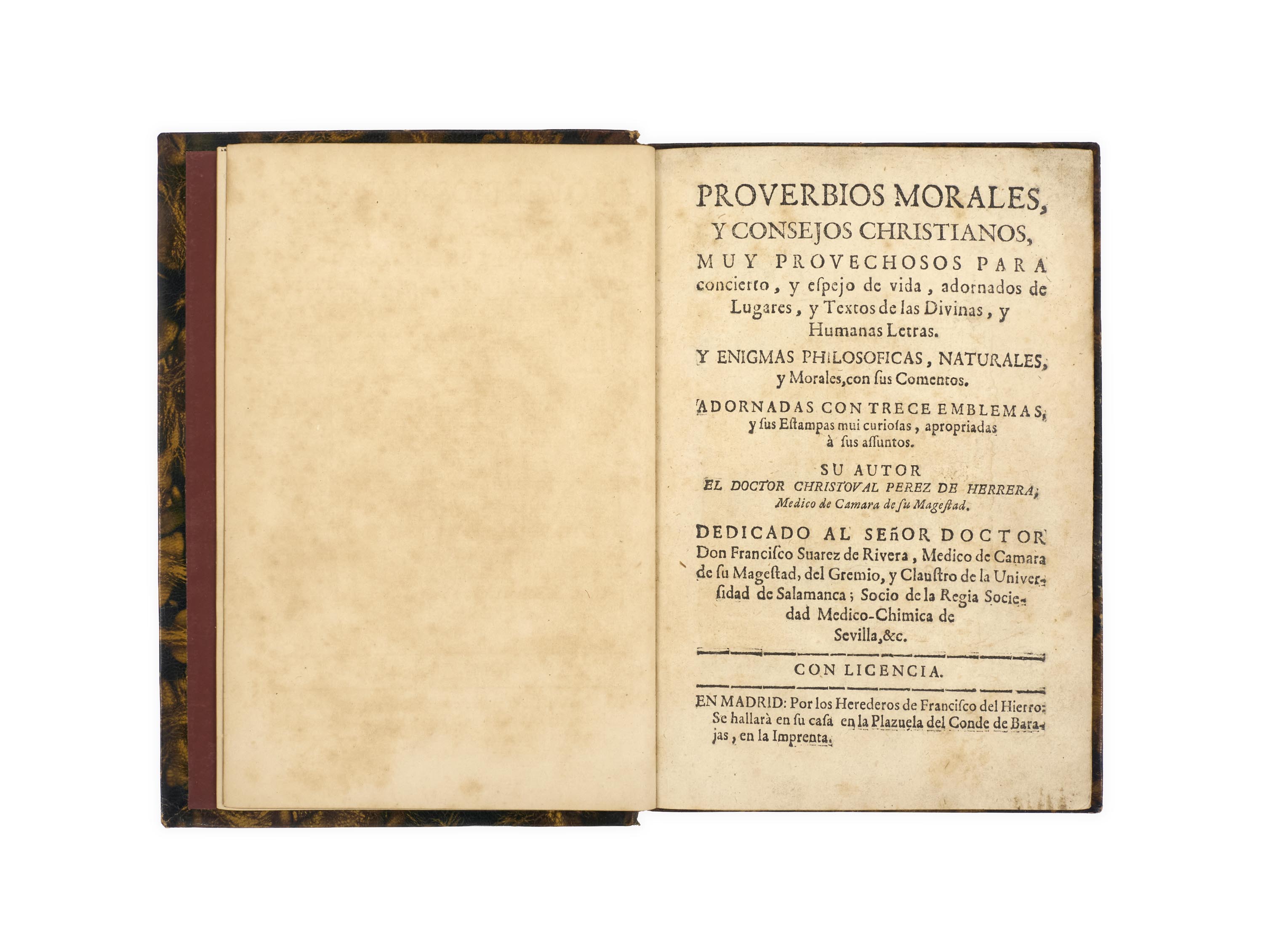
Proverbios morales, y consejos christianos … Y enigmas philosoficas, naturales, y morales, con sus comentos. Adornadas con trece emblemas … Madrid, heirs of Francisco del Hierro, [1733].
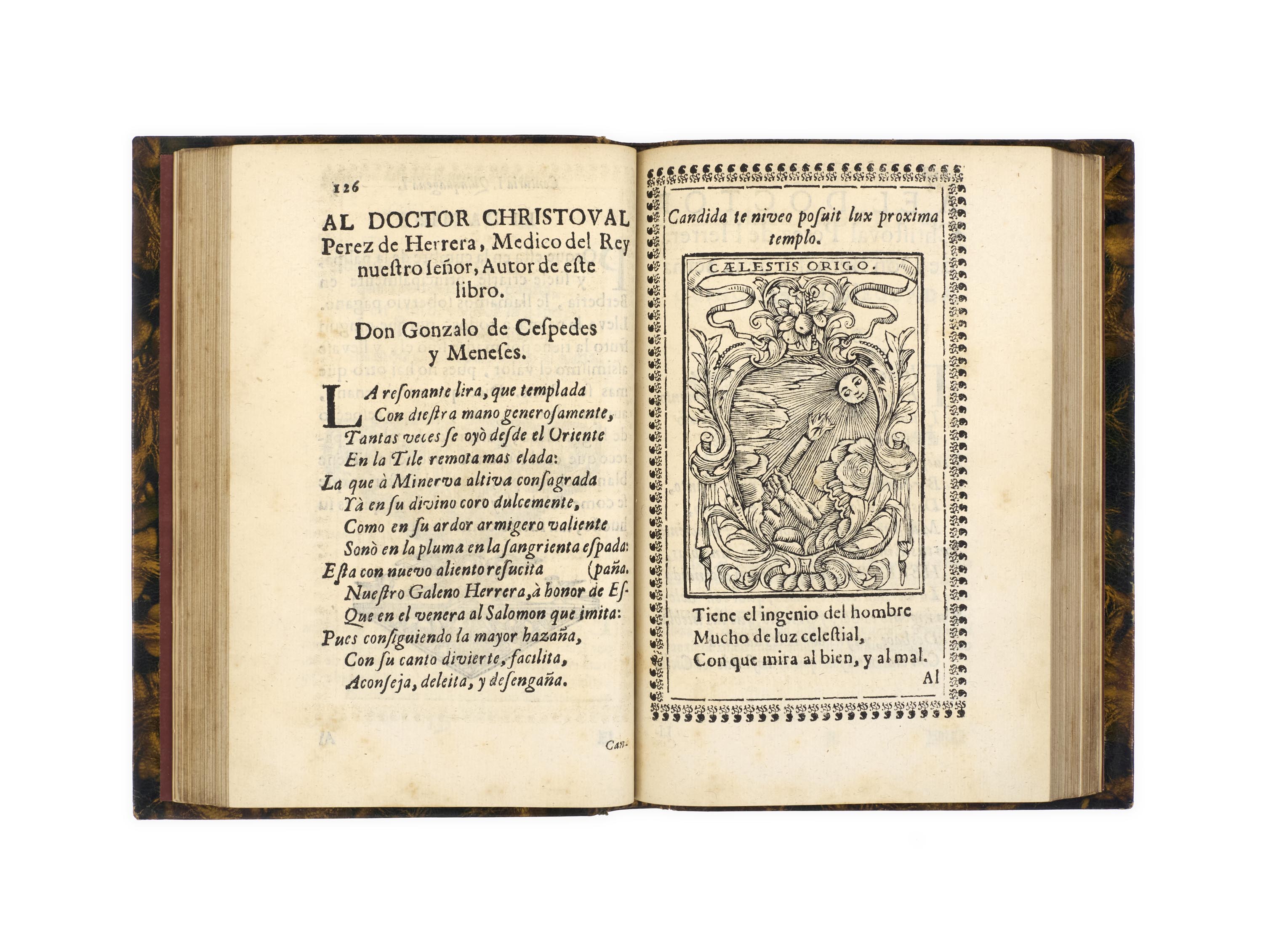
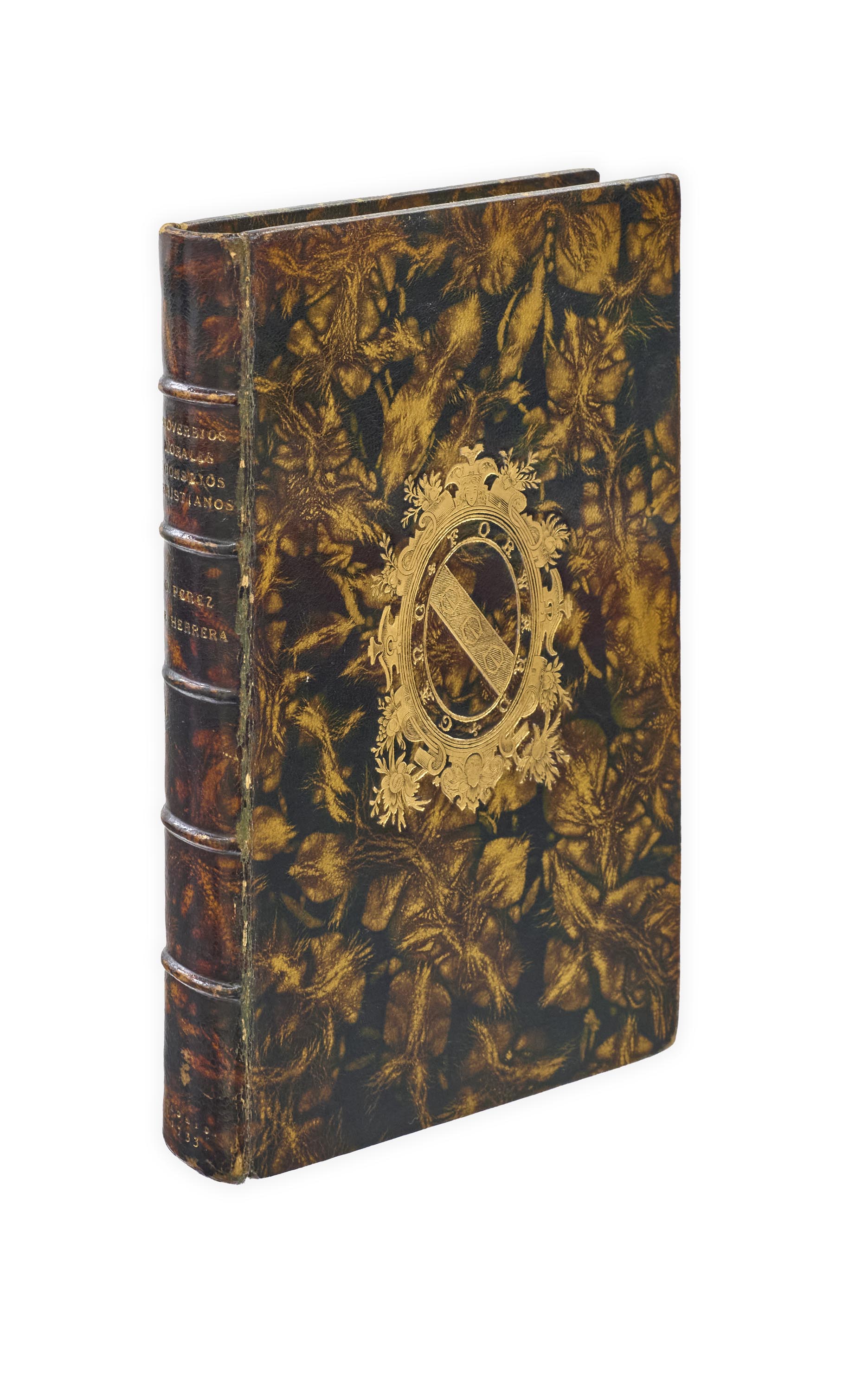
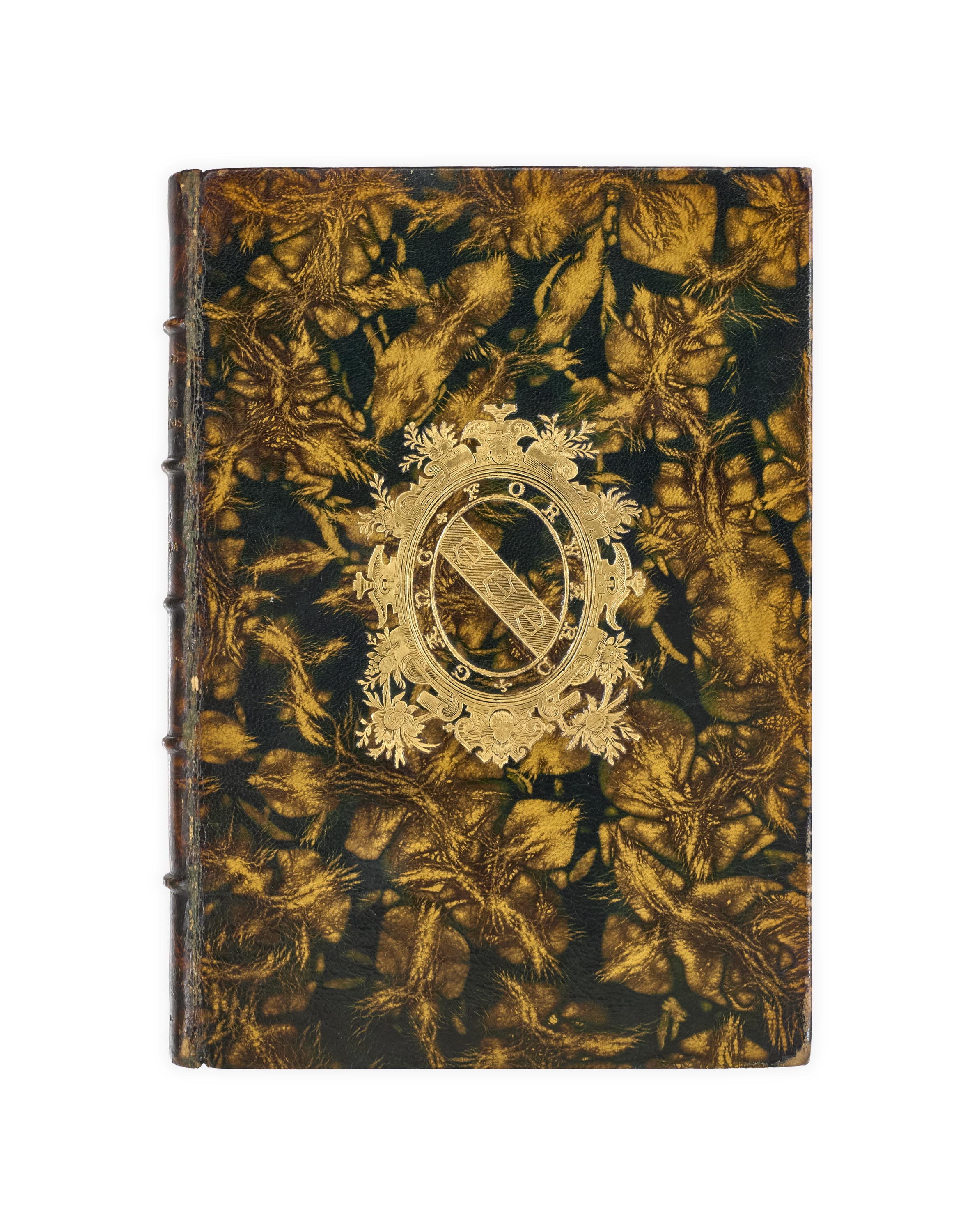
4to, pp. [xxiv], 360, [7], [1, blank], extra-illustrated with a copper-engraved portrait of the author by Pieter Perret (from the 1618 edition); with 13 large woodcut illustrations printed within decorative typographic frames, woodcut initials and tailpieces; some light foxing and toning, small paper-flaw to G2 (touching two characters without affecting sense), nonetheless a very good copy; bound in nineteenth-century pasta española with the arms and devices of Sir William Stirling Maxwell blocked in gilt to covers (BAB stamps 1 & 14 and 1 & 15), spine lettered directly in gilt, edges gilt, brick-red endpapers; extremities very slightly rubbed; engraved armorial bookplate of Gavin Crookshanks MD (Franks 7434) to title verso, armorial bookplate of William Stirling to front pastedown with his ‘Proverbs’ bookplate from Keir to rear pastedown, bookplate of Lt. Col. V.S.M. de Guinzbourg to front free endpaper.
Added to your basket:
Proverbios morales, y consejos christianos … Y enigmas philosoficas, naturales, y morales, con sus comentos.
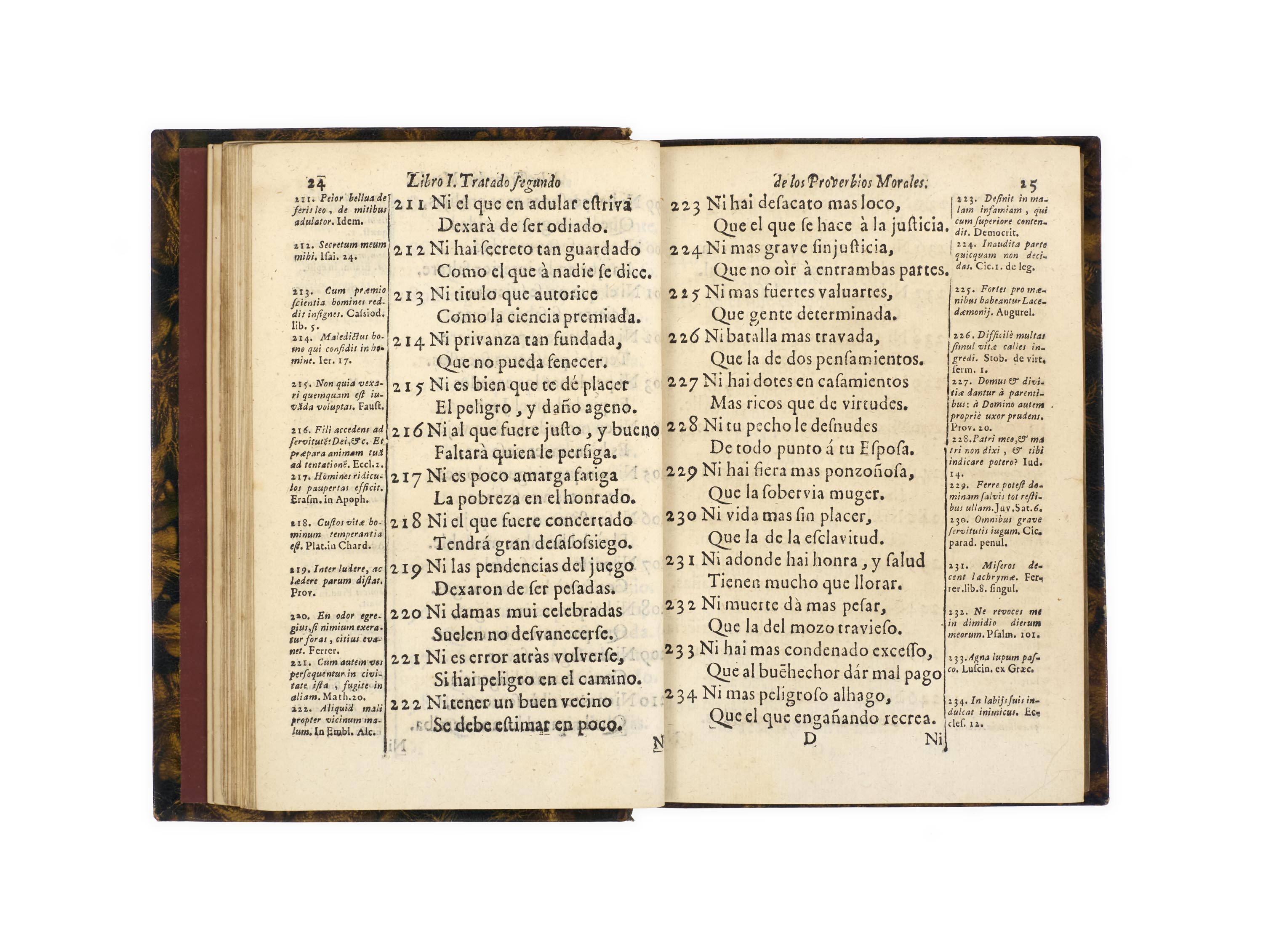
Second edition, the Stirling Maxwell copy, of these 759 proverbs and 311 enigmas by Cristóbal Pérez de Herrera, social reformer, senior physician to Philip II of Spain, and ‘the prince of riddles’.
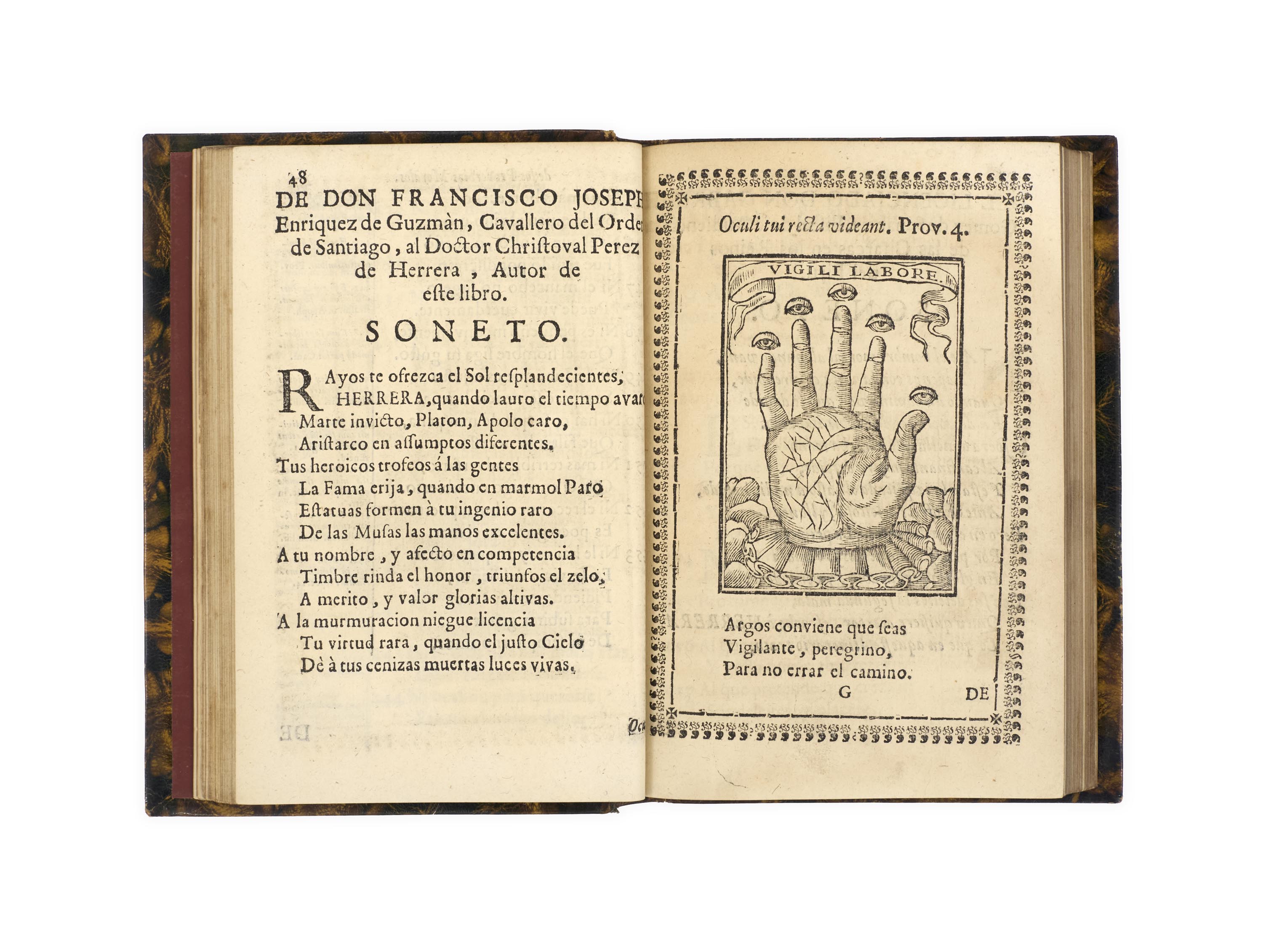
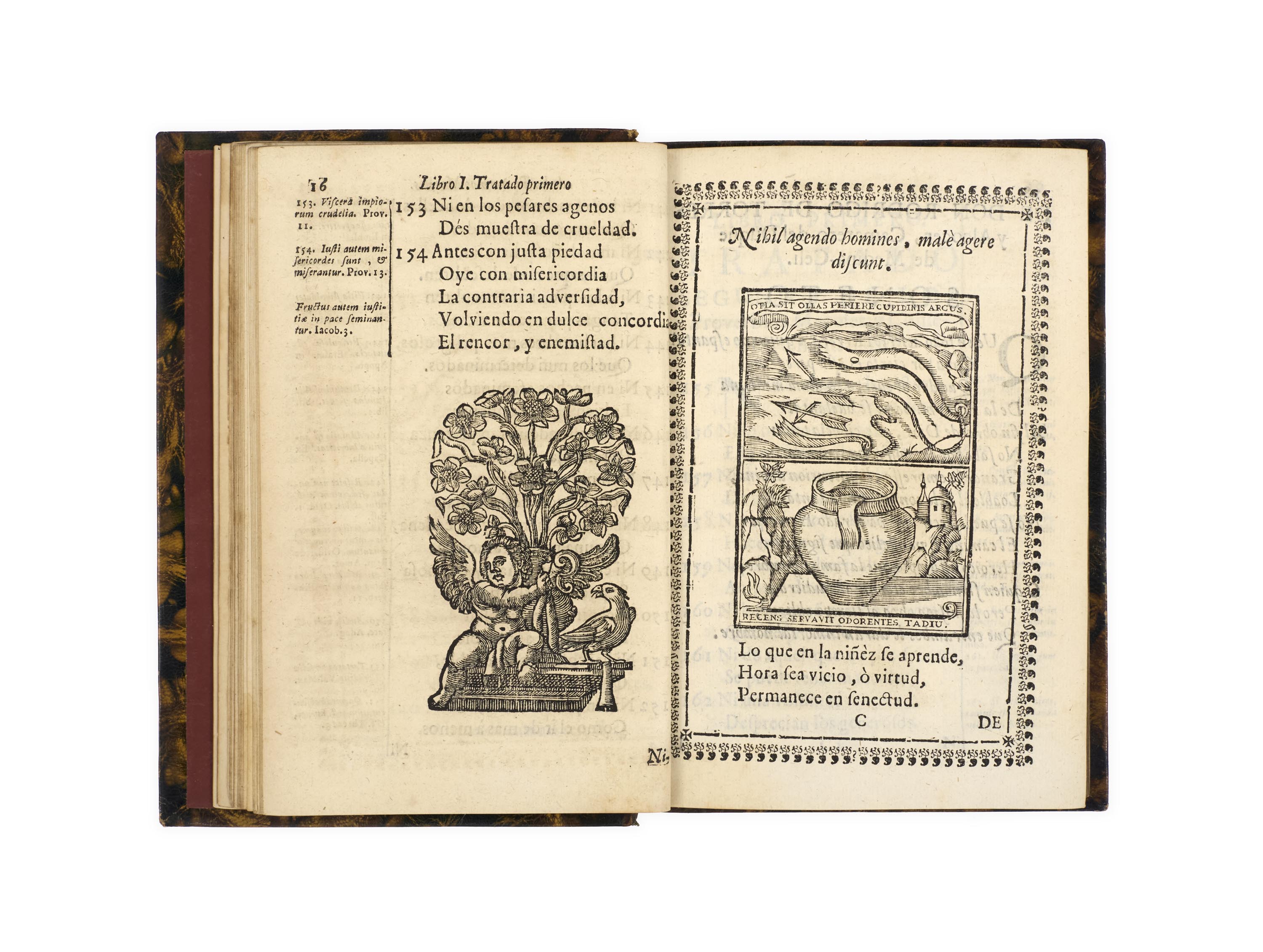
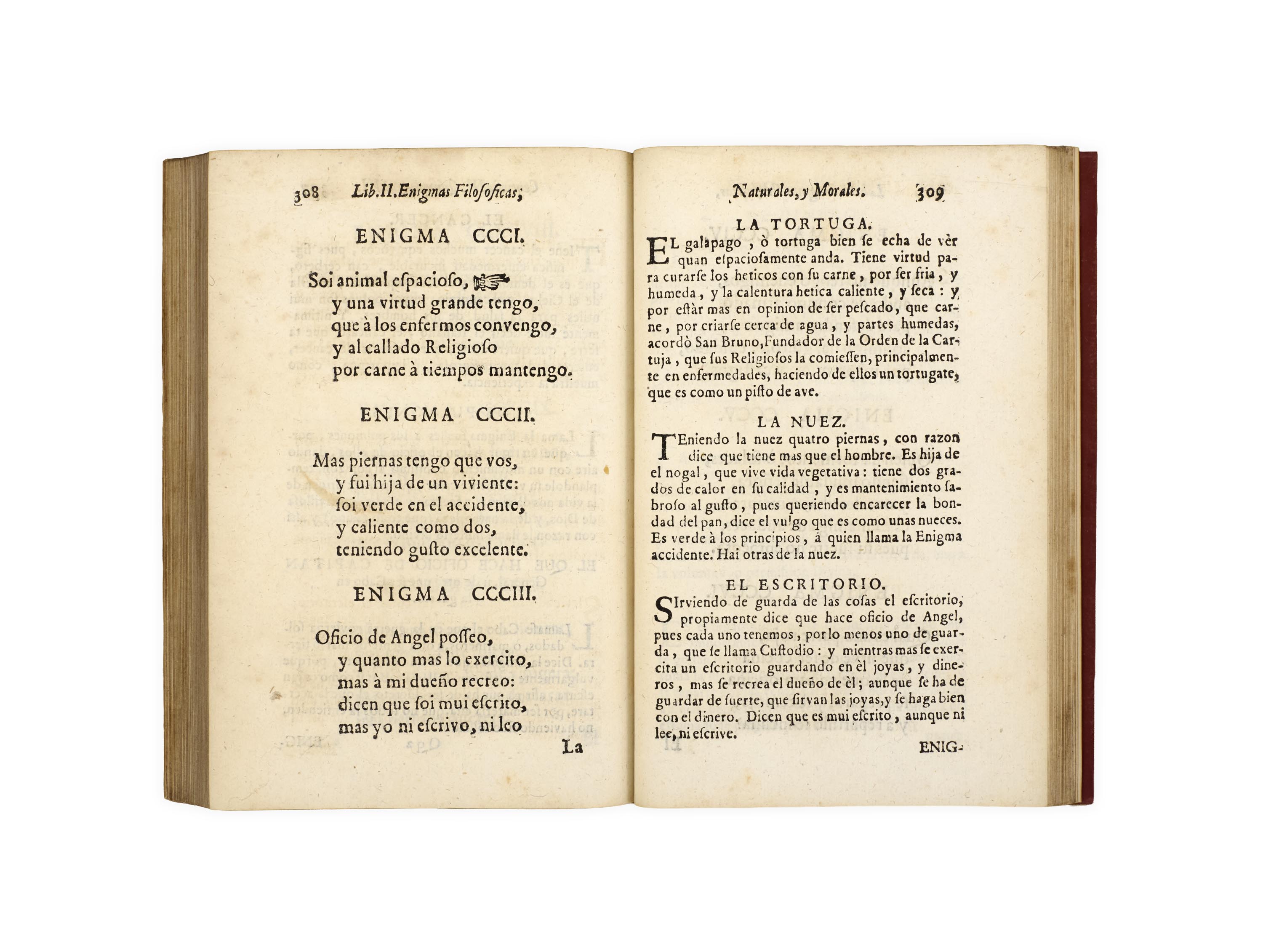
First published in 1618, this work contains thirteen large emblematic woodcuts, each accompanied by a Latin motto and a Spanish tercet, a dedicatory sonnet, and a series of proverbs or enigmas in verse. The enigmas deal with, inter alia, quicksilver, ticklishness, pain, parrots, Añejo cheese, the arquebus, gnats, bookshelves, and the enigma itself, with solutions to each riddle on the facing page (the exception being the final the final doce enigmas sin comento, whose answers appear on p. 320).
‘The prince of riddles’ (Santi, p. 74, trans.), Pérez de Herrera (1558–1620) became Philip II’s royal physician in 1592 and was previously Protomédico de Galera, senior physician of the Spanish Armada, where he witnessed the inhumane working conditions of galley slaves. He founded the Albergue Real, a shelter for the sick, elderly, and homeless (later the site of Madrid’s first general hospital), using 16,000 ducats from his own funds, and in 1598 authored the Discursos del amparo de los legitimos pobres (‘Speeches on the protection of the legitimate poor’, the source of ten of the thirteen woodcuts in the Proverbios morales). As a result, his proverbs and enigmas are here followed by an impassioned call for social reform – namely through employment for the homeless, the appointment of Justices of the Peace, and the establishment of shelters – as part of his campaign to help the ‘genuine’ poor.
Provenance:
1. Gavin Crookshanks (1703/4–1747), Scottish physician. He graduated MA from Marischal College, Aberdeen in 1733, studied medicine at Leiden (MD 1740, providing the terminus post quem for his bookplate), and practised as a physician in London.
2. Sir William Stirling Maxwell (1818–1878). He amassed several impressive collections which he kept at Keir House, the Stirling family residence since the mid-fifteenth century. This included his library of proverbs, identified here with a distinctive bookplate to the rear pastedown and for which he published a catalogue in 1860, An Essay towards a Collection of Books relating to Proverbs, Emblems, Apophthegms, Epitaphs, and Ana (this copy listed on pp. 67-70). His sale, Christie’s, 20 May 1958, lot 956 (to de Guinzbourg).
3. Victor de Guinzbourg (1906–1976), a former governor of the National Counter Intelligence Corps Association and a long-serving attaché to the United Nations (whose distinctive headquarters are shown in outline on his bookplate). An equally passionate proverb enthusiast, Guinzbourg was a founder and Permanent Secretary of the Paremiological Society and his only published work, Wit and Wisdom of the United Nations (1961), is a collection of ‘proverbs and apothegms on diplomacy’.
Palau 221125; Landwehr, Romanic 576; Praz, p. 448; Santi, Bibliografia della enigmistica 210.