
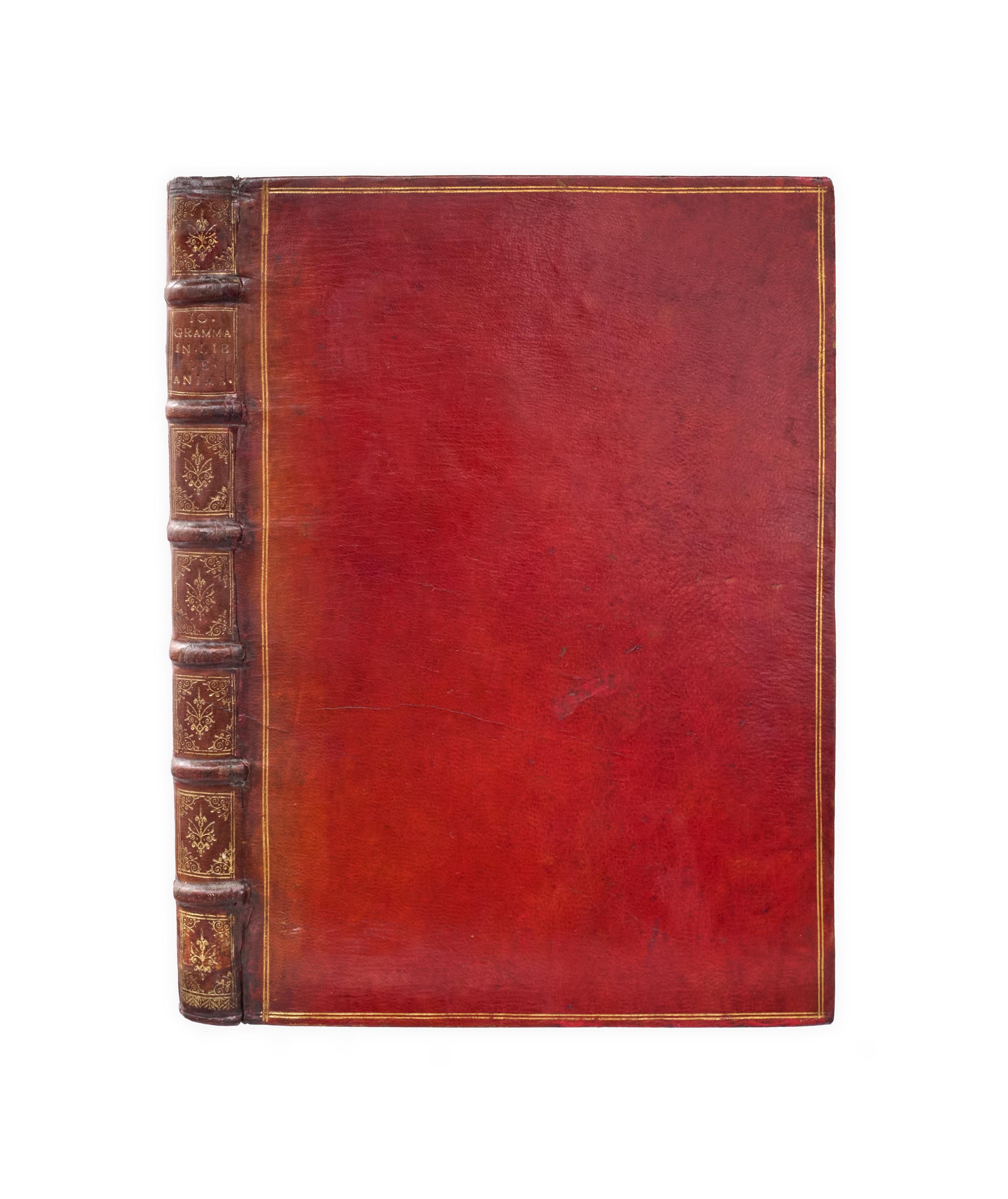
The Sunderland Copy, Annotated
PHILOPONUS, Joannes.
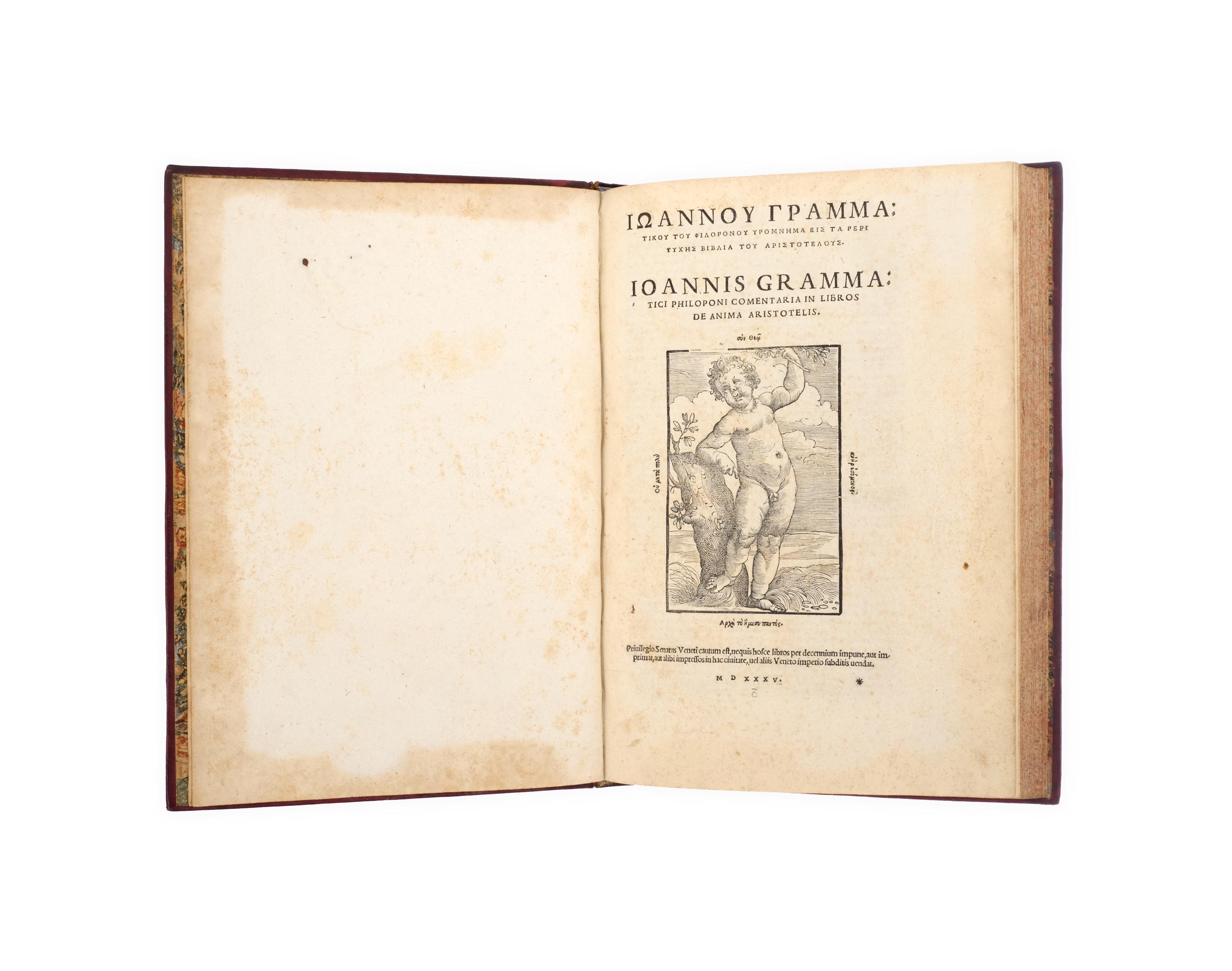
Υπομνημα εις τα περι ψυχης βιβλια του Αριστοτελους … Comentaria in libros de anima Aristotelis. [(Colophon:) Venice, Bartolomeo Zanetti and Giovanni Francesco Trincavelli, November 1535.]
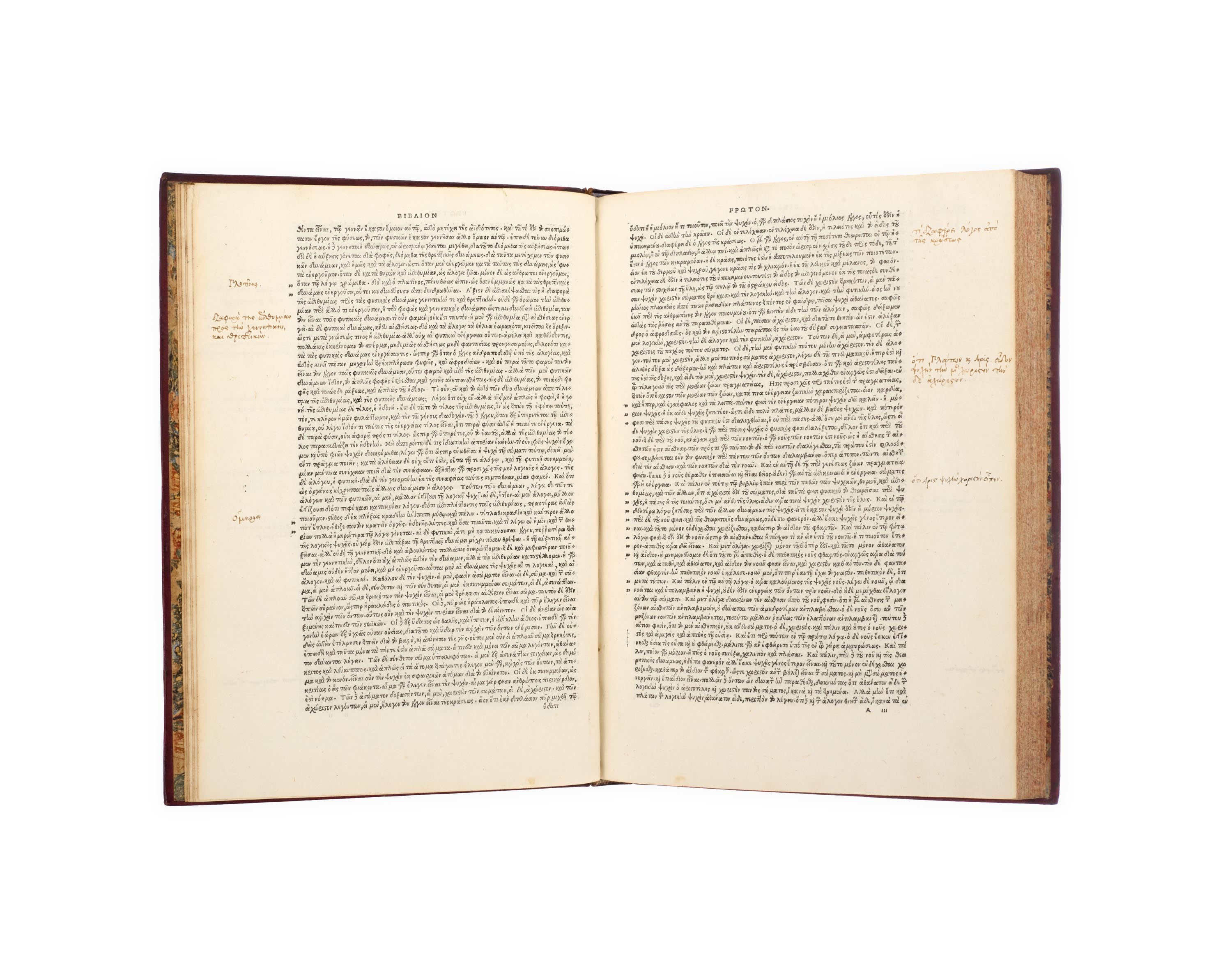
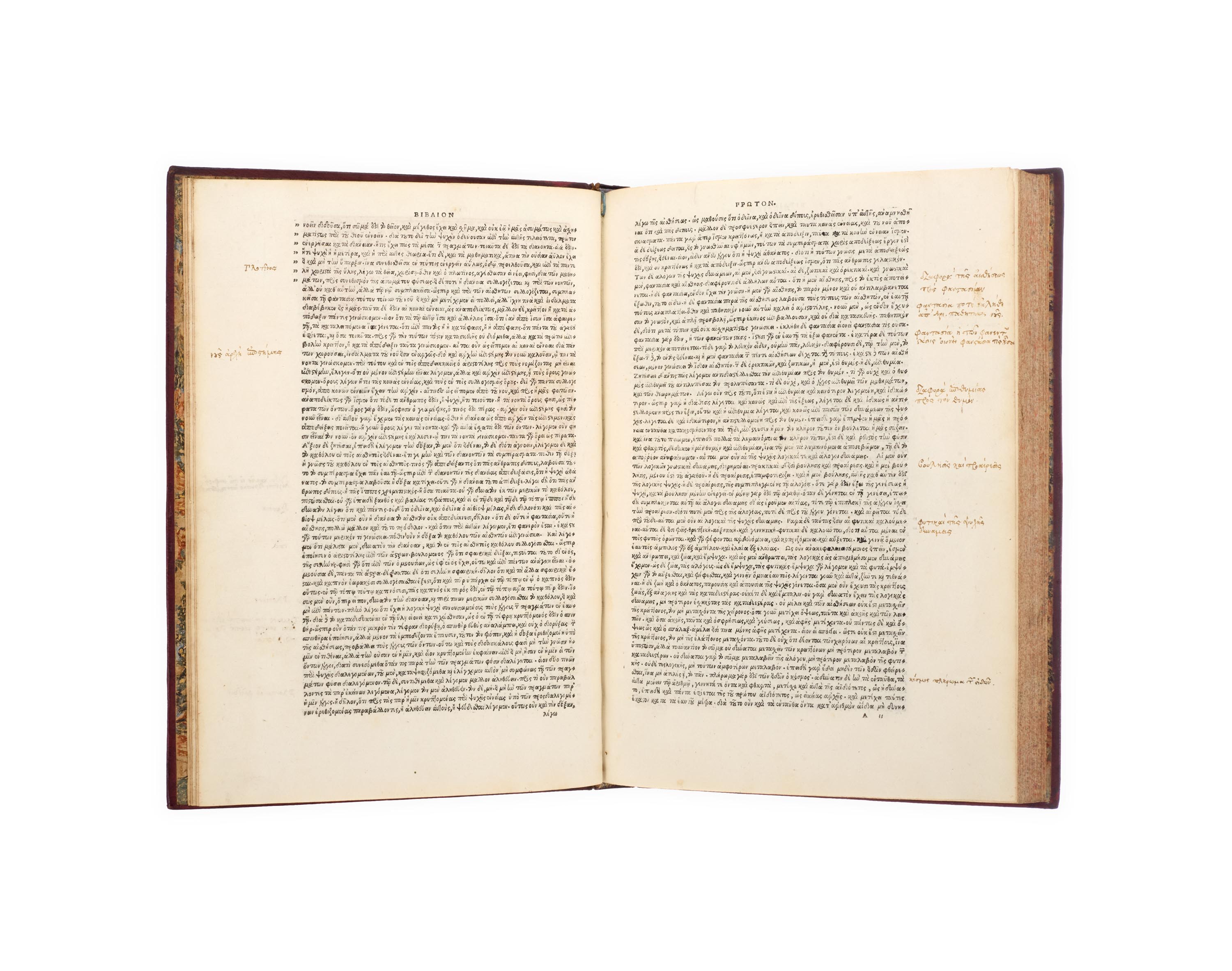
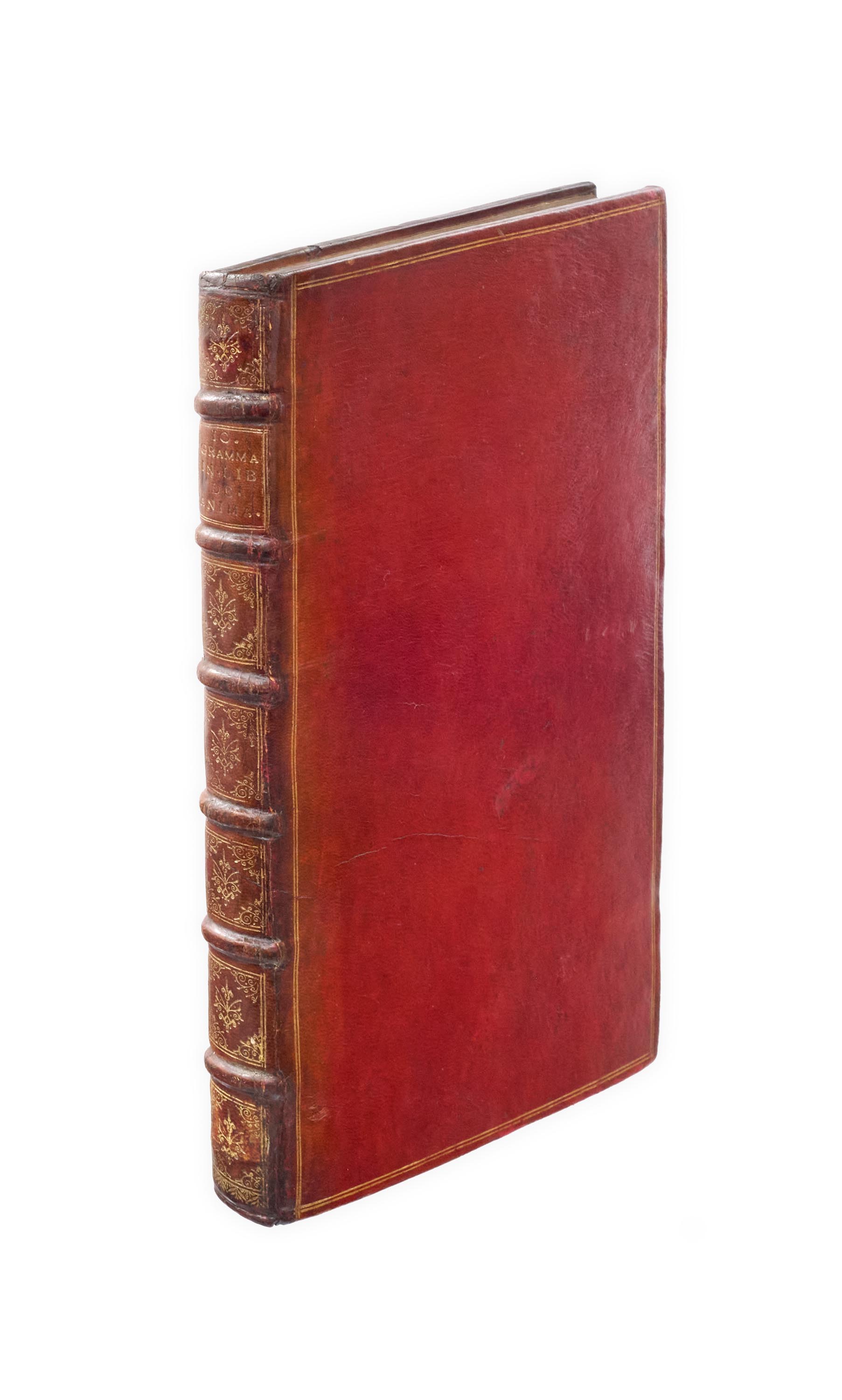
Folio, ff. [146]; π2 A–S8; large woodcut Zanetti device to title and to final verso, large woodcut Greek-style headpiece and initial printed in red to A1r, text printed in Greek type; occasional light browning and spotting, but a wide-margined, very good copy; bound in early eighteenth-century French red morocco, spine gilt in compartments lettered directly in gilt, edges sprinkled red and blue, marbled pastedowns; headband renewed and headcap skilfully repaired, edges a little rubbed, a few minor scuffs neatly retouched; contemporary marginal annotations to c. 70 ff. (very occasionally cropped), early manuscript numbering of sections and foliation; eighteenth-century Sunderland ink shelfmark to front free endpaper, modern blindstamp of the Theological Institute of Connecticut to the outer margin of the first and last two leaves.
Added to your basket:
Υπομνημα εις τα περι ψυχης βιβλια του Αριστοτελους … Comentaria in libros de anima Aristotelis.
Editio princeps of the ancient commentator John Philoponus’ commentary to Aristotle’s On the Intellect, edited by the Venetian Vettore Trincavelli (1496–1568), responsible for the publication of several Greek editiones principes. The authorship of Book III of the commentaries on De anima is, today, an object of debate.
Philoponus lived in sixth-century Alexandria. His commentary on the Aristotelian work On the Intellect has been seen as introducing a Neoplatonic approach to Aristotle’s psychology, ascribing to the Philosopher the conviction that the human rational soul is both ungenerated and immortal, as well as an agreement with the Platonic theory of innate ideas and with the Neoplatonic doctrine of the presence of the Ideas as creative logoi in the divine Intellect. Such interpretation was integral to the Alexandrian exegetical stance of harmonization of Aristotle with Plato, with the purpose of giving Neoplatonism a broader basis of authority in its opposition to Christianity.
It is this appeal to a broader philosophical basis that gives renewed impetus and strength to the commentary of Philoponus in the Renaissance. The reinterpretation of Aristotle’s views on such topics as the immortality of the soul, the role of images in thought, the character of sense perception and the presence within the soul of universals paved the way for the new approaches that the golden ages of universities such as Padua and Paris introduced at the beginning of the early modern era.
Our copy bears contemporary annotations throughout the book, denoting a careful and competent, and thorough reading of the text in the original Greek.
Provenance: from the library of the Earl of Sunderland at Blenheim Palace, sale, Puttick and Simpson, 1 December 1881 onwards, lot 6712, sold for 16s.
EDIT16 CNCE 38435; USTC 836420.