Codes, Clocks, and Cardinals
PIETRASANTA, Silvestro.
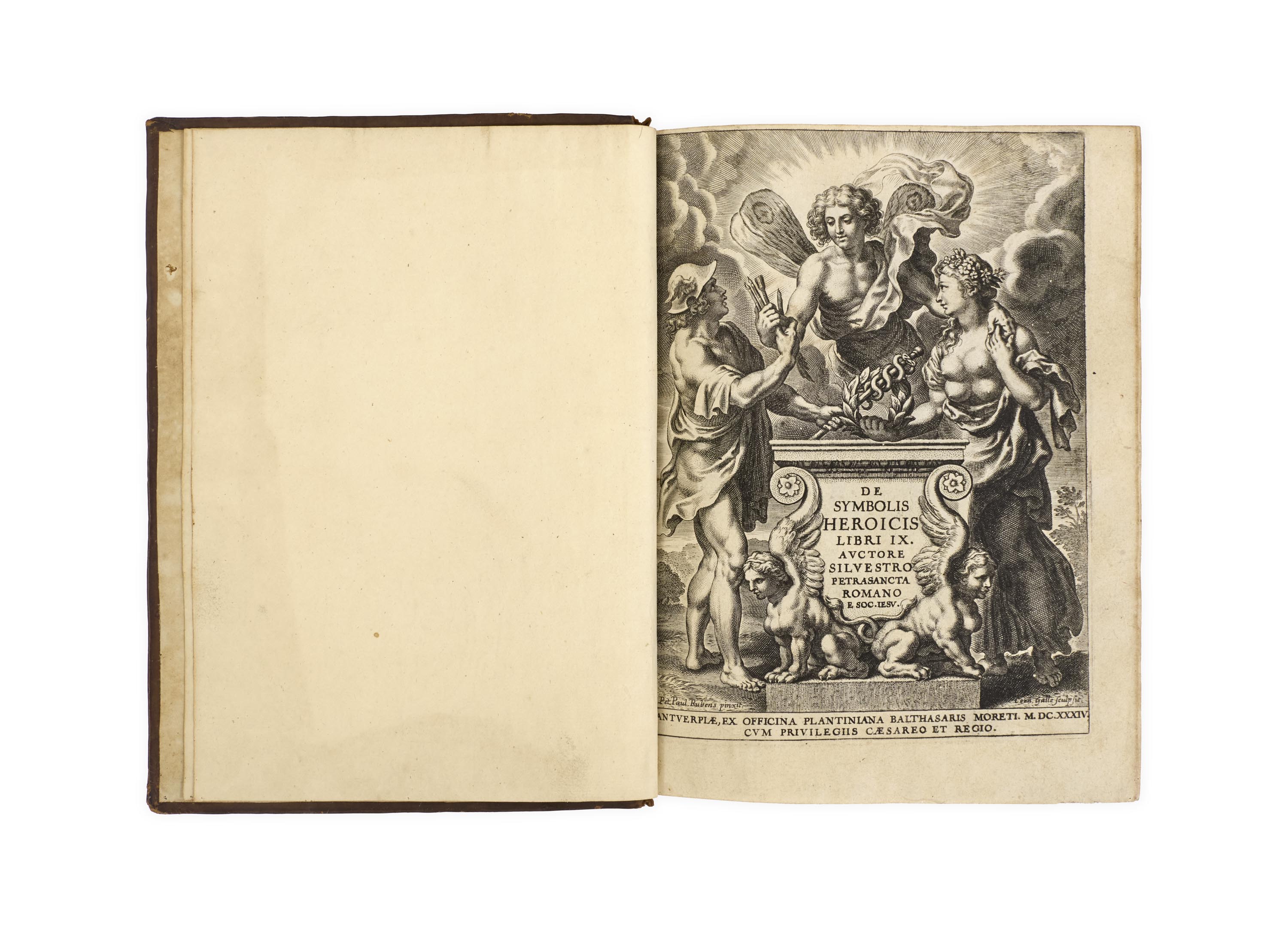
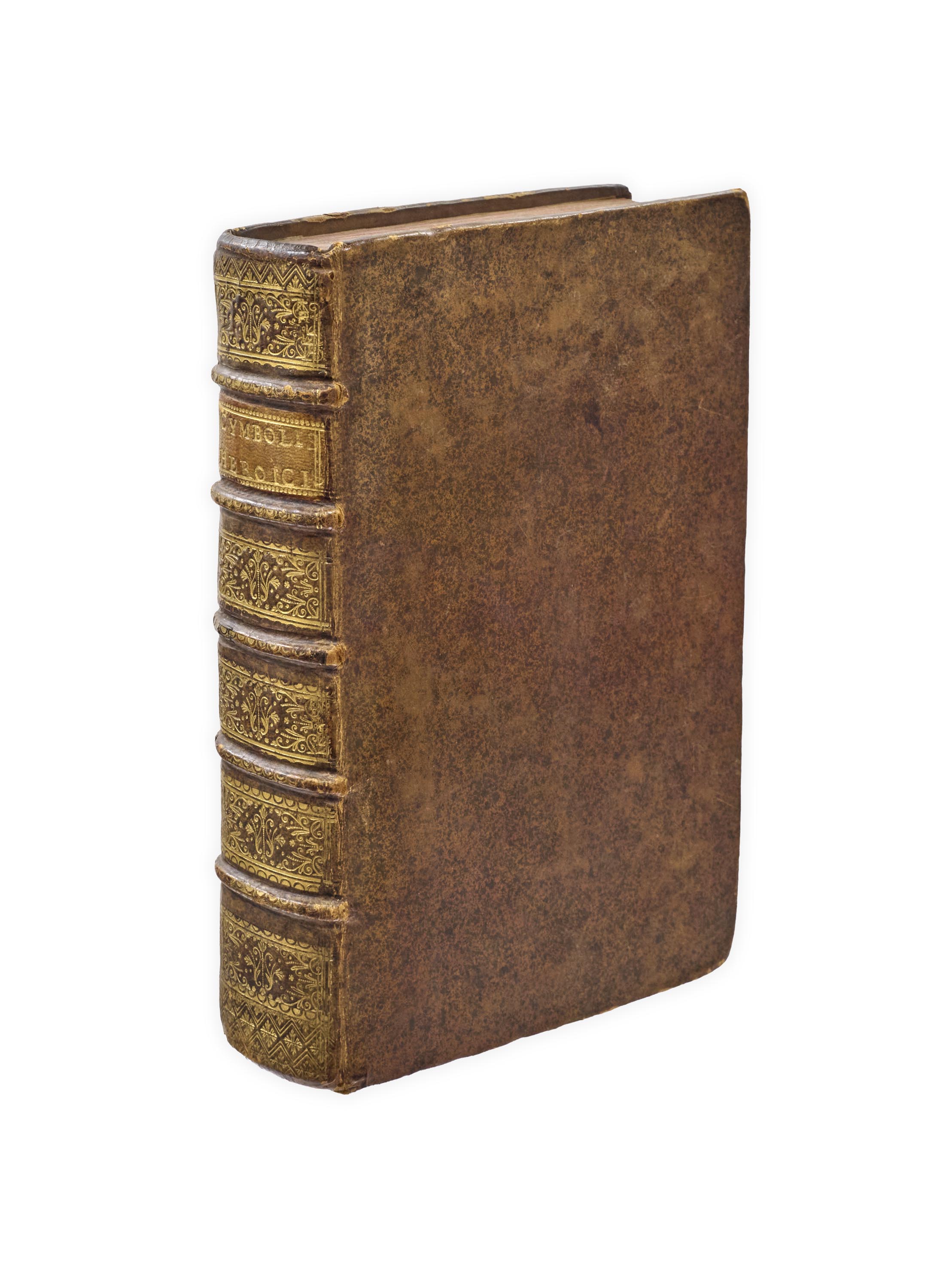
De symbolis heroicis libri IX … Antwerp, Balthasar Moretus ‘ex officina Plantiniana’, 1634.
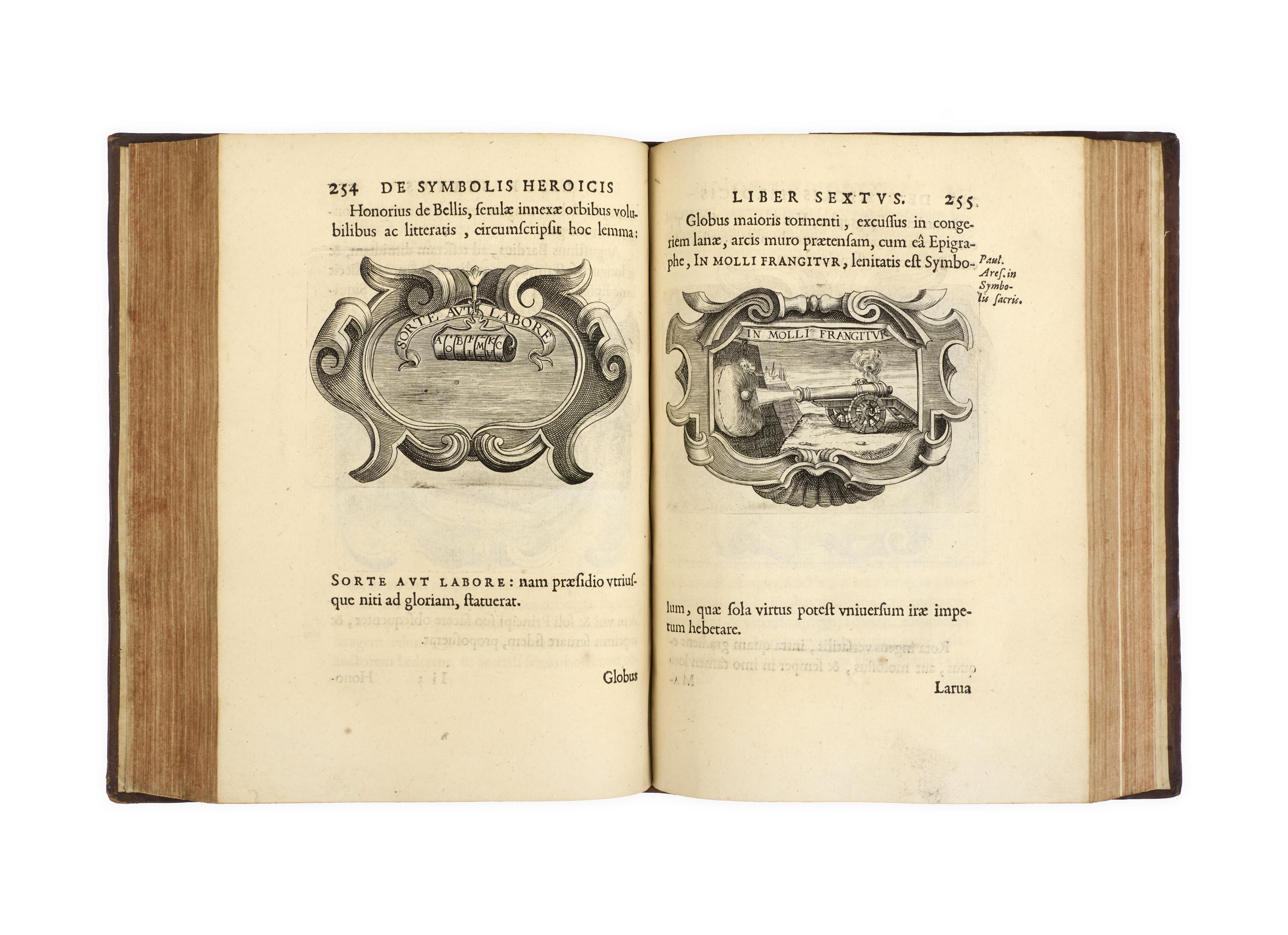
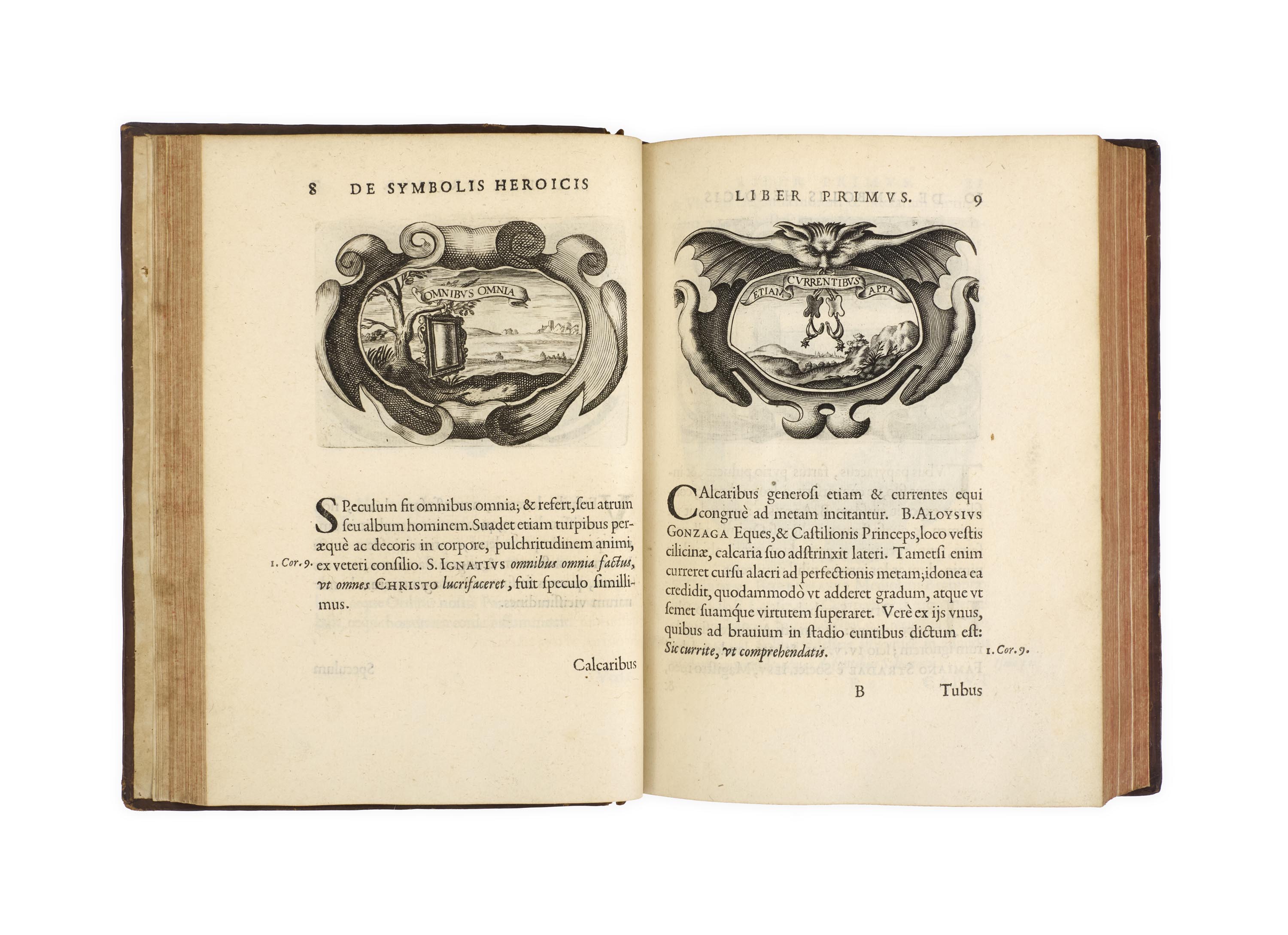
4to, pp. lxxx, 480, [30]; without Sss3.4 (index) and Sss6 (colophon); with full-page engraved portrait of Cardinal Carafa, full-page engraved Carafa armorial, a further 7 engravings of arms and genealogies in preliminaries, 281 engraved devices within cartouches, and 13 smaller engraved illustrations, title-page copper-engraved by Cornelis Galle after Peter Paul Rubens, woodcut initials, woodcut head- and tailpieces, typographic music on p. 135; small wormholes to E1–2 (touching a few characters), stain to upper margin of Aaa1, otherwise an excellent copy; bound in early eighteenth-century sprinkled calf, spine gilt in compartments with gilt tan morocco lettering-piece, edges speckled red; ownership inscription ‘J.B. De Gheus 1734’ to front pastedown.
First edition of this Jesuit collection of cryptic emblems covering the elements of natural and supernatural life, dedicated to Cardinal Pier Luigi Carafa and written by his confessor, the Roman Jesuit Silvestro Pietrasanta.
Pietrasanta (1590–1647), rector of the College of Loreto, completed the present work whilst accompanying Cardinal Carafa on a pastoral visit to Liège. ‘This well-printed emblem book dates from the period when both Catholics and Protestants had realized that this type of book, formerly produced for the frivolous pleasure of courtiers, was equally suitable for the allegorical interpretation of spiritual truths. The frontispiece, as in many books printed by Moretus, is engraved by Cornelis Galle the Elder after a design by Rubens, but the Plantin-Moretus archives reveal that the emblems were evidently originally engraved on copper by artists in the employ of the Jesuit fathers and then re-worked for Moretus between December 1633 and June 1634 by the skilled hand of Andre Pauwels’ (Printing and the Mind of Man).
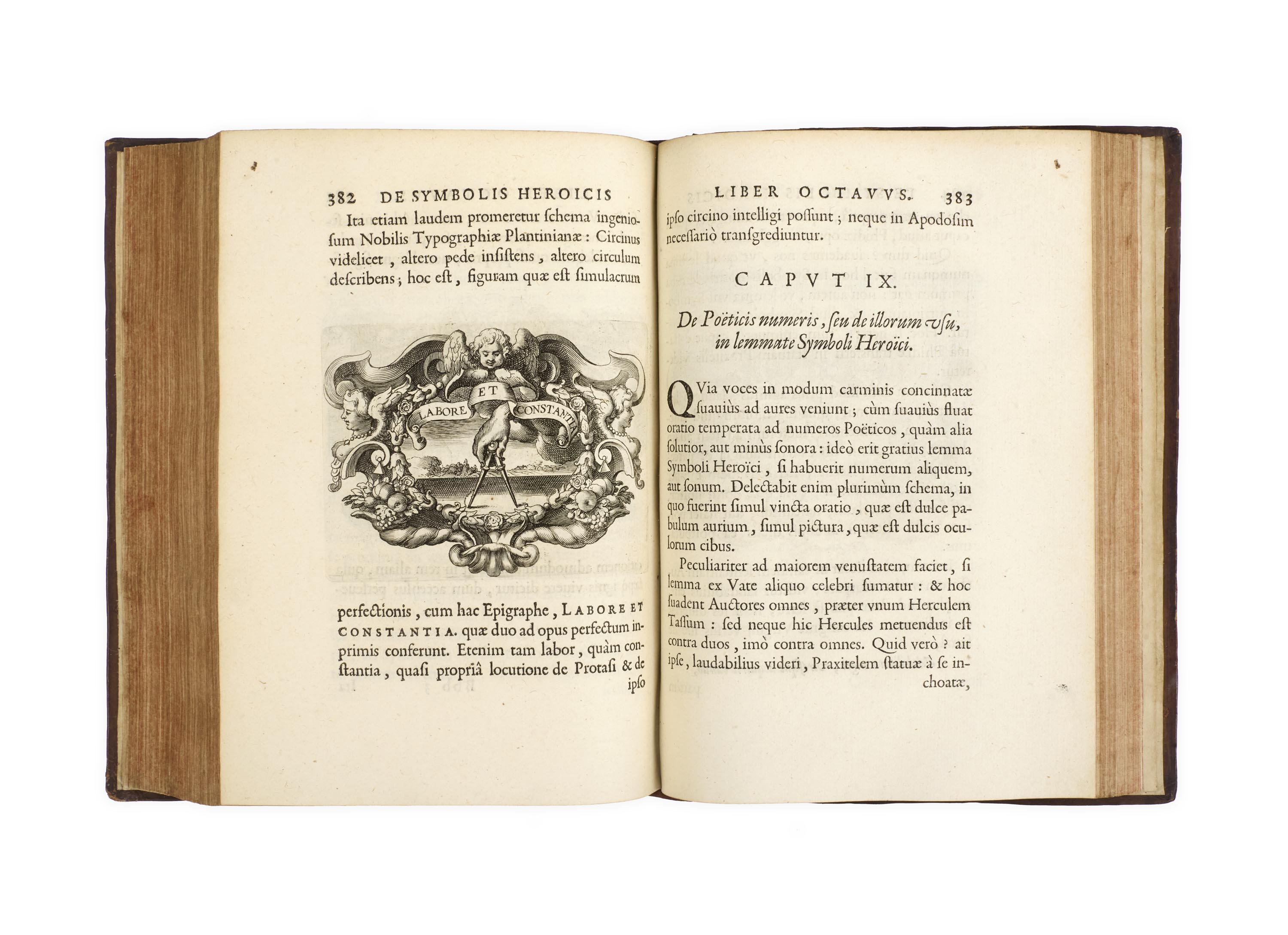
The book opens with a detailed Carafa genealogy with numerous family trees, and the text proper includes explanations for the symbolism of medallions and rings (wedding rings, rings in antiquity, sliding sundial rings, and rings which also function as keys), cryptography, coins and medals, the magnetic clock invented by the Jesuit Francis Line (1595–1675; p. 146), along with the imprese of hundreds of notable figures, amongst them Plantin and an explanation of his ‘Labore et constantia’ compass device (p. 382).
Provenance:
Jean Baptiste de Gheus (d. 1740), seigneur of Steencouter and Schachtelwege, or perhaps his eldest son.
STCV 6667324; USTC 1004022; Landwehr, Low Countries 498 & Emblem and fable books of the Low Countries 633; Praz, p. 455; Printing and the Mind of Man: An Exhibition of fine Printing in the King’s Library of the British Museum (1963) 86; Sommervogel VI, 740 no. 15.