The Muralt Copy
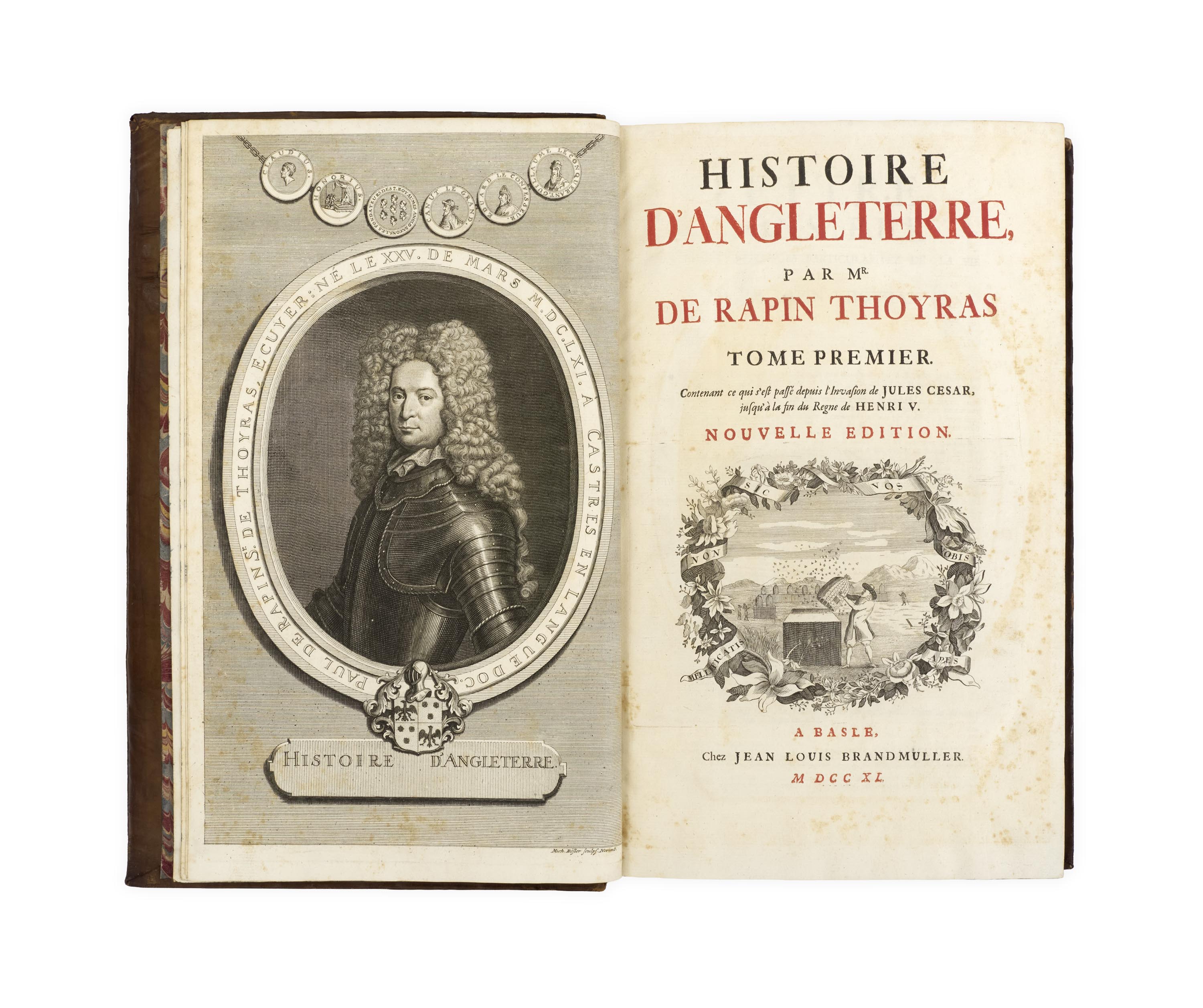
RAPIN, Paul de, Sieur de Thoyras.
Histoire d’Angleterre … Nouvelle édition. Basel, Jean Louis Brandmuller, 1740.
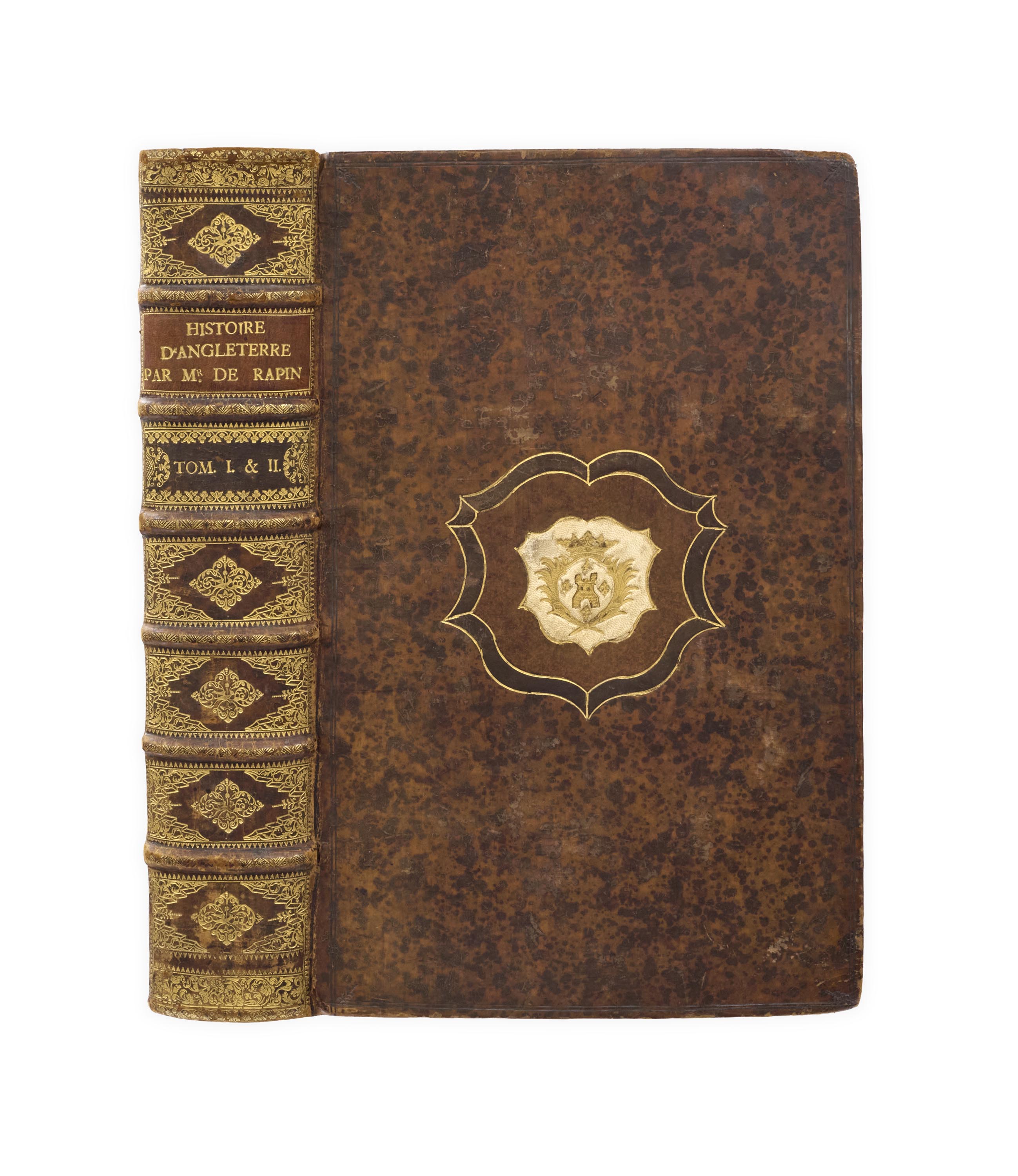
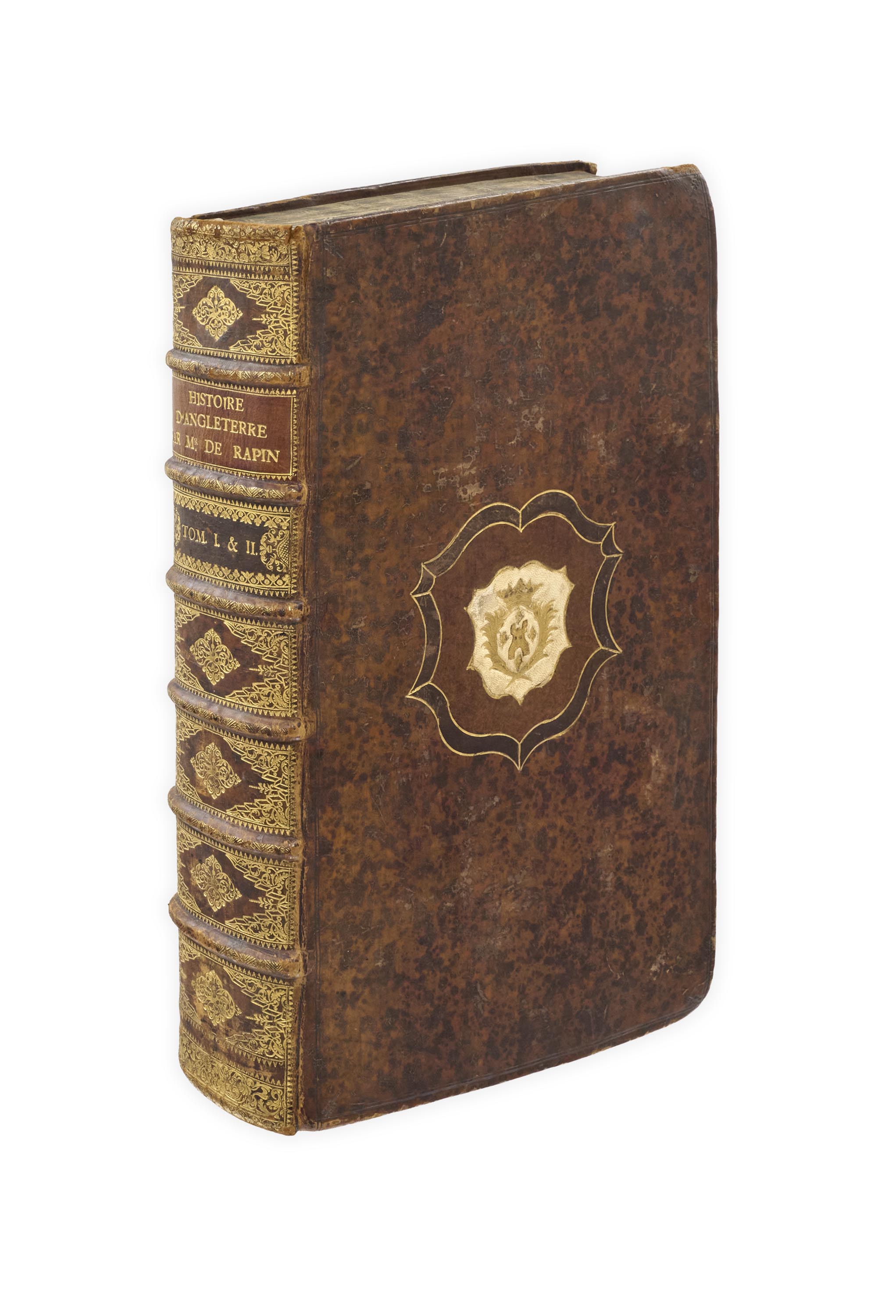
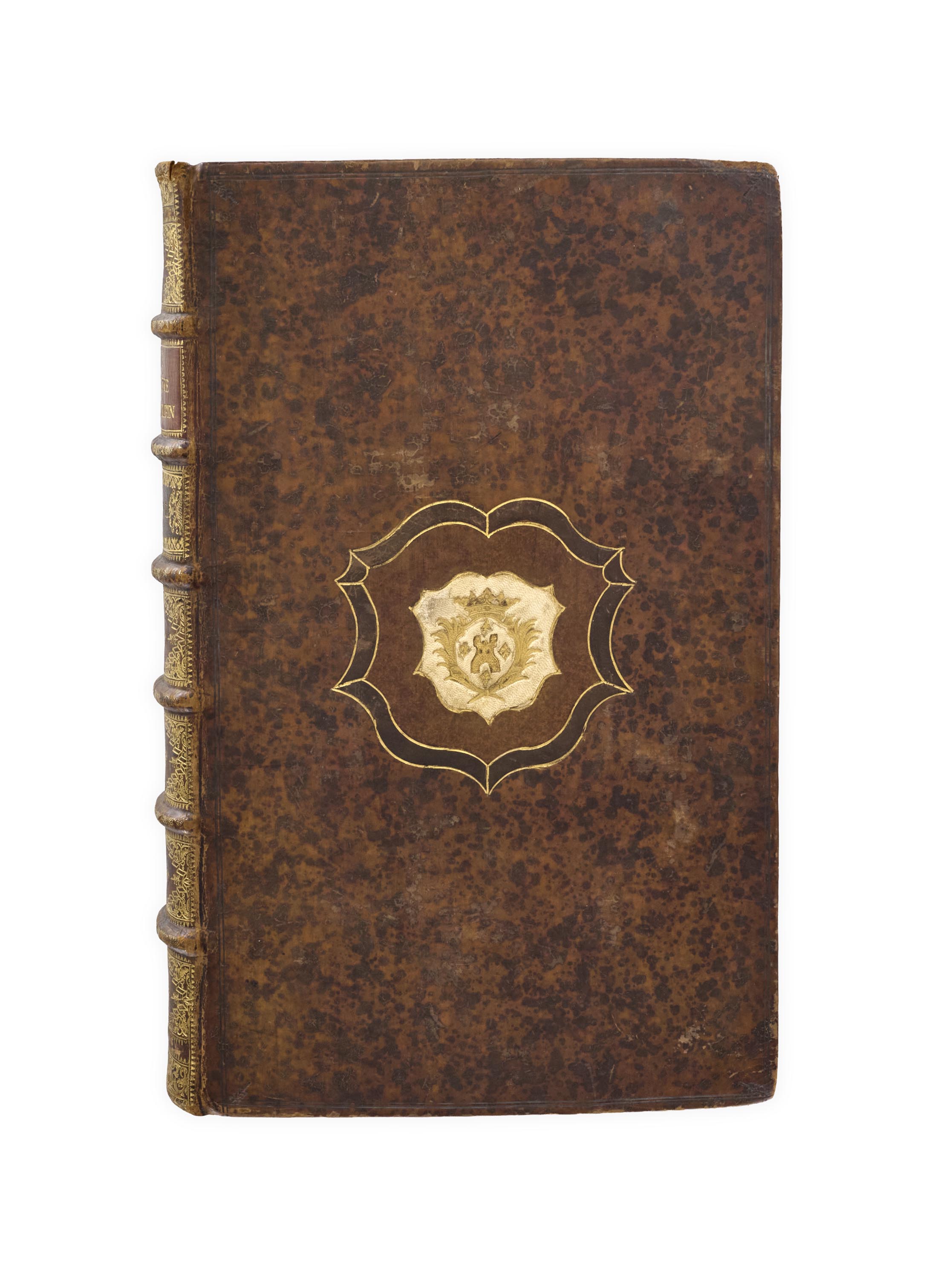
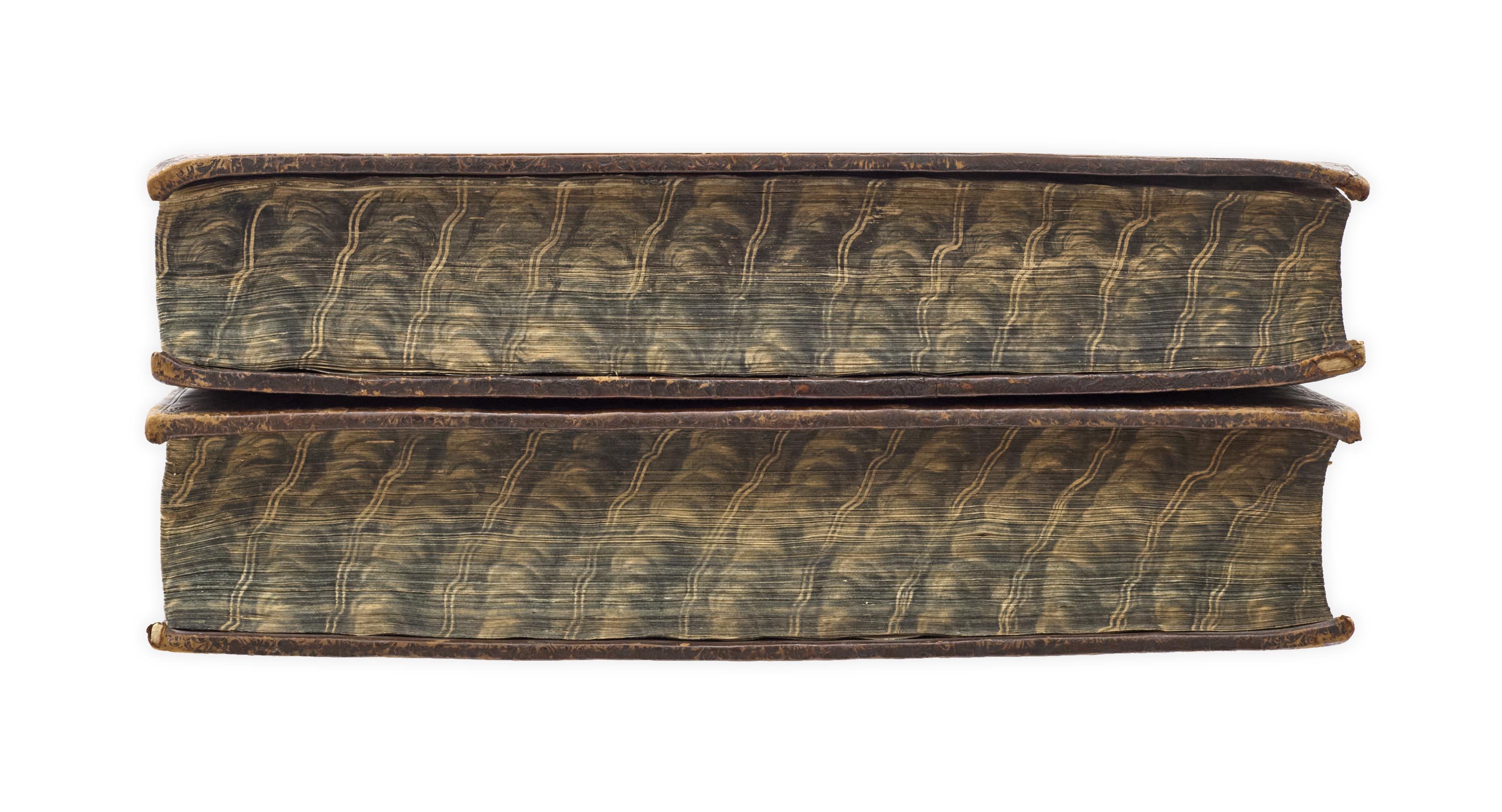
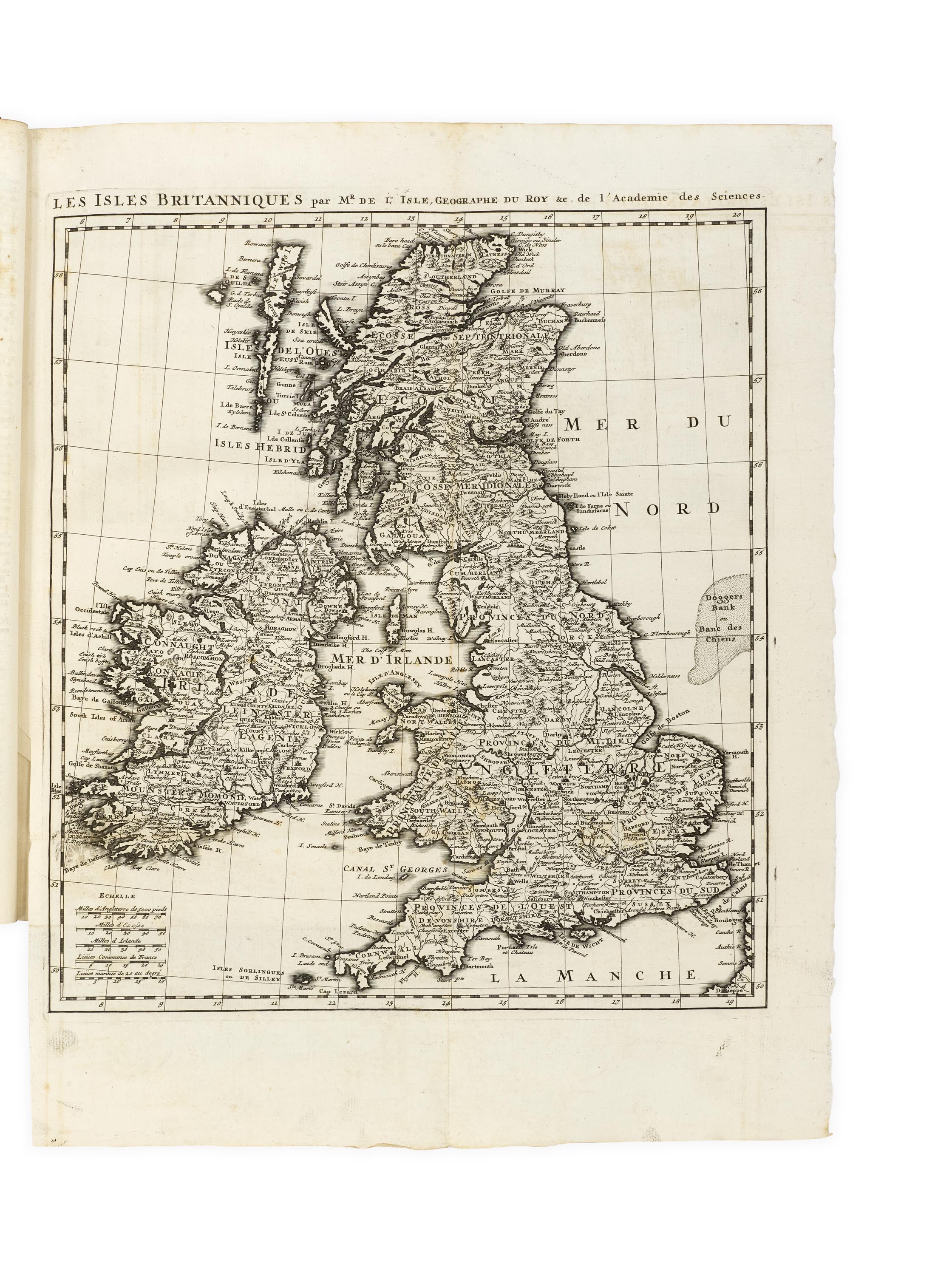
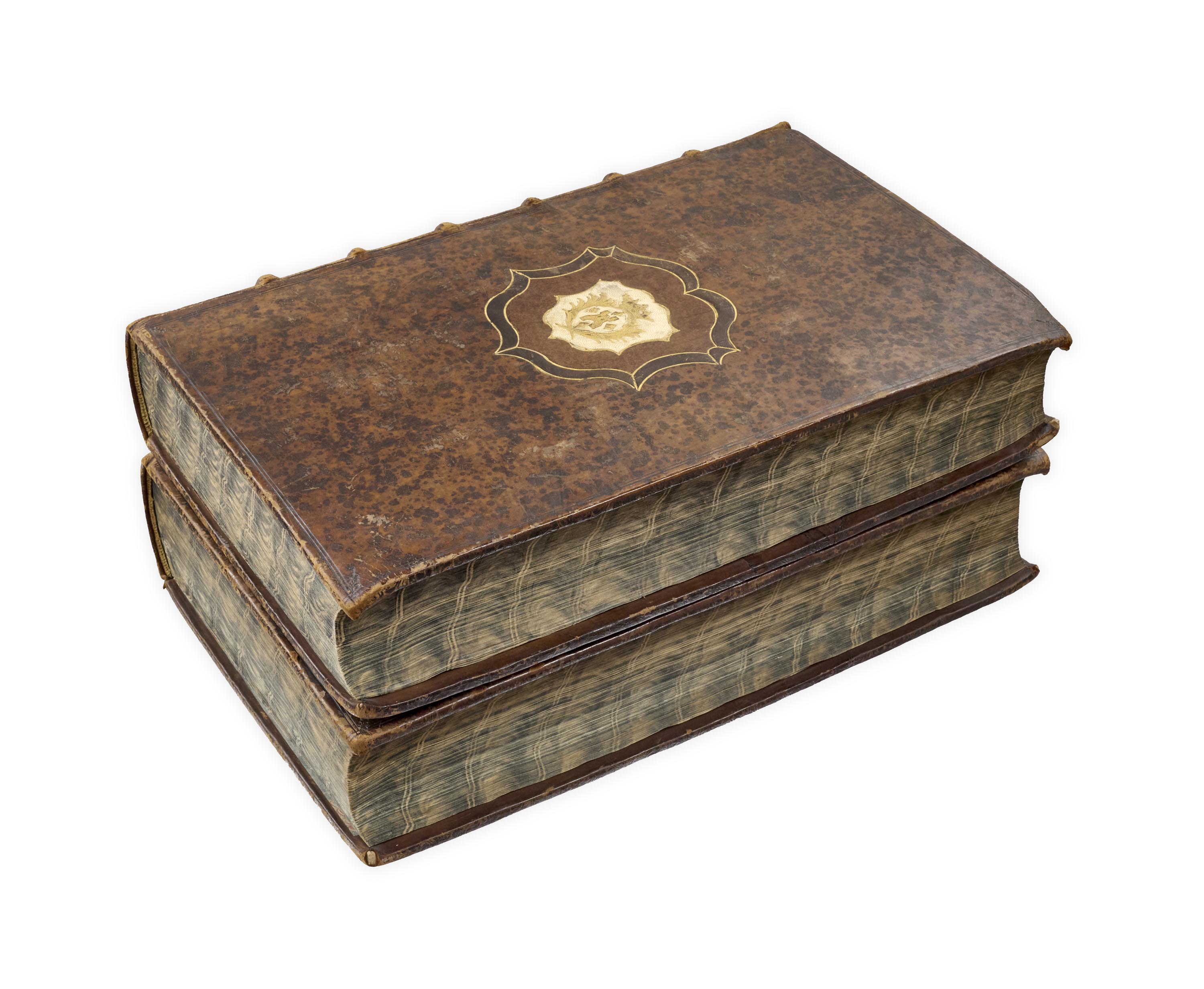
Four vols in two, folio, pp. I: [iv], 23, [1, blank], 452, II: [ii], 440, III: [ii], 631, [1, blank], IV: [x], 507, [1, blank], with engraved frontispiece and 14 folding plates; engraved vignette to titles; the odd minor spot, occasional light toning; else a very good set in contemporary Swiss mottled calf, white sheep inlays gilt with arms of Muralt family to front covers, spines gilt in compartments, gilt brown morocco lettering-pieces, all edges marbled in blue; a little rubbed, rear joint of vol. II starting at foot but sound.
First Basel edition of Rapin’s influential history of England, a handsome set bound with the arms of the prominent Muralt family of Zurich and Bern – one of whom, Beat Ludwig, was the author of a similarly celebrated French account of the English.
The Huguenot Rapin (1661–1725) had fled for London after the revocation of the Edict of Nantes in 1685, thereafter enlisting in the Dutch army and fighting in William of Orange’s English and Irish campaigns following the Glorious Revolution. It was then, at Kinsale, that ‘he first had the idea of writing a history of England, to explain to the other peoples of Europe the significance of the events he was taking part in’. The work of more than a decade, his Whiggish Histoire d’Angleterre would be published in ten volumes from 1723 on. ‘His text was politically suited to the times, and stylistically amenable to the British public. The History formulated the English past as an essential struggle between the “prerogatives” of the crown and the “privileges” of the people. When the two are in balance “liberty” is maintained. … The wide distribution given to Rapin’s text and ideas in the 1730s established the History as a classic’, and it ‘remains a key milestone in British historiography, political thought, and bibliography’ (ODNB).
The present set was appealingly and rather unusually bound with contemporary gilt white sheep inlays within calf bearing the arms of the eminent Muralt family of Switzerland. Protestant refugees from Catholic Locarno, the Muralts settled in Zurich and Bern, where they were successful silk manufacturers and rose to prominence in politics and foreign military service. Their set would have been acquired and bound during the lifetime of their most celebrated literary son, Beat Ludwig (or Béat Louis) von Muralt (1665–1749), captain of the Swiss Guards in the French Army and author of the influential Lettres sur les Anglois et les François (1725). Here he ‘attributed a kind of liberal “common sense” to the English, while criticising the French aristocracy’s bel esprit as superficial. … Marivaux and Voltaire took up [his] theories of national character, which were likewise embraced by other distinguished figures of the Enlightenment, in particular Jean-Jacques Rousseau, Albrecht von Haller, Johann Jakob Bodmer, Johann Christoph Gottsched, Johann Gottfried Herder, not to mention Gotthold Ephraim Lessing’ (HLS).