
SENECA the Younger, and SENECA the Rhetorician.
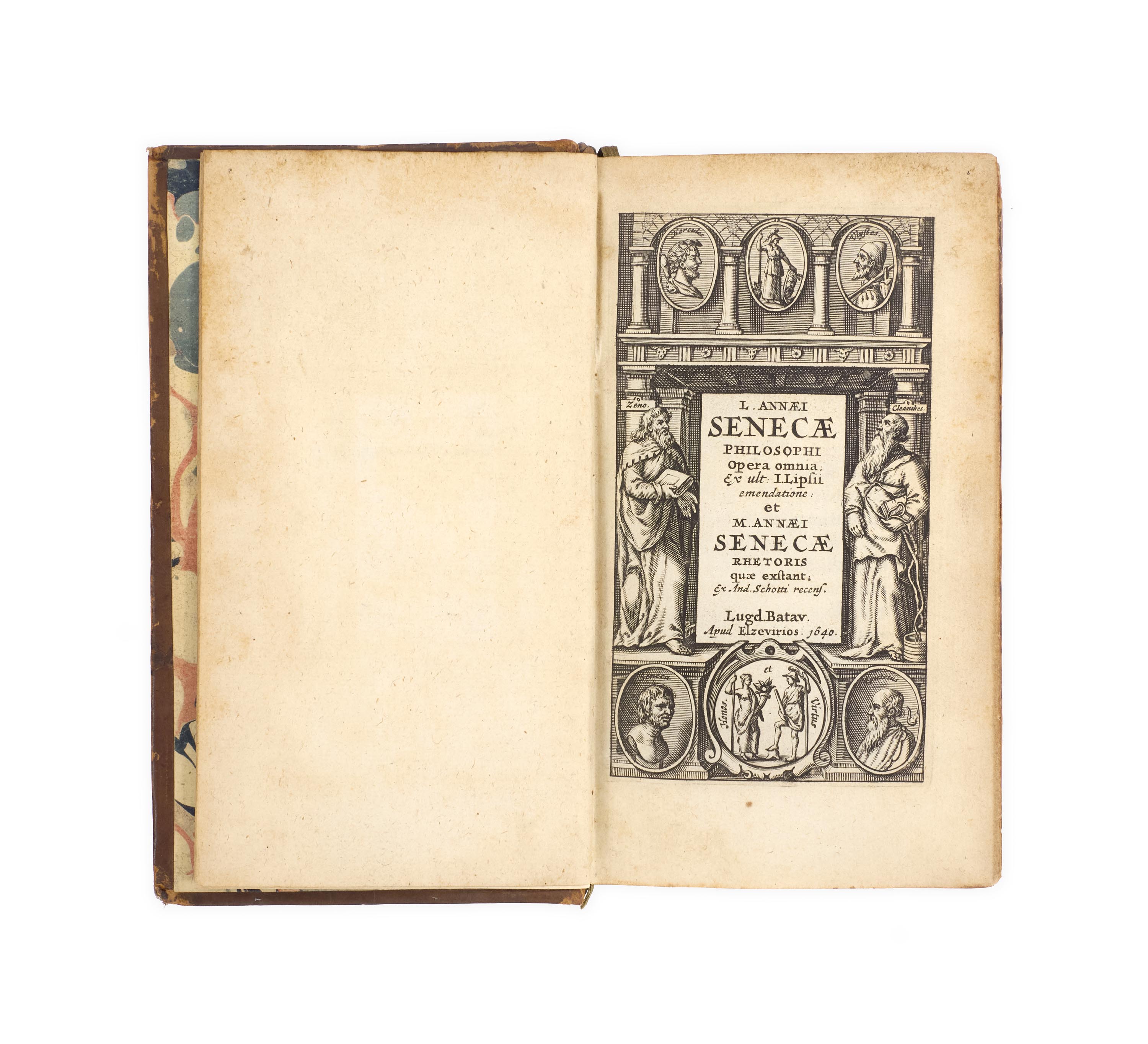
L. Annaei Senecae philosophi opera omnia; ex ult. I. Lipsii emendatio: et M. Annaei Senecae rhetoris quae extant, ex And. Schotti recens.
Leiden, [Bonaventure & Abraham] Elzevir, [1639–]1640.
[With:]
GRONOVIUS, Joannes Fredericus. Ad L. & M. Annaeos Senecas notae. Amsterdam, Ludovic & Daniel Elzevir, 1653.
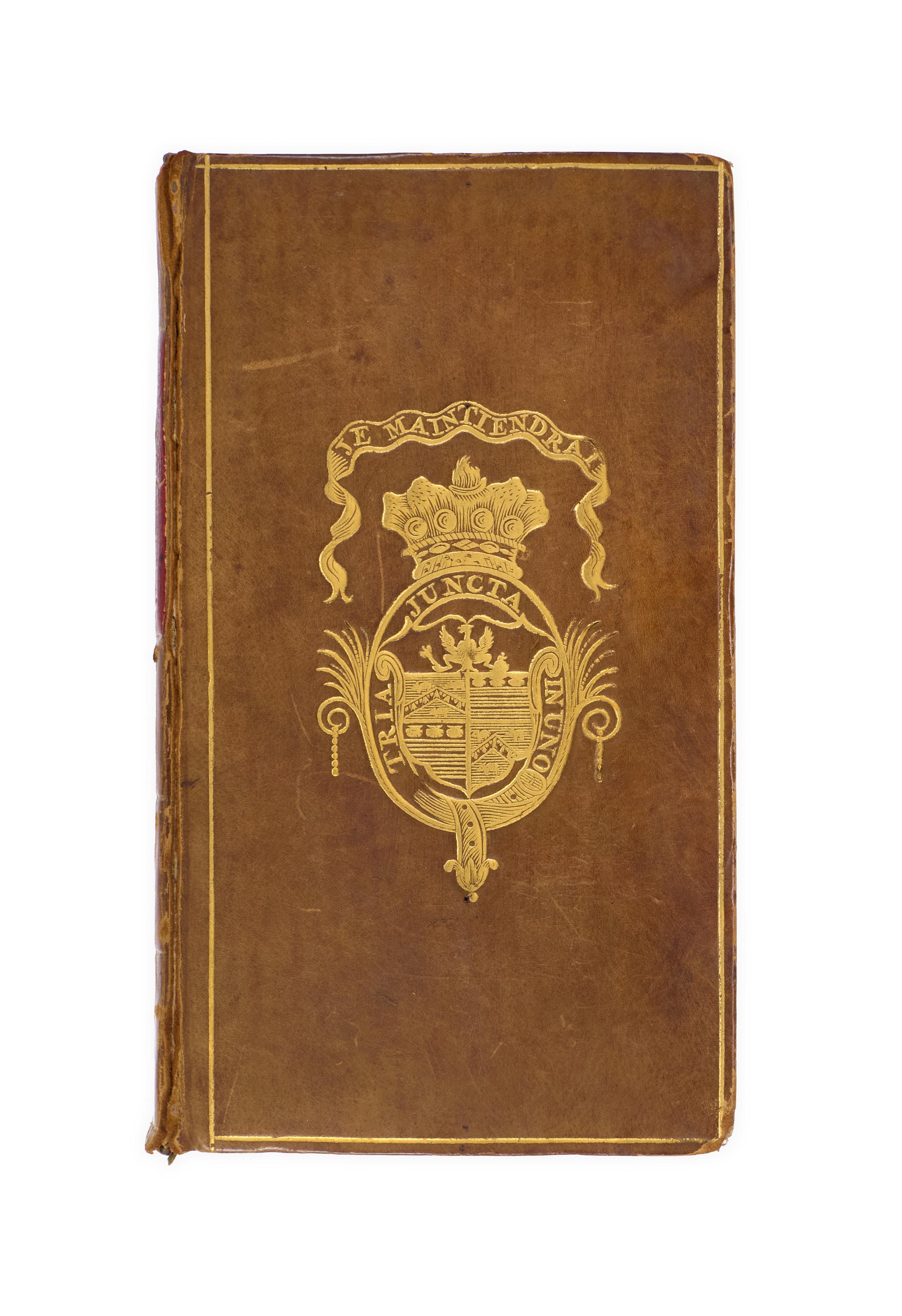
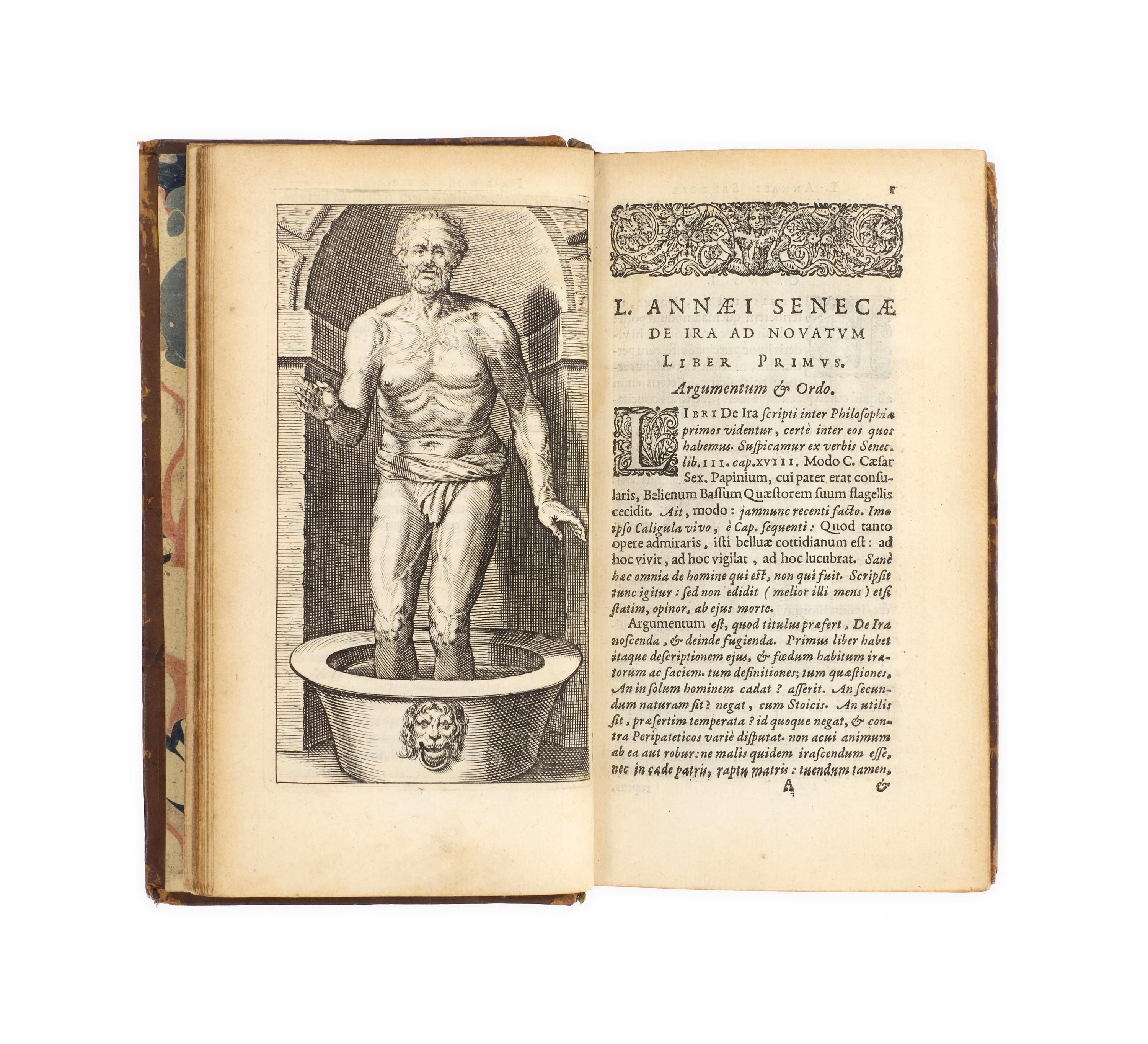
Two works in four volumes, 12mo, Seneca: pp. [xxiv], 552; 718, [2 (blank)]; 442, [153 (index), 1 (blank)], Gronovius: pp. [xxiv], 490, [25 (index), 1 (blank)]; engraved title-page to first volume of Seneca, letterpress title-pages dated 1639 to vols II and III (with woodcut ‘Solitaire’ device), engraved illustration in vol. I; Gronovius with woodcut ‘Minerva’ device to title; some spotting but good copies in uniform early nineteenth-century polished calf, front covers gilt with the arms of James Harris, first Earl of Malmesbury (BAB stamp 2), with his crest to head of spine (stamp 4), flat spines ruled gilt, red morocco labels, slightly rubbed, headcaps worn, front cover of Gronovius detached.
Added to your basket:
L. Annaei Senecae philosophi opera omnia; ex ult. I. Lipsii emendatio: et M. Annaei Senecae rhetoris quae extant, ex And. Schotti recens.
First Elzevir edition of the moral works and letters of the philosopher and playwright Lucius Annaeus Seneca, and the surviving Suasoriae and Controversiae of his father, known as Seneca the Rhetorician, along with the Amsterdam reprint of the extensive scholia of Johann Friedrich Gronow (1611–1671). The two Senecas were frequently confused in the Middle Ages but identified as father and son in the early sixteenth century, the father then mistakenly assigned the name Marcus (as it appears on the title-pages here). Seneca the Younger had a long history of influence in England, with translations of the philosophical works published from the mid-sixteenth century establishing him as the epitome of Stoicism in Elizabethan thought.
STCN 833600644 and 091015243; Copinger 4301; Rahir 671; Willems 672 and 1228.