One Gentleman of Venice
W. W. Greg’s Copy
SHIRLEY, James.
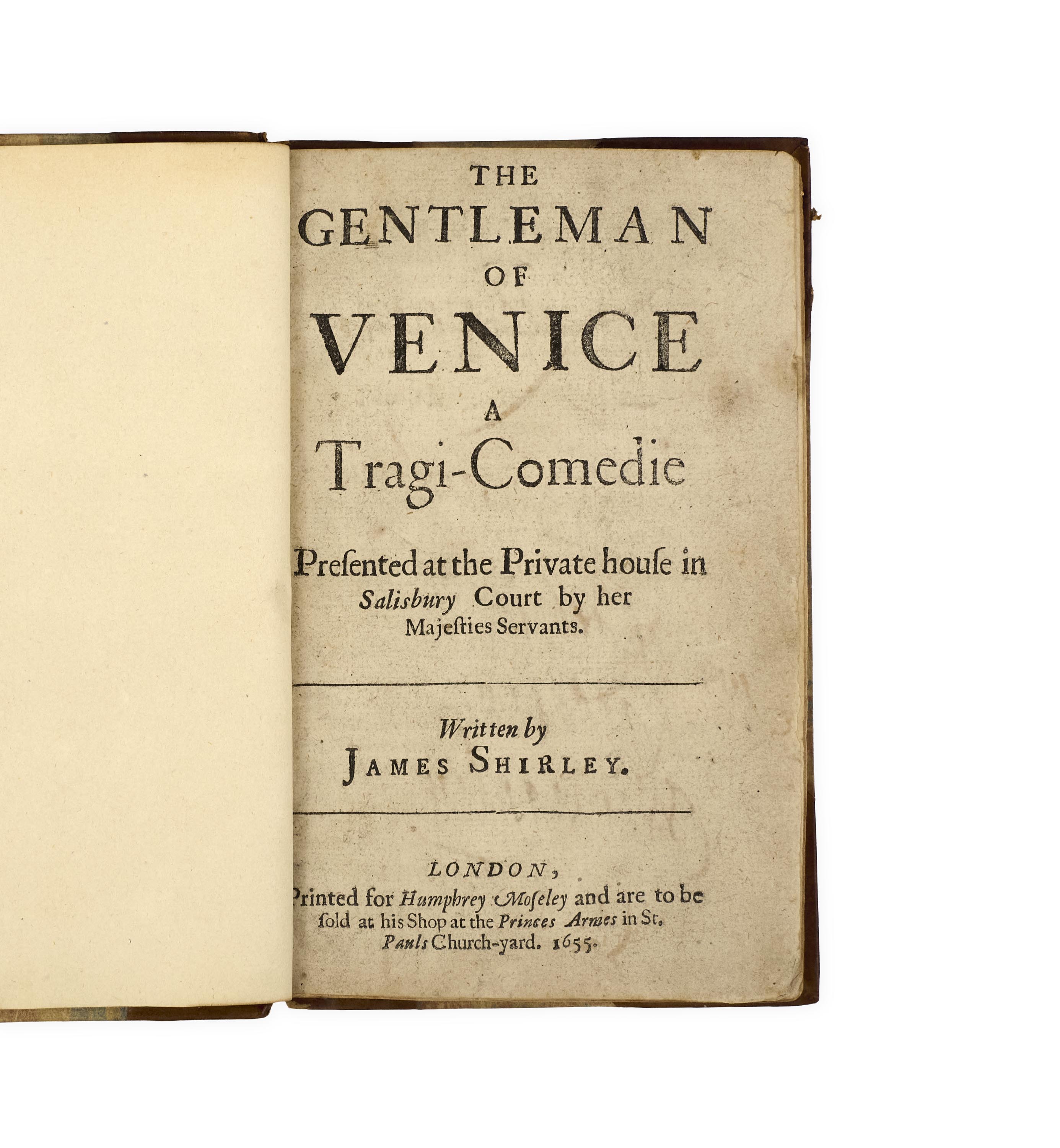
The Gentleman of Venice. A Tragi-Comedie presented at the private House in Salisbury Court by her Majesties Servants. London, Humphrey Moseley, 1655.
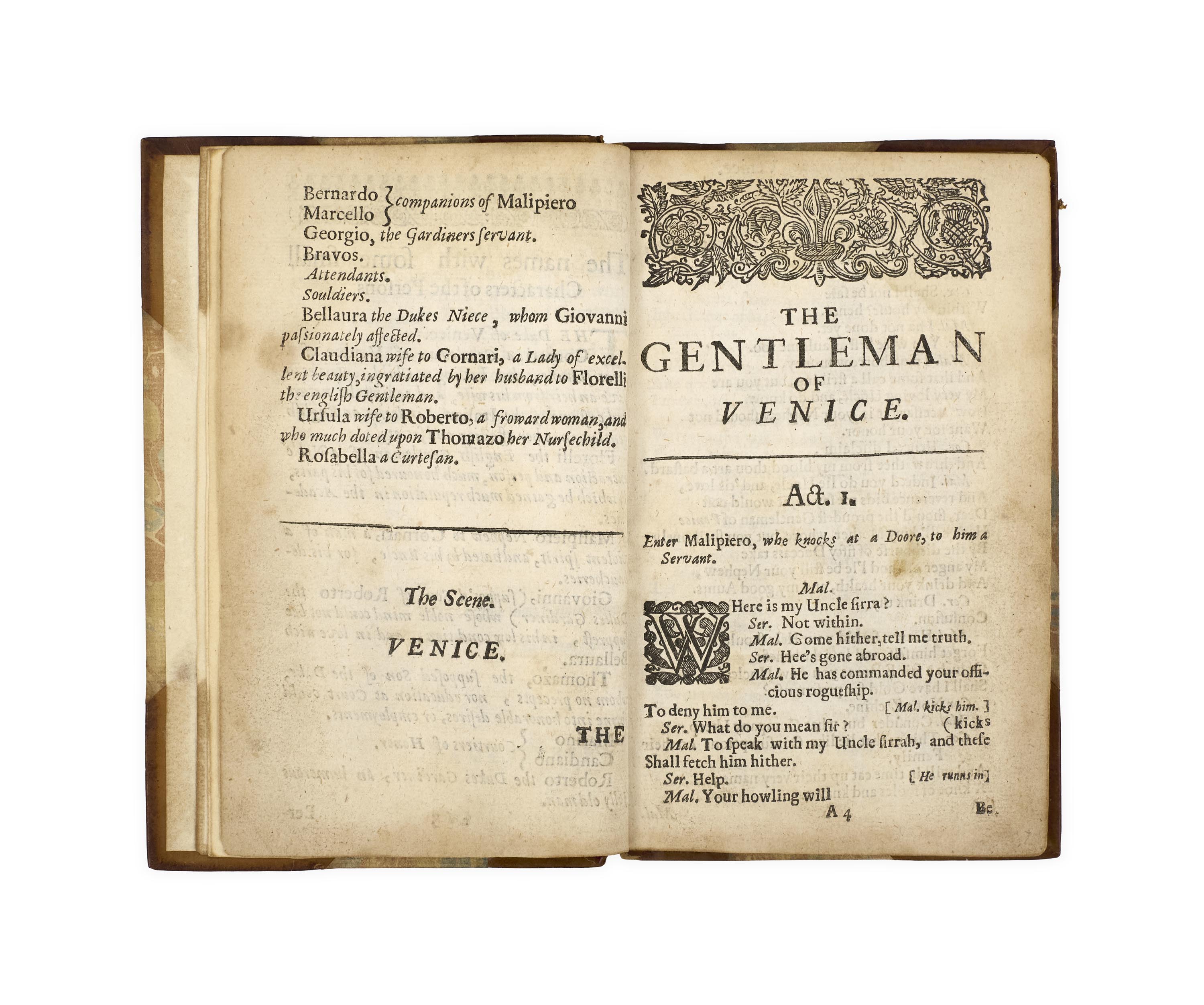
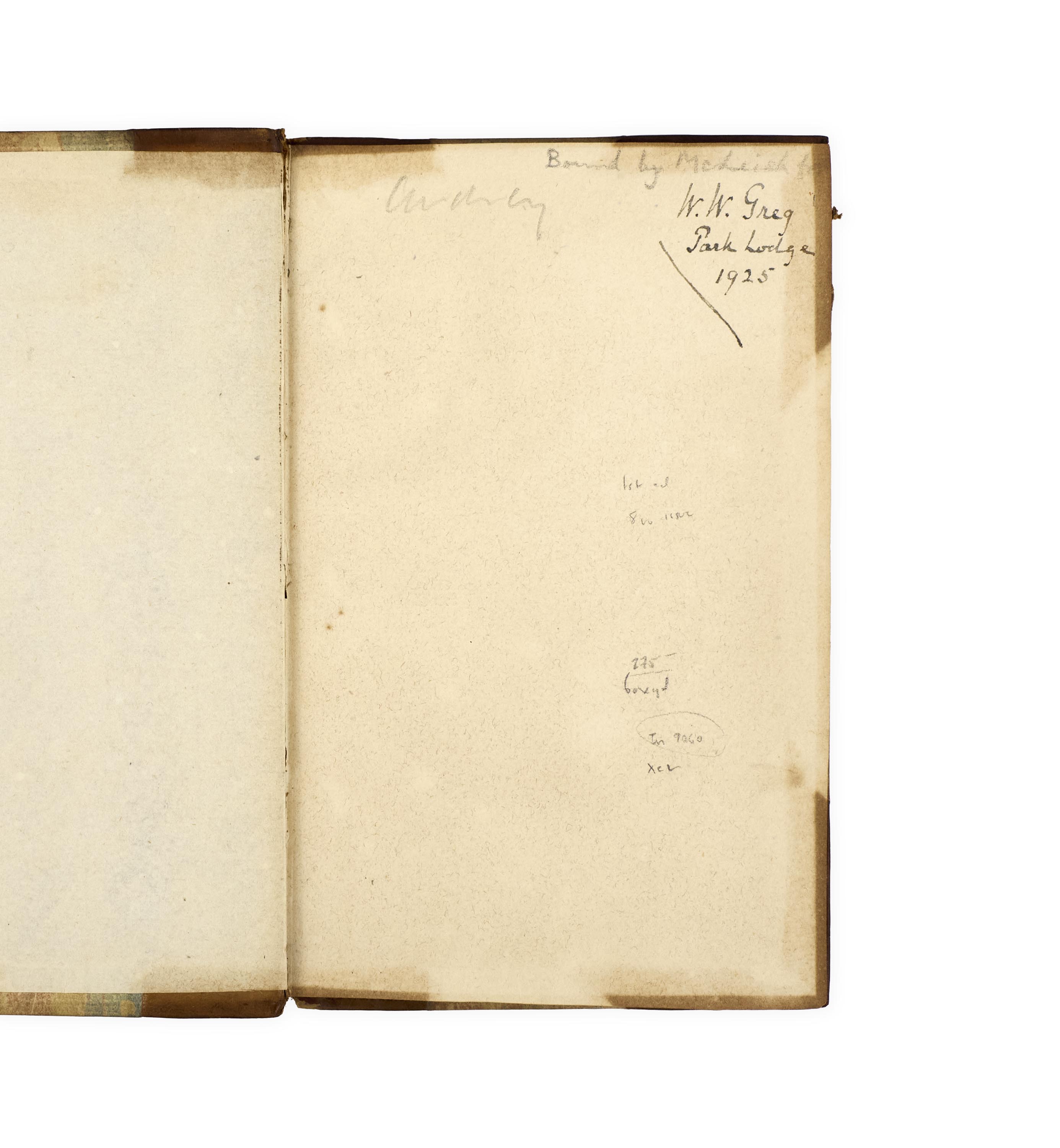
8vo, pp. [6], 78; woodcut and typographic headpieces, woodcut initials; browned at edges, light damp-stains, small loss to A6 not affecting text, tear to C1 touching one letter, headline of F1v cut into; else a good copy in twentieth-century half calf with marbled sides; extremities a little rubbed, superficial cracks to joints; early ownership inscriptions of Katherine Winstanley to title verso, ownership inscription ‘W. W. Greg | Park Lodge | 1925’ and above it ‘Bound by McLeish for’ to front free endpaper.
Added to your basket:
The Gentleman of Venice. A Tragi-Comedie presented at the private House in Salisbury Court by her Majesties Servants.
First edition, the rarer octavo issue of this ‘delightful comedy’ (Nason) of the Caroline stage, from the library of W. W. Greg.
First performed c. 1639 – possibly in Dublin, where Shirley had decamped following the closure of the London theatres owing to plague – the play tells of Giovanni, valiant and admirable gardener to the Duke of Venice. Asked to name a reward after fighting bravely in battle against Genoa, Giovanni requests the hand of the Duke’s niece, who, though in love with the humble gardener, refuses on account of her pride. All is changed, however, when the Duke’s rascally son is convicted of high treason, and is revealed to have been swapped at birth with Giovanni (how else could a prince behave so basely?). The gardener, now recognised as the true prince, marries his love.
A subplot, from which the play takes its name, concerns Cornari, a wealthy gentleman of Venice. Childless and despairing of an heir by his wife, Cornari plots to kidnap an Englishman, cause the latter to impregnate his wife, and then kill him off and pass the child off as his own. The virtuous Englishman refuses to debauch the lady, however, and instead they spend their time together praying for Cornari, who is duly chastised by their example. The Englishman, somewhat distracted by the affair, resolves to leave Venice: ‘To drink, and then aboord, no matter whither …’.
Provenance:
W. W. Greg (1875–1959), pioneering bibliographer and scholar of early English drama, inscribed by him in 1925 at Park Lodge, Wimbledon, the house in which he was born. In his Bibliography of the English printed Drama to the Restoration (1939–59), still the standard work in its field, Greg surmised on the basis of ornaments that the present edition was printed for Moseley by William Wilson (IV, p. 1696).
ESTC R32666 (listing four institutions in the UK: BL, Durham, Bodley, V&A); Greg 747(Ai); Wing S 3469; Woodward & McManaway 1140.