Death by Sea
TREVLYN, Valda.
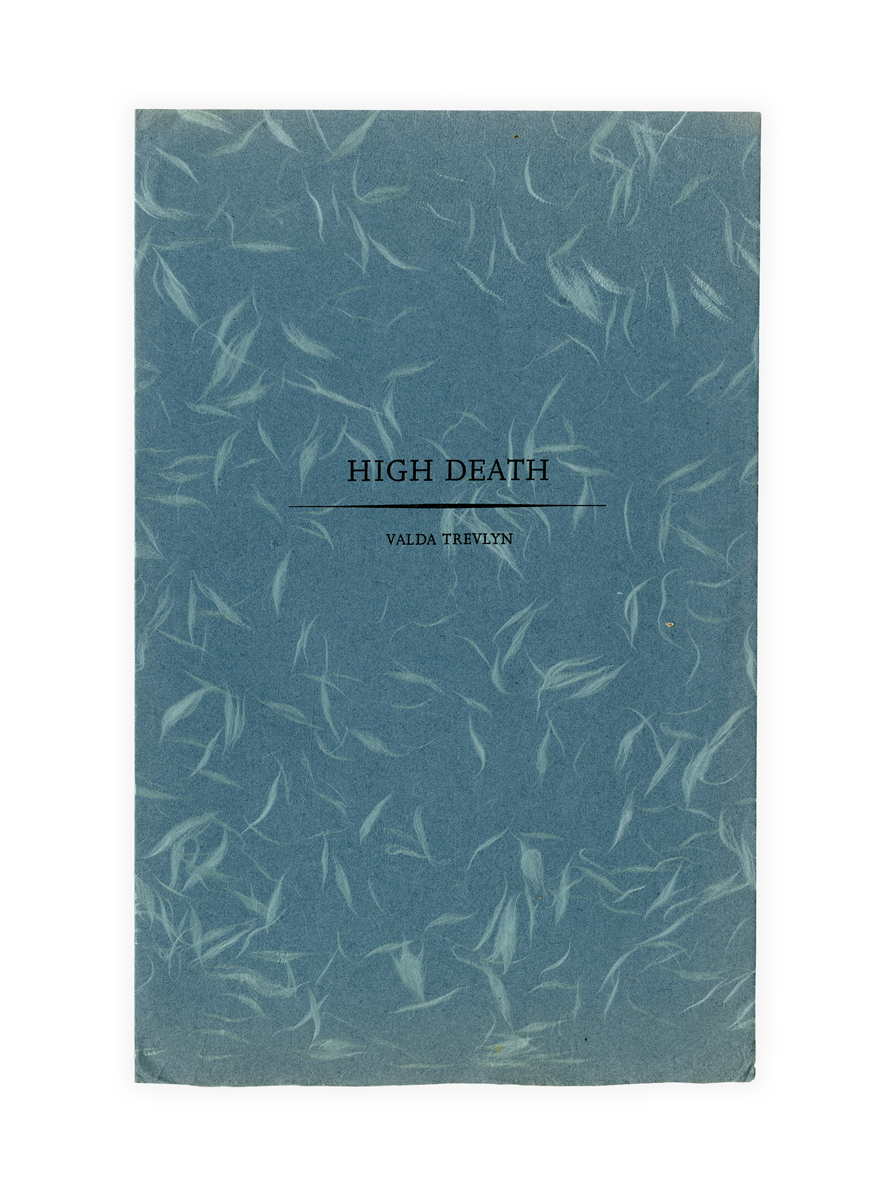
High Death. Falkland, K.D. Duval, 1970.
One folded folio sheet of blue Japanese paper; a fine copy; verso inscribed ‘with affection and some embarrassment Valda'.
£75
US $99 €88
If you wish to order more than one copy of this publication please make an enquiry. Add to basket Make an enquiry
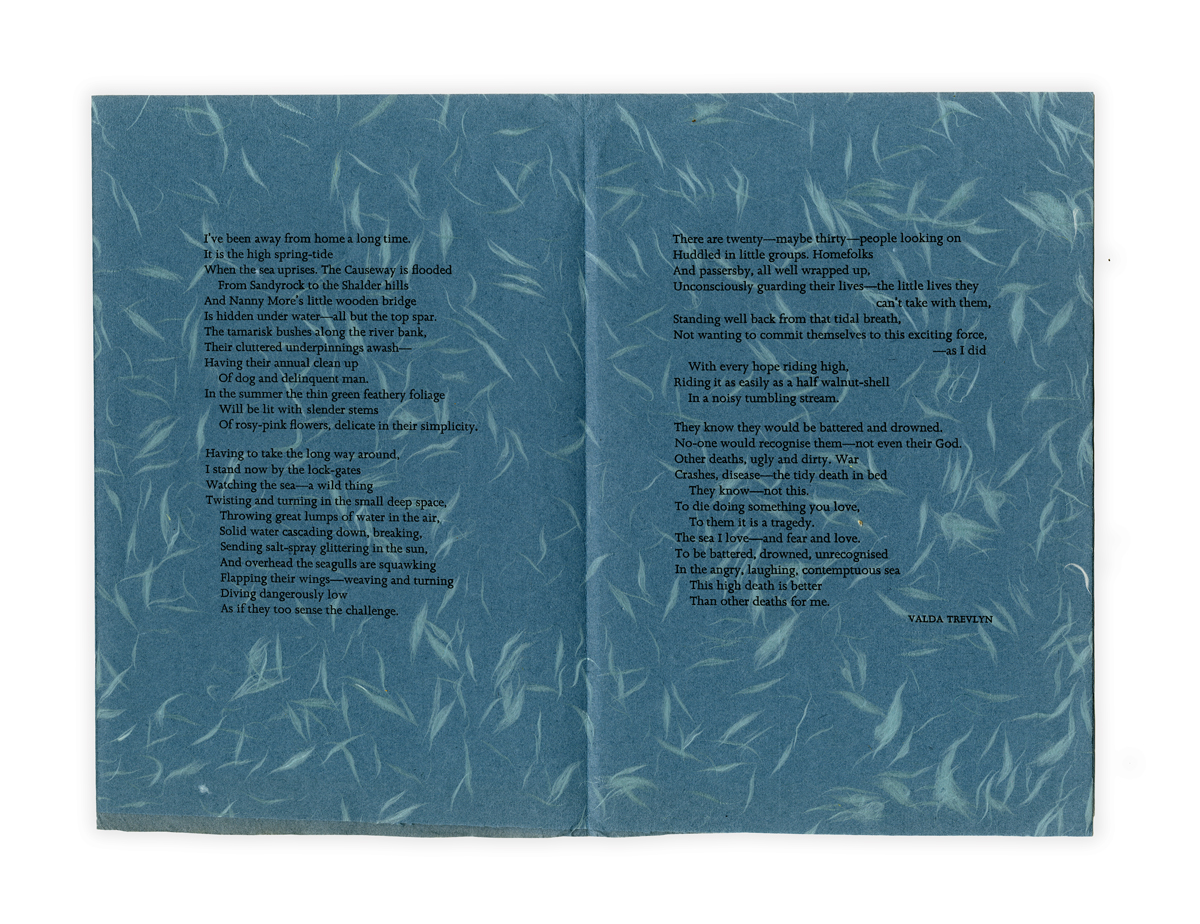
One of 100 copies of this poem on death by drowning and the simultaneous beauty and danger of the sea by the Cornish poet, activist, and suffragist Valda Trevlyn Grieve (1906–1989), inspired by the seascapes of her native Cornwall, our copy inscribed ‘with affection and some embarrassment Valda’.
Valda Trevlyn Grieve moved to London in her twenties and in 1932 married the poet Christopher Grieve (better known by his pen name, Hugh MacDiarmid); MacDiarmid published two poems in her honour, ‘Cornish heroic song for Valda Trevlyn’ and ‘Once in a Cornish Garden’. The couple’s left-wing politics and support of Scottish Nationalism led them to be included on George Orwell’s list of ‘those who should not be trusted’ and subsequently brought to the attention of MI5; the Grieves left London for the Shetland Isles and later Lanarkshire. ‘High Death’ vividly recalls the rocky seascapes of Trevlyn Grieve’s hometown of Bude, the poem’s climax portended by seagulls ‘weaving and turning | Diving dangerously low | As if they too sense the challenge’. The speaker regards a group of some twenty ‘homefolks and passerby’ standing ‘well back from that tidal breath, | not wanting to commit themselves to this exciting force, – as I did’. ‘War | Crashes, disease – the tidy death in bed | They know – not this. To die doing something you love, | To them it is a tragedy. The sea I love – fear and love. To be battered, drowned, unrecognised | In the angry, laughing, contemptuous sea | This high death is better | Than other deaths for me’.
Provenance:
From the library of the BBC radio producer D.G. Bridson, who knew Valda through his friendship and professional ties to MacDiarmid; he had organised a selection of MacDiarmid’s work for broadcast in 1951, and in 1959 spent a week with the Grieves for a television profile.
OCLC finds three copies in the US (Delaware, Emory, South Carolina) and three in the UK (Aberdeen, Edinburgh, NLS), to which Library Hub adds a copy at NLW.