The Power of Love
VAN VEEN, Otto.
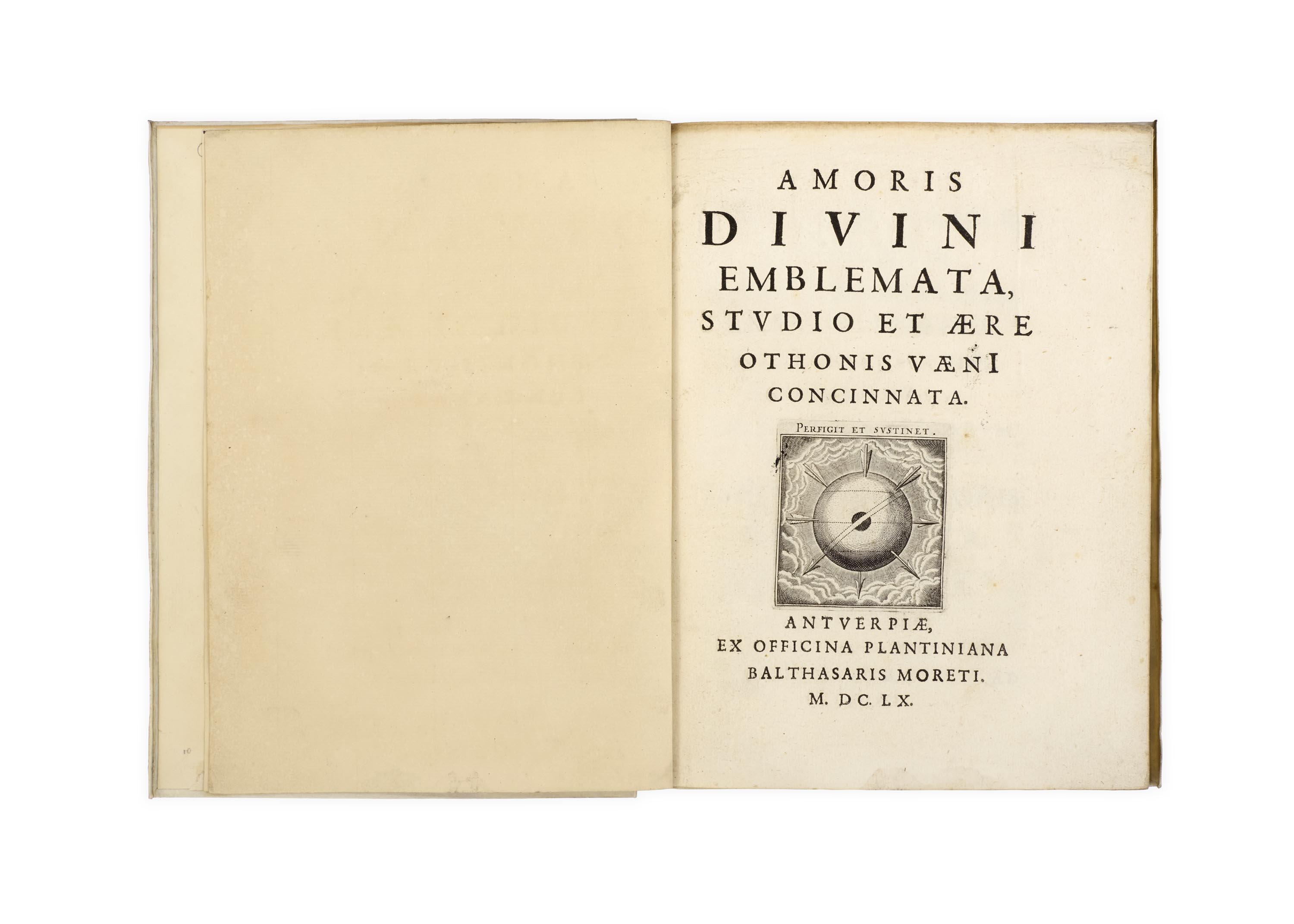
Amoris divini emblemata … Antwerp, Balthasar Moretus ‘ex officina Plantiniana’, 1660.
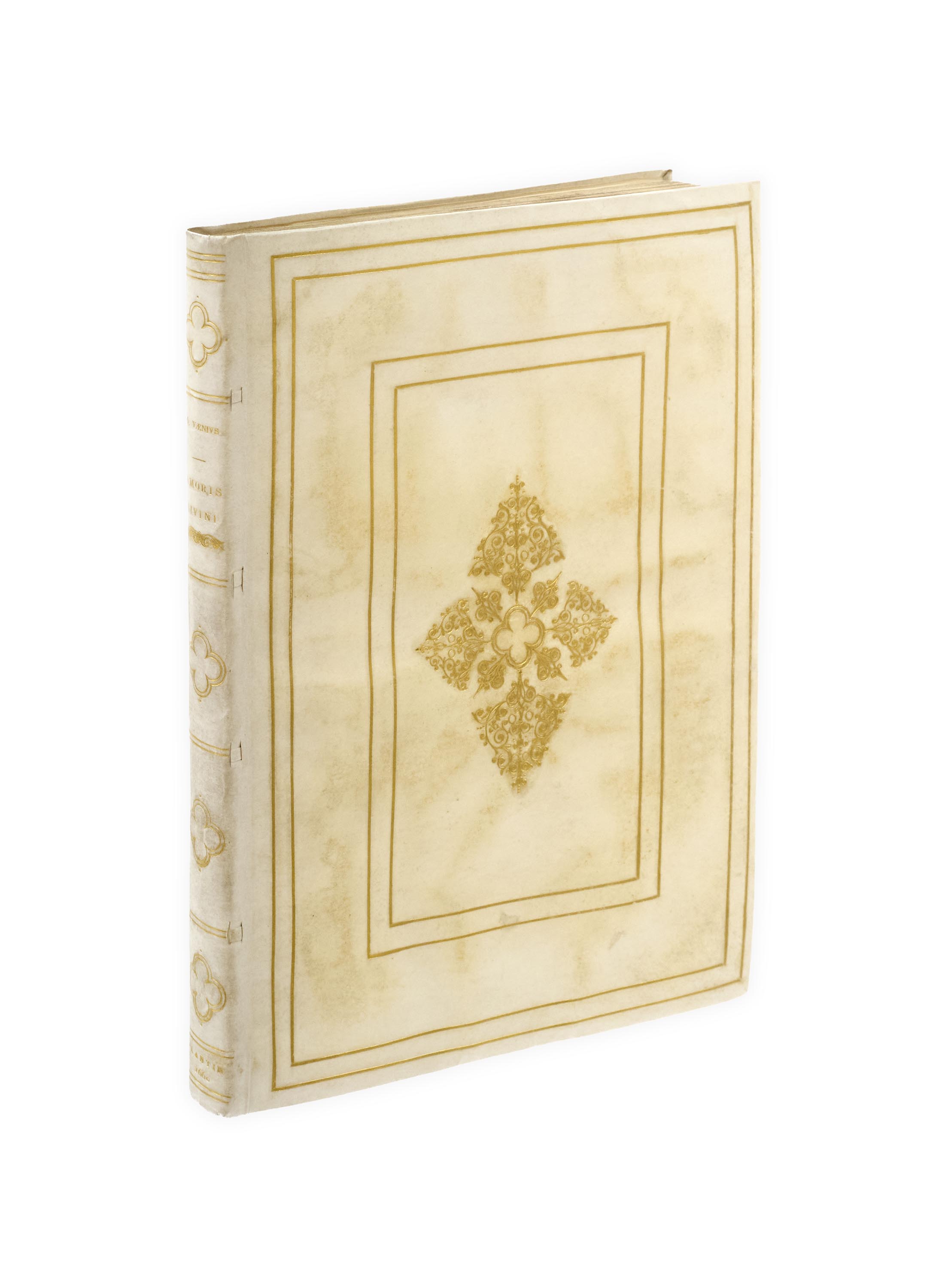
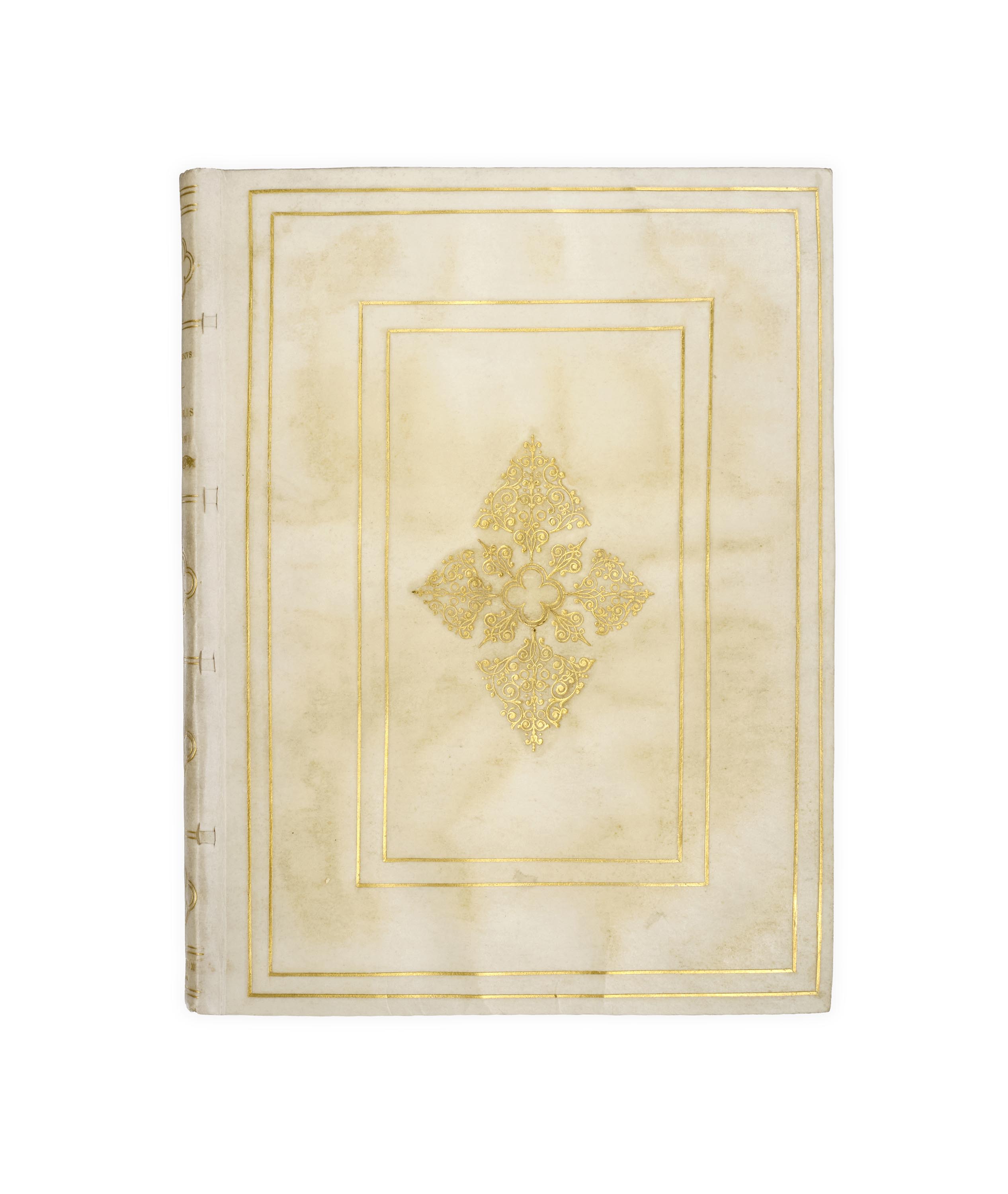
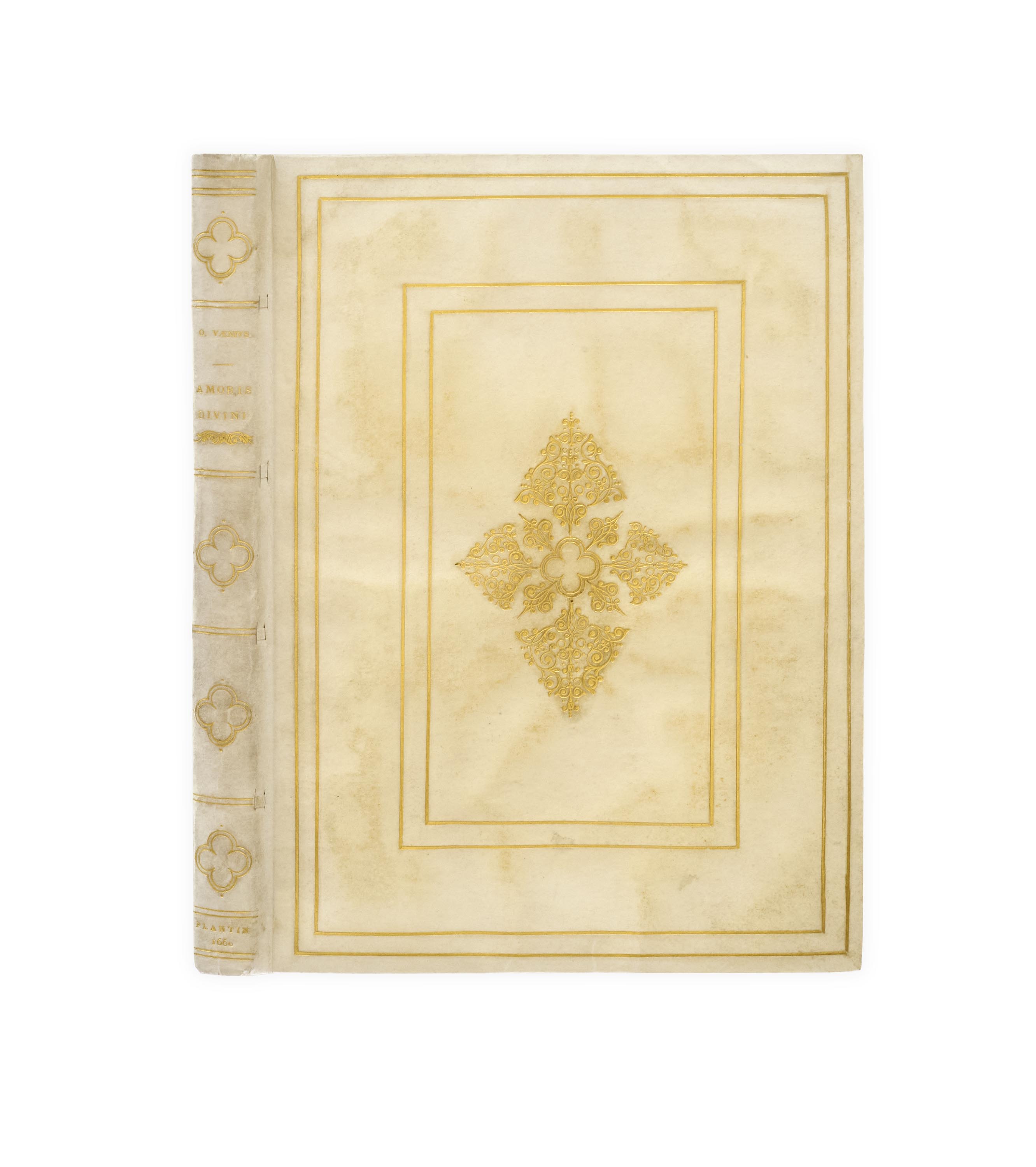
4to, pp. 127, [1]; with 60 large copper-engraved illustrations printed in-text, copper-engraved emblematic device to title with motto ‘Perfigit et sustinet’, text in Latin, Dutch, Spanish, and French; a very good copy; bound in late nineteenth-century vellum by De Samblancx–Weckesser (front free endpaper verso signed in black), covers panelled in gilt with a large central arabesque gilt aux petits fers, spine gilt in compartments and lettered directly in gilt, edges gilt; bookplates of Thomas Westwood (relaid?) and Samuel Ashton Thompson Yates to front pastedown.
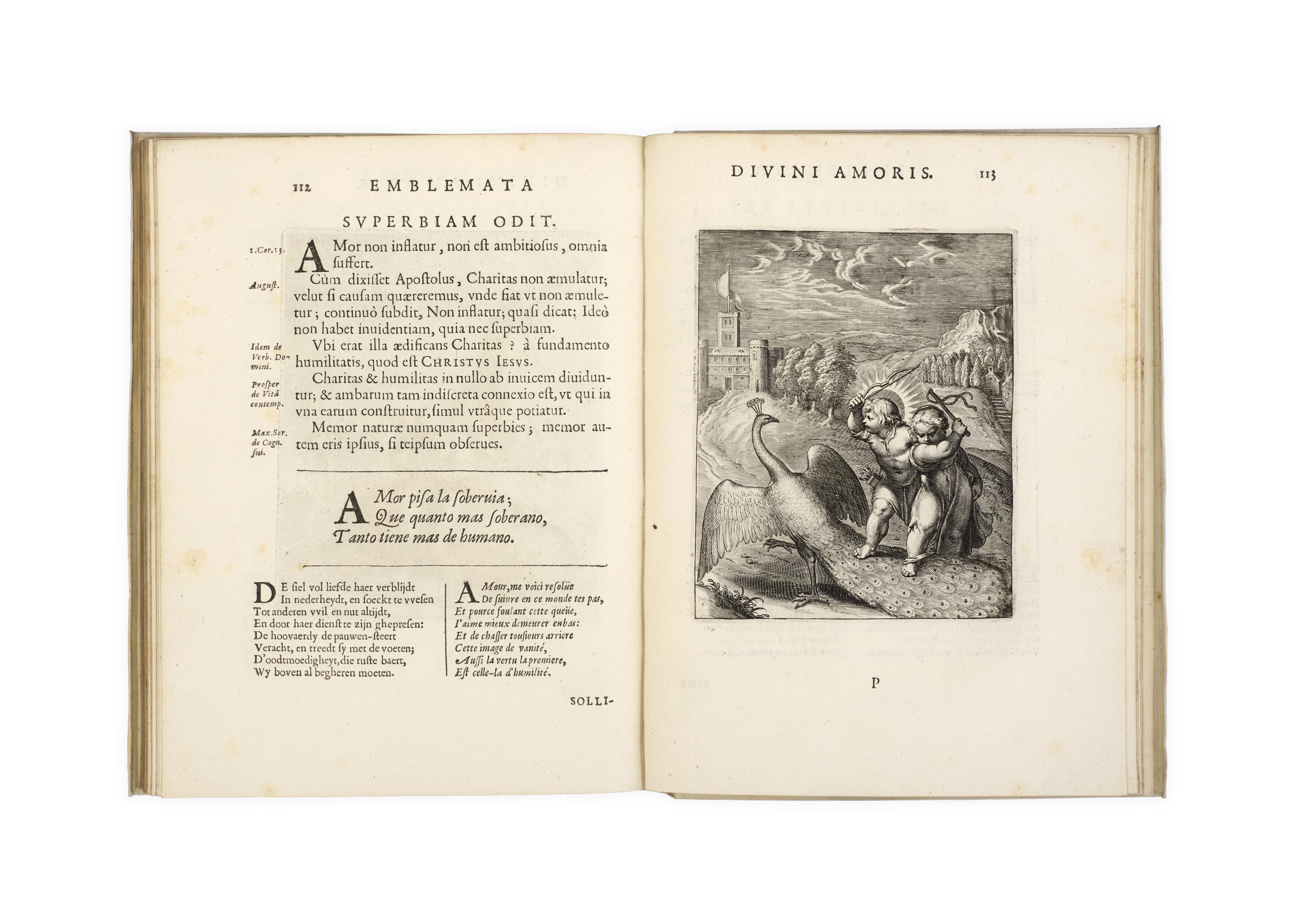
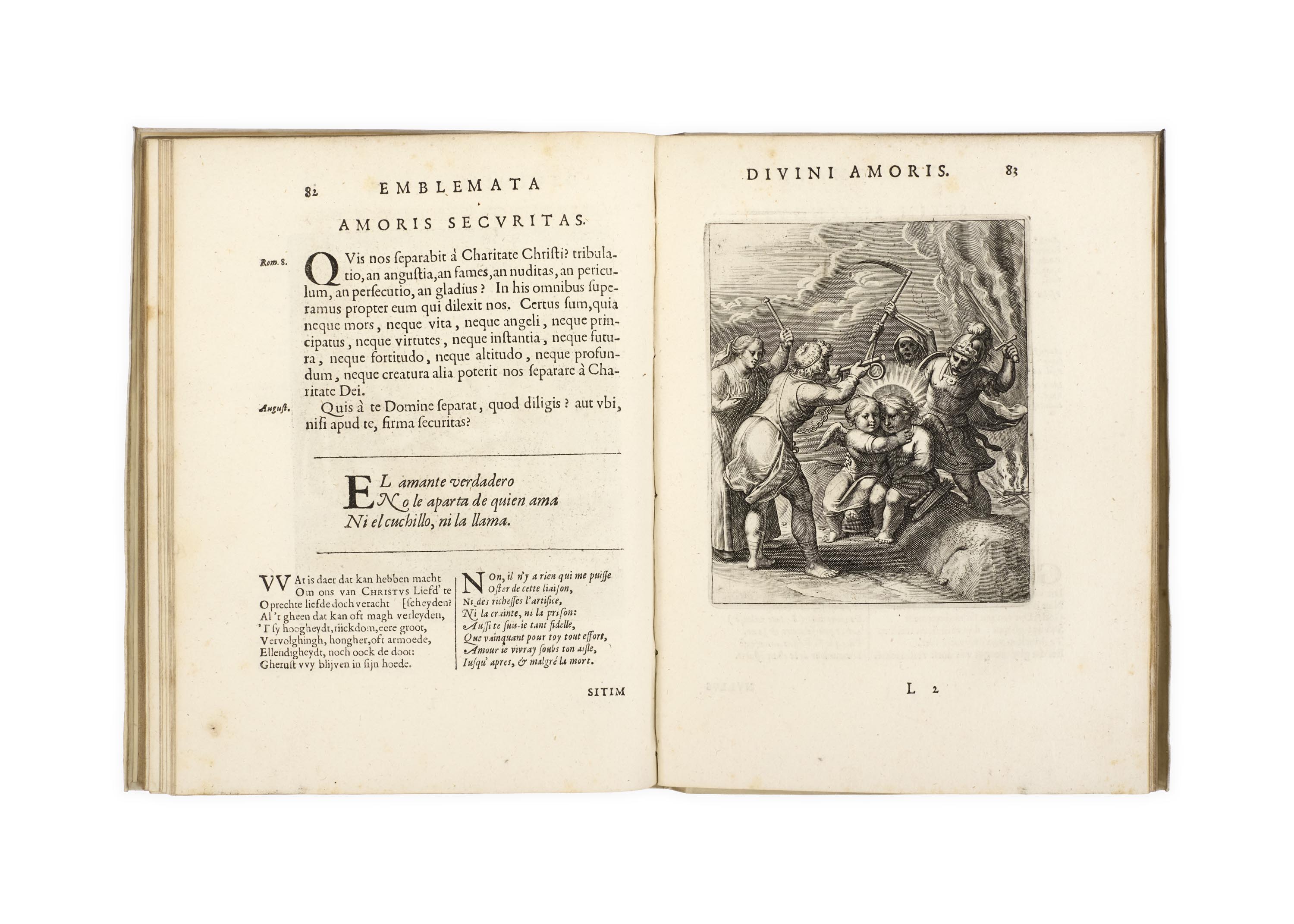
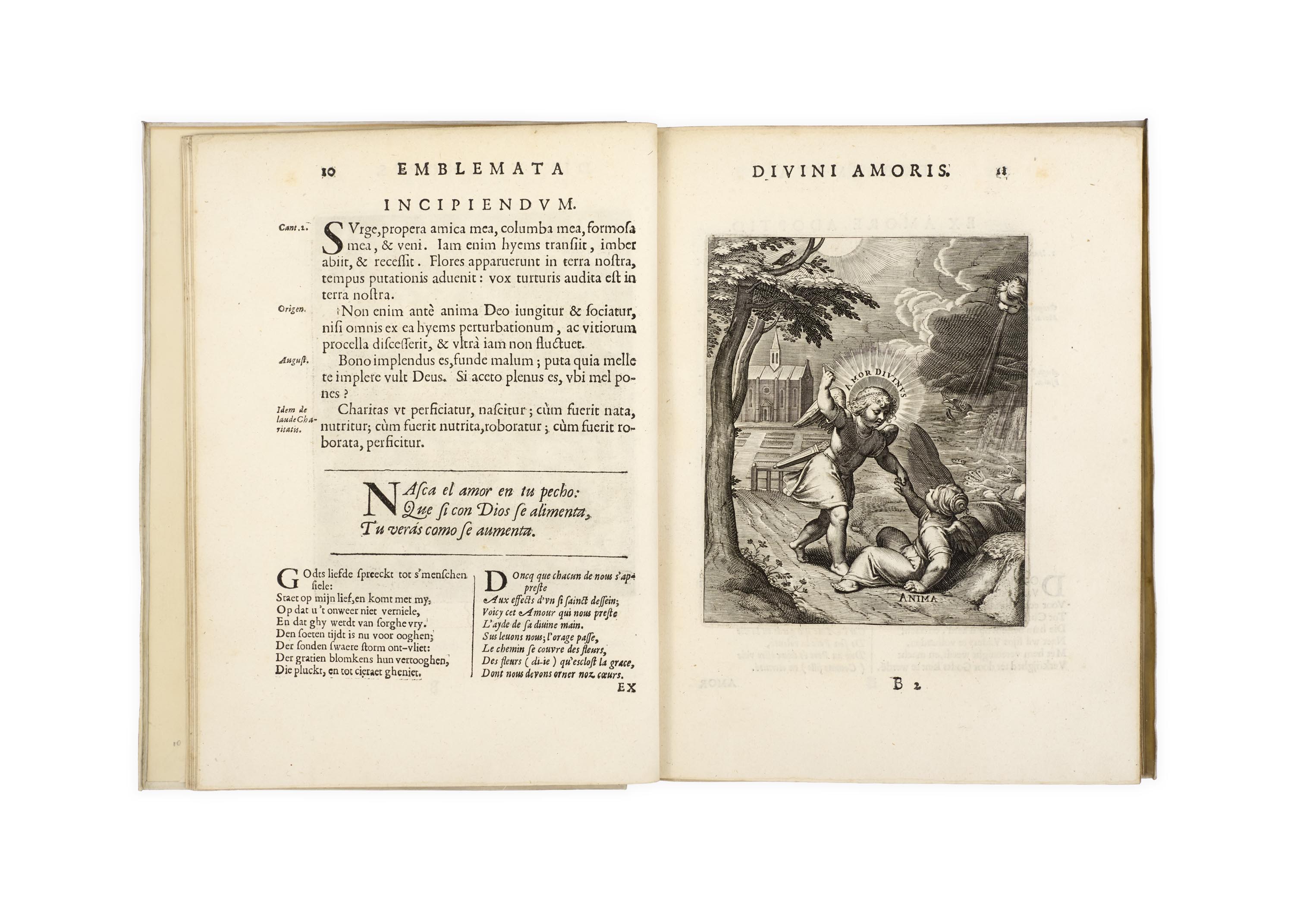
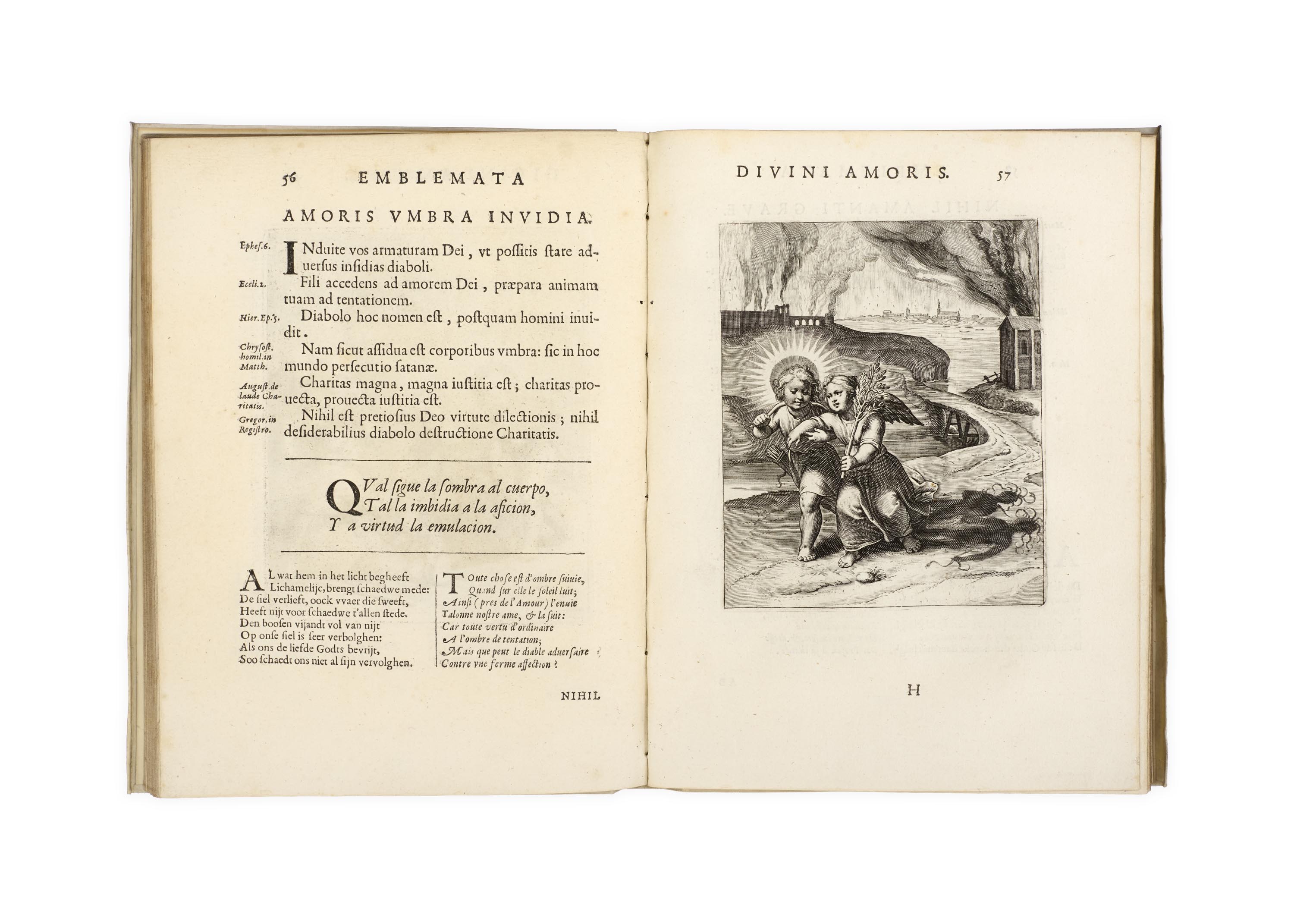
Second edition (first 1615) of sixty spiritual emblems personifying the Soul and Divine Love, a counterpart to van Veen’s 1608 emblem book on secular love, Amorum emblemata.
An important precursor to Herman Hugo’s 1624 Pia desideria, van Veen’s Amoris divini emblemata portrays love as an instrumental force in the shaping of the universe through engravings of Divine Love and the Soul as putti. Van Veen’s visual programme is in turns charming – featuring the Soul and Divine Love shaking hands, surrounded by an ouroboros as a sign of enduring love (Amor aeternus) or Divine Love reading aloud whilst the Soul diligently takes notes (Amor docet) – and sinister: in one scene, Divine Love leads the Soul away from a burning building, the pair casting shadows behind them in the form of gorgons (Amoris umbra invidia); in another, Divine Love and the Soul are burnt at the stake. The work was dedicated to the regent of the Spanish Netherlands, Isabella Clara Eugenia (1566–1633), who had suggested the work’s publication; beneath each Latin subscriptio are epigrams in Spanish by Alonso de Ledesma, as well as verse in French by Charles Hattron, and in Dutch by van Veen himself.
The Belgian belle époque binder Charles de Samblancx (or Samblanx, 1855–1943) and finisher Jacques Weckesser (1862–1923), both former pupils of Josse Schavye, were in partnership from 1889 to 1909.
Provenance:
1. Thomas Westwood (d. 1888), bibliophile, bibliographer of angling, and friend of Elizabeth Barrett Browning. He lived in Brussels from 1871 until his death; his angling collection was offered for sale by J. W. Bouton of New York in 1873, and remaining books by Sotheran’s in 1897.
2. Samuel Ashton Thompson Yates (1843–1903), albeit not the copy listed in his 1896 catalogue (see Ex Bibliotheca Samuel Ashton Thompson Yates (1896), no. 97, in half calf).
STCN 328734861; STCV 12870550; USTC 1845150; Adams, Rawles & Saunders F.600; Landwehr, Emblem and fable books of the Low Countries 838; Landwehr, Romanic 756; Praz, pp. 525–526.