With a Note From Arthur Waley
[WALEY, Arthur.]
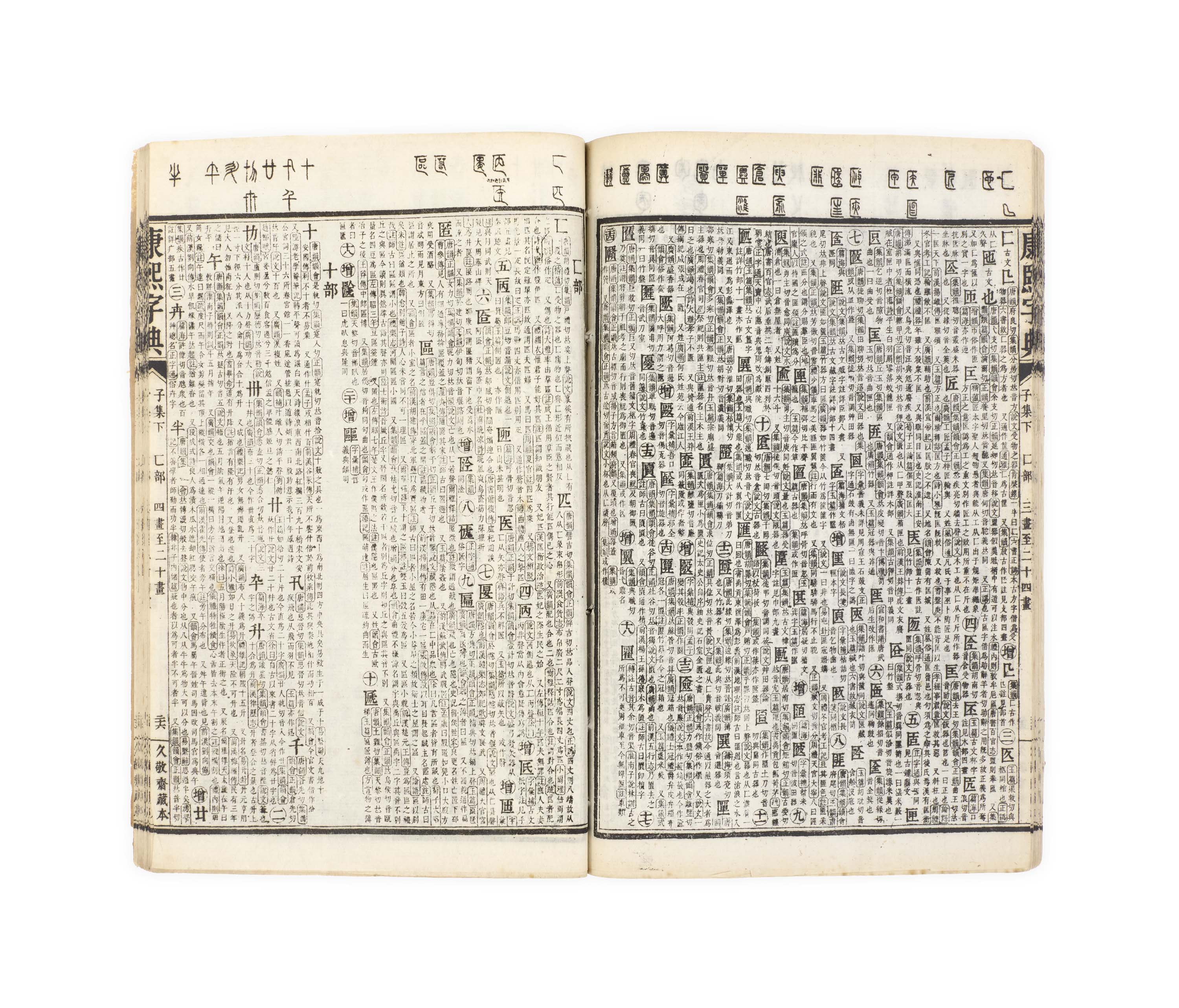
康熙字典 [Kangxi zidian; ‘The Kangxi Dictionary’]. Shanghai, Dianshizhai for Jiujingzhai, Guangxu 22 [1894].
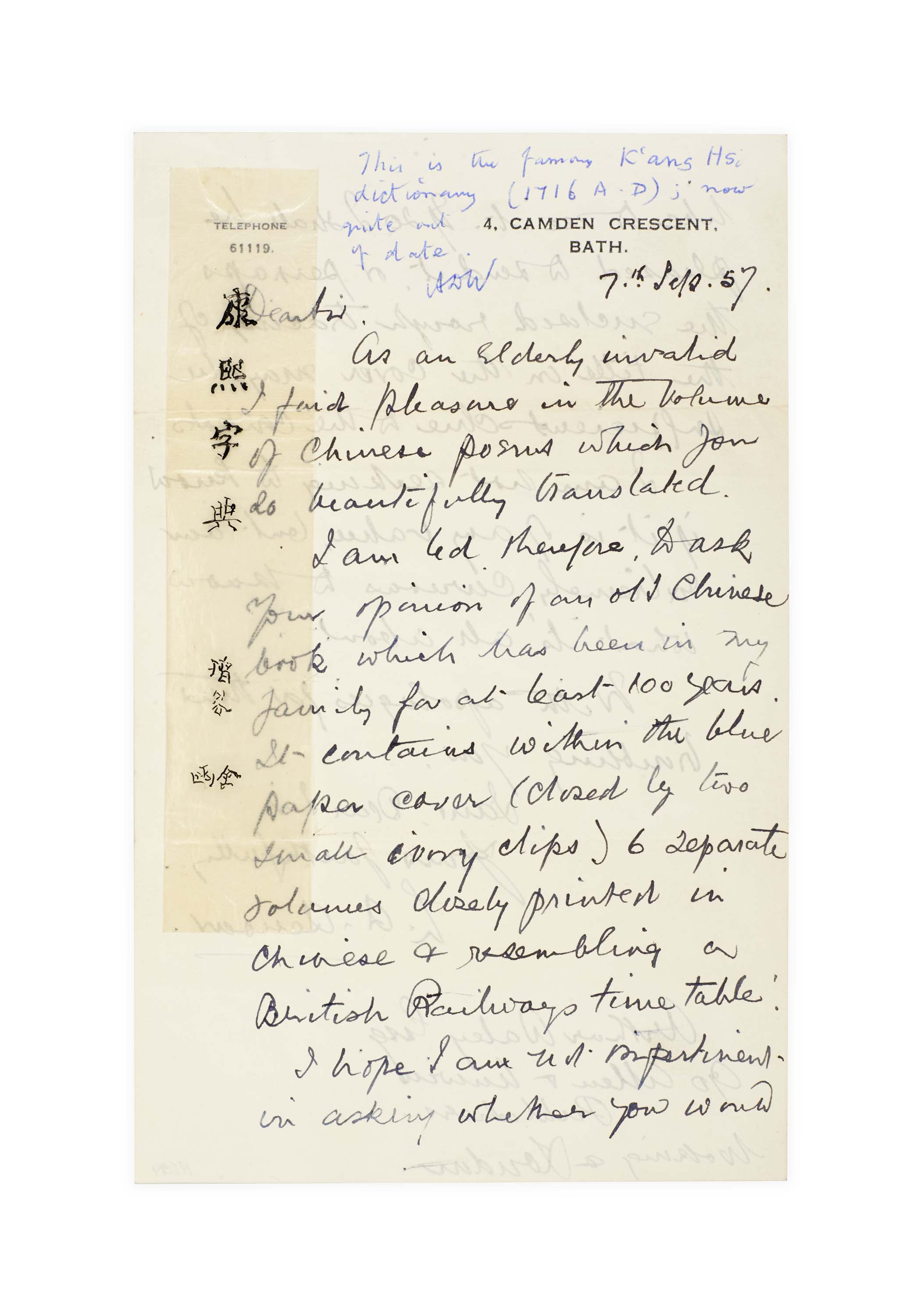
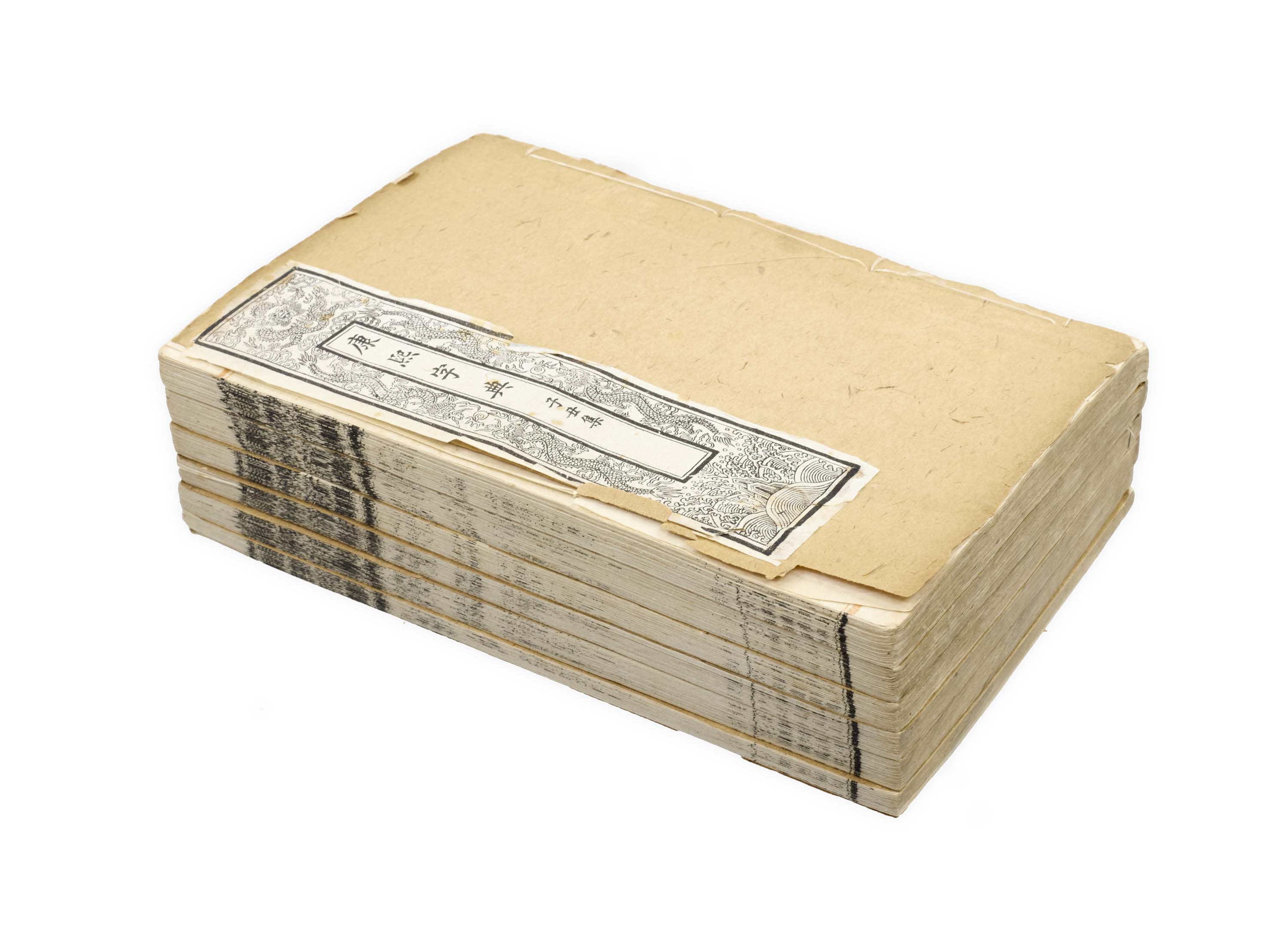
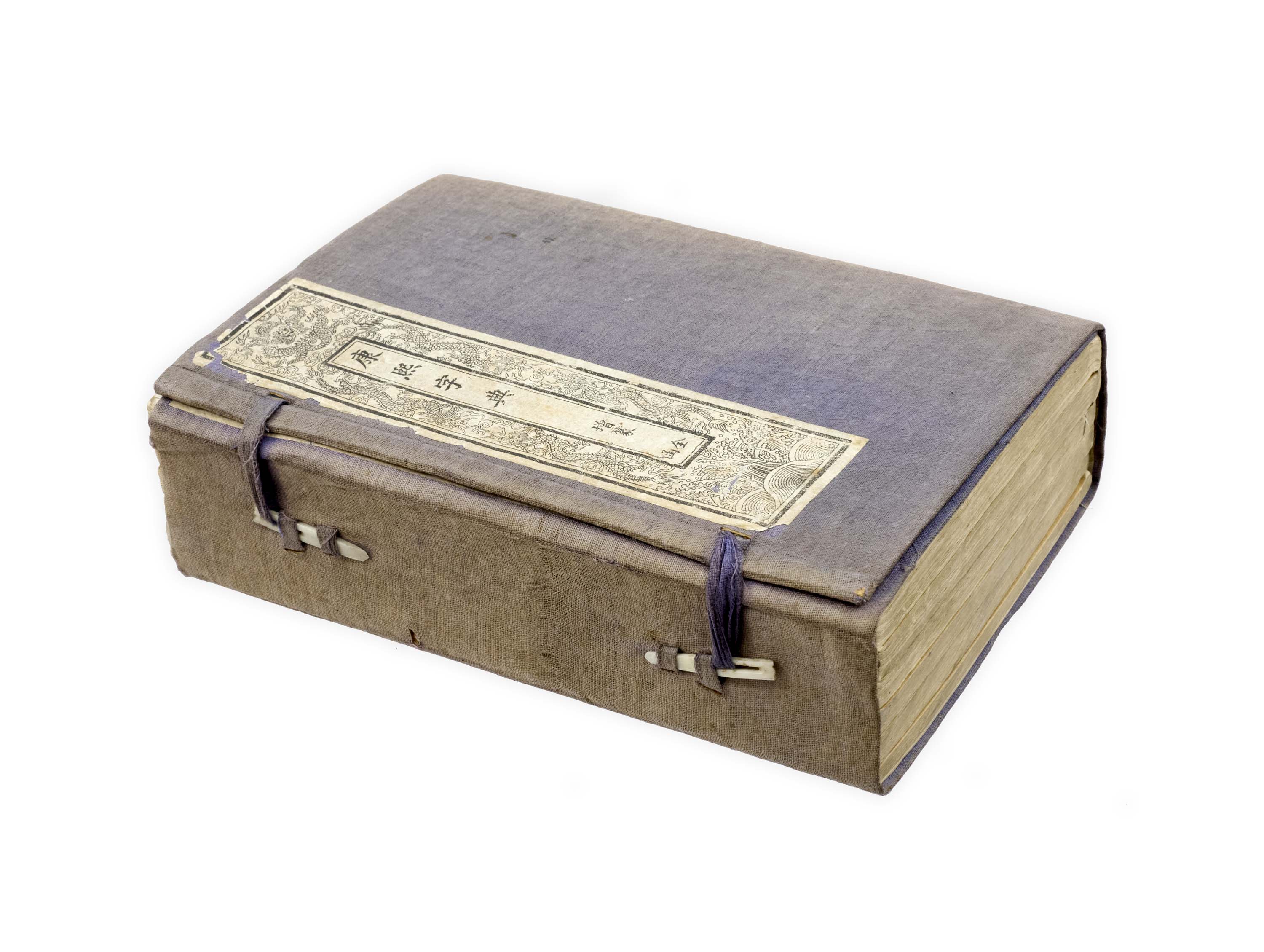
Six vols, 8vo; printed lithographically in Chinese on double leaves, title and imprint of vol. I printed in red; a few leaves printed askew, some foxing and other minor stains within; else a very good copy stitched as issued in the original beige paper wrappers, printed title label with decorative border to front covers, housed in a contemporary blue cloth folding case with bone clasps and a matching title label; wrappers a little worn, thread split in parts, hinges of case somewhat tender, its sides sunned; two letters enclosed, one an autograph letter (203 x 126 mm), signed, dated 7 September 1957 and addressed to Arthur Waley, with strip of tracing paper bearing title traced in manuscript pasted down, and with an autograph note, signed, in reply from Waley at head, the other a typewritten letter (209 x 150 mm), signed, from J. H. Eisenegger of the British Museum to G. F. Benson, dated 17 May 1966, concerning the work and edition.
Nineteenth-century Shanghai edition of the Kangxi Dictionary, this set with an autograph note from the great Sinologist and translator Arthur Waley identifying the text for a previous owner.
Ordered by the Kangxi Emperor in 1710 and first published six years later, the dictionary was one of the literary triumphs of the Qing Dynasty and stands as the last in a long tradition of major lexicons commissioned by Chinese emperors. With entries for some 47,000 characters, it was the largest Chinese dictionary hitherto compiled. It remained the standard work into the twentieth century, and its influence continues in the use of its system for organising characters by radical.
The present copy preserves an autograph note on its contents by Arthur Waley, the pioneering translator of Chinese and Japanese literature. The set made its way to Britain at some point in the earlier twentieth century – possibly via a family connection with the Shanghai International Settlement – and by 1957 had been inherited by a self-described ‘elderly invalid’ of Bath. Curious as to what it was, the owner wrote to Waley, then still the best-known translator of Chinese in the West, describing it as having been ‘in my family for at least 100 years’ (clearly erroneous, given the imprint) and tracing the title on transparent paper. Waley’s rather terse reply survives at the head of the same letter: ‘This is the famous K'ang Hsi dictionary (1716 A·D); now quite out of date. ADW’.