

'Enormously Influential' in Chinese Painting
[WANG Gai 王概, WANG Shi 王蓍, and WANG Nie 王臬.]
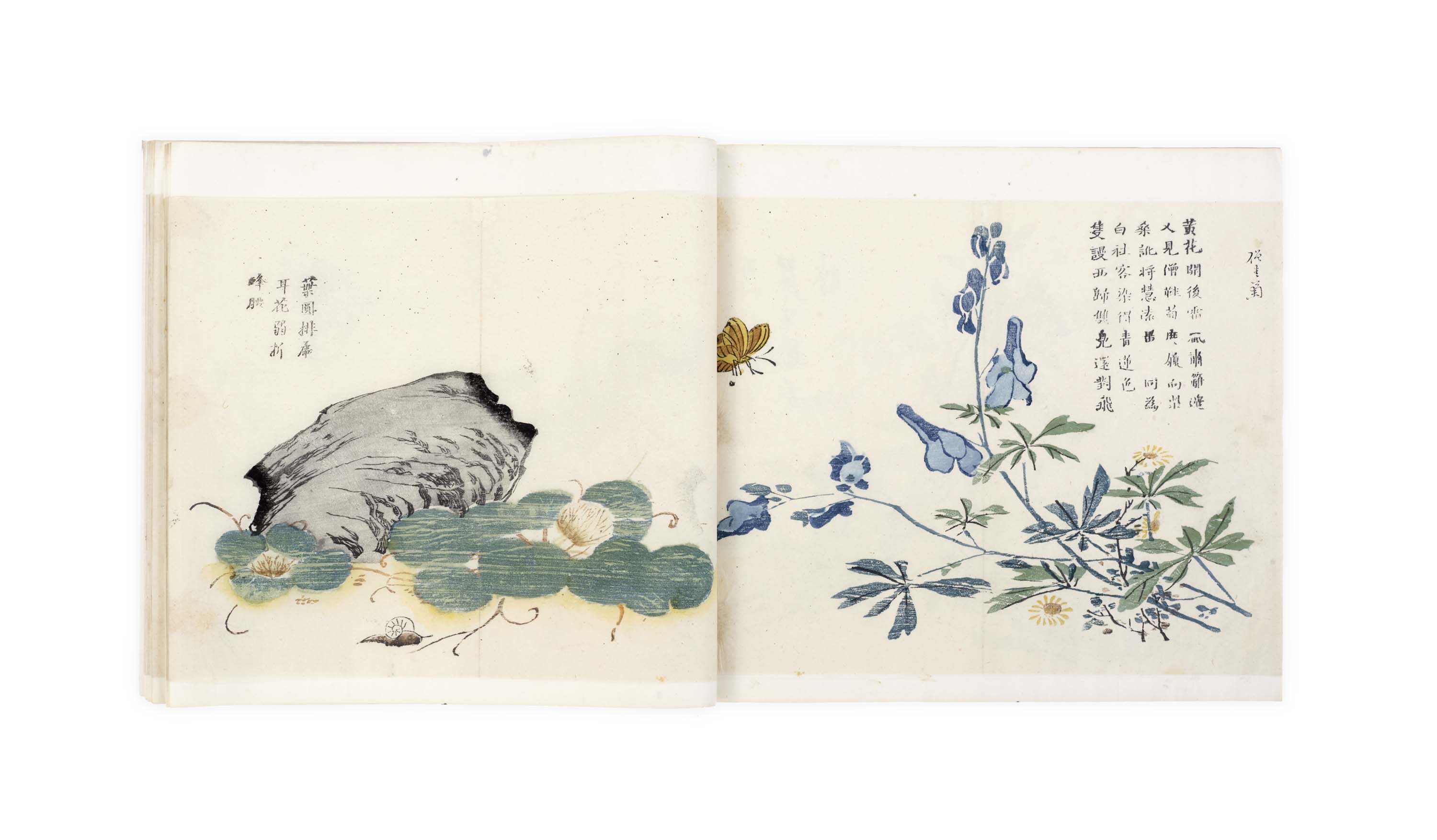
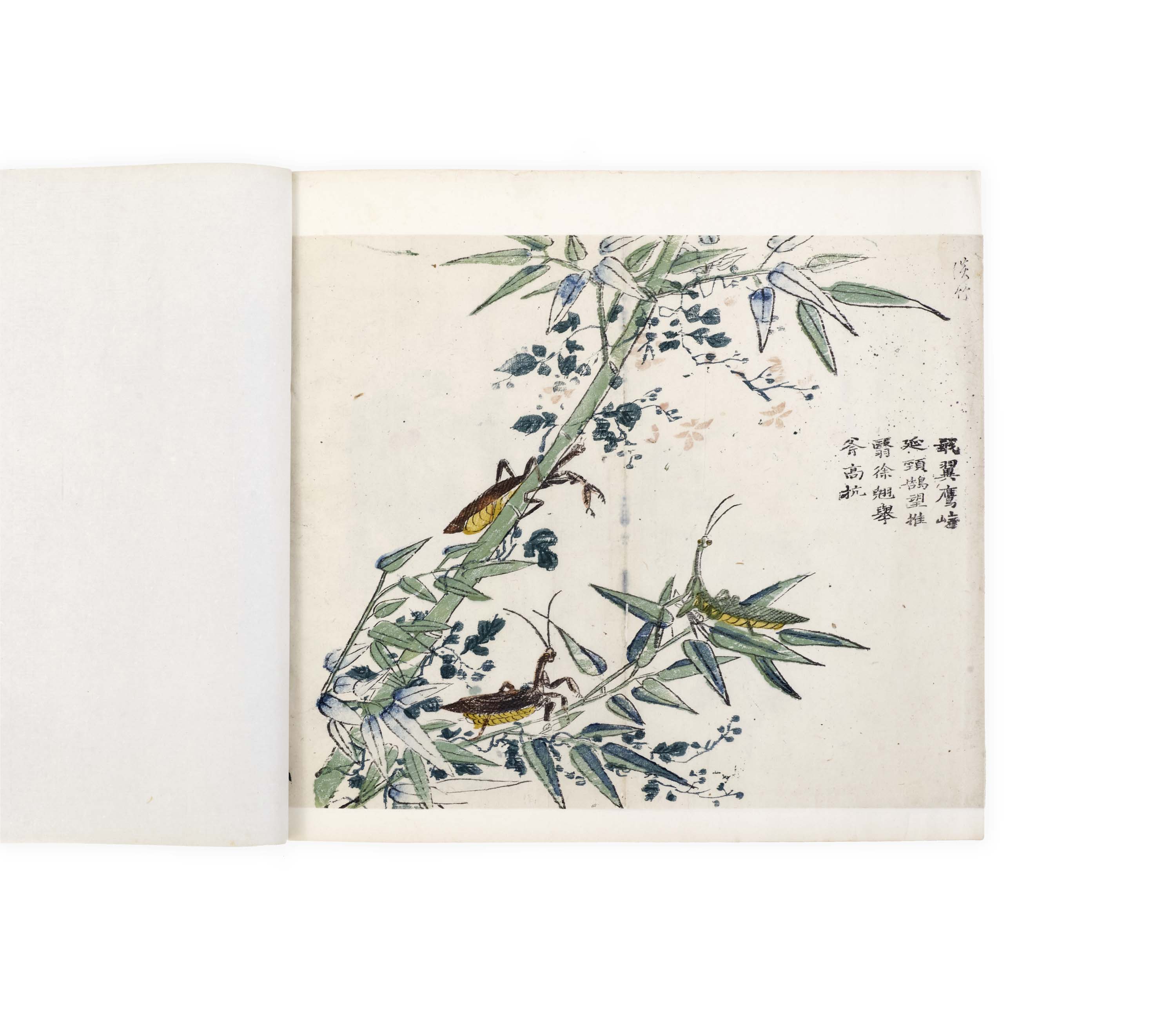
[芥子園畫譜 Jieziyuan huapu; ‘The Mustard Seed Garden Manual of Painting’.] [China], s.n., (prefaces:) Qianlong renyin [i.e. 1782] and Jiaqing 23 [i.e. 1818].
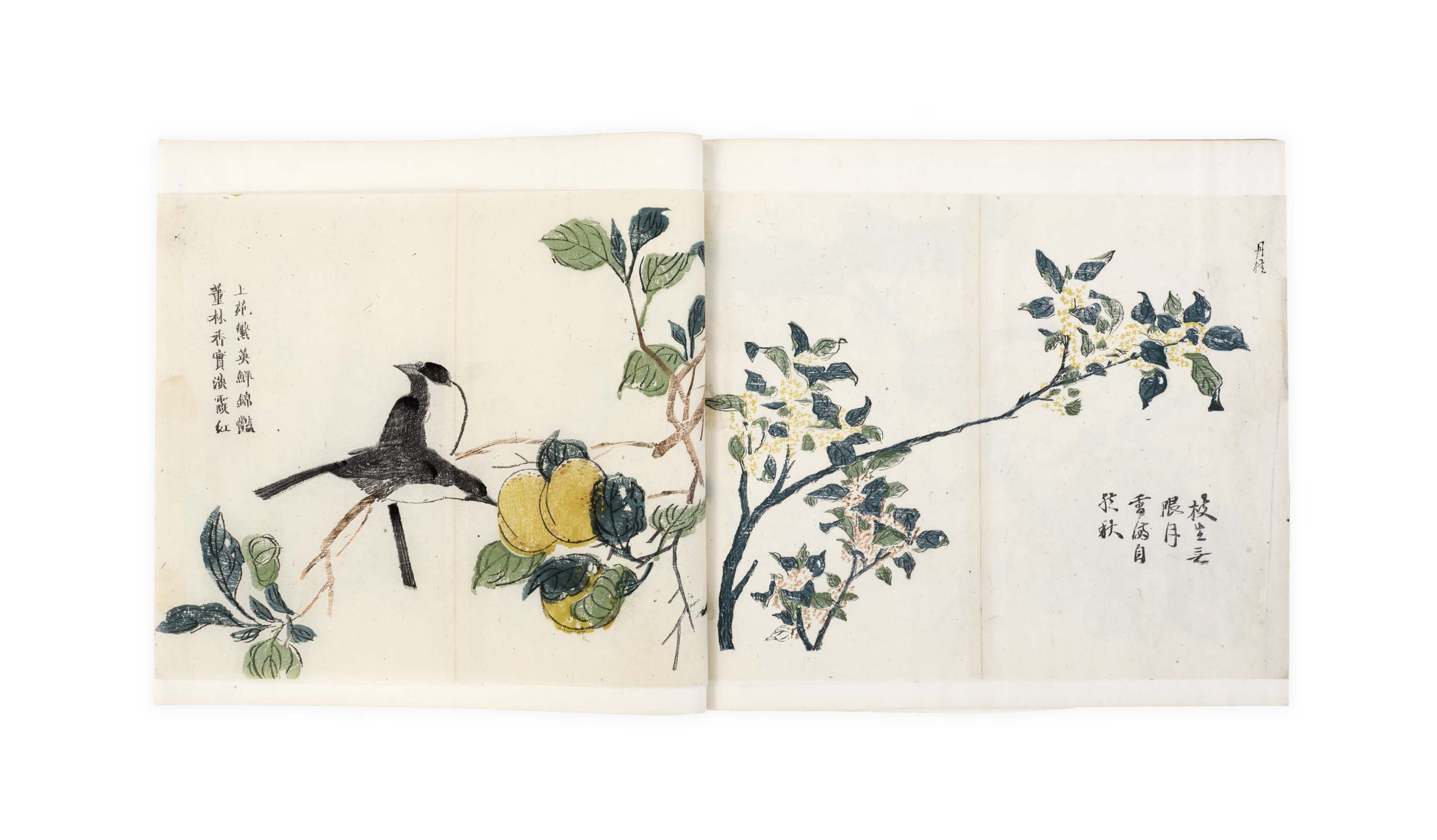
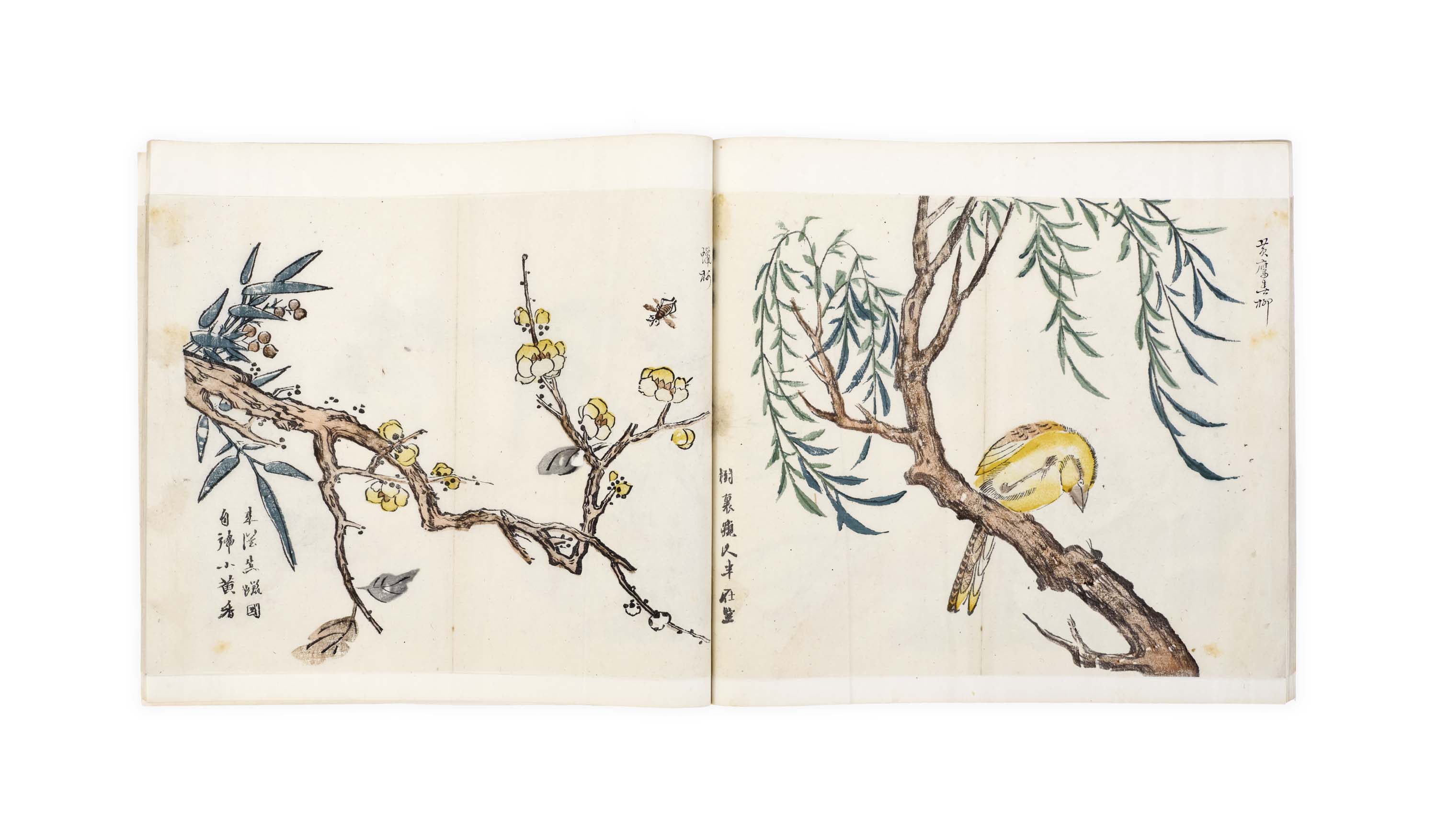
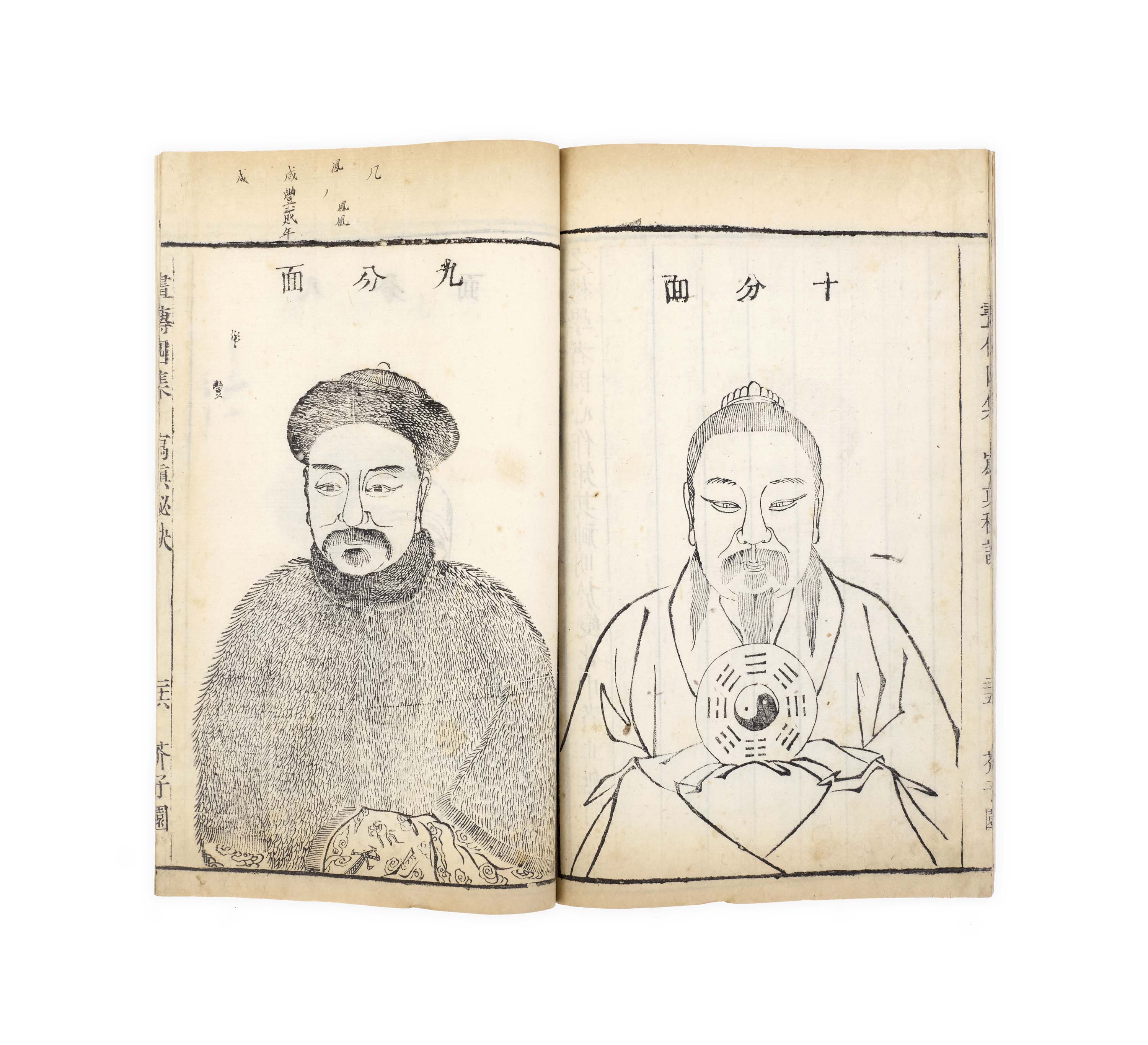
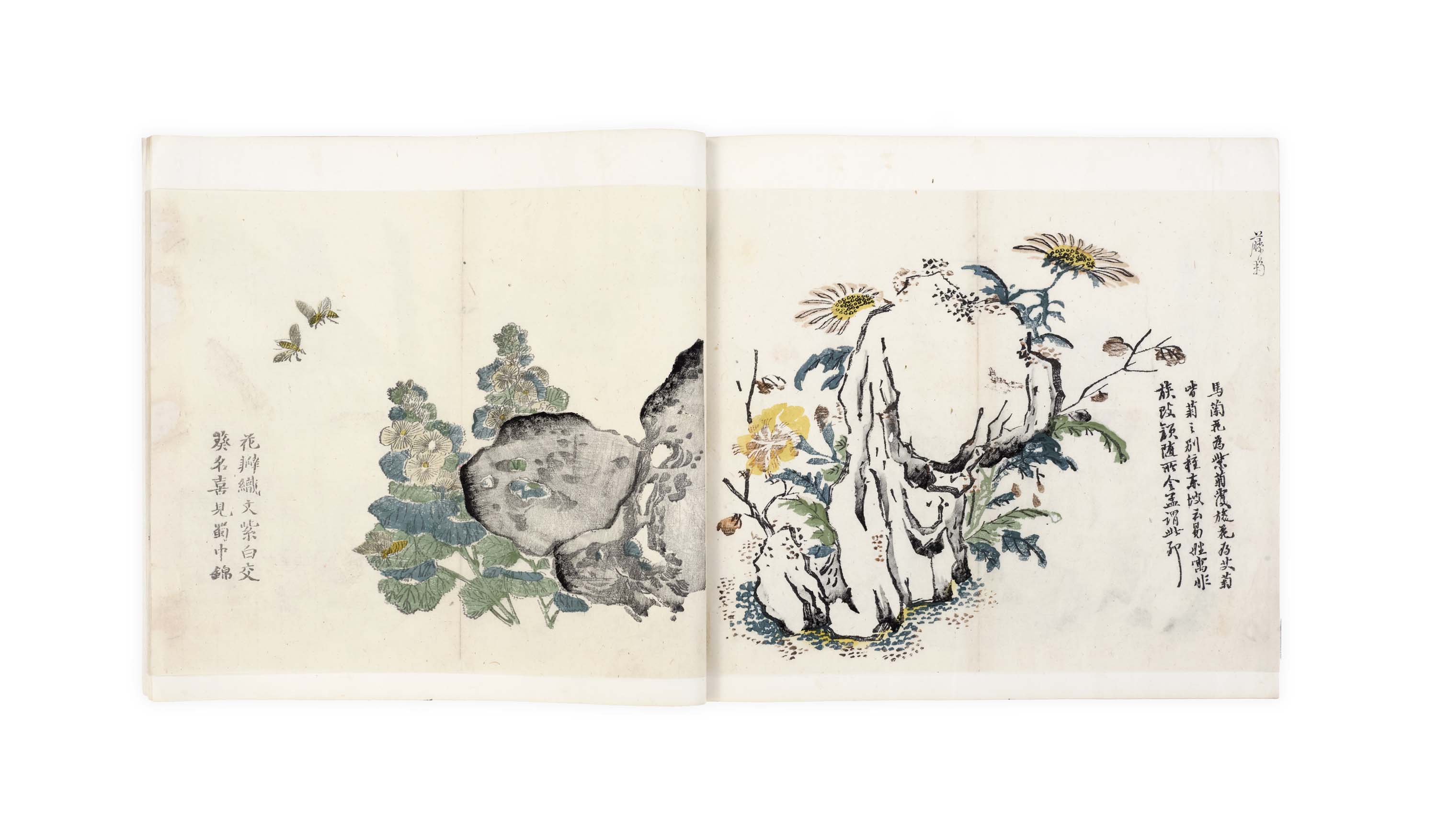
Six vols in 3 cases (tao), 8vo and square 4to; printed in Chinese on double-leaves, 40 monochrome and 80 polychrome double-leaf woodcuts in third series, more than 150 full-page and smaller monochrome woodcuts in fourth series, leaves of third series mounted as single-page spreads; lacking some title-leaves and prefatory matter, some leaves bound out of order, but the images seemingly complete (see below); occasional tears, marginal losses, and worming but with loss to only part of one image and a few characters of text and neatly repaired throughout, light pink staining to a couple of leaves, light foxing to parts; else a good set, the third serie;s in modern blue paper wrappers, the fourth in contemporary beige paper wrappers, housed in 3 modern folding tao; a few brush-and-ink pentrials in Chinese to fourth series.
Added to your basket:
[芥子園畫譜 Jieziyuan huapu; ‘The Mustard Seed Garden Manual of Painting’.]
A handsome set comprising the third and fourth series of ‘without question the best-known opus of Chinese color woodblock printing’ (Splashes of Color, pp. [2]–[3]).
‘It is safe to say that for the last two centuries and a half no book on Chinese painting has enjoyed wider circulation in China and Japan’ (Ch’iu, p. 55). ‘The impetus for this publishing project is attributed to the dramatist Li Yu, whose estate in Nanjing was known as the Jiezi yuan (Mustard Seed Garden). Li persuaded his friend Wang Gai to compile and create designs that instructed the reader how to paint, beginning with simple motifs and components such as rocks, trees, and figures, and advancing to complex landscapes. Many of the images of completed landscapes were based on Li’s private collection, while others drew on prestigious private collections in southern China. Li’s son-in-law, Shen Xinyou, published the first set of books in 1679. Two decades later, in 1701, Wang Gai and his two brothers, Wang Nie and Wang Shi, collated Part II, with two volumes each on orchids, bamboo, plum blossoms, and chrysanthemums. Later the same year, they issued Part III, with designs of plants, insects, and birds’ (Splashes of Color, p. [3]). Shen had planned a fourth series on portraits but did not live to finish it; this was compiled after his death and published in 1818.
This attractive set consists of the third series in a Qianlong-era edition and the fourth possibly in its first edition, both with their woodblock images seemingly complete. The third series, as mentioned, covers plants, flowers, insects, and birds in forty monochrome and eighty polychrome full-leaf illustrations, the latter brilliantly coloured. The fourth series contains more than 150 woodblock illustrations, most of them full-page, depicting immortals, historical worthies, and famous beauties, together with prefaces and afterwords on the history and theory of portraiture.
We have collated the partly unfoliated third series against the Cambridge and Huntington copies, which contain 78 and 72 polychrome woodblocks respectively as against the 80 in ours. All the illustrations in those copies are present in ours, though as expected there are small differences in detail, colour, and wear.
See Chi’iu, ‘The Chieh Tzu Yüan Hua Chuan (Mustard Seed Garden Painting Manual): early Editions in American Collections’, Archives of the Chinese Art Society of America 5 (1951); Splashes of Color: Chinese Woodblock Prints from the You Wei Du Zhai Collection (2016).