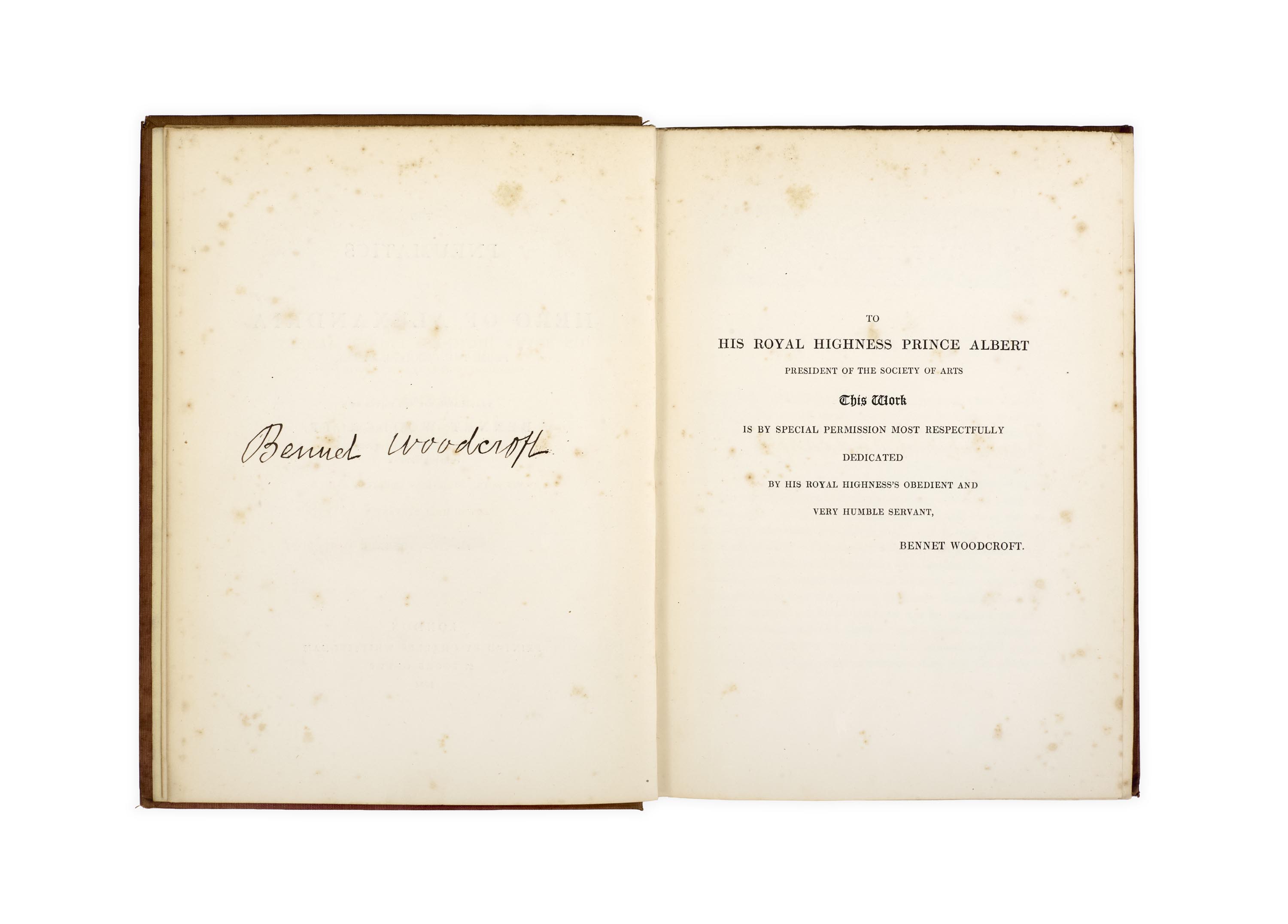
Signed by the Editor
WOODCROFT, Bennet, editor; [J. G. GREENWOOD, translator].
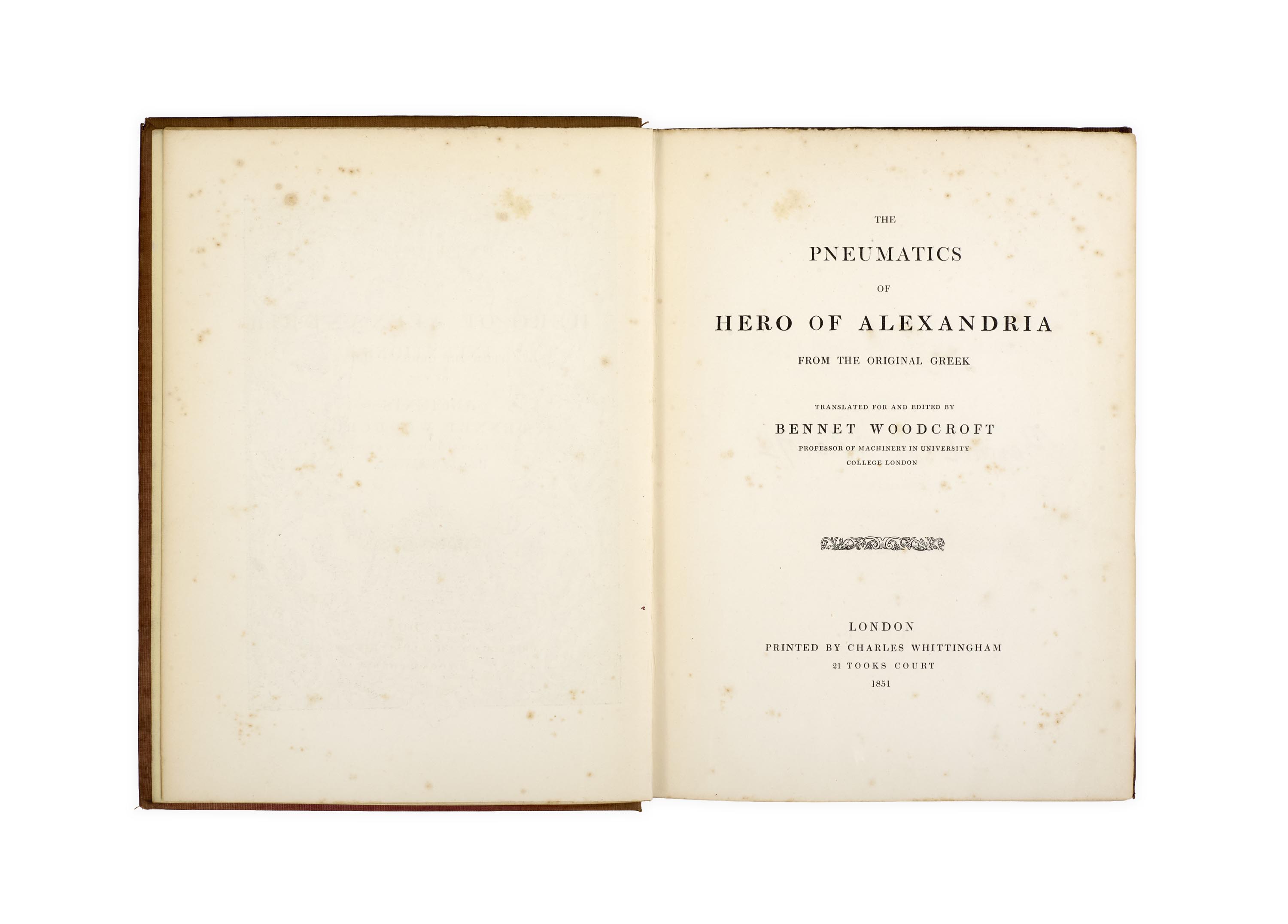
The Pneumatics of Hero of Alexandria. From the original Greek. London, Charles Whittingham, 1851.
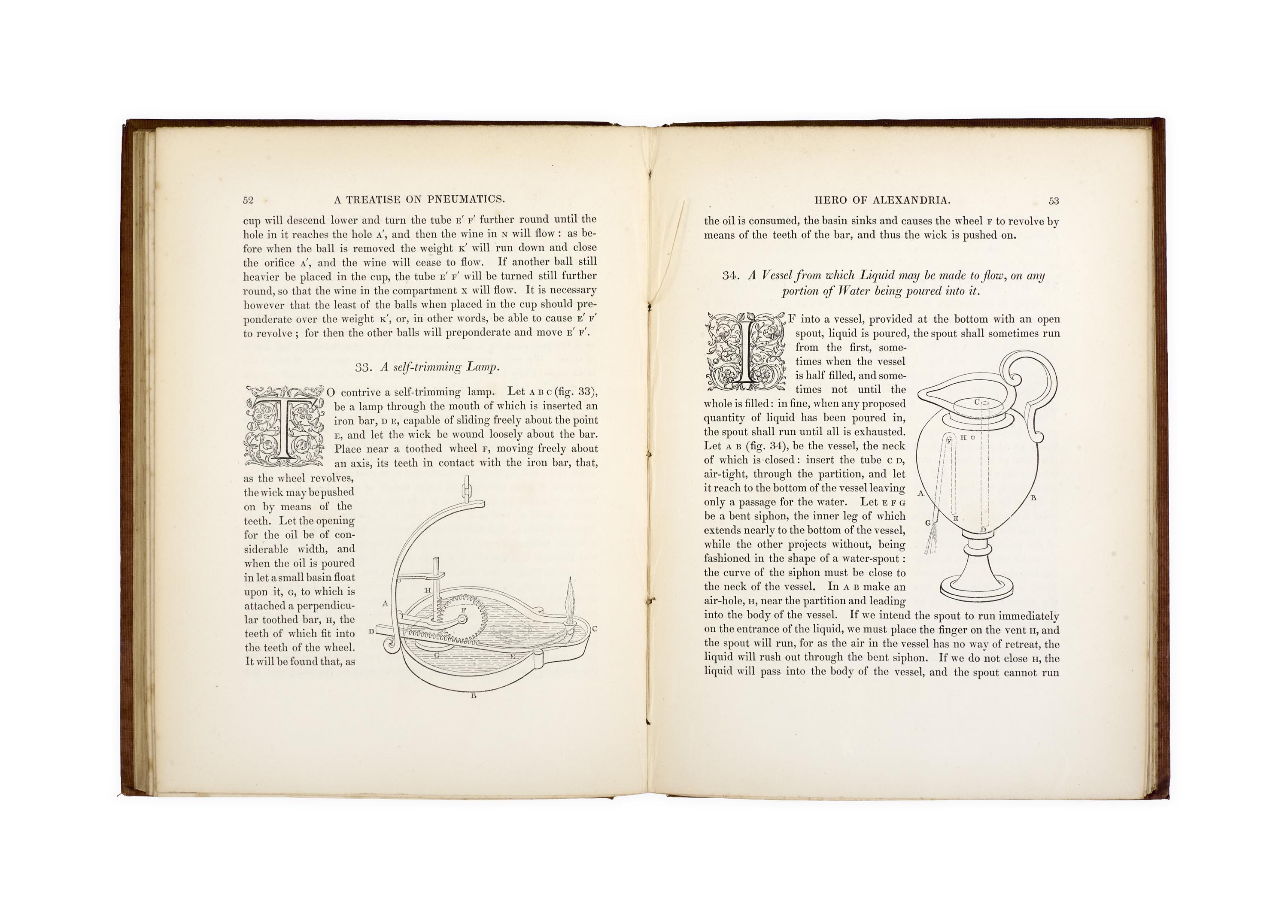
4to, pp. [2], xix, [1, blank], 117, [3]; in-text illustrations and ornamental initials throughout, top-edge uncut; somewhat foxed; else a good copy in the publisher’s red cloth, boards blocked in blind, title gilt to spine; spine sunned and a little worn at head and tail; title verso signed ‘Bennet Woodcroft’, armorial bookplate of one Joseph Jones to front pastedown, modern book-label of Robin de Beaumont to front pastedown with his acquisition notes to front free endpaper.
First edition of this English translation of the Pneumatics of Hero of Alexandria, this copy signed by the editor, the engineer, inventor, and pioneering patent administrator Bennet Woodcroft.
Illustrated throughout, the present edition of this ancient engineering treatise was translated by the classicist John Gouge Greenwood (1821–1894), principal of Owens College and first vice-chancellor of Victoria University (both of which would later form the University of Manchester).
The editor was Bennet Woodcroft (1803–1879), a talented inventor in the fields of textiles and propulsion: among his patents were methods of printing yarn before weaving and for improved tappets for looms as well as a series of increasing pitch screw propellers. In 1852 he was appointed assistant to the Commissioner of Patents, a position that brought him into close contact with Prince Albert – much interested in encouraging manufactures after the Great Exhibition of 1851 – to whom this edition is dedicated. At the Patent Office, Woodcroft saw that the chief obstacle to a modern patent system was the difficulty of seeing earlier specifications and the want of indexes: to overcome these he compiled and published more than 14,000 specifications granted between 1617 and 1852 along with indexes, and assembled a collection of technical books that became the nucleus of the Patent Office library (now in the British Library). His collections of portraits of inventors and of historic models and machines are now in the Science Museum.