Vice and Virtue
‘ABRAHAM a Sancta Clara’ [pseud. Johann Ulrich MEGERLE].
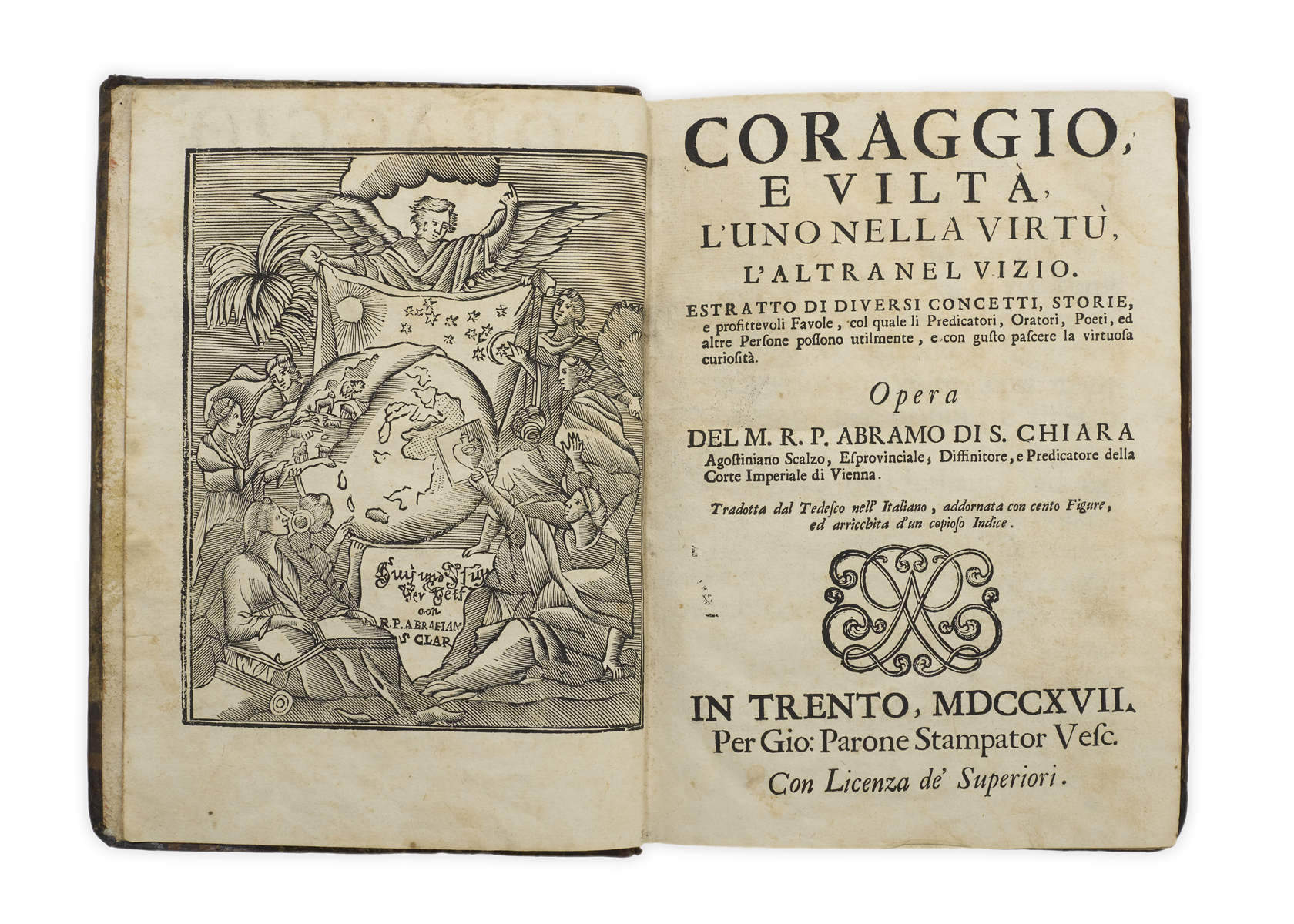
Coraggio e viltà, l’uno nella virtù, l’altra nel vizio. Estratto di diversi concetti, storie, e profittevoli favole … Tradotta dal Tedesco nell’Italiano, addornata con cento Figure … Trento, Giovanni Parone, 1717.
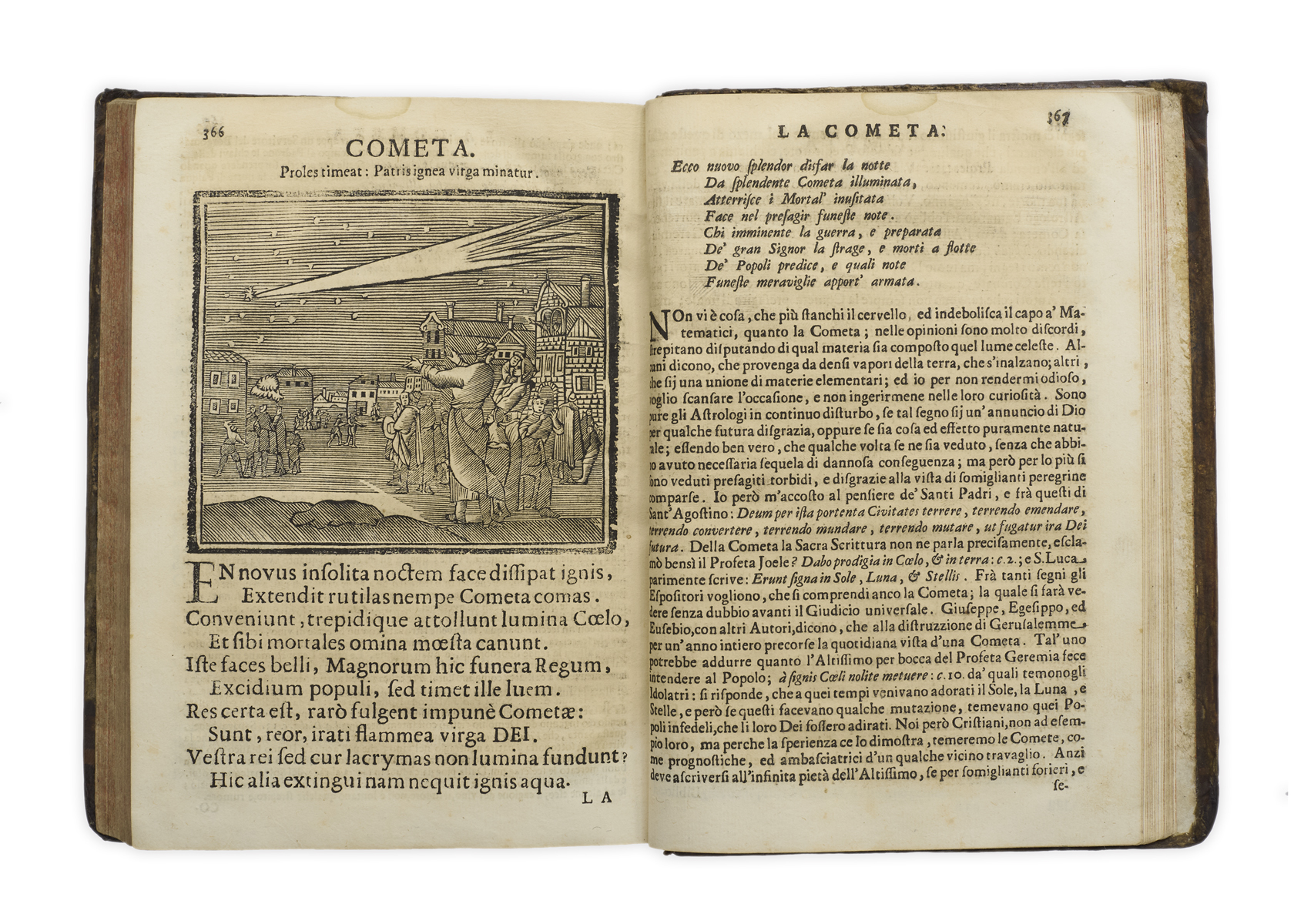
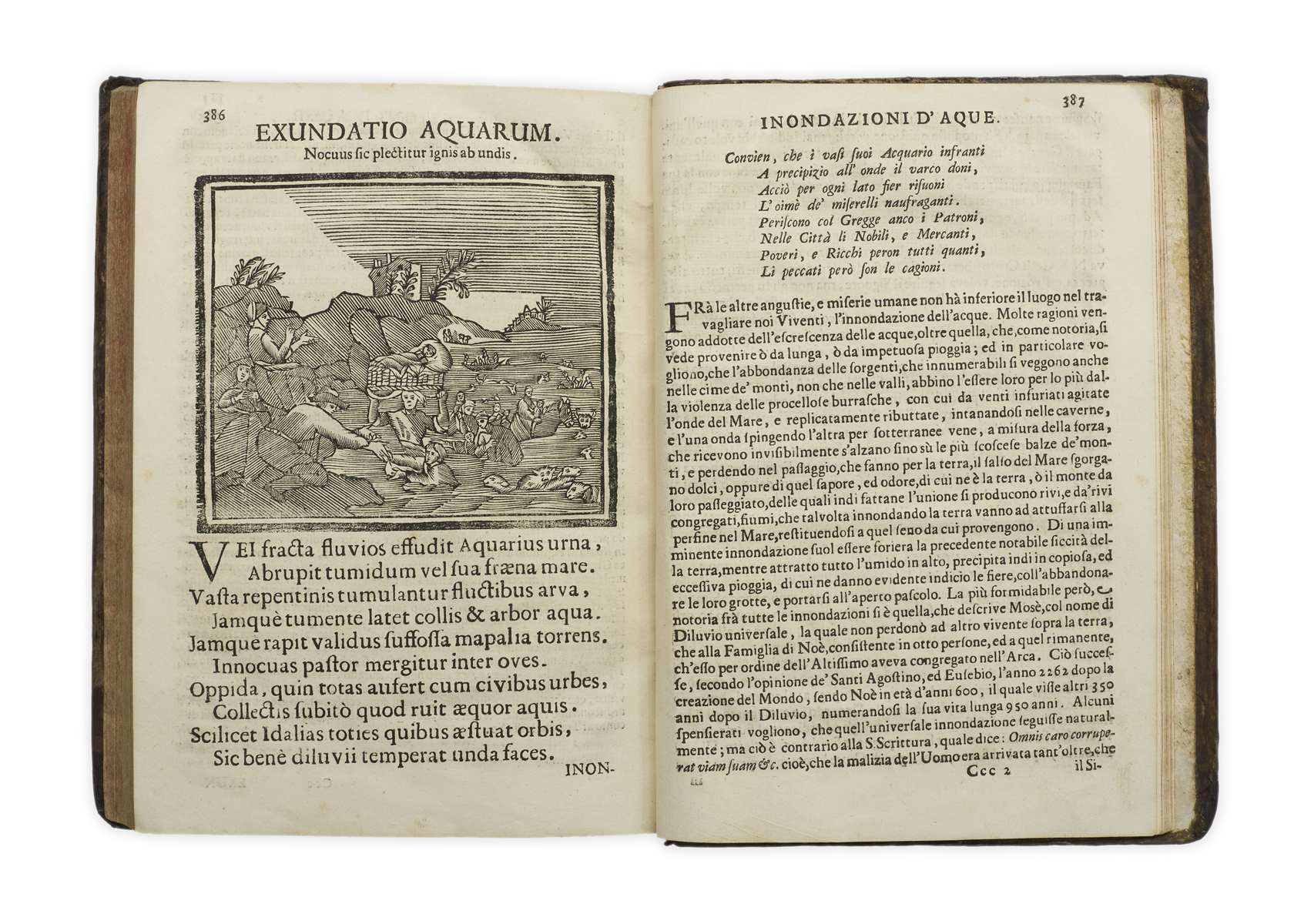
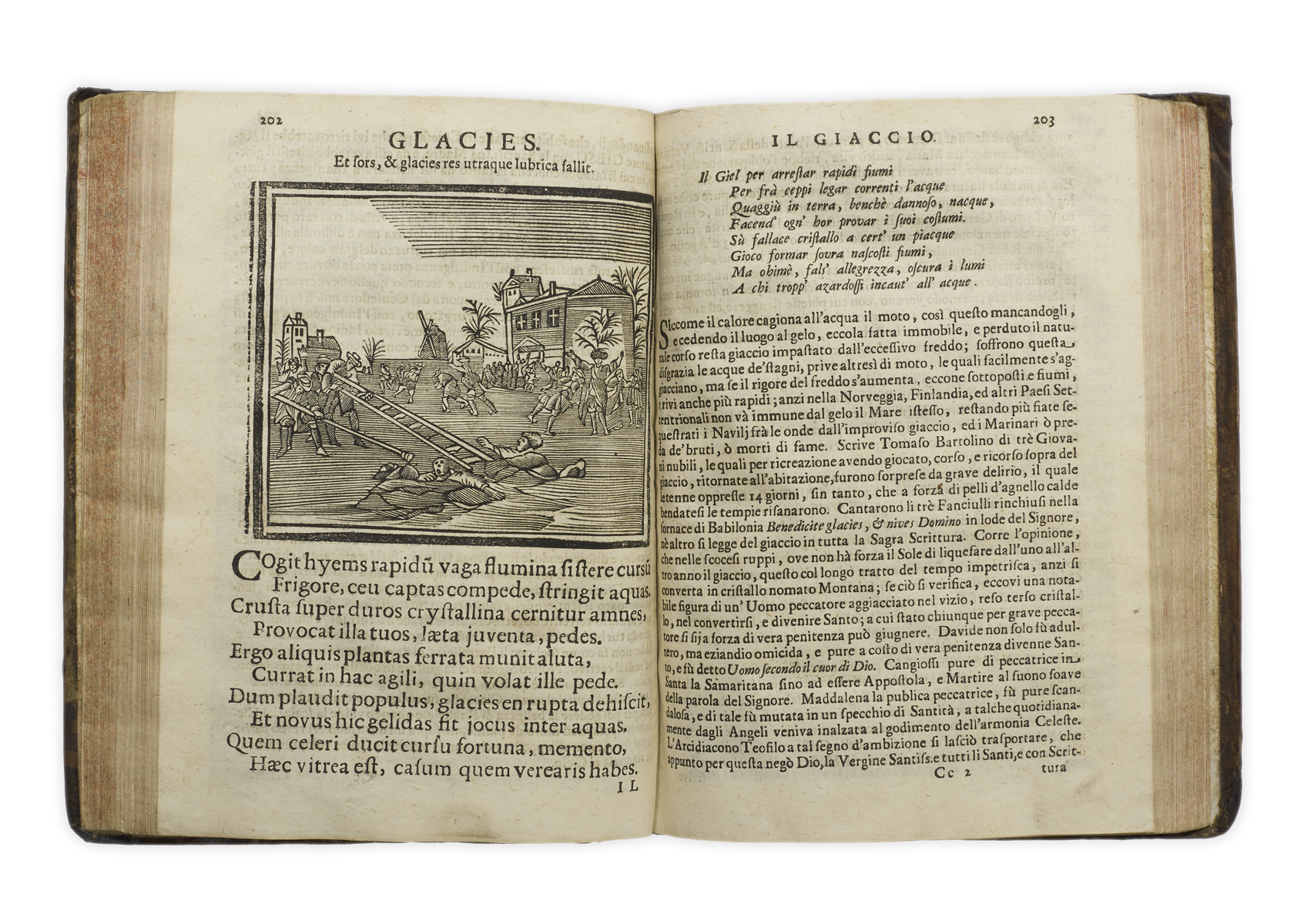
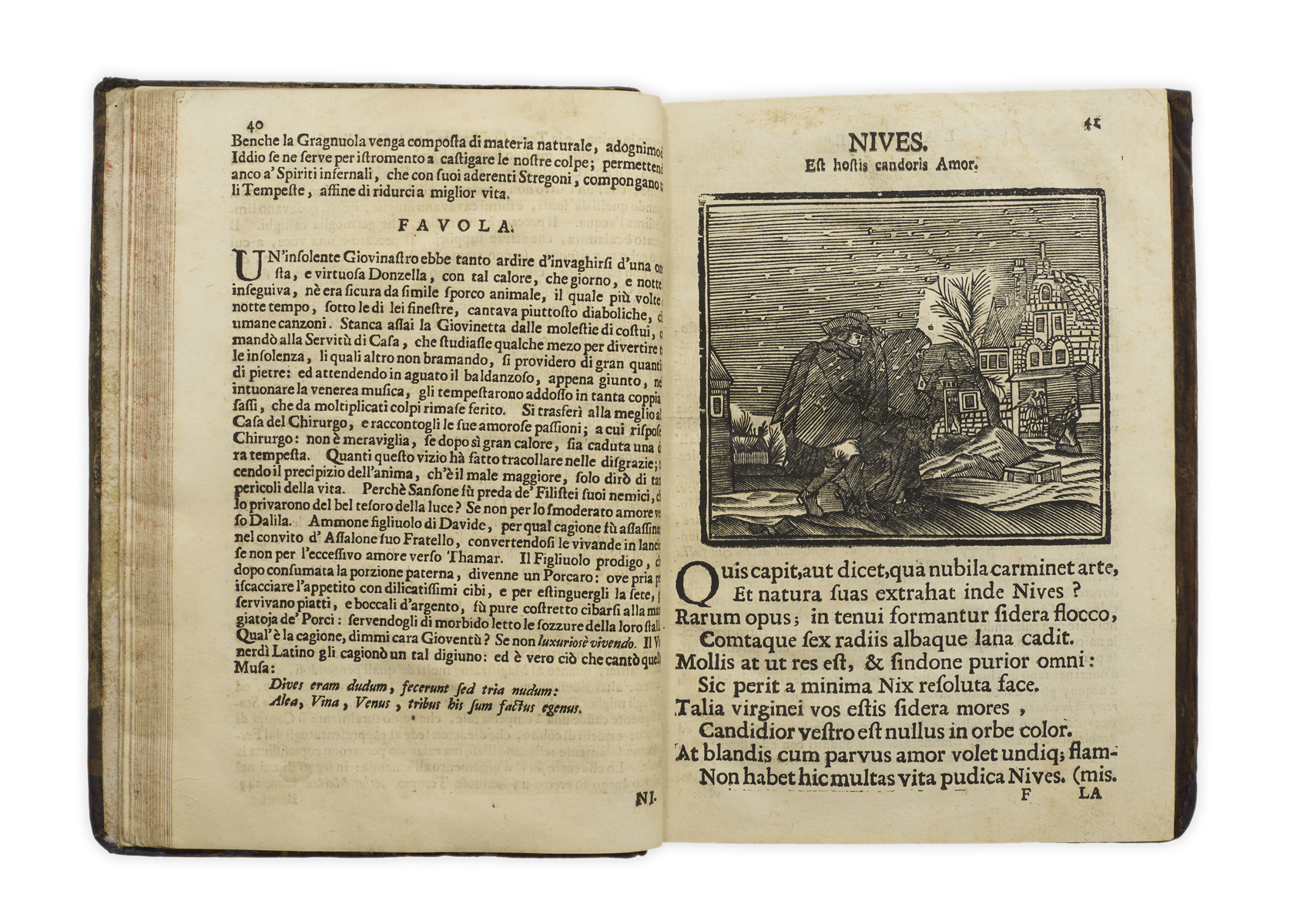
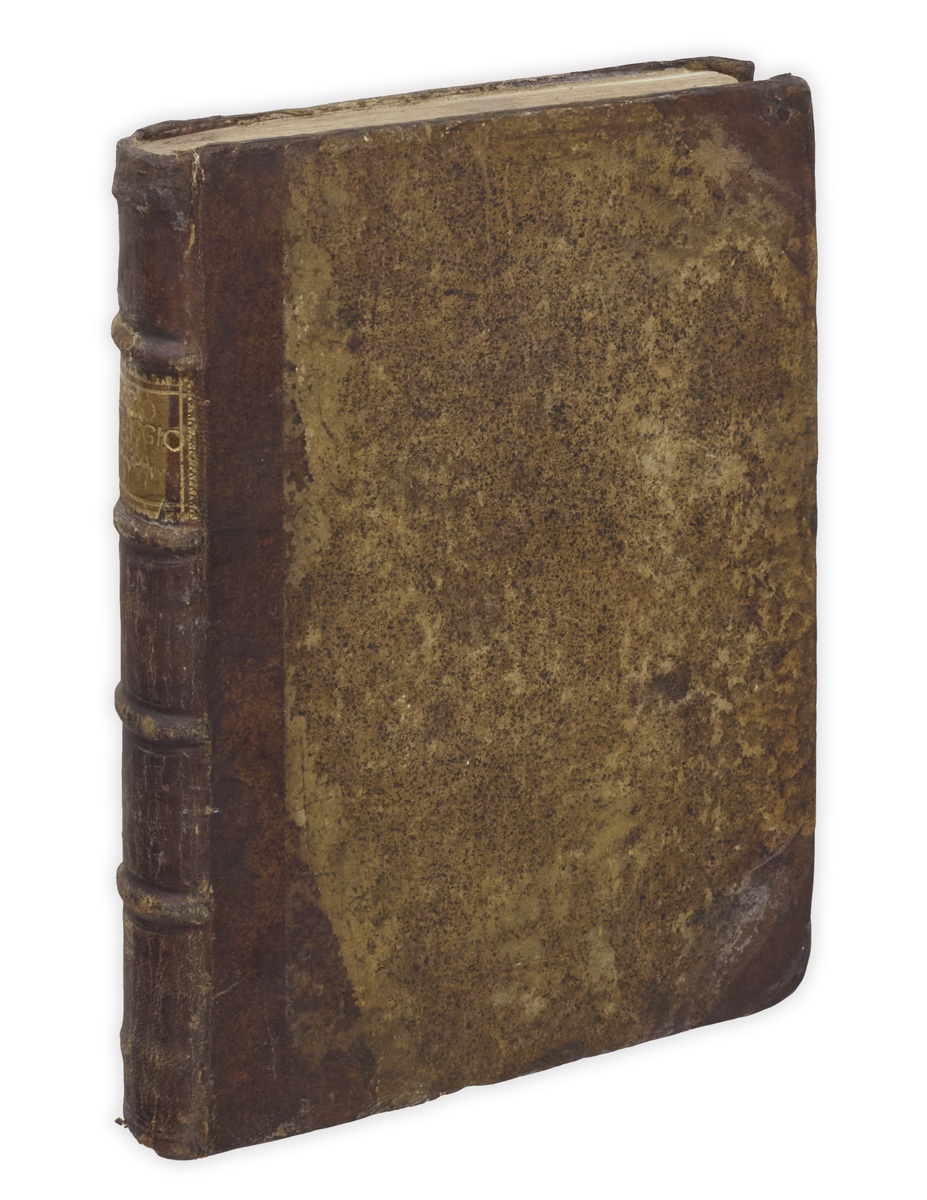
4to, pp. [xii], 400; with full-page woodcut frontispiece (see below) and a further 100 half-page woodcut illustrations printed in-text, printer’s woodcut monogram to title, woodcut initials and tailpieces; sporadic light foxing and toning, but a very good copy; bound in contemporary half sheep with speckled paper sides, spine in compartments with gilt lettering-piece, edges speckled red; a little rubbed with minor repairs to headcap and corners.
Added to your basket:
Coraggio e viltà, l’uno nella virtù, l’altra nel vizio. Estratto di diversi concetti, storie, e profittevoli favole … Tradotta dal Tedesco nell’Italiano, addornata con cento Figure …
Scarce first and only Italian edition of Abraham a Sancta Clara’s emblematic moral treatise Huy! und Pfuy! der Welt, printed in Trento with one hundred striking – albeit somewhat provincial – woodcuts based on the engravings in the first German edition (1707).
Abraham a Sancta Clara (1644–1709), of the order of the Discalced Augustinians, was imperial court preacher of Vienna from 1669. The Latin explanations accompanying each woodcut illustration are the work of Viennese Jesuit Paul Hansiz, each corresponding to natural and astronomical phenomena (the sun, snow, comets, etc.), geographical features (hills, valleys, caves), animals (nightingales, wolves, camels, bees), natural disasters (here illustrating people rescued from earthquakes, icy lakes, and flooding, sheltering from tornadoes, or dying of plague or famine), and elements of human life (old age, wealth, illness). Each entry is followed by a cryptic fable (here translated from German to Italian) only tenuously connected to the phenomenon it claims to represent; the text cloaks moral or spiritual guidance in humour, positioning ‘the function of amusement at the very core of the work’ (Eybl, p. 335, trans.). The emblematic function of Abraham a Sancta Clara’s work is thus ingrained in the fables – the only portion of each section for which he is responsible – rather than the images themselves.
The striking frontispiece appears to be a woodcut imitation of the emblematic engraved title of the first edition of Huy! und Pfuy! der Welt (1707), and the one hundred woodcut illustrations in the text are likewise renderings of the engravings of the first edition, which are themselves copies of those in Christoph Weigel’s Ethica naturalis, seu, documenta moralia (Nuremberg, c. 1700), by Jan and Caspar Luyken.
Published in Trento, Abraham a Sancta Clara’s text is preceded by a note to the reader in which the translator apologises for any faults in the Italian, having been born in an area ‘where one speaks both languages mixed together’ (trans.), a nod to the zone of cultural liminality between present-day Italy and its Germanic neighbours. This is seemingly the first appearance of any of Abraham a Sancta Clara’s works in Italian; the only other known translation, printed by Parone two years later (and presumably the work of the same apologetic translator), is the Miscuglio salutare (Heilsames Gemisch-Gemasch).
We find four copies in the US (Emory, Georgetown, Texas, Michigan), and none in the UK.
Bertsche, Die Werke Abrahams a Sancta Clara (1943–1945) 48b; this translation not in Praz (see pp. 241–2) or Landwehr (see German 11). See Eybl, Abraham a Sancta Clara: Vom Prediger zum Schriftsteller (1992).