Sermon Series
BARTHOLOMEW OF PISA.
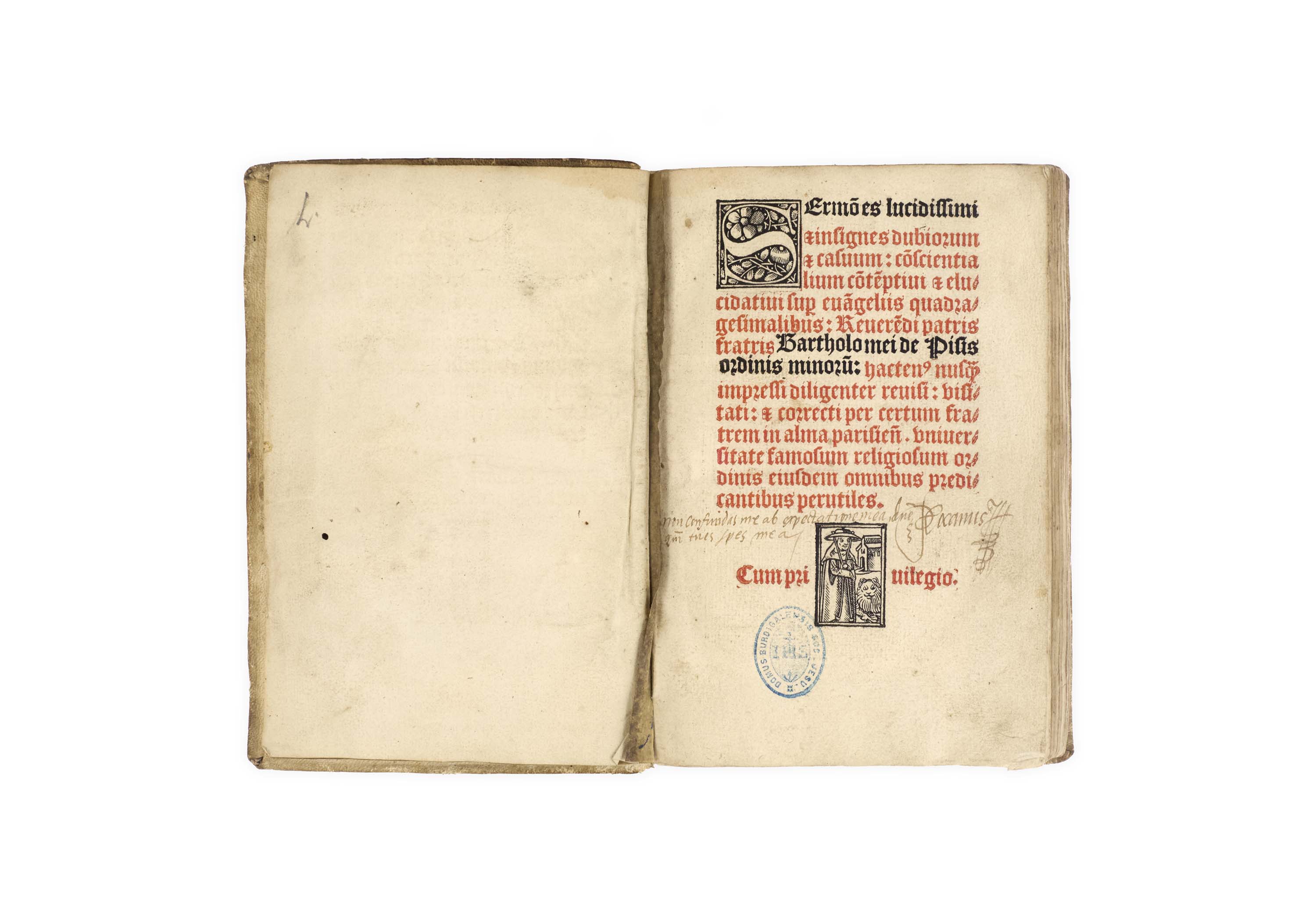
Sermo[n]es lucidissimi et insignes dubiorum et casuum, co[n]scientialium co[n]te[m]ptivi et elucidativi sup[er] eva[n]geliis quadragesimalibus revere[n]di patris fratris Bartholomei de Pisis ordinis minoru[m] hacten[us] nusq[uam] impressi diligenter revisi, visitati, et correcti per certum fratrem in alma parisien[se] universitate famosum religiosum ordinis eiusdem omnibus predicantibus perutiles. Lyon, Romain Morin, 3 February 1519.
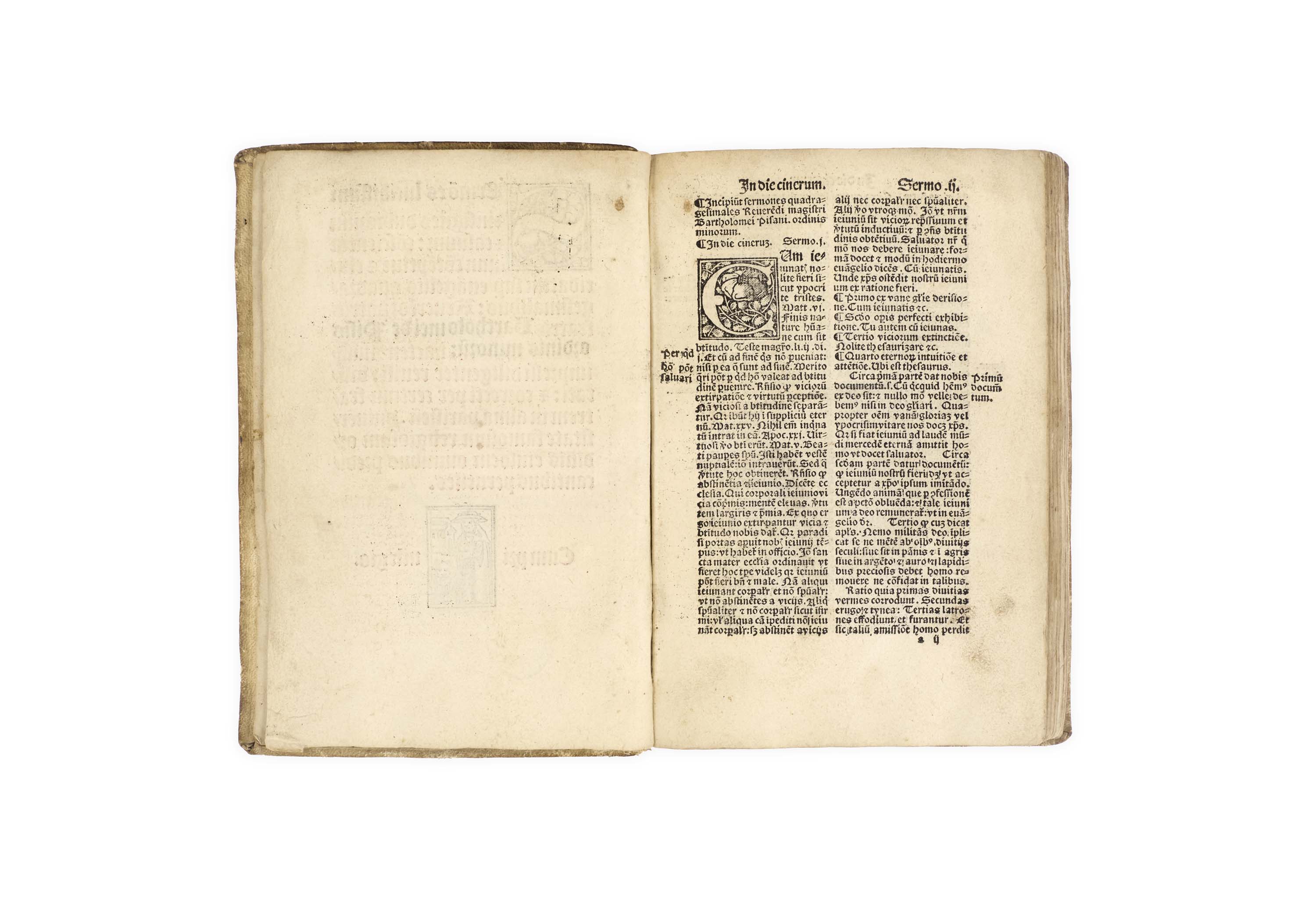
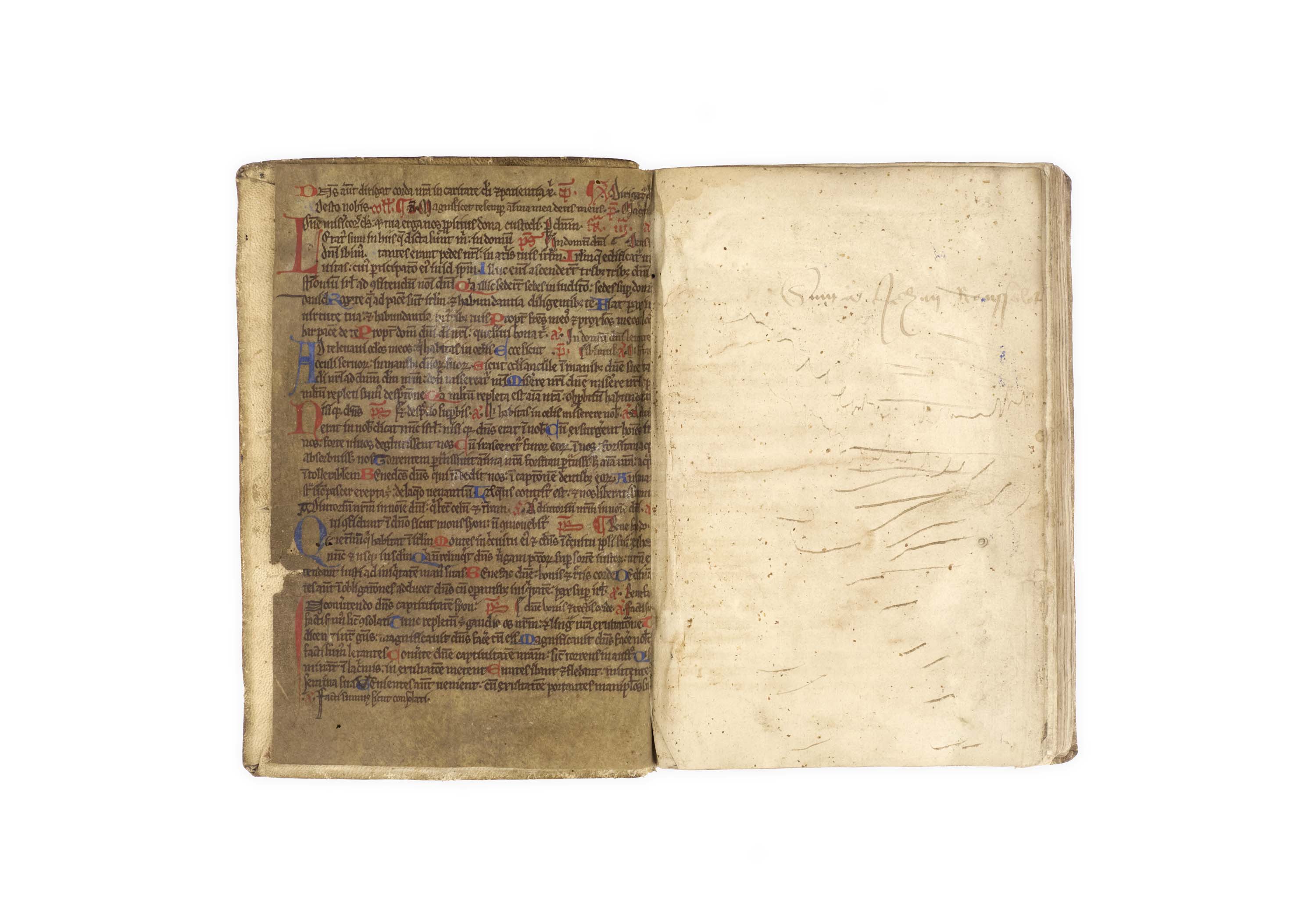
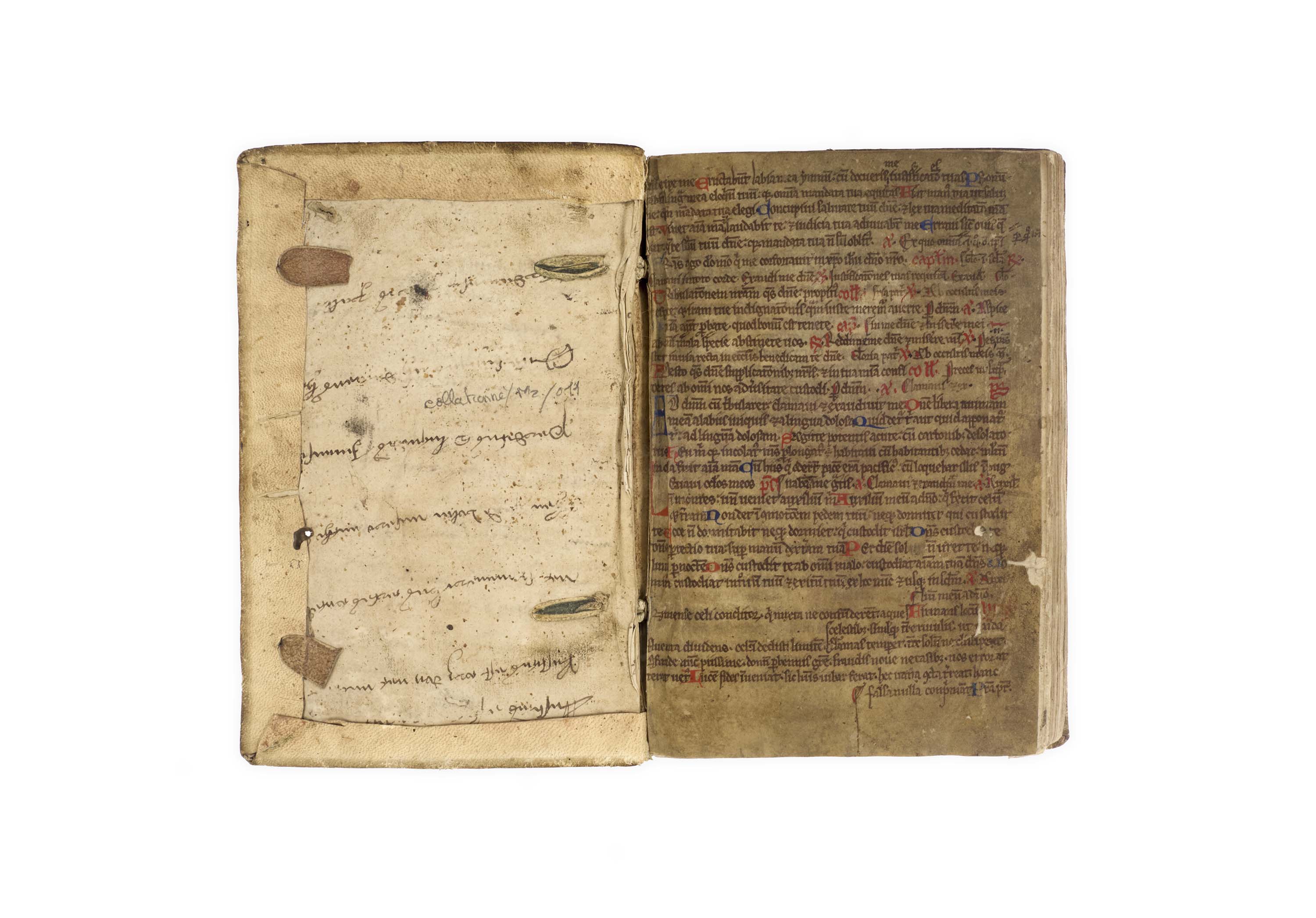
8vo, ff. cxv, [3]; title in red and black with woodcut initial and small woodcut of St Jerome with lion, text in two columns, woodcut initials; occasional light dampstaining, a few small marks; a good copy in sixteenth-century vellum over paste-boards, nineteenth-century label to upper cover with title and imprint in ink, flyleaves comprising leaves from a thirteenth-century Latin Breviary (see below); a little worming to spine, somewhat worn and rubbed; early ownership inscription to front flyleaf ‘Sum a Jehan Rousselot’, another to title (‘Plocanus’?), oval blue ink stamp ‘Domus Burdigalensis Soc. Jesu’ (the Jesuits of Bordeaux) at foot of title, inscription to last leaf ‘Fr. Petrus Bellever.’; a few early corrections to the table of contents at the end.
Added to your basket:
Sermo[n]es lucidissimi et insignes dubiorum et casuum, co[n]scientialium co[n]te[m]ptivi et elucidativi sup[er] eva[n]geliis quadragesimalibus revere[n]di patris fratris Bartholomei de Pisis ordinis minoru[m] hacten[us] nusq[uam] impressi diligenter revisi, visitati, et correcti per certum fratrem in alma parisien[se] universitate famosum religiosum ordinis eiusdem omnibus predicantibus perutiles.
Rare edition of forty-five sermons for Lent and Easter by the Franciscan friar Bartholomew of Pisa (d. c. 1401), printed in Lyon by Romain Morin.
From a Pisan noble family, Bartholomew lectured at Bologna, Padua, Pisa, Siena, and Florence, also preaching for many years with great success in different Italian cities. He is best known for his Liber Conformitatum, drawing parallels between the lives of Christ and St Francis.
These sermons, running from Ash Wednesday to Easter, range widely, encompassing, inter alia, women’s dress, the devil and temptation, buying and selling, dismissing servants, human afflictions, and telling lies. The useful table at the end points the reader to all manner of questions discussed in the sermons e.g. is God more just than merciful?; should parents indulge their children?; can the devil reveal the future?; should the truth always be told?; was Christ’s sacrifice sufficient medicine for mortal sin?; is the active life better than the contemplative one?; do prayers help the dead?; is it a greater miracle to resuscitate the dead bodily or spiritually?; should we always be thinking about death?; how can the small Eucharistic host hold Christ’s larger body?; would it have been better for Christ to prove his resurrection through reason rather than the senses?
The endpapers here comprise two almost complete leaves from an attractive small Latin Breviary written in France in the first half of the thirteenth century, with initials in alternating blue and red. The front flyleaf, for example, bears the text of Psalms 121–125 with antiphons.
French Vernacular Books 56043; Gültlingen III, p. 232: 1; USTC 155433. No copies traced in the US; only one copy found in the UK, at the BL.