
Statutes of the Carthusians
[CARTHUSIANS. GUIGO DE CASTRO, compiler.]
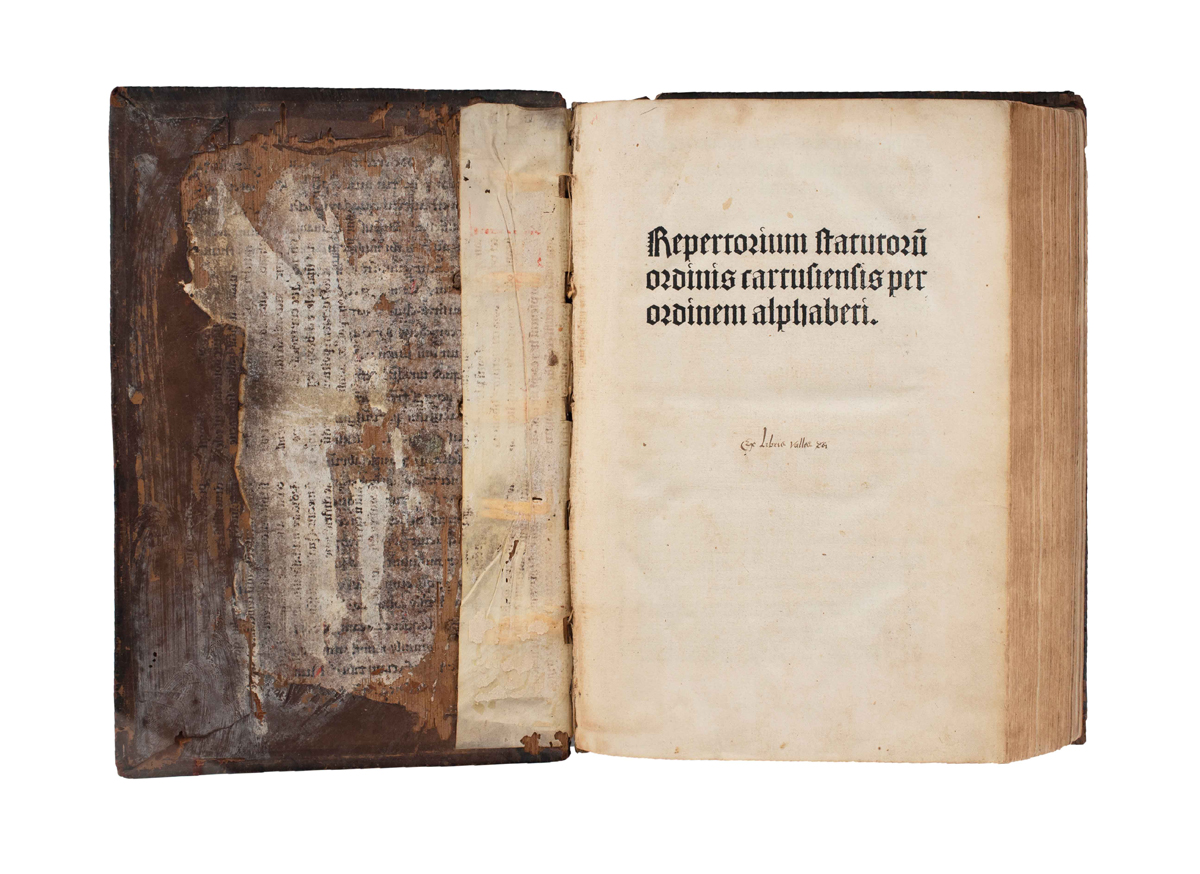
Repertorium statutoru[m] ordinis cartusiensis per ordinem alphabeti. Basel, Johann Amerbach, 1510.
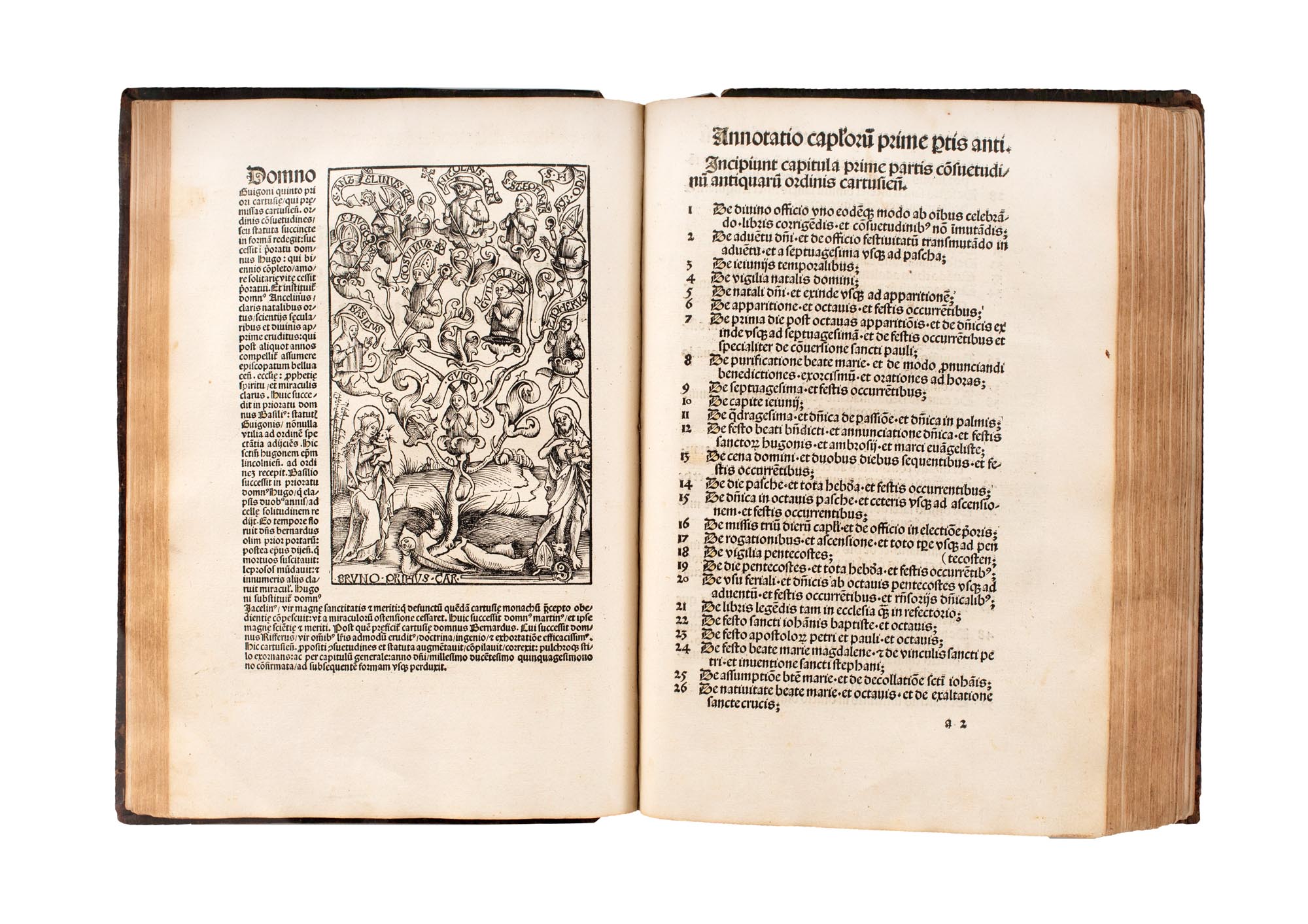
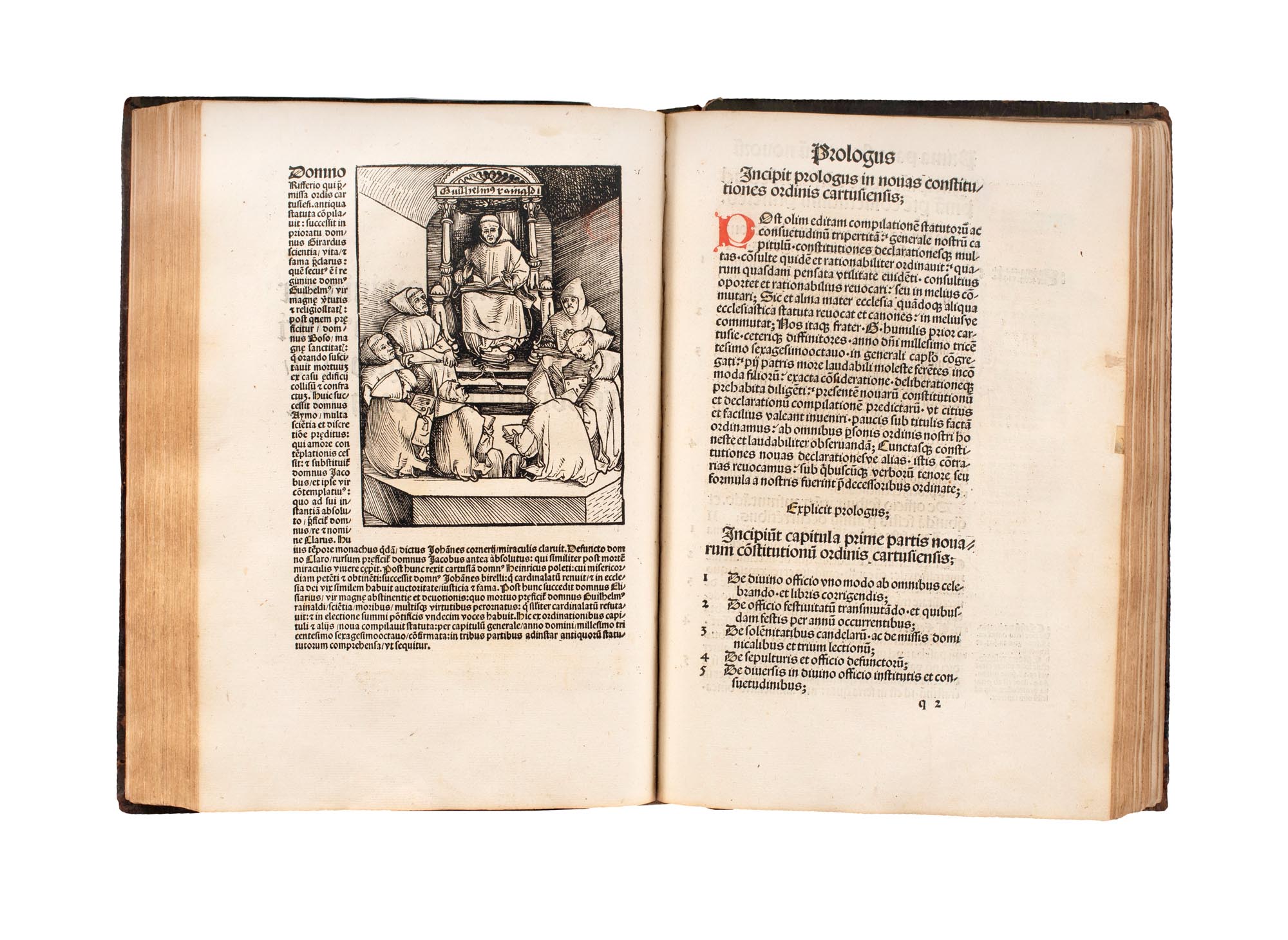
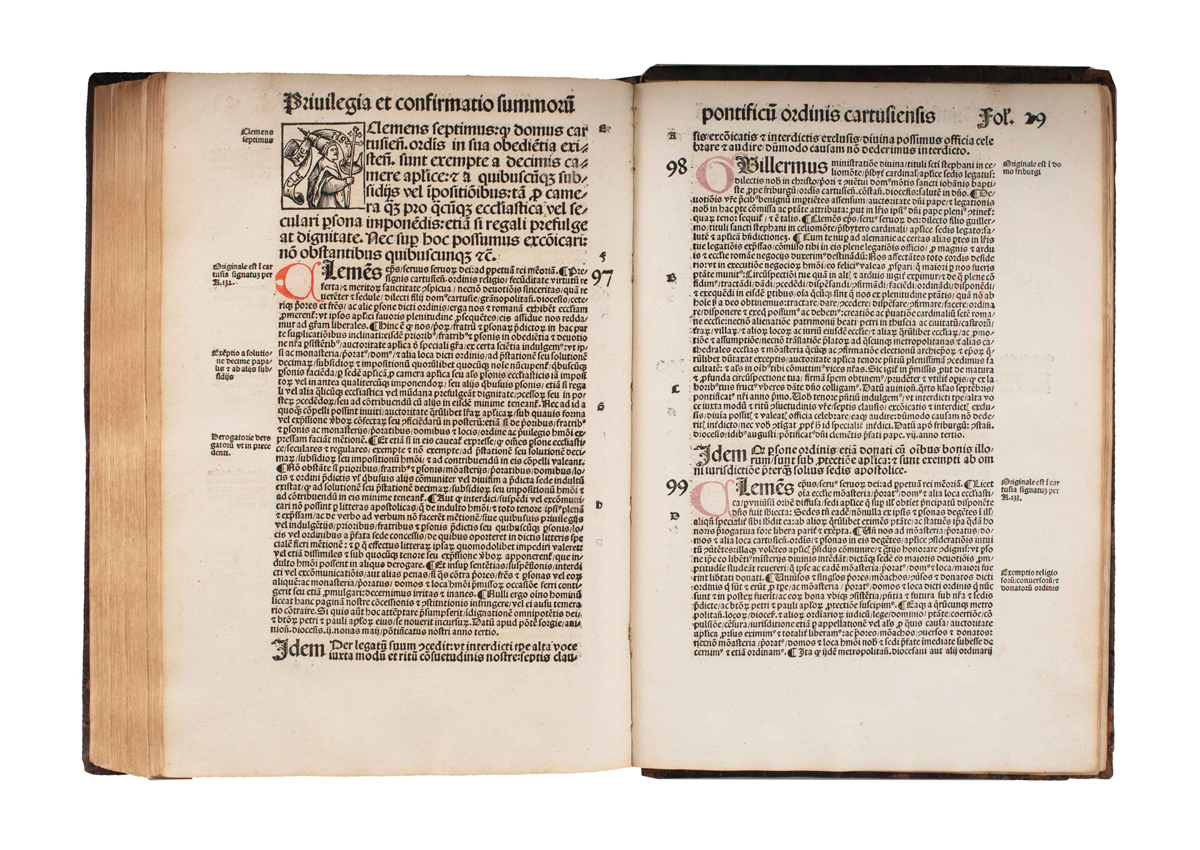
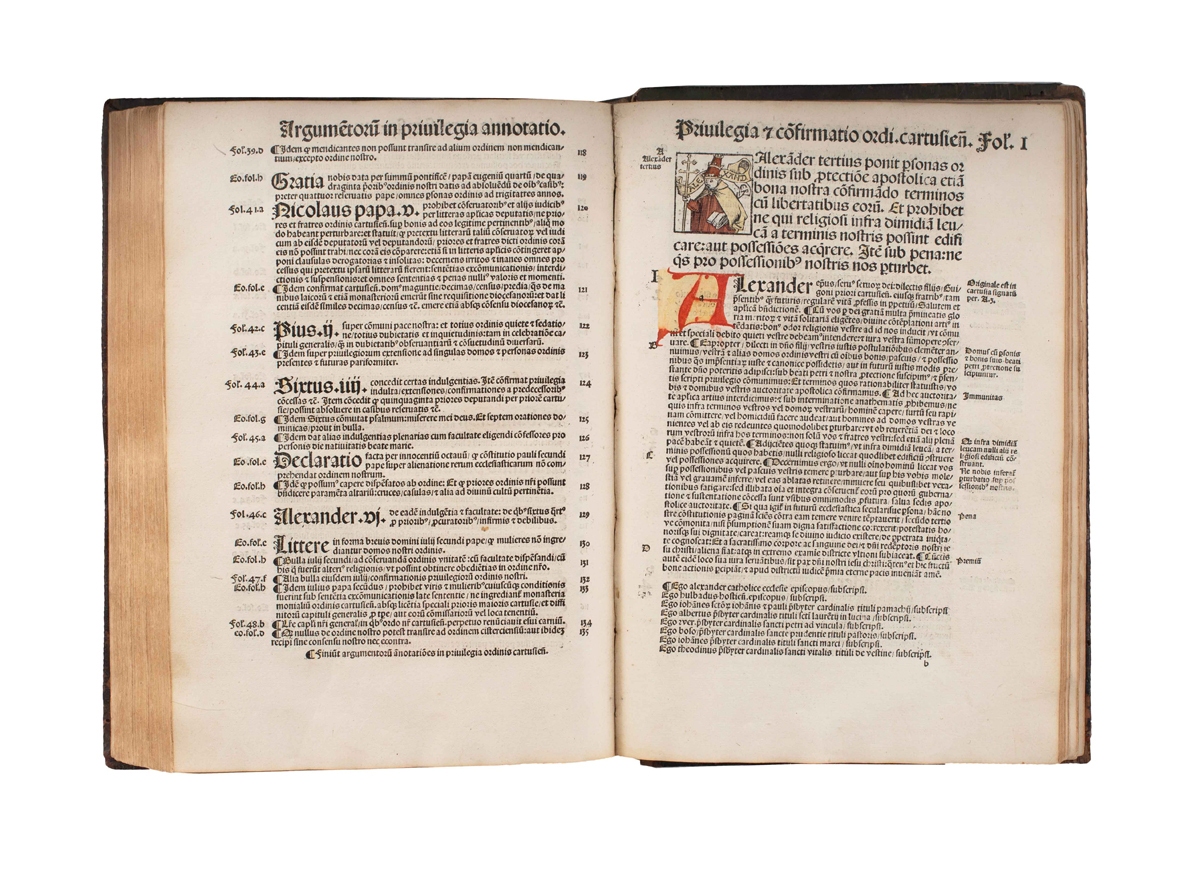
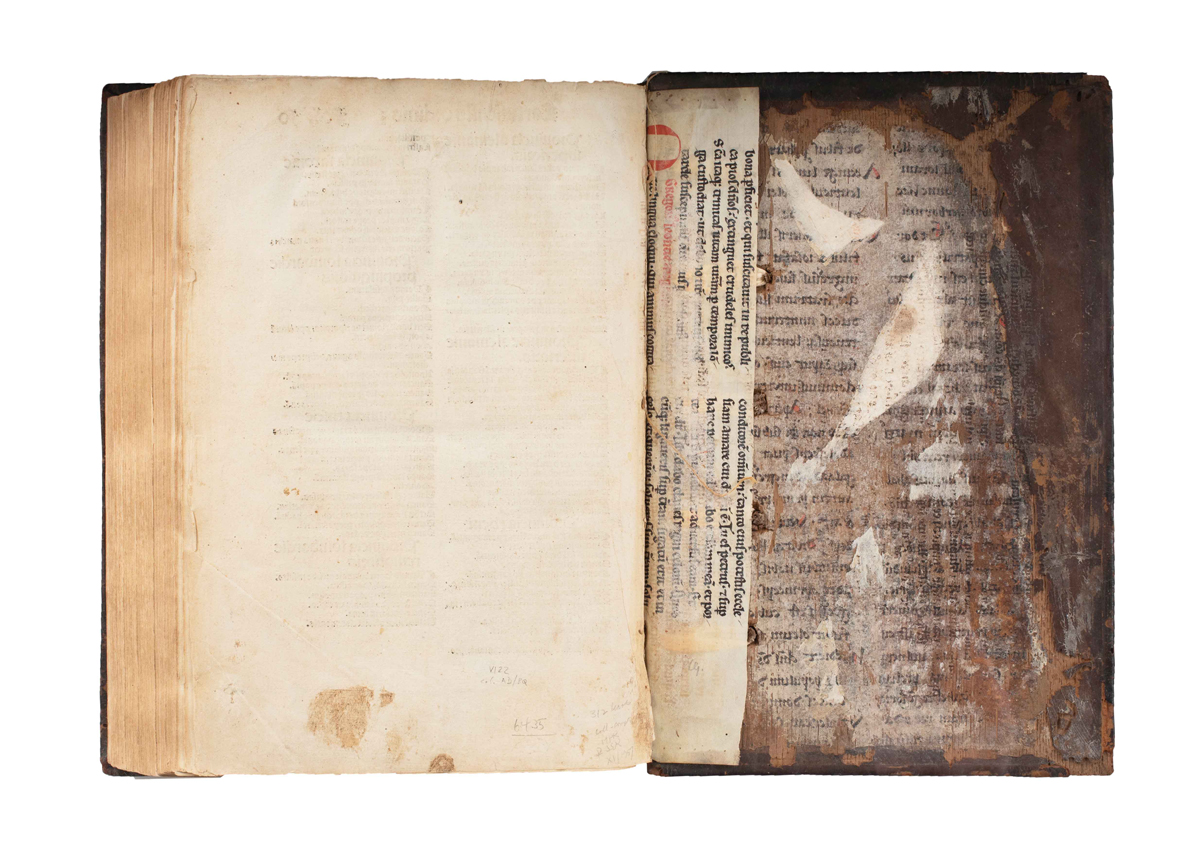
Six parts in one vol., folio, ff. [66], [26], [132], [28], [10], 50; gothic letter (except for one leaf printed in roman letter), rubricated throughout, several large initials supplied in yellow and red or yellow and purple (or all three in combination), with 20 fine woodcuts by Urs Graf, some full-page, and another woodcut by the Master DS, some of the smaller woodcuts partly coloured in a contemporary hand; contemporary blind-stamped calf over wooden boards, eighteenth-century gilt tooling and lettering-piece on spine, spine lining reusing a fragment from a medieval manuscript (apparently Gregory the Great, Registrum epistolarum); rubbed and worn but sound, traces of medieval manuscript pastedowns sometime removed, section of lowermost spine compartment missing, head of spine slightly chipped.
Added to your basket:
Repertorium statutoru[m] ordinis cartusiensis per ordinem alphabeti.
First printed edition of the Statutes of the Carthusian Order, printed at the expense of the editor, Gregor Reisch (c. 1467–1525), author of the Margarita philosophica, for distribution to members of the Order only.
The original compiler, Guigo de Castro (Gigues du Chastell), became a monk of the Grande Chartreuse in 1107 (St Bruno had died in 1101), and three years later was elected prior. ‘To Guigo the Carthusian Order in great measure owes its fame, if not its very existence. When he became prior, only two charterhouses existed, the Grande Chartreuse and the Calabrian house where St. Bruno had died; nine more were founded during his twenty-seven years’ priorship. These new foundations made it necessary to reduce to writing the traditional customs of the mother-house. Guigo’s Statutes, composed in 1127 or 1128, have always remained the basis of all Carthusian legislation’ (Catholic Encyclopaedia).
There are four large cuts representing the history of the Carthusian Order and seventeen portraits of popes, all by Urs Graf (see His, Urs Graf 203–223). Koegler (Kunstchronik, N.S. XVIII, p. 290) attributes the representation of ‘Guillhelmus Rainaldi’ to the Master DS. According to Isaac (no. 14140 in his supplement to Proctor) this work was printed by Amerbach in association with Johannes Froben and Johann Petri. In some copies the six parts are bound in a different order.
Provenance: ‘Ex libris Vallae Dei’ in a contemporary hand on first leaf, perhaps the charterhouse of Valdieu Réno in Normandy; pencilled H.P. Kraus collation note dated November 1957 on verso of final leaf.
VD 16 G 4071; Adams G 1559; Machiels G584.