The Perfect Courtier Perfected
CASTIGLIONE, Baldassare.
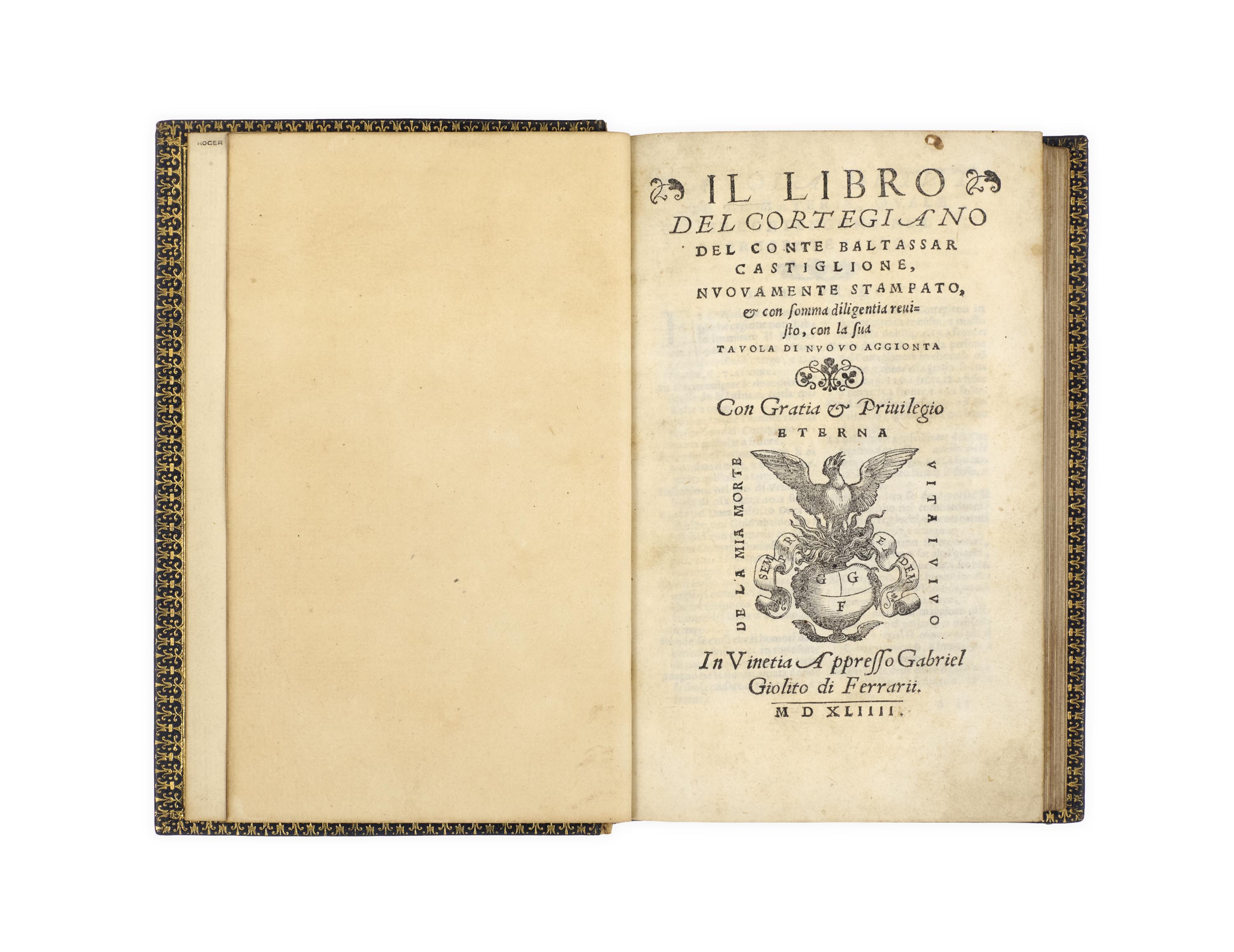
Il libro del cortegiano … nuovamente stampato, & con somma diligentia revisto, con la sua tavola di nuovo aggionta. Venice, Gabriele Giolito de’ Ferrari, 1544.
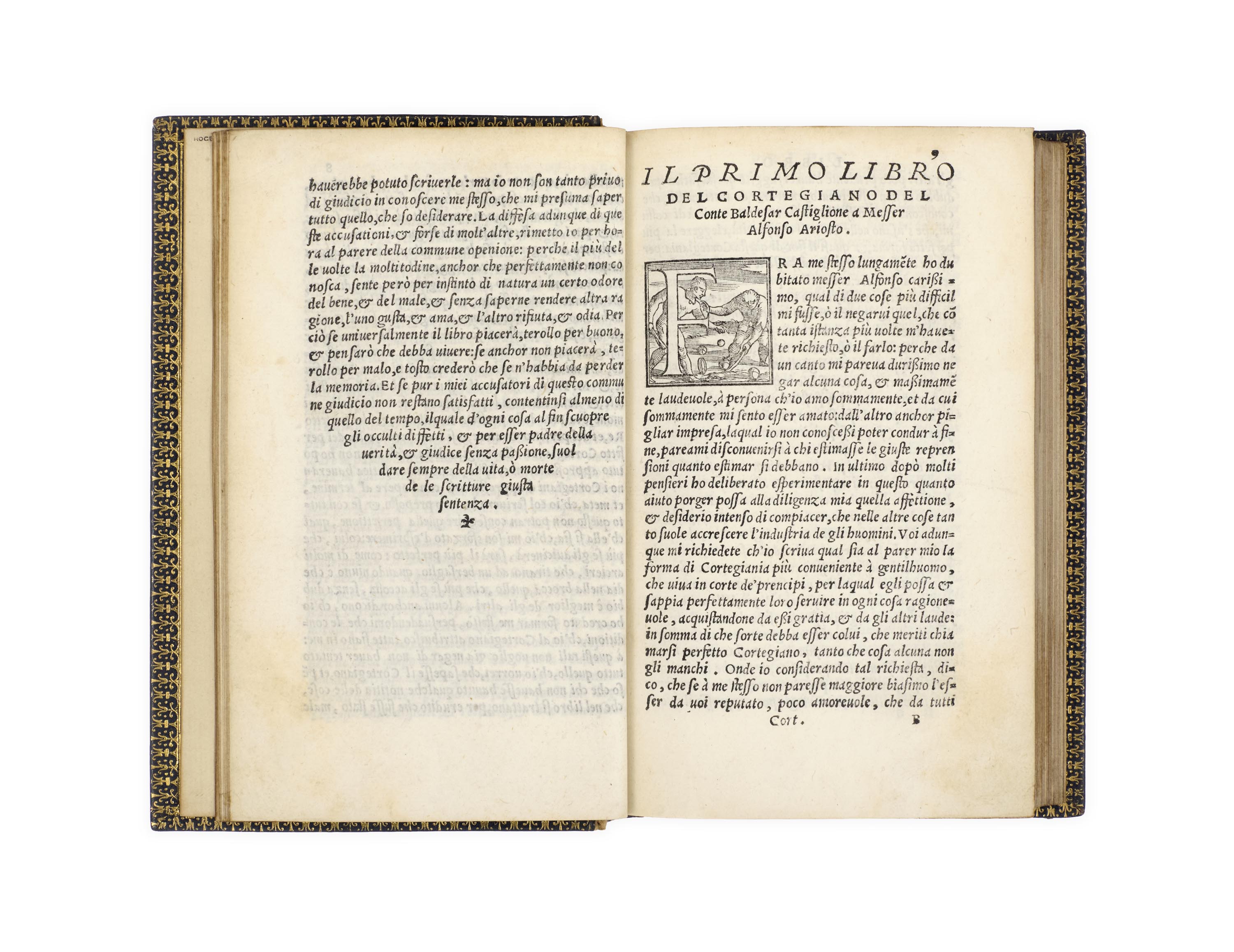
8vo, ff. 191, [1, device only]; woodcut printer’s device to title, woodcut initials, different woodcut printer’s device to final verso; title slightly dusty with very small hole at head, final leaf remargined (not affecting device), a very good copy; bound in crushed navy morocco by Roger de Coverly, with his stamp to verso of front endpaper, spine lettered directly in gilt, turn-ins roll-tooled in gilt, marbled endpapers, edges gilt; extremities slightly rubbed; bookplate of Samuel Ashton Thompson Yates dated 1894 to front pastedown.
Added to your basket:
Il libro del cortegiano … nuovamente stampato, & con somma diligentia revisto, con la sua tavola di nuovo aggionta.
Second Giolito edition of the classic Renaissance manual of courtly behaviour.
First printed in 1528, Castiglione’s conduct manual set at the court of Urbino became a pan-European bestseller. The Aldine press issued it six times between 1528 and 1547; Gabriele Giolito’s first edition was in 1541, after the expiration of the ten-year Venetian privilege. The title claims that the text has been revised, though it repeats that of the 1541 Aldine, which had Tuscanised some of the orthography, in line with contemporary editorial practice. The Giolito firm printed the Book of the Courtier around ten times, adding various paratexts and claims of revision each time. The text, however, attracted the interest of the Inquisition and later sixteenth-century editions were required to be expurgated before printing.
Provenance:
The Rev. Samuel Ashton Thompson Yates (1842–1903) owned a substantial library of early printed books, and in particular emblem books. Many of his books were rebound by the notable London binder Roger de Coverly (1831–1914).
EDIT16 CNCE 10072; USTC 819504; Bongi I, p. 75. See Richardson, Print culture in Renaissance Italy (1996), pp. 124–125.