Feeding the Poor, and Keeping Them Busy
[CHARITY.]
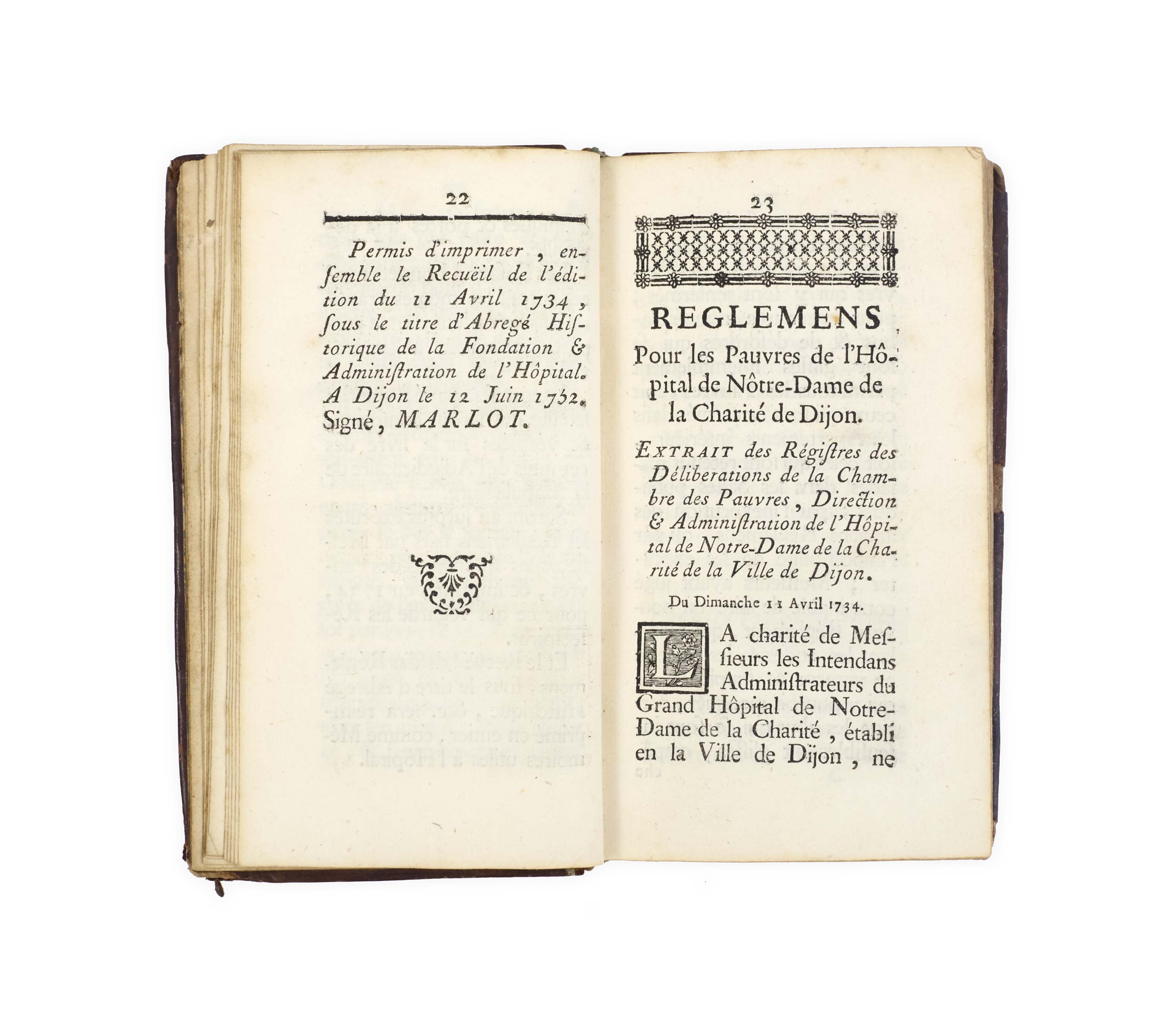
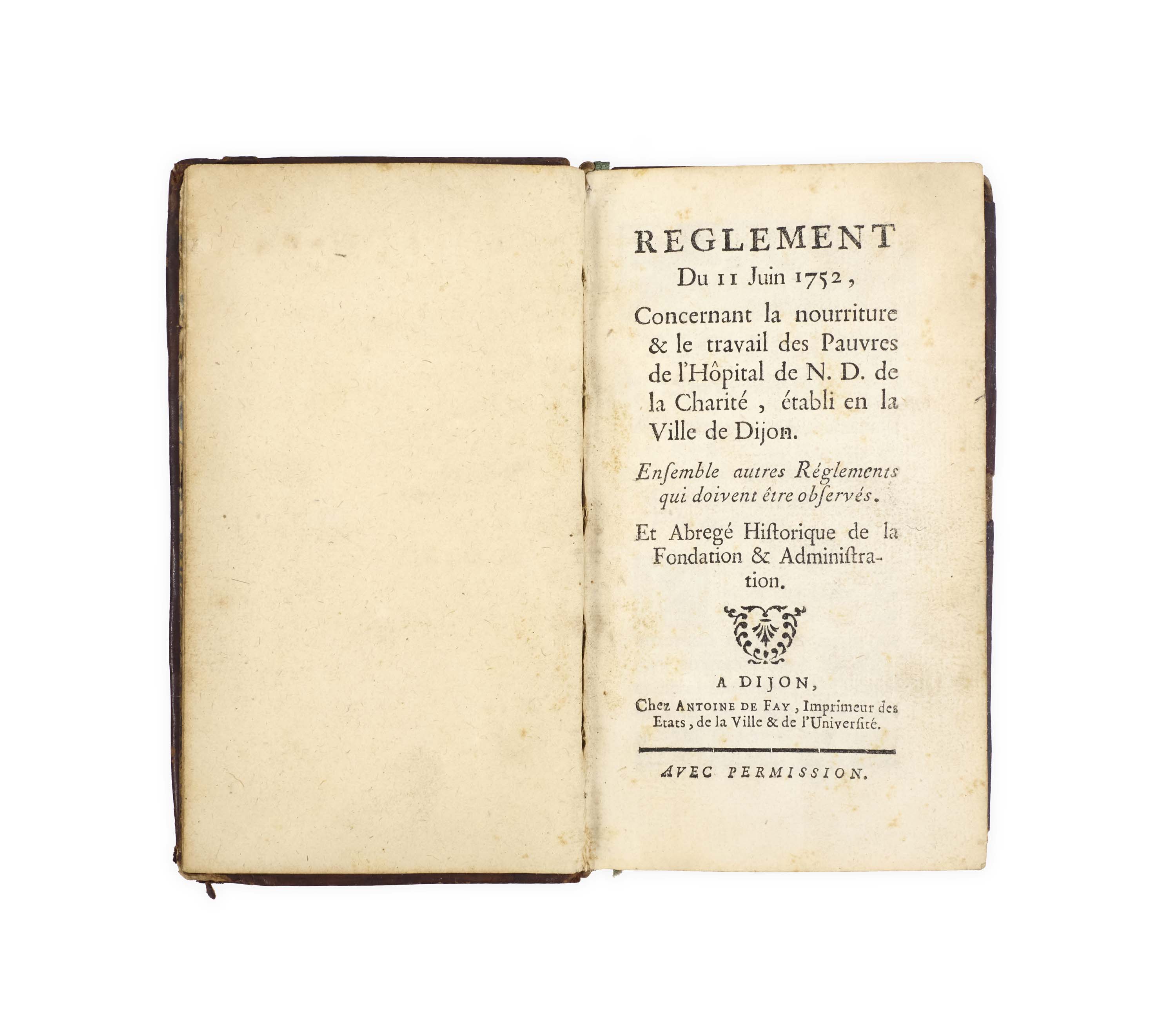
Reglement du 11 Juin 1752, concernant la nourriture et le travail des pauvres de l’Hôpital de N. D. de la Charité, établi en la ville de Dijon. Ensemble autres réglements qui doivent être observés. Et abregé historique de la fondation et administration. Dijon, Antoine Defay, [1752].
12mo, pp. 187, [1]; typographic ornament to title, woodcut headpiece and initial; a few light marks, occasional light foxing; a good copy in contemporary mottled calf, spine gilt in compartments with red morocco lettering-piece, marbled endpapers, green silk place-marker; loss at head of spine, tailcap chipped, wear to joints and corners, some staining and abrasions to covers.
Added to your basket:
Reglement du 11 Juin 1752, concernant la nourriture et le travail des pauvres de l’Hôpital de N. D. de la Charité, établi en la ville de Dijon. Ensemble autres réglements qui doivent être observés. Et abregé historique de la fondation et administration.
Very rare work detailing the regulations governing the 450-or-so poor residents of the Hôpital de Notre Dame de la Charité in Dijon, eastern France, in the mid-eighteenth century.
The opening section provides much interesting detail on the different diets of the hospital’s elderly men and women, girls, and schoolchildren. All were entitled to bowls of soup or gruel, cheese, seasonal vegetables and herbs, and herring. The distribution of butter, bread, wine, and salt is also discussed, with detailed instructions on the use of the latter for salting soups, vegetables, stews, omelettes, and pork. The hospital’s weavers, carpenters, gardeners, gravediggers, cleaners, coopers, and carriers ate together in the refectory, enjoying portions of eggs, wine, and bread. The gardener was not to show favour in presenting the fruits of the garden to individual charitable sisters. The residents were to sweep, carry wood, and weed; those who refused to do so would have their wine ration withdrawn; those who sewed and knitted were paid for their work, which was sold to benefit the hospital.
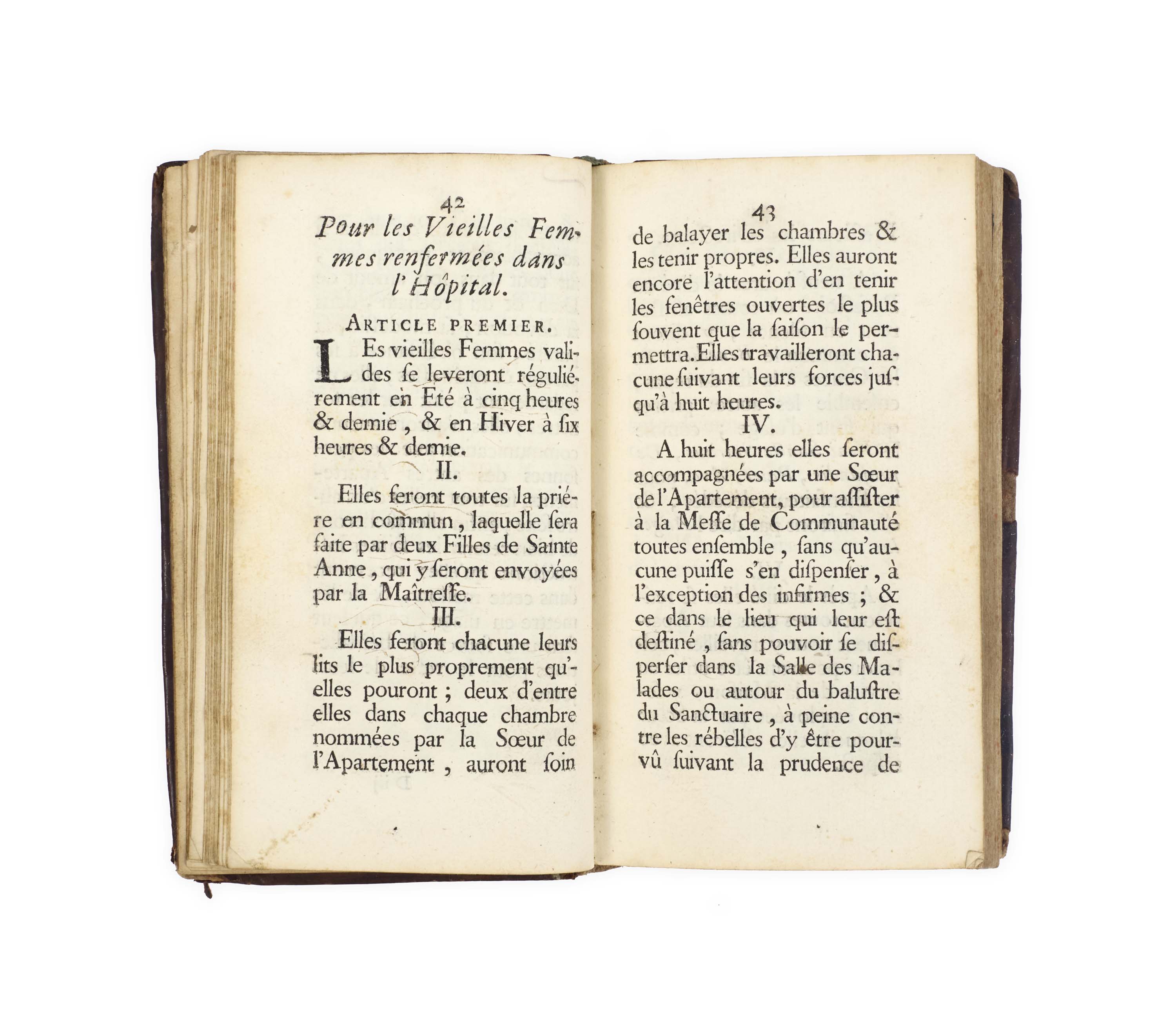
Daily timetables and punishments for misbehaviour are also described. The girls rose at 4:30 am in summer and had half an hour to dress and make their beds. Elderly women enjoyed an extra hour in bed but those who consistently swore, quarrelled, stole, or got drunk were expelled following two warnings; for throwing things from their windows, they were put on bread and water. Schoolchildren caught drinking in the cellars or local bars were suitably punished.
There are also regulations governing the sick (who were not allowed to play cards, smoke, or cook anything on their heaters); for abandoned children and wet nurses; and for the hospital’s porters (who were to keep fruit and salad sellers at bay). The final chapters provide an historical overview of the hospital, which could trace its origins back to 1204.
Only one copy on OCLC, at the University of Dayton; no copies traced in the UK.