Raphael’s Brain
COMBE, George.
Phrenology applied to Painting and Sculpture. London, Simpkin, Marshall, and Co., 1855.
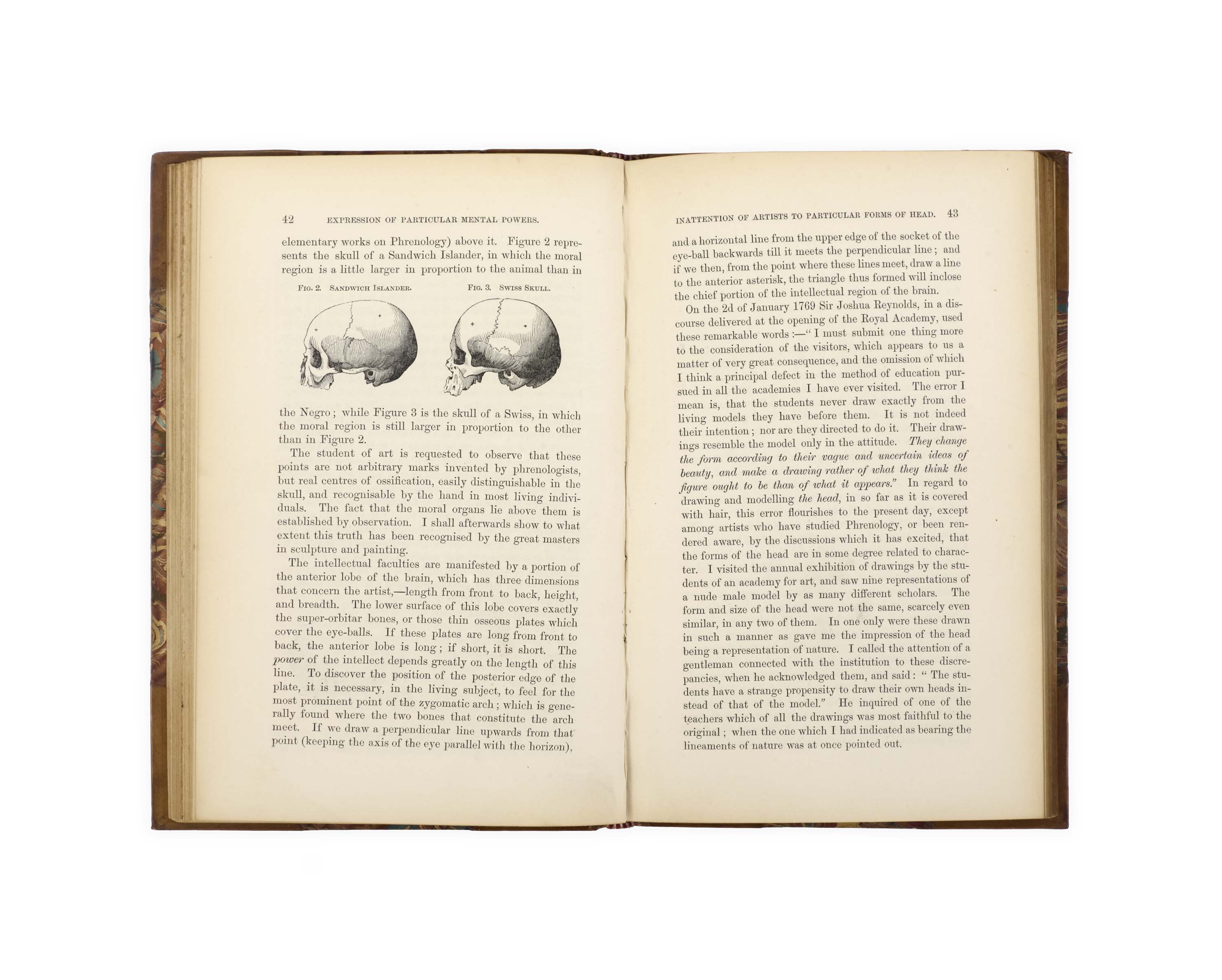
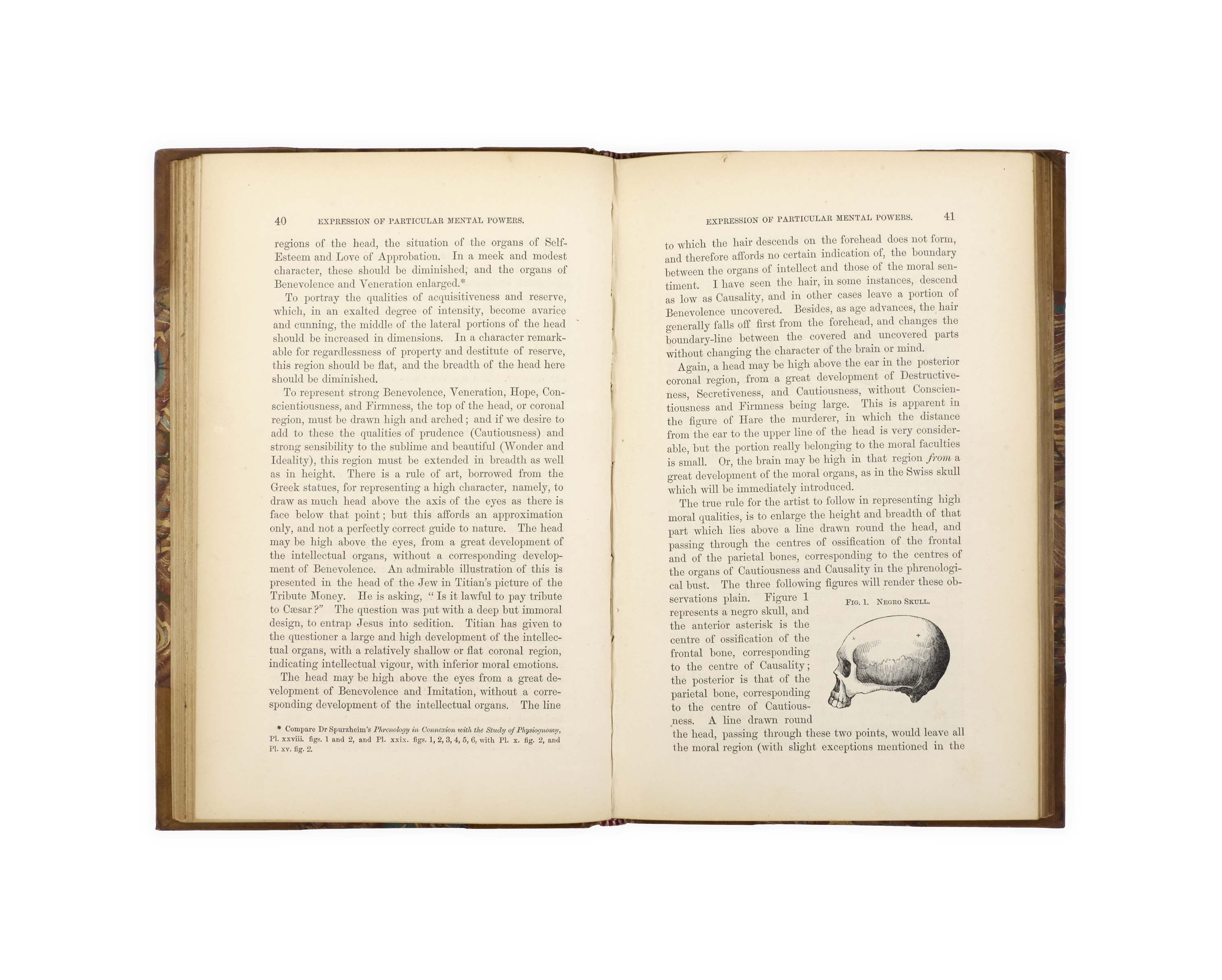
8vo, pp. xx, 158; half-title; illustrations of skulls to text; an excellent copy in contemporary half calf and marbled boards, spine lettered directly and with red morocco label, raised bands; marbled endpapers; one pencil note.
First edition, scarce in commerce. George Combe (1788–1858) was a Scottish lawyer and a leading exponent of phrenology, co-founding in 1820 the Edinburgh Phrenological Society. This is an art historical retrospective using phrenology as the basis for an understanding of beauty and artistic ability, one of the principal subjects being Raphael, both his artworks (especially the cartoons, then available to the British public at Hampton Court, as they are now at the V&A) and his brain, via his skull; an appendix deals with the controversy {20} surrounding a purported new skull of Raphael recently unearthed in Rome, which threw phrenological observations on the original skull, assumed for centuries to be the artist’s, into some doubt. Other subjects include colour-blindness, ‘Napoleon and idiots’ and a remarkable analysis of Leonardo da Vinci’s Last Supper using the phrenological apparatus: ‘the head of Christ is the highest in its forms and proportions … Judas the lowest’.