Abolition for Children
[HEDGE, Mary Anne.]
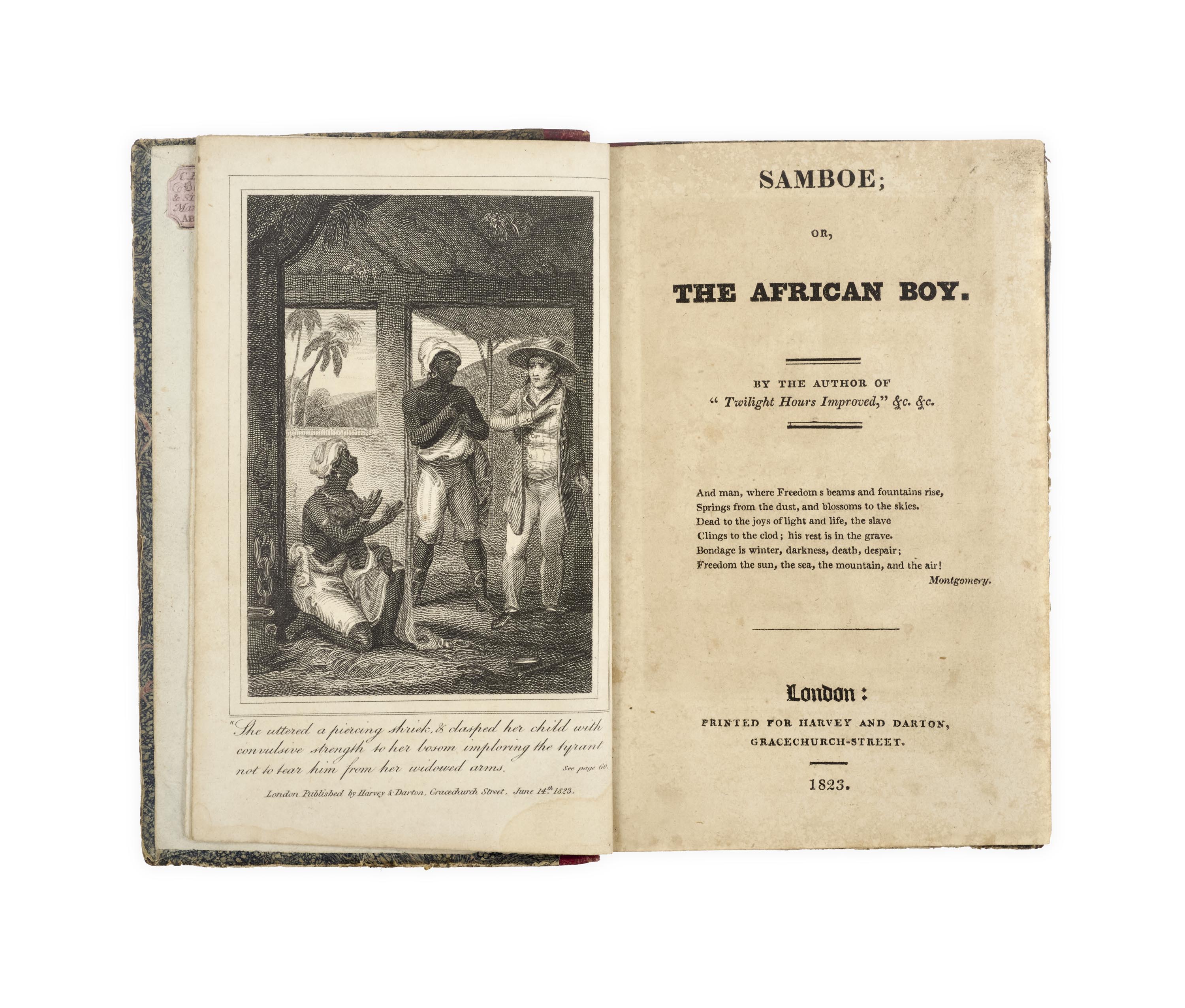
Samboe; or, the African Boy … London, Harvey and Darton, 1823.
12mo, pp. viii, [2], 175, [1], [10 ‘Notes’], with an engraved frontispiece; slightly foxed but a very good copy in the publisher’s quarter red roan, spine ruled gilt and lettered directly, marbled paper sides; ownership inscription ‘Hester Bowles, given her by her mama, 1826’; contemporary pink bookseller’s ticket of C. Evans, Abingdon.
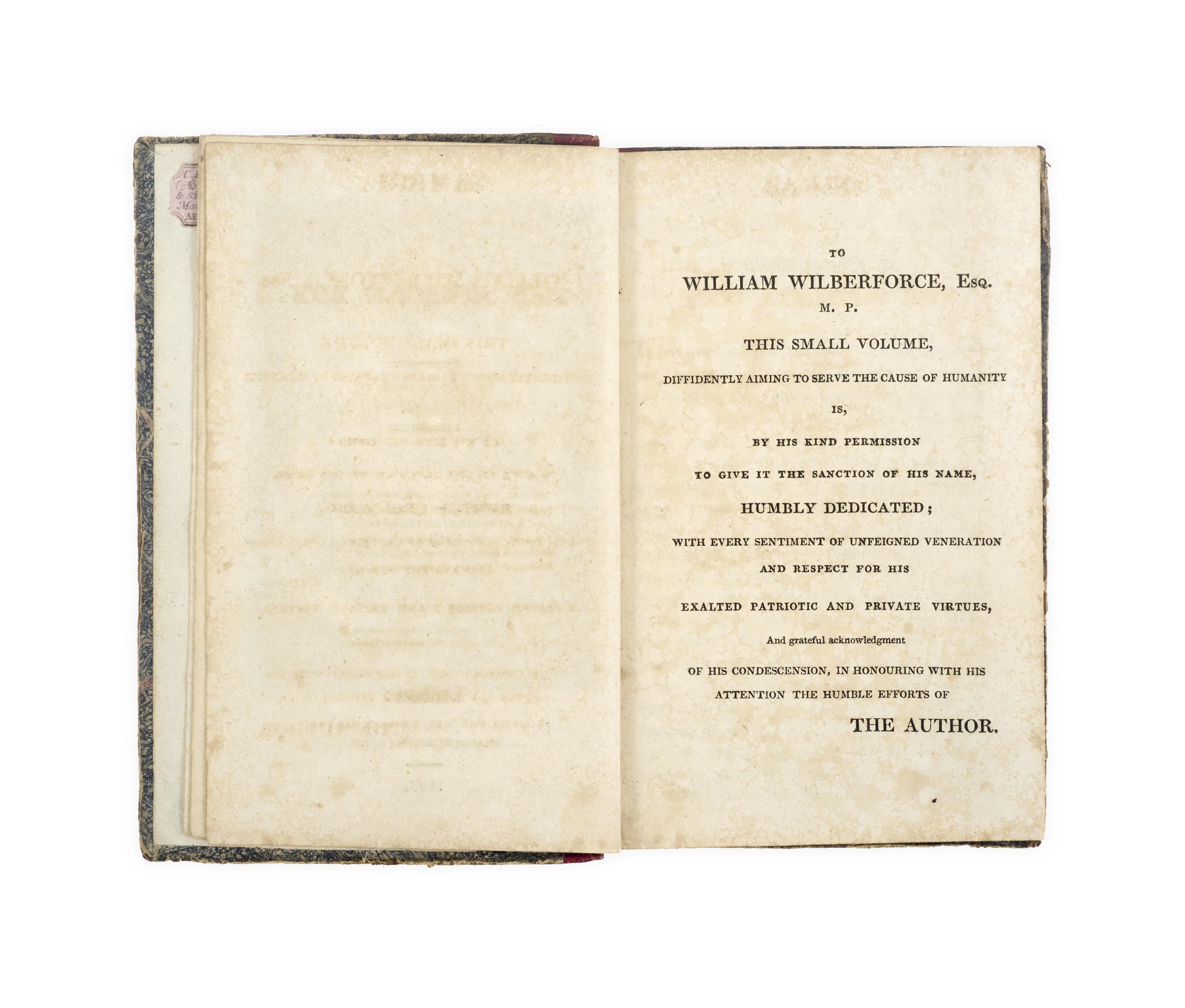
First edition of an abolitionist novella for children dedicated to William Wilberforce. Hedge, of Colchester, was the author of a number of improving works for youth, of which this is probably the best known.
Hedge’s self-congratulatory preface rejoices that ‘England has achieved the triumph of humanity’ by abolishing the slave trade, but ‘other nations’ still practice ‘unprecedented enormities and misery’ as well as ‘deliberate perjury’ in its concealment. The story itself starts with Mr. Irving, a slave factor at Ouidah (on which there are many observations), who buys a young woman and her son from a cupidinous local magnate; pleased with himself at preventing their separation he nevertheless consigns them to a slave ship bound for the West Indies (of which there is a description based on Clarkson). She is sold to a ‘humane’ master and mistress in Jamaica, but nevertheless succumbs to her sufferings, leaving her boy Samboe to pass through several owners before he is sent to England as a plaything for some vile children. Finally he comes into the hands of an abolitionist, who educates him and brings him with him to the Sierra Leone Colony – there is a closing passage in its praise as a ‘medium of civilization for Africa’.
Provenance:
Hester Bowles (1813–1844), elder sister of the travel diarist Rev. Thomas Bowles, of Milton Hill House, near Abingdon, the gift of her mother Hester Sophia (née Sellwood). Most of her brothers went to Rugby and Oxford, but her education was evidently not wholly neglected.
Darton G444; Goldsmiths'-Kress 23957.