Presentation Copy That Survived the Great Fire of Montreal
DUER, William Alexander.
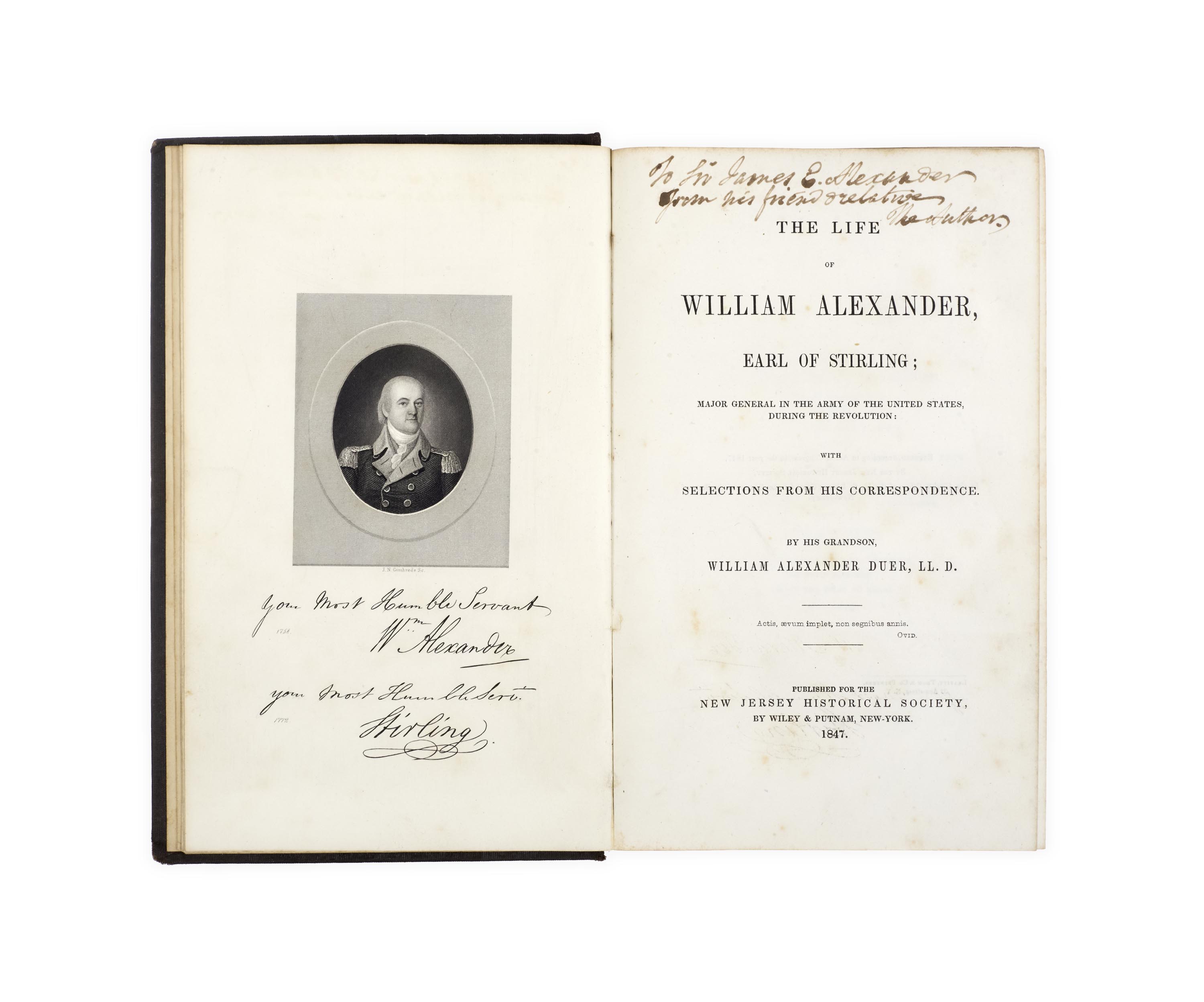
The Life of William Alexander, Earl of Stirling; Major General in the Army of the United States, during the Revolution: with Selections from his Correspondence. By his Grandson … New York, Wiley & Putnam for the New Jersey Historical Society, 1847.
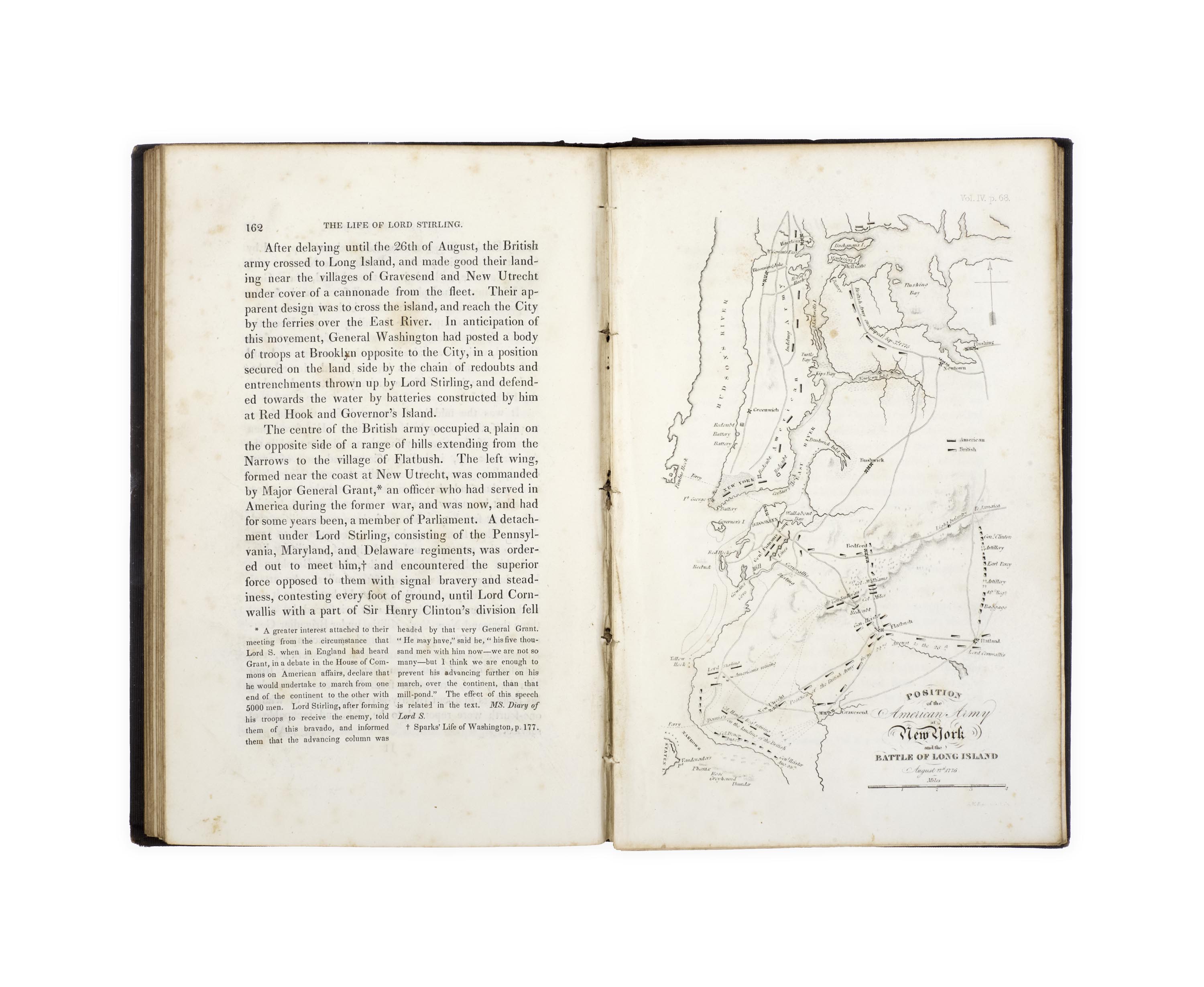
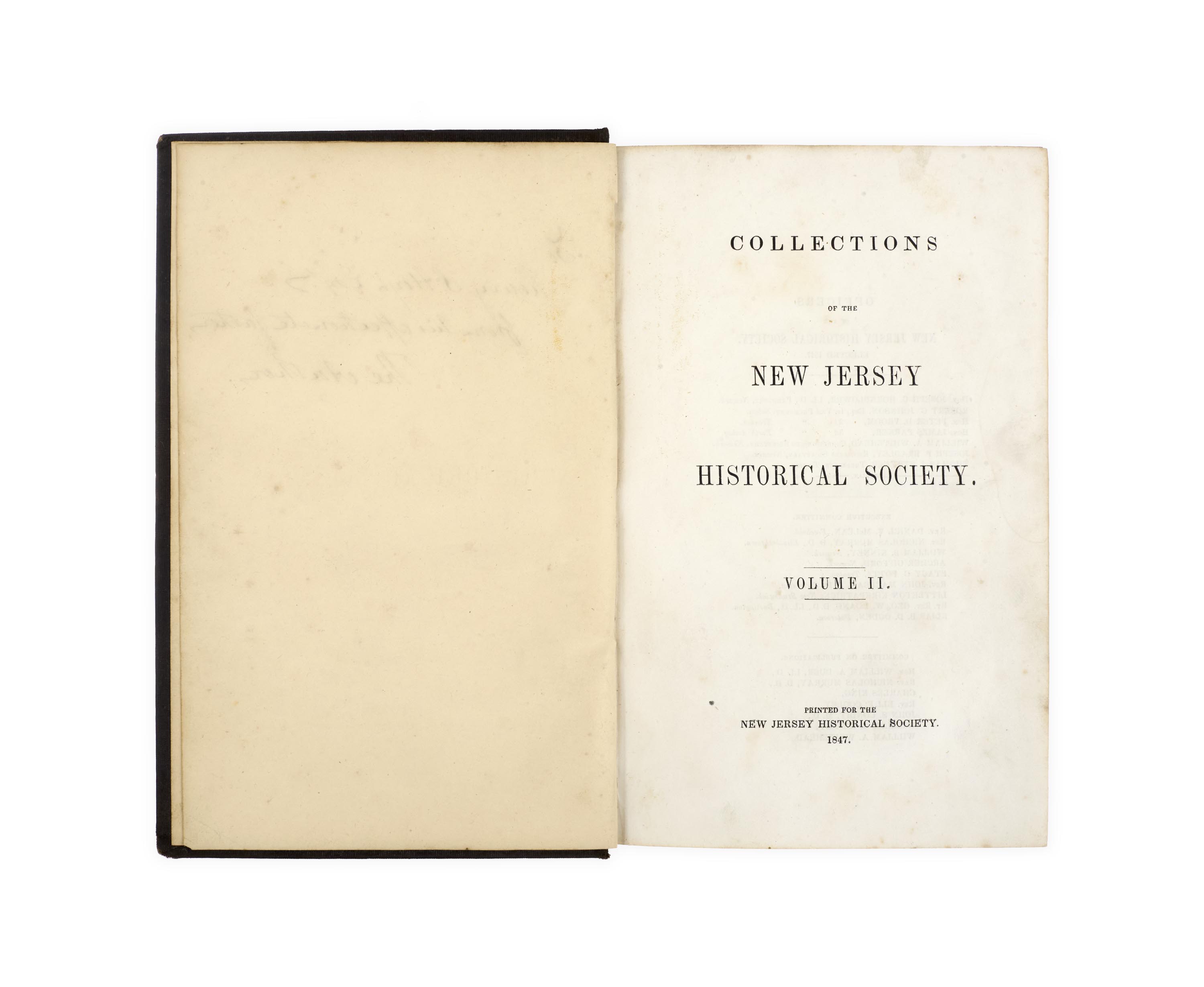
8vo, pp. xv, [1], 272, with a general series title (‘Collections of the New Jersey Historical Society. Volume II’), a half-title, an engraved frontispiece, and four engraved maps and battle-plans (plus one woodcut plan within the pagination); slightly shaken, one gathering coming loose, but a good copy in the original patterned, diapered cloth, joints worn, covers somewhat marked; manuscript copy letter to the author laid in, manuscript note in pencil on rear endpapers (see below).
Added to your basket:
The Life of William Alexander, Earl of Stirling; Major General in the Army of the United States, during the Revolution: with Selections from his Correspondence. By his Grandson …
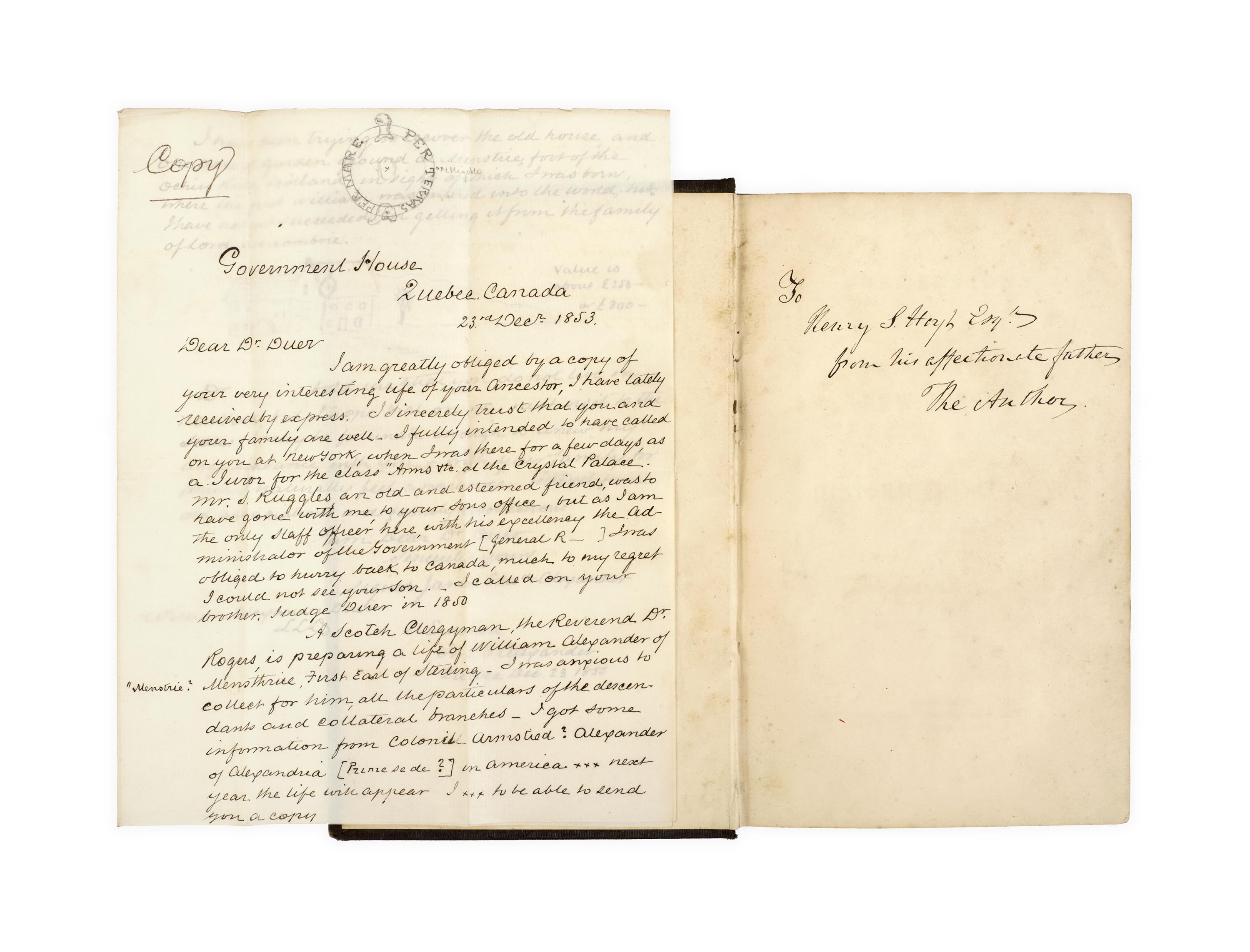
First edition, doubly inscribed ‘To Henry S. Hoyt Esq from his affectionate father / The Author’ and ‘To Sir James E. Alexander from his friend & relation / The Author’.
Major General William Alexander (1726–1783), whose claim to title of the Earl of Stirling was rejected by the Lords in 1762, was born in New York, inheriting a fortune from his father with which he built a country estate in New Jersey. On the Revolution he outfitted the 1st New Jersey Regiment and was appointed a brigadier general by the Second Continental Congress. After very effective service at the Battle of Long Island he was briefly a prisoner of war, becoming one of Washington’s most trusted generals – at one point he was left in charge of the entire Continental Army for two months. He fought at Brandywine, Germantown, and Monmouth, but died, probably as the result of habitual heavy drinking before the conclusion of the war, in January 1783.
The author of this life, which prints extensive correspondence, including letters to and from Washington and Franklin, was William Alexander Duer (1780–1858), the son of Alexander’s daughter Catherine (‘Lady Kitty’), who had been given away by Washington at her marriage to the jurist and politician William Duer in 1779.
This copy has been inscribed first to the author’s son-in-law Henry Sheafe Hoyt and then either withdrawn or not delivered, and given instead to the Scottish soldier, explorer and writer Sir James Edward Alexander (1803–1885), co-founder of the Royal Geographical Society, who would go on to serve in the Crimea and New Zealand but was at the time stationed in Canada. His letter to Duer here (dated 21 October 1853) thanks him for ‘your interesting life of your ancestor … lately received by express’ and apologises for not visiting him in New York. Alexander’s note at the end suggests that his book ‘passed through the terrible fire at Montreal which destroyed 1200 houses in 1852 and rendered houseless 20,000 people’ along with Alexander himself, whose house with its ‘books, arms & African trophies of the chase’ was destroyed, this book ‘saved from the wreckage’.