The Foundation of Animal Symbolism
EPIPHANIUS, Pseudo-; Gonzalo PONCE DE LEÓN, editor and translator.
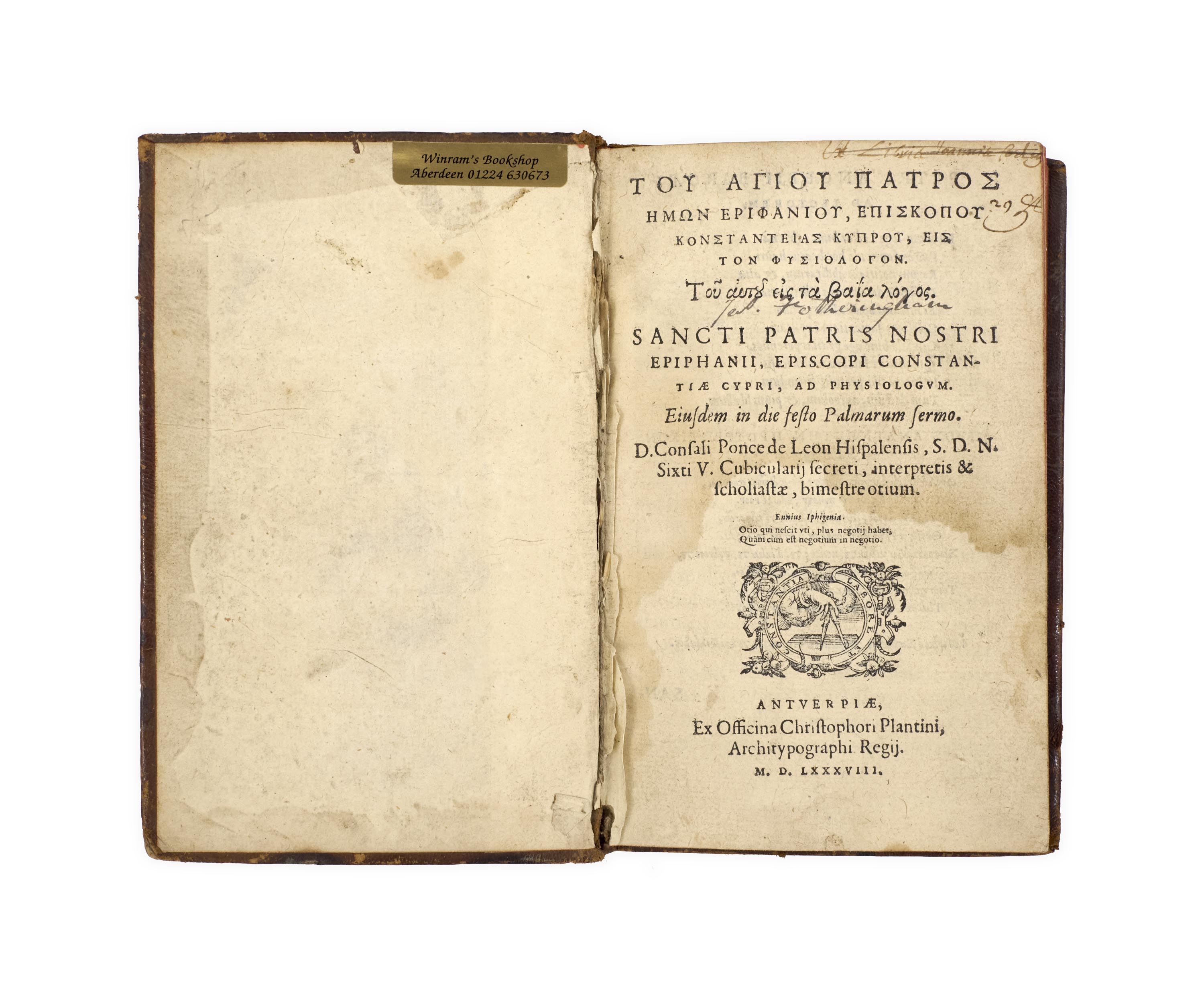
Εις τον φυσιολογον. Του αυτου εις τα βαια λογος … Ad physiologum. Eiusdem in dei festo Palmarum sermo. D. Consali Ponce de Leon Hispalensis … interpretis & scholiastae, bimestre otium. Antwerp, Christophe Plantin, 1588.
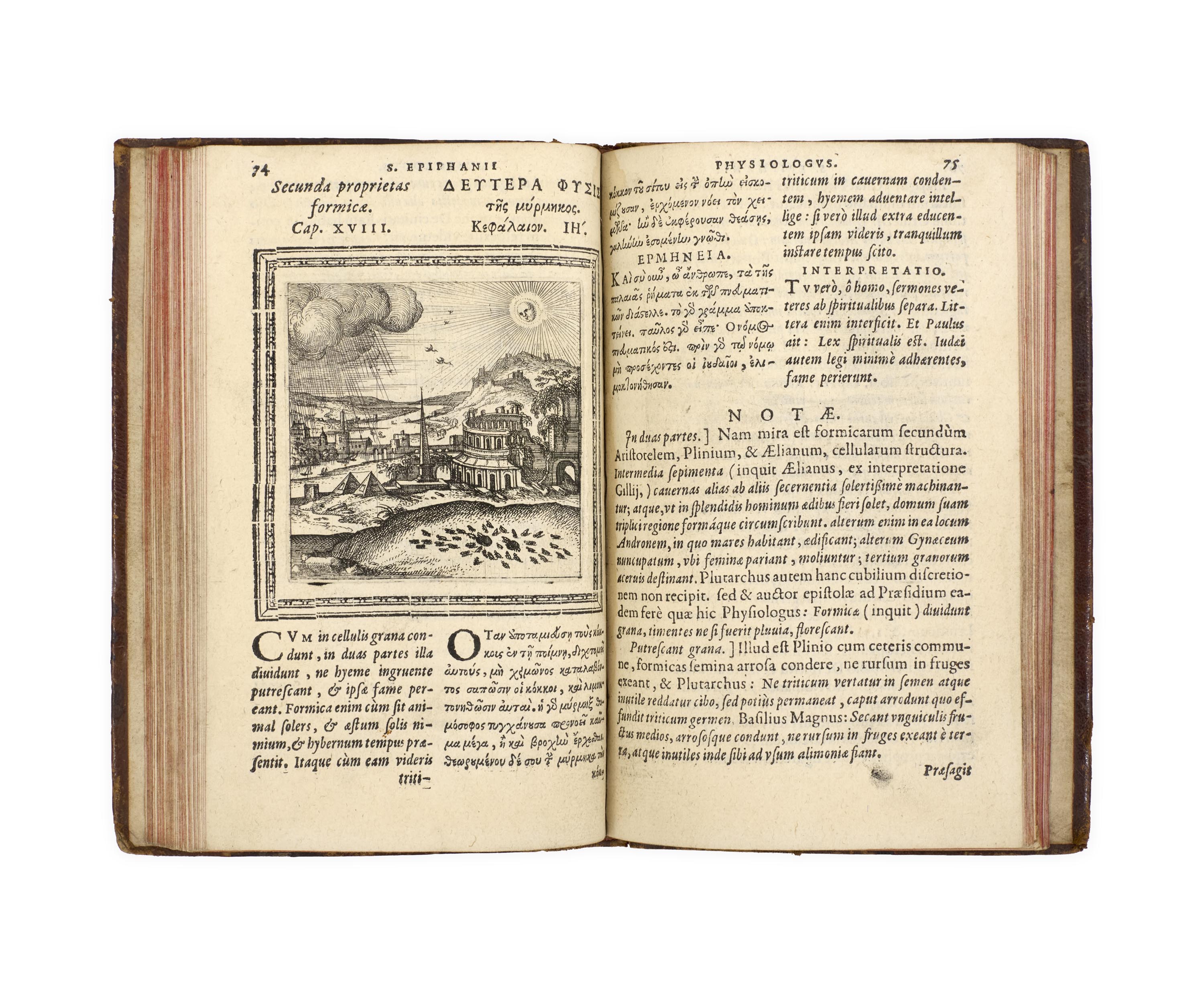
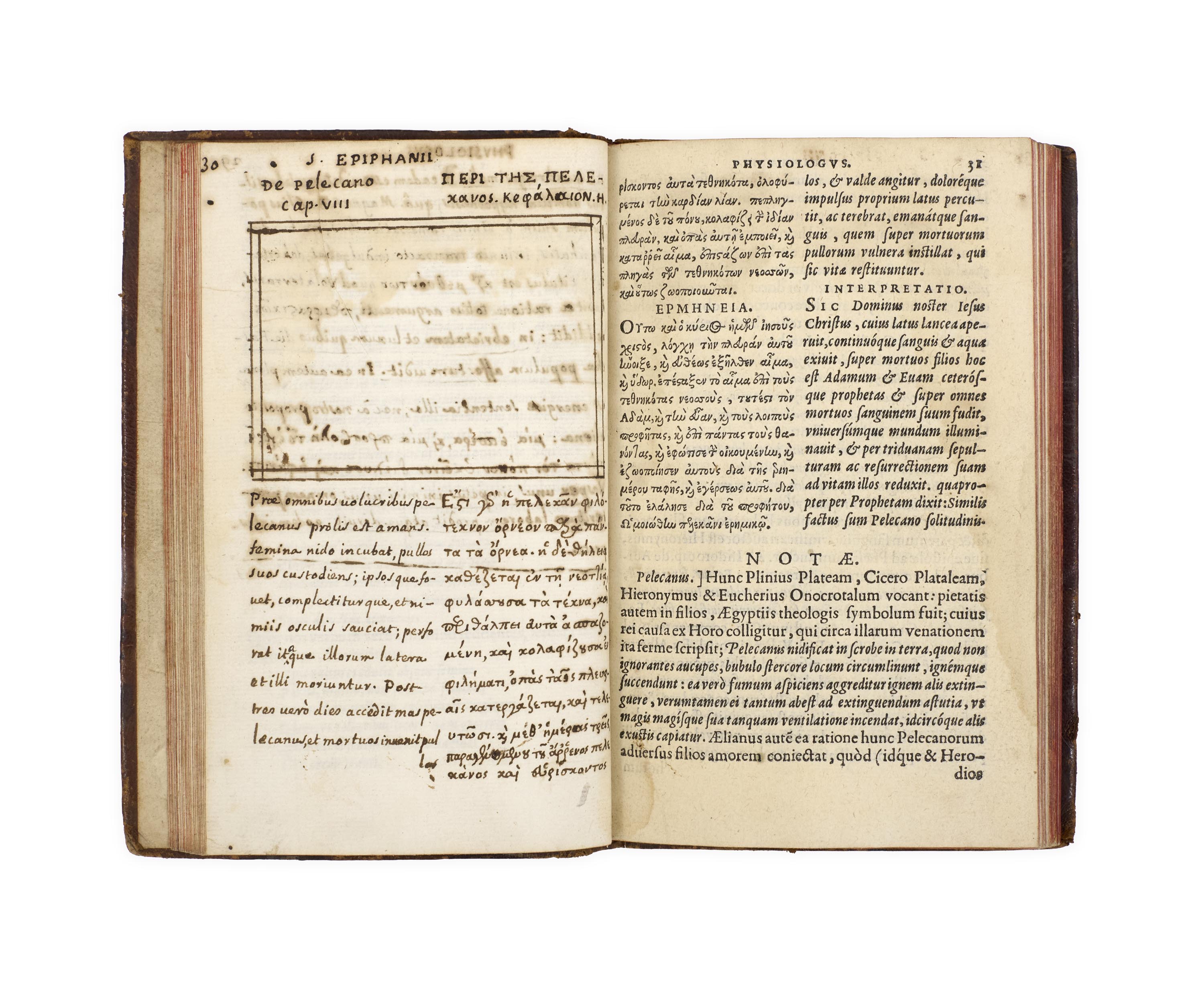
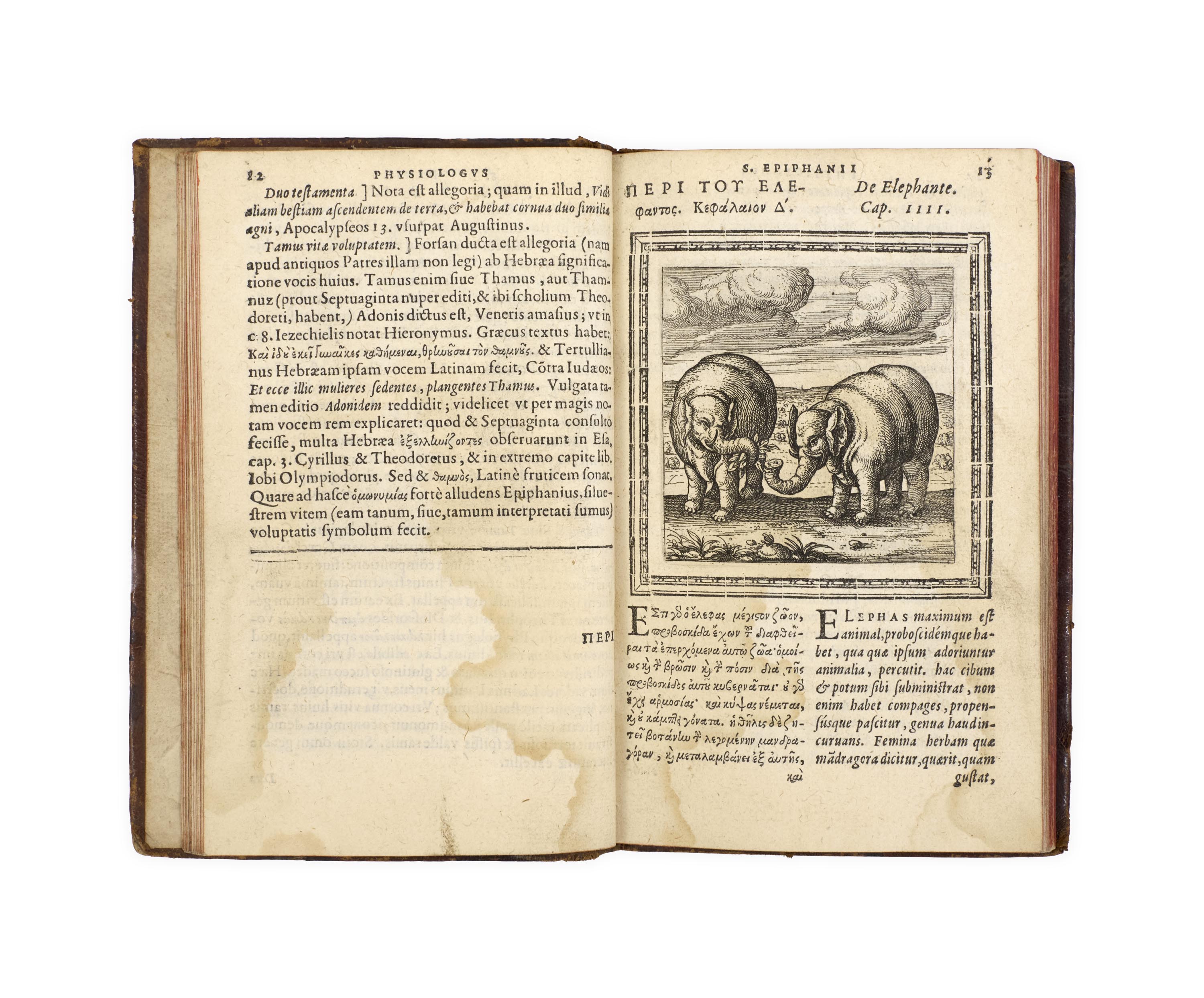
8vo, pp. [xv], [1, blank], 124, [11], [1, blank]; *8, B7 and C8 supplied in neat eighteenth-century manuscript facsimile with spaces left for the missing illustrations; title with woodcut printer’s device, 23 (of 26) engraved illustrations (probably by Pieter van der Borcht) each within a typographic frame, printed in Greek and Latin in parallel columns; first few quires a little damp-stained, ink stain to p. 42, otherwise a very good copy; bound in eighteenth-century sheep, gilt green morocco lettering-piece to spine, edges stained red; somewhat rubbed with a large scuff to front cover, free endpapers excised; early inscription ‘Ex libris Joannis Fortius[?]’ (cancelled in ink) and nineteenth-century inscription ‘Jas Fotheringham’ to title, modern bookseller’s ticket to front pastedown.
Added to your basket:
Εις τον φυσιολογον. Του αυτου εις τα βαια λογος … Ad physiologum. Eiusdem in dei festo Palmarum sermo. D. Consali Ponce de Leon Hispalensis … interpretis & scholiastae, bimestre otium.
Second edition, with finely engraved illustrations replacing the woodcuts of the first, of this late antique text on animals and their behaviour as Christian symbols and moral exempla, a forerunner to the tradition of the medieval bestiary.
Although attributed to Epiphanius of Constantia, the fourth-century bishop of Salamis (Cyprus), the text was more likely written in Syria or Egypt, perhaps in the second or fourth century AD. The text as it appears here contains descriptions of twenty-five animals, insects, and birds, along with a Christian interpretation; while not an emblem book in the strict sense, the use of animals to provide exempla has resulted in its repeated and extensive use by emblem writers and bibliographers. The original version contained a further twenty-three stories involving plants and precious stones as well as more animals, not here present. The second text in the volume is a sermon for Palm Sunday, likely also pseudonymous.
This volume is based on the first edition produced in Rome in 1587 and reprinted by Plantin at Ponce de León’s own request. The etched illustrations here are finer than the woodcuts of the Rome edition, and the Greek and Latin texts are now in parallel, rather than appearing one after the other. The translator claims on the title-page that he took two months to prepare the text (‘bimestre otium’).
STCN 12924383; USTC 402141; Voet 1126; Landwehr, Low Countries 162 & Emblem and fable books in the Low Countries 230.