Cross-Dressing and Self-Pleasure
[EROTICA.]
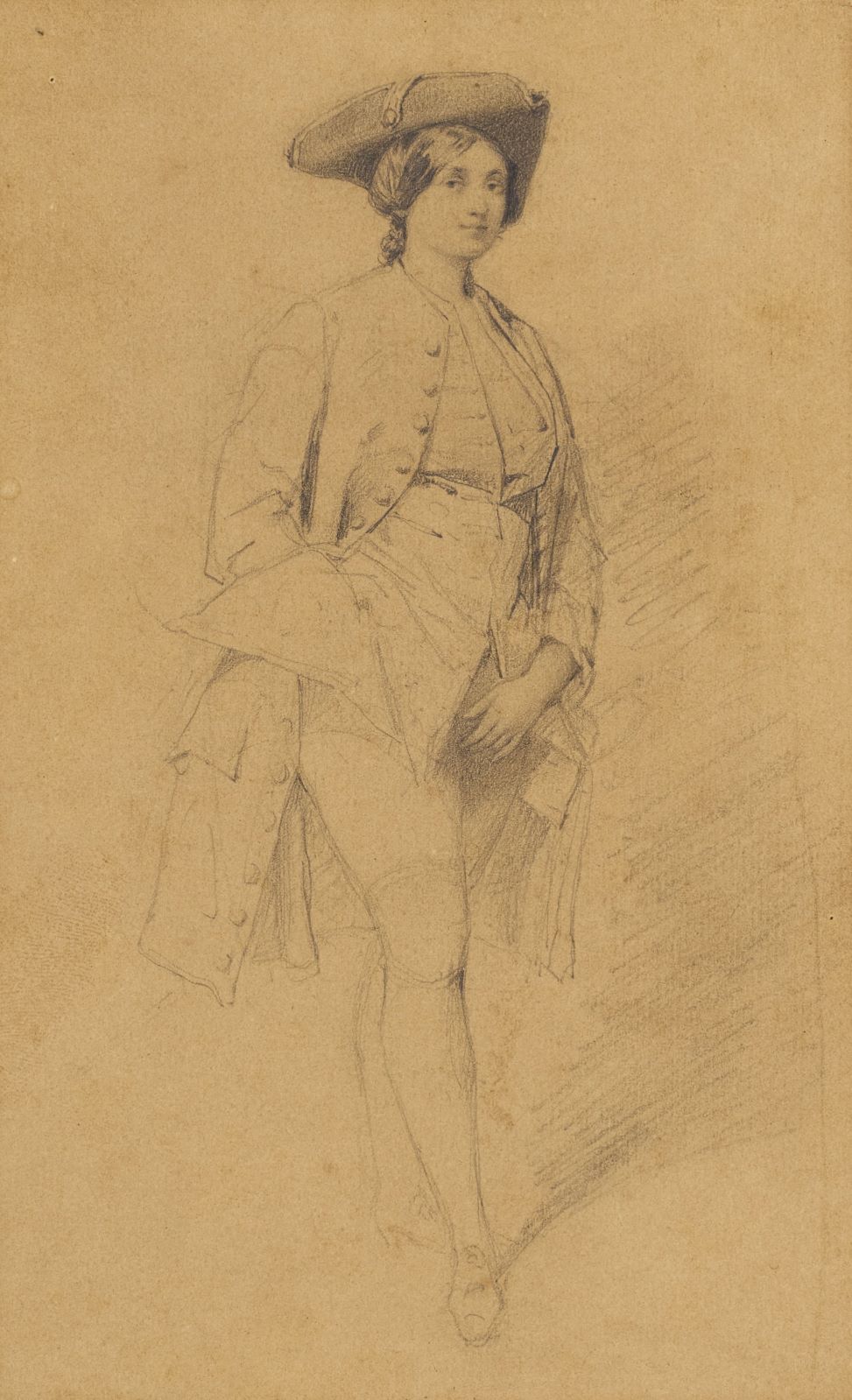
Pencil drawing of a woman in eighteenth-century hunting dress. [France, early nineteenth century?]
Unsigned and undated pencil drawing on paper, mounted on later card (225 x 150 mm, the figure c. 180 mm high); paper browned where previously exposed.
A fine erotically-charged figure study of a woman in rather masculine eighteenth-century French hunting dress, seemingly pleasuring herself for the gratification of the viewer.
Dressed in a riding coat, waistcoat, knee breeches, and tricorn hat, the young huntress coyly pulls aside her breeches, one hand suggestively concealed by her waistcoat, the other gesturing pointedly, her gaze directly engaging the viewer, or voyeur. The clothing, though rather manly in cut, is not dissimilar to that worn by the young Marie Antoinette in a portrait of c. 1772 by Joseph Krantzinger, though the intention here is more explicit.
Hunting, as a sport rather than a means of sustenance, was the province of royalty and the aristocracy in eighteenth-century France. Generally women would follow the hunt on horseback or in carriages but not participate, but la chasse was also a possible locus for amatory engagement – the dual-meaning of venery was part of familiar discourse. Louis XV, for example, first encountered Madame de Pompadour on a hunt, and she later installed a picture of herself as Diana at Fontainebleau – one of a number of such performative paintings in the period. For nineteenth-century ‘amateurs’, the morals of the previous century were a rich hunting ground for titillation.