Planting for Posterity
EVELYN, John.
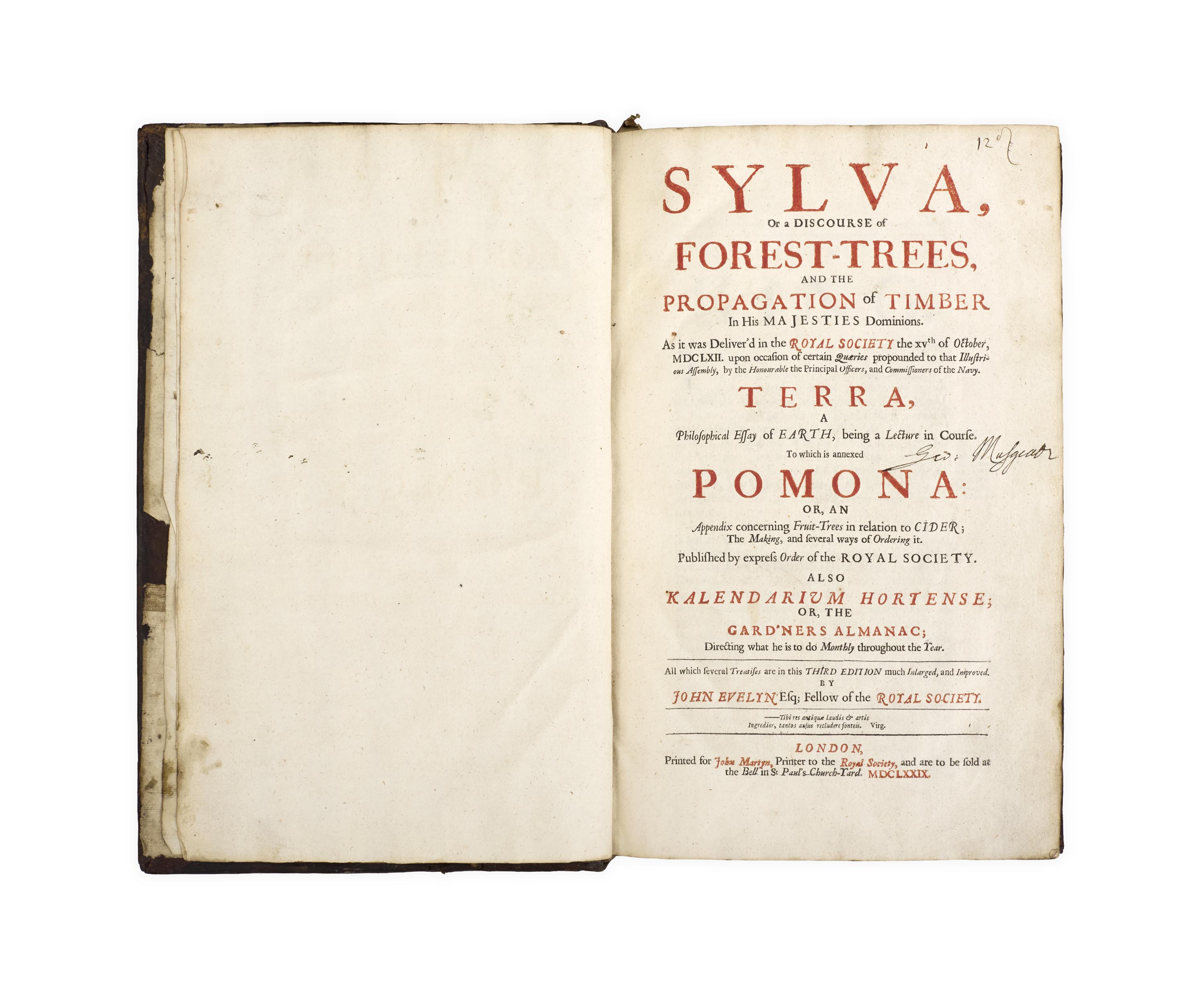
Sylva, or a Discourse of Forest-Trees, and the propagation of Timber in His Majesties Dominions. London, John Martyn, 1679.
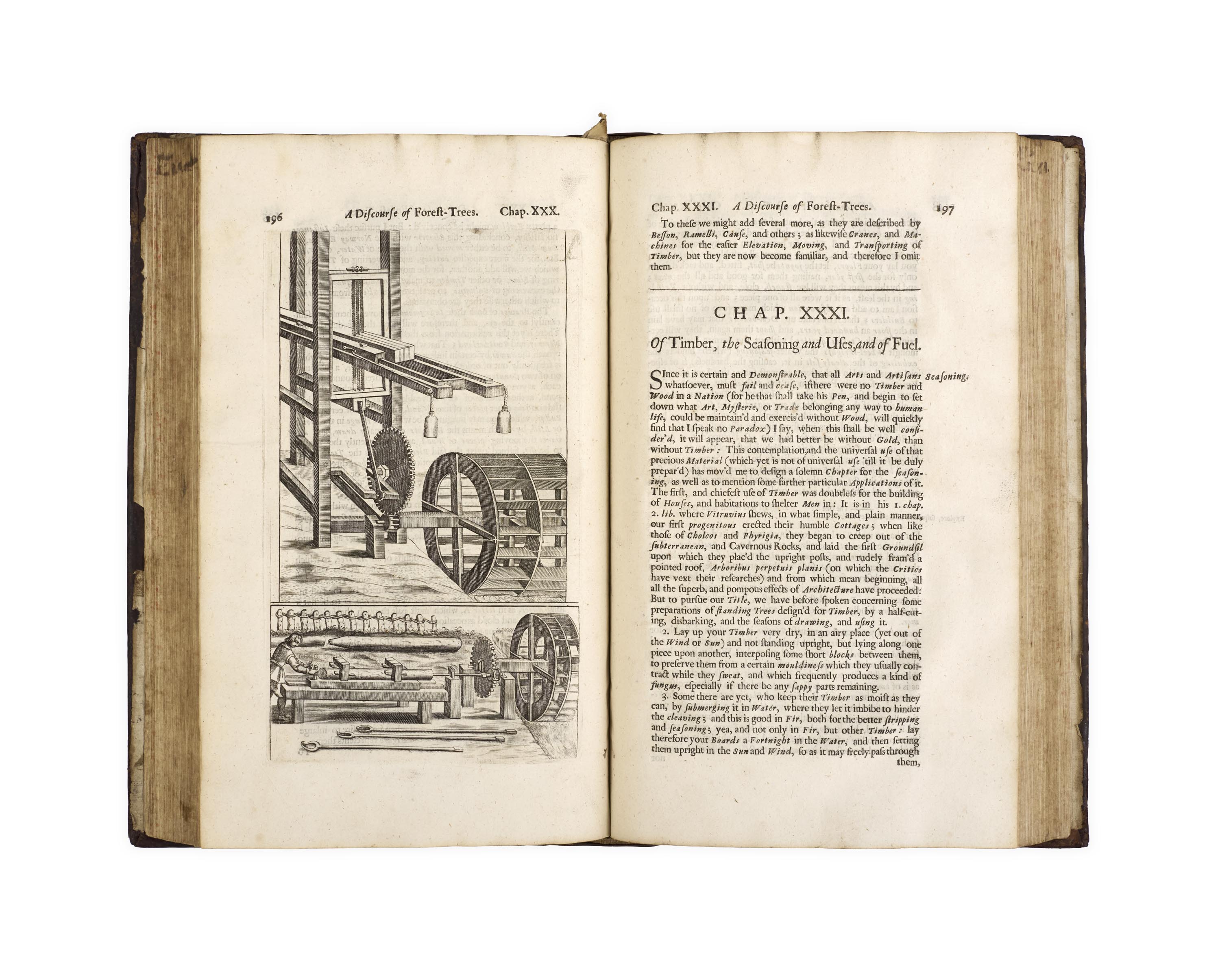
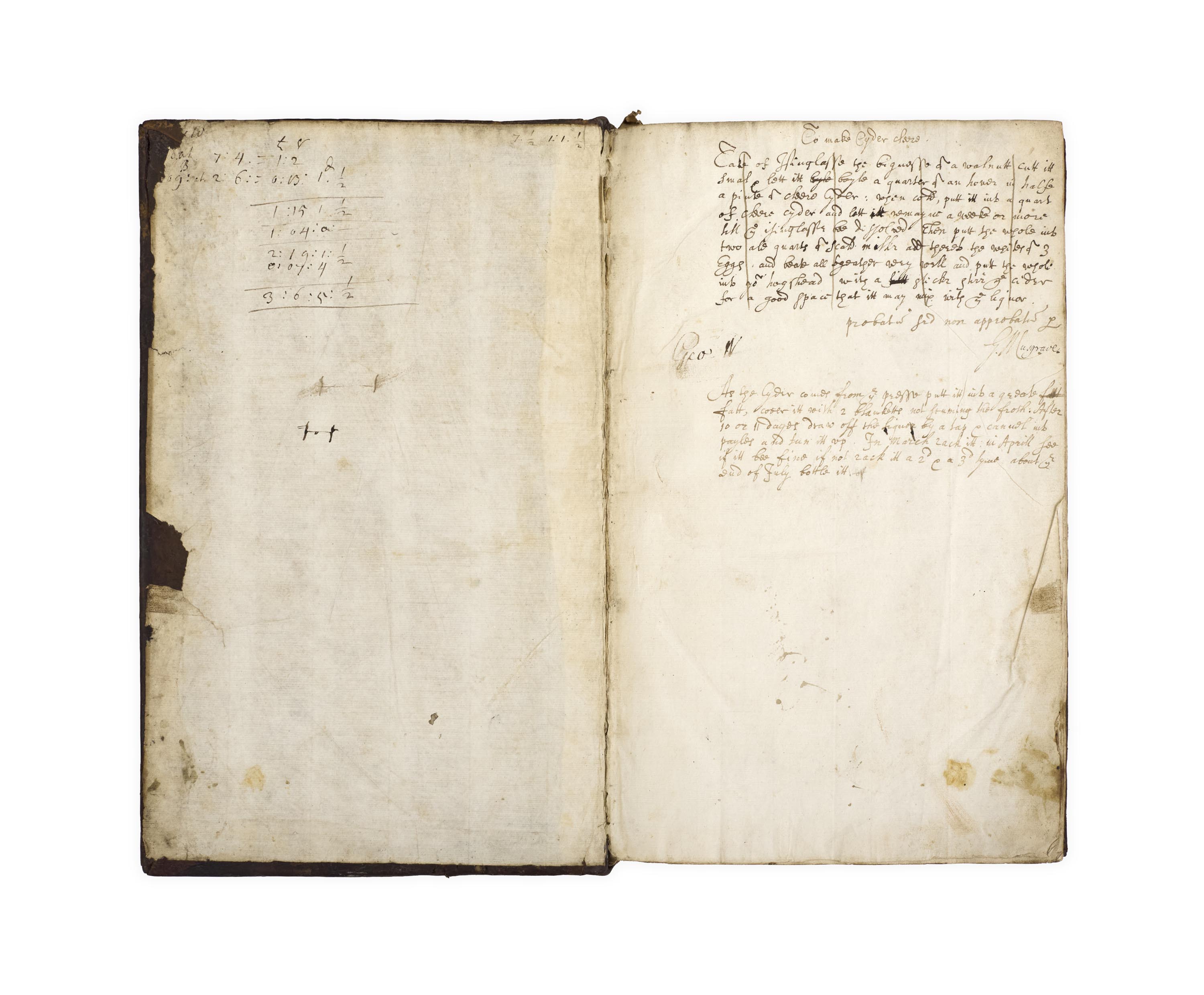
Folio, pp. [lxxii], 412, 38, [2], with a preliminary blank; five large or full-page engraved illustrations and a woodcut of a cider vat (new to this edition); title printed in red and black, part-titles to A Philosophical Discourse of Earth (second edition) and Pomona (third edition) each dated 1678, part-title to Kalendarium Hortense (fifth edition) printed in red and black with woodcut device; marginal paper-flaw to lower outer corner of i2, but a very good copy; contemporary mottled calf, rebacked, manuscript fore-edge title; ownership inscriptions of George Musgrave to the title page, and of his son, also George Musgrave, to front endpaper, with the former’s notes on cider making to the preliminary blank.
Added to your basket:
Sylva, or a Discourse of Forest-Trees, and the propagation of Timber in His Majesties Dominions.
Third, enlarged edition of Evelyn’s Sylva, the foundational work of English forestry that remained the standard English treatise on the subject well into the nineteenth century.
First delivered before the Royal Society in 1662 at the request of the Commissioners of the Navy, Evelyn’s treatise sought to remedy England’s dwindling timber reserves. The work advances a persuasive case for the cultivation and preservation of woodland by drawing together practical arboriculture, classical learning, and natural philosophy in an encyclopaedic survey of Britain’s trees, their cultivation, soils, medicinal properties, and uses. The economic and arboreal success that emerged out of the work was attested to by Evelyn himself, who claims in this edition’s address to Charles II, ‘I need not acquaint your majesty how many millions of Timber-Trees (beside infinite others) have been propagated, and planted through your vast dominions, at the instigation and by the sole direction of this work’. This third edition is described as ‘much inlarged, and improved’ and incorporates the revised second edition of Terra, Evelyn’s philosophical discourse on soils; the enlarged third edition of Pomona, on fruit trees and cider; and the fifth edition of the Kalendarium Hortense with further additions.
Provenance: George Musgrave (1648–1721) of Nettlecombe, Somerset, brother of the physician and antiquary William Musgrave (1655–1721, Fellow of the Royal Society, for which he acted as secretary, and editor of the Philosophical Transactions in 1685). George, who studied at Exeter College, Oxford, and then qualified as a barrister, was a friend of Edward and Mary Clarke, the friends and correspondents of John Locke. A contemporary recipe for clarifying cider is written on the front endpaper under which Musgrave has noted that the recipe is ‘probatum sed non approbatum’ and has crossed it through accordingly. A second recipe follows below, as well as a list of quantities and measurements on the front pastedown. The front endpaper also bears the later inscription of his son, George Musgrave.
ESTC R5987; Wing E3518.